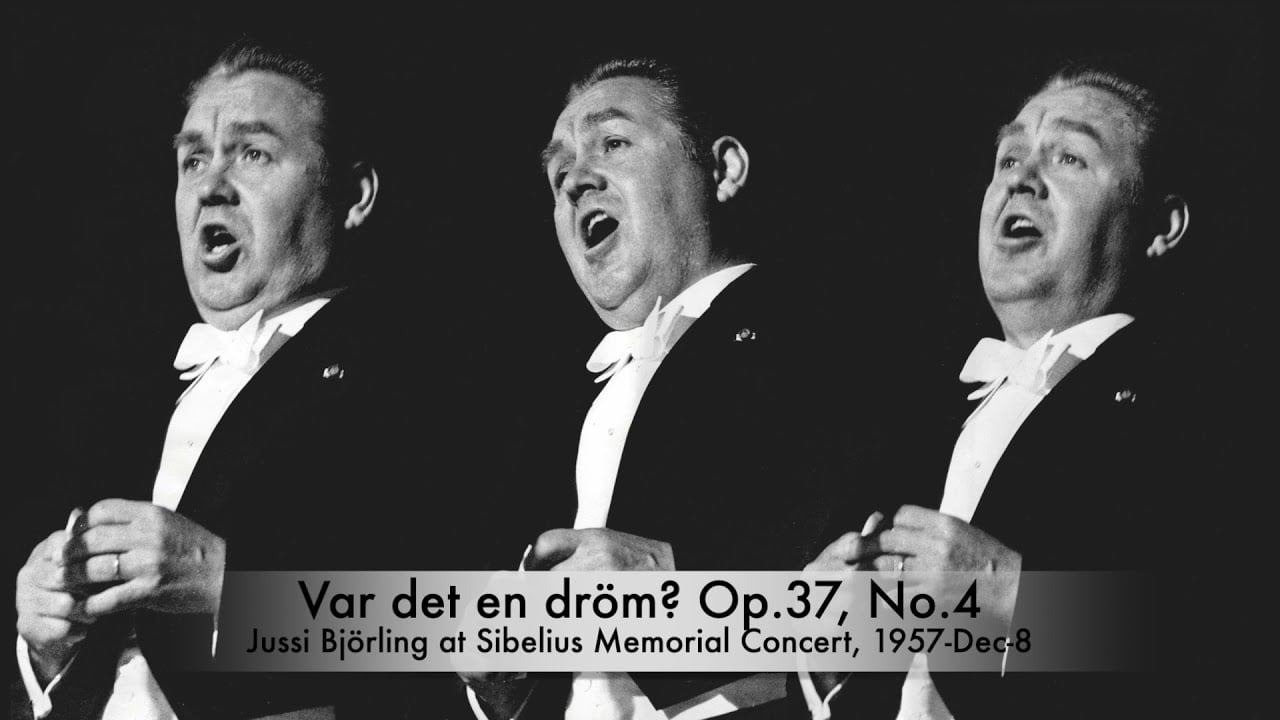
On Sibelius’ birthday, Jussi Björling sings five of the composer’s songs, as part of a memorial concert at Carnegie Hall on December 8, 1957. The composer died only weeks earlier at the age of 91.
Also on the program was Sibelius’ bleakest symphony, the Symphony No. 4, “En Saga,” and “Finlandia.” Sadly, the guest conductor of the New York Philharmonic, Martti Similä – a close friend of Sibelius, who held posts as chief conductor with the both the Helsinki and Lahti Symphony Orchestras – died not long after, on January 9. This concert was his American debut – and presumably swan song.
Sibelius had been very fond of Björling’s renditions. After a concert in Helsinki in 1951, he invited the tenor to his home, where he presented him with an inscribed photo. Sibelius wrote, “To the genius, the great singer Jussi Björling.”
Who knew that the Finnish master, Jean Sibelius, so dreaded the darkest time of the year? Finland’s kind of a bad place to live, then, don’t you think?
The composer once confided to his secretary, “The darkest weeks of the year, from my birthday [December 8] until Christmas, when the sun is at its lowest, are always a difficult time for me.”
I could say it’s a difficult time for me, too, but for entirely different reasons!
They aren’t exactly sung in the streets here in the United States, but Sibelius’ Christmas songs are some of the most beloved in Finland.
He compiled five of them, written between 1897 and 1913, and published them in 1915 as his Opus 1.
The best-known of these is the fourth of the set, “En Etsi Valtaa Loistoa” (“I seek not power, glory or gold”), which he composed in 1909.
The text is by Zacharias Topelius:
I seek not power, glory or gold,
I wish for the light of Heaven and peace on Earth.
Let Christmas bring happiness and put us in mind of heavenly things.
Neither power nor gold but peace on Earth.
May the wonder of Christmas come to both poor and rich;
Into Earth’s darkness bring the light of Heaven.
For you I yearn, you I await, Lord of Earth and Heaven,
Now bring sweet Christmas to poor and rich.
Here it is arranged for male chorus, followed by the fifth of the set, “High are the snowdrifts.”
“High are the snowdrifts” for women’s voices
“I seek not power” in a jazzy arrangement, played in a snowy field!
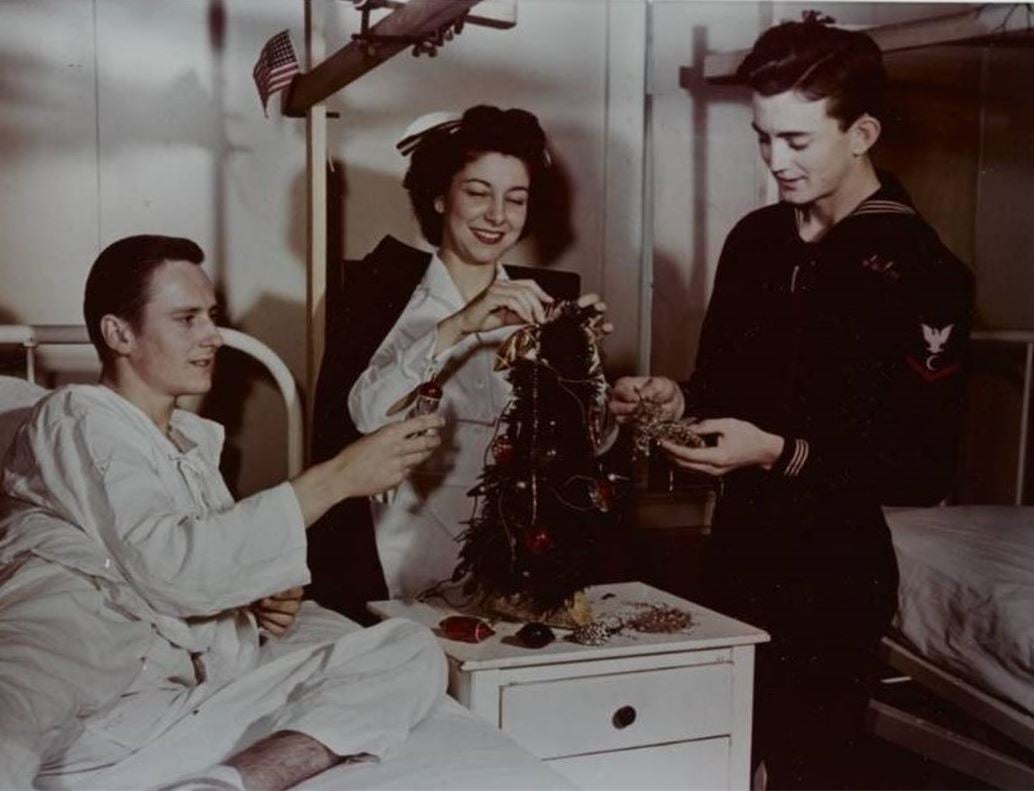
I was reflecting this morning that the events of December 7, 1941, would have made Christmas an anxious time for millions of Americans.
It was on this date 80 years ago that the Imperial Japanese Navy launched a surprise strike on the United States naval base at Pearl Harbor, precipitating the U.S.’ entry into World War II. Sailors, soldiers, airmen, marines, and civilians were caught in the attack. In all, 2,403 Americans were killed and 1,178 wounded.
A stunning blow, by any measure. Yet, from what I gather, though surely shadows must have flitted across the consciousness of any rational celebrant that year, Christmas in the U.S. proceeded pretty much as it always had.
Of course, it wouldn’t be long before the war turned everyone’s lives upside down. There was the need to organize, train, and outfit an enormous influx of civilians into the armed forces. Means of production would be adapted to meet the necessities of defense. For those who remained at home, there would be restrictions on many facets of American life. It would be a time of enormous personal sacrifice, and of course concern for loved ones deployed around the globe.
It’s hardly conceivable today, when so many Americans are affronted by the slightest suggestion that there is a world outside of themselves, that our citizenry would be up to such a challenge. Not when people become apoplectic if they have to wear a mask or endure a Columbus Day parade. I shudder to think what would be the reaction when the butter, bacon, and sugar disappeared.
Christmas 1942 was really the era’s first “wartime Christmas.” In 1941, aside from any psychological discomfort, there were few deprivations for Americans. Gas rationing would begin in December 1942, and a 35 mph “Victory Speed Limit” imposed. By 1943, metal would disappear from kids’ toys and copper from pennies. In the coming years, fathers, sons, and brothers would be in short supply, as they spent Christmas abroad with Uncle Sam.
Wartime Christmas was not merry for all, by any means. During the conflict, some of our fighting men were lucky enough to get turkey. Others were fortunate to get an apple or even a potato. All would have been thankful for their lives.
Here’s an interesting article on American Christmases during World War II. I never realized that the nylon shortage was because the material was needed to make parachutes. I guess the dream was kept alive through pin-ups. At least Artur Rodzinski’s recording of the “1812 Overture” was selling well.
It’s not difficult to understand why wartime favorites like “White Christmas” and “I’ll Be Home for Christmas” were embraced in their poignancy. While family celebrations would continue during those lean years, for most servicemen, attendance would be only in their dreams.
A tall glass of Romulan ale for Mike and Marybeth of SciFi Distilled for beaming over last night to share their recollections and insights into all things “Star Trek,” during our animated discussion of “Star Trek: The Animated Series.”
We’ll be taking off next weekend, since Roy will be participating in another Country Gate Players murder mystery on December 11, but we’ll be back on Friday, December 17, with the first of our official “Viewer’s Choice” shows. If there’s a science fiction or fantasy film you would like us to discuss (’50s, ’60s, or ’70s), get your suggestion in ASAP by posting it under this image over at the Roy’s Tie-Dye Sci-Fi Corner Facebook page.
Also, mark your calendars for our special holiday edition, a suitable follow-up to last year’s “Santa Claus Conquers the Martians,” as we tackle “Santa Claus vs. The Devil” (1959) on Thursday, December 23.
It’ll be a hell of a time at the North Pole (actually Santa’s Toyland castle in space). In the meantime, enjoy a jolly and meaningful solstice. Live long and conifer!
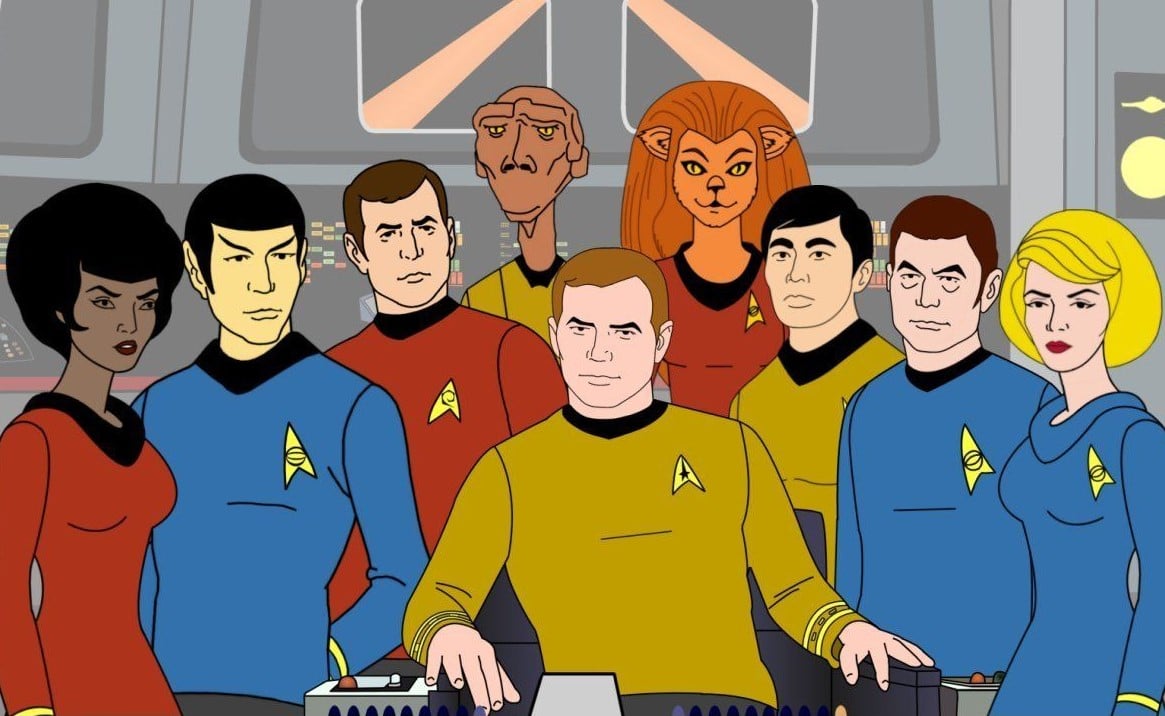
Following the cancellation of the original “Star Trek” in 1969, the only authorized “Trek” for ten years – prior to the release of “Star Trek: The Motion Picture” – was “Star Trek: The Animated Series” (1973-74).
The show, produced by Saturday morning powerhouse Filmation, succeeded in bringing “Star Trek” to a younger audience without talking down, employing a winning formula of intelligent concepts, imaginative scripts from respected writers, and “Star Trek” original cast members returning to voice their signature roles. Sure, the animation itself was kind of creaky (it was, after all, the ‘70s), but a number of the episodes aimed quite high, especially for a “kids’ show.”
Roy and I are very pleased to welcome back our friends and colleagues, Mike and Marybeth of SciFi Distilled, for a conversation about the series and some of our favorite episodes. M&M have been working their way through a number of the “Trek” series on Wednesday nights, so if you’re a fan, definitely check out their archived shows at the “SciFi Distilled” Facebook page.
For tonight, the discussion is destined to be animated. Your comments lend another dimension to our 2D palaver, on the next Roy’s Tie-Dye Sci-Fi Corner. The five-year mission becomes a reality, when we livestream on Facebook, this Sunday evening at 7:00 EST!