Category: Daily Dispatch

  • Ahmed Adnan Saygun Turkish Coffee Composer

    Ahmed Adnan Saygun Turkish Coffee Composer

    There is a Turkish proverb: “Coffee should be black as Hell, strong as death, and sweet as love.”

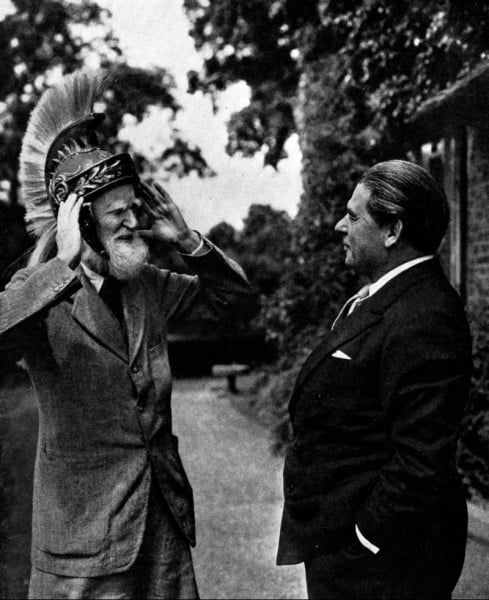
    The music of Ahmed Adnan Saygun is very good coffee indeed. Saygun (pictured, right) rode a wave of Turkish nationalism to become his country’s foremost composer in the Western classical tradition. Perhaps best remembered abroad as an associate of Béla Bartók (pictured, left), Saygun was a prominent ethnomusicologist, but also an important educator and cultural administrator.

    This Sunday night on “The Lost Chord,” savor an hour of his sometimes sweet, often astringent, always rewarding music, including a selection of “Etudes on Aksak Rhythms” (1964), his Suite for Violin and Piano (1956), and the Piano Concerto No. 1 (1951-57).

    The refreshments are guaranteed to be aromatic, bold, and rich, on “Turkish Toughie,” this Sunday night at 10:00 EDT, on WWFM – The Classical Network and wwfm.org.

  • Damnation Alley Cult Classic or Sci-Fi Flop?

    Damnation Alley Cult Classic or Sci-Fi Flop?

    I’m happy to report that after having had all of my matter rearranged by my second Covid shot on Wednesday, I have been feeling tip-top all weekend. So I will arise, phoenix-like, to assume the co-pilot’s chair for tonight’s rescheduled conversation about “Damnation Alley” (1977).

    20th Century Fox put all its chips on this post-apocalyptic sci-fi thriller, starring a mustachioed George Peppard (clearly a long way from “Breakfast at Tiffany’s,” but getting a lot closer to “The A-Team”) and bad boy Jan Michael Vincent (inordinately proud of his dirt bike skills).

    They’re joined by lifetime Actors Studio member Paul Winfield, and young Jackie Earle Haley, trading rocks for baseballs, right in the middle of his hot streak of “Bad News Bears” movies. Winfield and Haley were past and future Academy Award nominees (Winfield for “Sounder” in 1972, and Haley for “Little Children” in 2006). Bertolucci favorite Dominique Sanda lends some cosmopolitan “je ne sais quoi” to the “gonna say cray-cray.”

    Director Jack Smight delivered his cut of the film in time for a projected December 1976 release. Unfortunately, that’s when the serious meddling began. Thanks to studio intervention, corner-cutting, and some rather unfortunate decisions made in post-production, “Damnation Alley” did not open until October of 1977 – five months after Fox’s other, generally-dismissed, sci-fi kid’s picture, a little film called “Star Wars.” And we all know how that turned out. Over the years, “Damnation Alley” may have developed a cult following, but “Star Wars” changed the course of the entire industry. But what’s a little egg on your face, when you wind up sitting on a mountain of gold?

    I hope you’ll join us, in our all-terrain armored Landmaster, on the next Roy’s Tie-Dye Sci-Fi Corner. Giant scorpions and flesh-eating cockroaches can’t keep me away. From Vaccination Valley to “Damnation Alley,” we’ll be following your signal in the comments section, as we livestream on Facebook this Sunday evening at 7:00 EDT!

    https://www.facebook.com/roystiedyescificorner

  • Shaw on Screen Film Music from GBS

    Shaw on Screen Film Music from GBS

    Prior to his death in 1950, George Bernard Shaw was granted complete creative control over a number of film adaptations of his stage works. Of course, he was also an astute and entertaining music critic. This week on “Picture Perfect,” enjoy an hour of Shavian delights. We’ll hear selections from scores from the films of GBS.

    It was the ambition of Hungarian producer Gabriel Pascal to create a series of films inspired by Shaw’s plays, beginning with “Pygmalion” in 1938. Shaw was skeptical at first, on account of some inferior adaptations by other hands which had already appeared. However, when he was granted final approval, he agreed. This led to several big screen collaborations. After “Pygmalion” (scored by Arthur Honegger) came “Major Barbara” (1941).

    Wendy Hiller plays the Salvation Army major, who is appalled to take donations from those who have made their fortunes on war and whiskey, and Robert Morley her father, a munitions manufacturer. Rex Harrison is the scholar who tries to persuade her of the benefits of capitalism. (Harrison, of course, would go on to star in the musical version of Shaw’s “Pygmalion,” “My Fair Lady.”)

    William Walton wrote the score. Still a few years shy of his knighthood, he was already one of Britain’s most famous composers.

    “Caesar and Cleopatra” (1945) would be the final Pascal-Shaw collaboration. (Following Shaw’s death, Pascal would film “Androcles and the Lion” in 1953.) Claude Rains and Vivien Leigh were cast in the title roles. Rains made history as the first actor ever to receive a million-dollar salary. The lavish Technicolor production wound up being the most expensive British film ever made, up until that time, and unlike “Pygmalion” and “Major Barbara,” it was not a success.

    Pascal had actually wanted Sergei Prokofiev to write the music, but when that didn’t go anywhere, he offered the assignment to Walton. When Walton turned it down, Arthur Bliss was engaged. Bliss, like Walton, was destined to receive a knighthood. In 1953, he would also be appointed Master of the Queen’s Music.

    Bliss may have been good enough for the Royal Family, but Pascal was evidently not pleased with him from the start. He had been Shaw’s choice, and the playwright encouraged him to eschew any Egyptianisms in his music. Rather, Shaw wanted the score to sound as “Bliss-ful and British” as possible.

    In the end, Pascal’s surliness, in no doubt exacerbated by production setbacks, ran Bliss out. The job was then offered to Benjamin Britten, but Britten wisely declined, acknowledging that his own temperament was a great deal less mild than Bliss’.

    The final cut sports a score by Georges Auric. Both Bliss’ and Auric’s scores have been recorded, so we’ll get to sample from both.

    Finally, we’ll turn to Otto Preminger’s adaptation of “Saint Joan” (1957). Graham Greene worked on the screenplay, produced seven years after Shaw’s death. The film featured a seasoned cast, including Richard Widmark, Anton Walbrook, John Gielgud, Felix Aylmer, and Finlay Currie. However, Jean Seberg, an unknown actress, reportedly selected from a casting call of 18,000 applicants, was widely panned for her alleged inability to carry the film.

    The music was by Mischa Spoliansky, not exactly a household name. Spoliansky was born in Bialystok. He moved with his family to Vienna, then was displaced from Koenigsberg to Berlin during the First World War. With the rise of fascism in Germany, he settled in London in 1933. Some of his songs were written for Paul Robeson, and he provided the complete underscore for the Robeson version of “King Solomon’s Mines,” in 1937. Whatever the film’s perceived faults, the music Spoliansky composed for “Saint Joan” is beautiful and evocative.

    In the classical music world, we’re used to encountering Shaw’s assessments of Wagner and Brahms and Parry and Elgar. One wonders what he would have made of these scores composed for his films.

    Shaw observed, “Most people go to their grave with their music inside them.” Hear some that made it to the big screen this week, on “Picture Perfect,” music for the movies, this Saturday evening at 6:00 EDT, on WWFM – The Classical Network and wwfm.org.


    PHOTO: Shaw models centurion headgear for Pascal

  • Otto Klemperer A Life of Genius and Madness

    Otto Klemperer A Life of Genius and Madness

    You were an associate, friend and disciple of Gustav Mahler. You championed new works by Schoenberg, Stravinsky, and Hindemith. You stood 6-foot-6 and wore a look of granitic intensity. You tolerated no coughing or sneezing from your audience. You suffered from severe cyclothymic bipolar disorder. You answered the door to your dressing room in your boxers and covered in lipstick. You were horsewhipped at the Hamburg Opera for stealing a man’s wife (the soprano Elisabeth Schumann). You underwent surgery to remove a brain tumor “the size of a small orange.” You were placed in an institution, only to escape. You took a severe spill, requiring you to conduct from a chair. You set yourself on fire and tried to douse the flames with spirits of camphor. You sired the actor who became Colonel Klink. When you weren’t offered the music directorship of the New York Philharmonic, you fired off a scathing rebuke, then moved to London where a new orchestra (the Philharmonia) was founded for you. You embarked on a glorious Indian Summer that spanned 20 years. Somehow, incredibly, you made it to the age of 88. In all, you lived a life worthy of one of the 20th century’s great conductors.

    Happy birthday, Otto Klemperer!


    Klemperer in Philadelphia: I love how, as soon as this video gets taken down, somebody else just puts it right back up.

    Live Bruckner from 1947, quite at variance with recordings of the elder Klemperer:

    Klemp conducting Beethoven’s 7th at 85:

    Good Klemperer documentary

    https://www.youtube.com/watch?v=Mqz-qUiCgbQ

    “Klemperer the Immoralist”

  • Damnation Alley Postponed Due to Covid Shot

    Damnation Alley Postponed Due to Covid Shot

    When I signed up for “Damnation Alley” (1977), I was really hoping I wouldn’t be living it.

    The post-apocalyptic Jan Michael Vincent-George Peppard all-terrain armored adventure was to have been our topic tonight on Roy’s Tie-Dye Sci-Fi Corner. Unfortunately, I was hit with some pretty harsh side effects from my second Covid shot on Wednesday – resulting in perhaps the worst night of my life and a pretty lousy day yesterday. I’m doing better now (at least I can read and type), but since I’ve been up since 4 a.m., I think Roy and I are doing the right thing in hedging our bets and rescheduling our discussion for Sunday night.

    In the meantime, Roy will decide whether or not he plans to go solo this evening, with a possible open discussion with viewers. Follow the link later today to learn the latest developments:

    https://www.facebook.com/roystiedyescificorner/

    Both shows, tonight (if it happens) and Sunday, will begin at 7 pm EDT.


    PHOTO: A glimpse into my brain on Wednesday night

Tag Cloud

Aaron Copland (93) Beethoven (95) Composer (114) Film Music (136) Film Score (143) Film Scores (255) Halloween (94) John Williams (195) KWAX (229) Leonard Bernstein (103) Marlboro Music Festival (125) Movie Music (151) Mozart (88) Opera (208) Philadelphia Orchestra (89) Picture Perfect (174) Princeton Symphony Orchestra (108) Radio (88) Ross Amico (244) Roy's Tie-Dye Sci-Fi Corner (290) The Classical Network (101) The Lost Chord (268) Vaughan Williams (103) WPRB (396) WWFM (881)

DON’T MISS A BEAT

Receive a weekly digest every Sunday at noon by signing up here


RECENT POSTS