Category: Daily Dispatch

  • Vera’s Story Holocaust Remembrance Day

    Vera’s Story Holocaust Remembrance Day

    On this Yom HaShoah, hear the riveting, harrowing, and ultimately inspiring story of Vera Herman Goodkin, as told in her own words.

    Goodkin was just shy of her 9th birthday when the Nazis occupied her hometown of Uzhorod, Czechoslovakia. She spent the next four years in hiding and detention. Ultimately, she was rescued and taken to freedom under the protection of Swedish diplomat Raoul Wallenberg.

    A sweet, articulate, and upbeat personality, Goodkin continues to speak with young people about her experiences and to warn of the dangers of hatred and mistrust.

    “Vera’s Story: A Holocaust Remembrance” will be broadcast on WWFM – The Classical Network and wwfm.org today at 3 & 11 pm EDT.

    The award-winning program will also include music by composers who fled Europe or perished during the war, as well as works written in memory of the millions of victims of the Holocaust.

    Yom HaShoah, or Holocaust and Heroism Remembrance Day, also marks the beginning of the Warsaw Ghetto Uprising of 1943, when Jewish resistance fighters defied the Nazis and fought for freedom and dignity.

    You’ll find more information about “Vera’s Story” and a representative playlist – including works by Gideon Klein, Hans Krasa, Szymon Laks, Franz Waxman, and Eric Zeisl – here:

    https://www.wwfm.org/post/veras-story-holocaust-remembrance#stream/0

  • Radio in Movies Fact vs Fiction

    Radio in Movies Fact vs Fiction

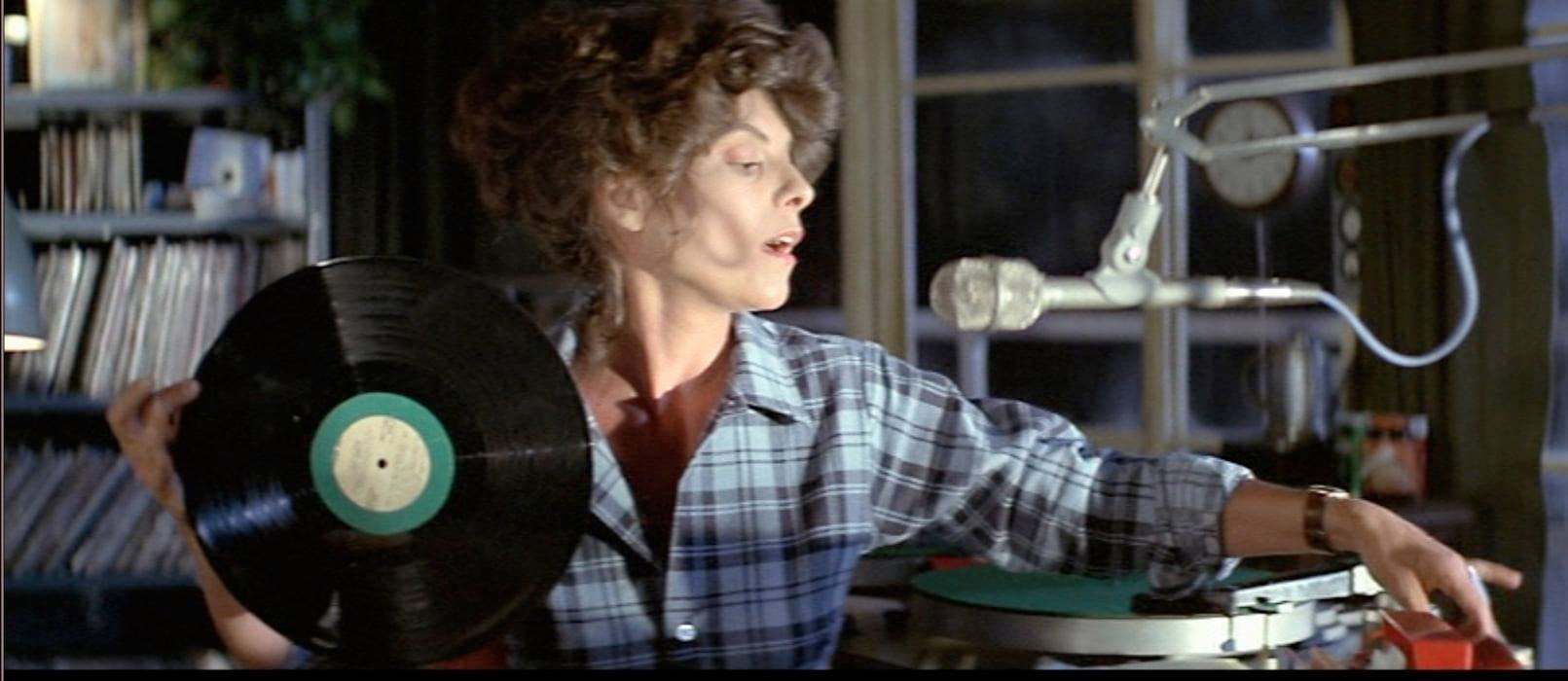
    Movies and television shows that feature radio stations are usually fairly inaccurate, romanticized affairs. They’re places to zoo out or pontificate, to stick it to the Man, or to just show up or leave whenever you feel like it. Or you can put on a record that’s just been handed to you and, voila, a star is born! At least half the time, nobody wears headphones. Certainly no one knows the proper way to cue up a record. I’m sure lawyers must experience the same thing all the time, whenever they encounter courtroom scenes.

    “Play Misty for Me,” “WKRP in Cincinnati,” “Northern Exposure,” “Grosse Point Blank,” “Good Morning, Vietnam,” “Frasier,” “American Graffiti,” “The King of Marvin Gardens.” I want to work at a movie radio station.

    At least I’ve been fortunate to be able to play anything I want for most of my career.

    From time to time, Adrienne Barbeau’s lighthouse radio station from John Carpenter’s “The Fog” still pops into my head. In my memory, she’s blasting Brandenburg Concertos in her jeep on a beautiful morning on her way to work. Surely, I’m misremembering.

    Barbeau getting ready to sign on:

    http://www.youtube.com/watch?v=I0hI-sipxSk&t=1m0s

    Barbeau in the middle of the night:

    https://www.youtube.com/watch?v=nOZwnivtLbc

    That’s the other thing about movies – the DJs are always there, at all hours. Except when they’re not.

    I never had Richard Dreyfuss walk in on me, but it’s nice to see a cart machine again.

    Hey, Wolfman! You’re not supposed to eat in the studio!

  • Stravinsky 50 Years On A Requiem Remembered

    Stravinsky 50 Years On A Requiem Remembered

    Igor Stravinsky died in New York City 50 years ago today.

    As per his wishes, he was buried in the Russian corner of the cemetery island of San Michele in Venice, transported there by gondola, following a service at the Basilica di Santi Giovanni e Paolo.

    His late, serial masterwork, “Requiem Canticles,” was performed at his funeral. Stravinsky described the 15-minute, six-movement piece, which is sung in Latin, as his “pocket requiem.” It was given its debut at Princeton’s McCarter Theatre in 1966, with the composer conducting.

    The event left a lasting impression. If you’re interested in some first-hand accounts, you can learn more in this article I wrote in 2016, to mark the work’s 50th anniversary, for the Trenton Times.

    https://www.nj.com/times-entertainment/2016/12/classical_music_puo_pugc_so_pe.html?fbclid=IwAR10cMEcv0Uaz4sYSGv-yX2-Xrr7tXOWpumyXcazdrnrigHpgl8rrXpquKg

    Robert Craft’s recording of “Requiem Canticles”:

    Leonard Bernstein conducts a Stravinsky memorial concert, including “The Rite of Spring,” “Capriccio for Piano and Orchestra,” and “Symphony of Psalms,” in April of 1972.


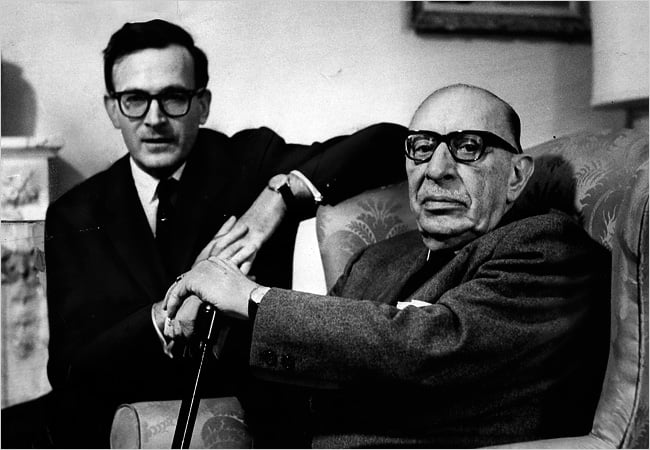
    Gone but not forgotten: Stravinsky and his assistant, Robert Craft, in 1964

  • Yardumian Ormandy Philly Rediscovered

    Yardumian Ormandy Philly Rediscovered

    Every year on Richard Yardumian’s birthday, I reflect on my days in community radio. I remember well playing his music from vinyl during my apprentice years, and I wonder at how those recordings – by the Philadelphia Orchestra, no less – have somehow dropped off the face of the planet.

    Yardumian served as the orchestra’s composer-in-residence from 1949 to 1964. During that period, Philly gave first performances of no less than ten of his works, beginning with “Desolate City” in 1945. Eugene Ormandy recorded six of them. The music is attractive, well-crafted, and often deeply felt, with insights into the composer’s spiritual convictions and Armenian heritage.

    Okay, maybe there was no financial incentive for Sony to reissue recordings of a dimly-recollected “niche” composer, when Ormandy’s “Scheherazade” continues to rake it in no matter how many times it is re-released. Then why not license the Yardumian recordings to another label?

    In the 1990s, Albany Records briefly revived some of Ormandy’s lesser-known American classics – among them, works by the equally neglected Louis Gesensway and John Vincent – so my hopes were high that I would finally be able to acquire Yardumian on CD. Alas, the series petered out after only three volumes.

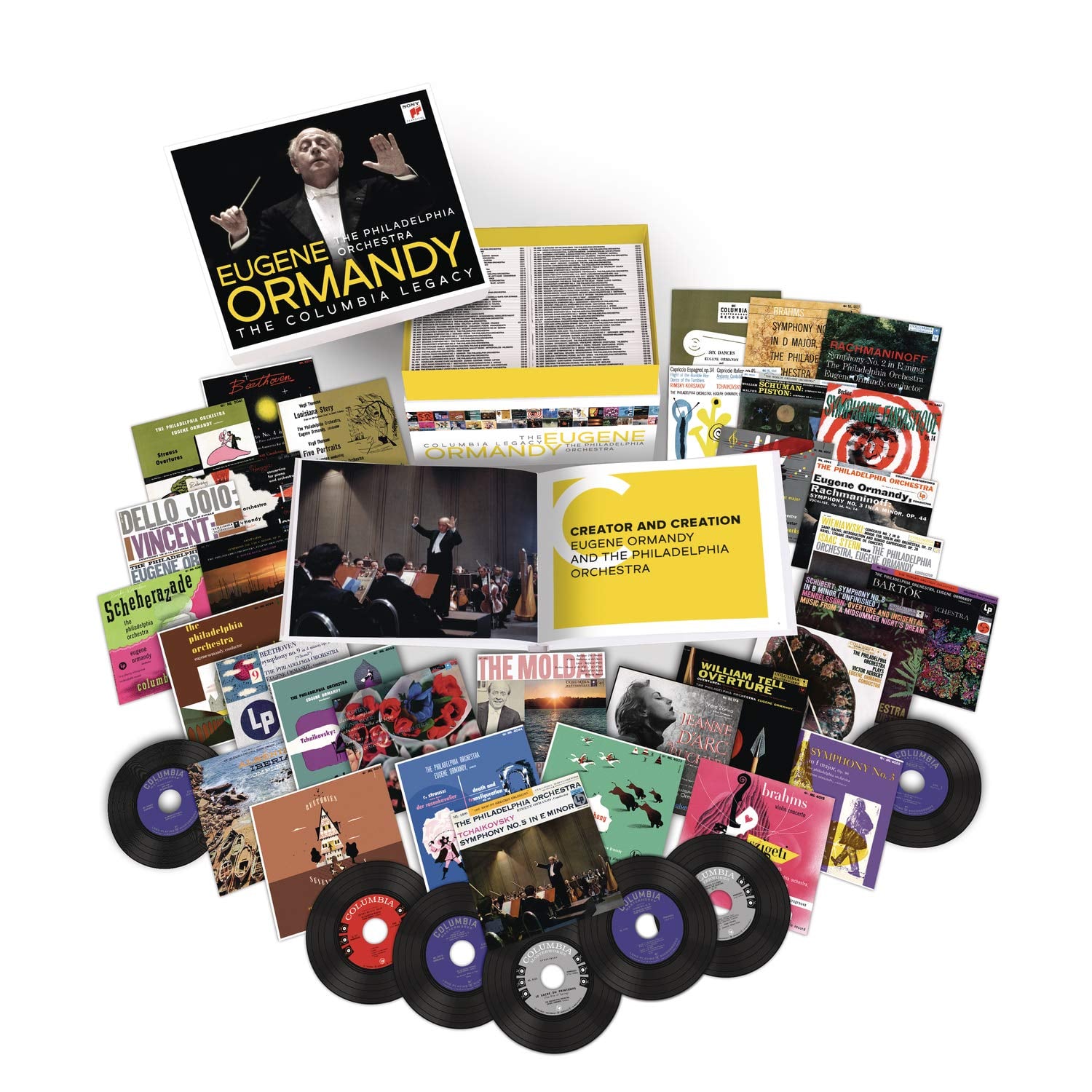
    Well, after nearly 35 years in radio, it appears my thinly-worn patience is finally about to be rewarded, as I only just learned of an impending box set on Sony Classical (the modern incarnation of Columbia Records) that is to comprise the orchestra’s complete mono recordings made under Ormandy from 1944 to 1958.

    This will include all the staples, of course – Tchaikovsky, Rimsky-Korsakov, Rachmaninoff, and Sibelius – but also much American music, including everything on the Albany series, but also recordings of Norman Dello Joio, Roy Harris, Leon Kirchner, William Schuman, and another composer closely associated with the orchestra, Harl McDonald. None of these have ever before been officially reissued.

    Interestingly, Virgil Thomson’s “Five Blake Songs” is also listed, which would suggest the set will include even the long-suppressed “The Little Black Boy.”

    In all, 152 of the recordings are said never to have appeared on compact disc. Philadelphia was responsible for some of the works’ first U.S. performances. Some of them were world premieres. There are simply too many highlights and curios to itemize. The list of vocal and instrumental soloists is also self-recommending.

    On the one hand, it makes me happy to know I will finally be able to access so many of these recordings easily in pristine copies. On the other, I realize that the value of my LP collection continues to plummet.

    The set, EUGENE ORMANDY/THE PHILADELPHIA ORCHESTRA: THE COLUMBIA LEGACY, runs to 120 CDs and will be issued on April 9!

    You can find the press release, with more information, here:

    https://www.jensenartists.com/single-post/sony-classical-releases-eugene-ormandy-and-the-philadelphia-orchestra-the-columbia-legacy
  • Howard Ferguson’s Easter Dream of the Rood

    Howard Ferguson’s Easter Dream of the Rood

    This Sunday night on “The Lost Chord,” it’s a Howard Ferguson Easter.

    Born in Belfast in 1908, Ferguson had ambitions to become a composer. To this end, he traveled to London, where he studied at the Royal College of Music with, among others, Ralph Vaughan Williams. He also met and befriended fellow student Gerald Finzi. He achieved early success with works like the Octet of 1933, and no less a personage than Jascha Heifetz recorded his Violin Sonata No. 1.

    Even so, over the decades his music has slipped from consciousness, no doubt helped by the fact that, by mid-life, he felt he had already said everything he had to say as a composer. He devoted his last four decades to musicological pursuits, editing and promoting works of Purcell, Schubert and Finzi. In the 1990s, he also wrote a cookbook, “Cooking Solo.” Ferguson died in 1999, not long after his 91st birthday.

    Thankfully, he lived long enough to hear some fine recordings as part of a modest revival of his music in the 1980s and ‘90s. A number of his chamber works were released on the Hyperion label by fine musicians like Thea King and members of the Nash Ensemble; his Piano Concerto was recorded for EMI by Howard Shelley; and Richard Hickox conducted a disc of his orchestral works for Chandos.

    Also on the latter album is what turned out to be Ferguson’s last completed work, “The Dream of the Rood,” for chorus and orchestra, composed in 1958. After that, the composer embarked on a string quartet, but became frustrated by the lack of a fresh perspective and tore the thing up.

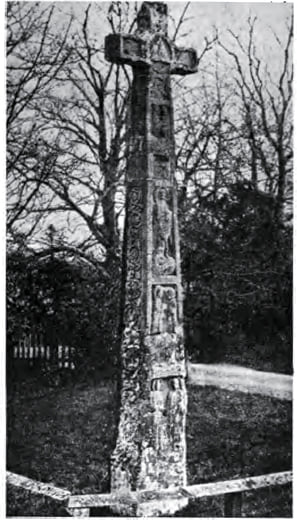
    “The Dream of the Rood” is based on an 8th century Anglo-Saxon poem that marries the Passion story with characteristics of the secular heroic tradition. The poem is framed by a narrator’s vision of a magnificent bejeweled tree. Upon closer inspection, however, he finds its jewels bespattered with blood. It becomes apparent that this tree was the very same upon which Christ was crucified.

    The middle portion of the poem is told from the tree’s perspective, with the tree being cut down and carried away for the purpose of the Crucifixion. The nails pierce the tree, yet man and tree endure, refusing to fall, bearing unimaginable pain for the sake of mankind. Just as Christ is resurrected, so is the Cross resurrected, now adorned with gold and silver. It is honored above all trees, just as Christ is honored above all men. The narrator gives praise to God, filled with hope at the prospect of eternal life and a desire to be nearer the glorious Cross.

    I hope you’ll join me for music of Howard Ferguson on “Rood Awakening,” this Sunday night at 10:00 EDT, on WWFM – The Classical Network and wwfm.org.


    PHOTO: Portions of the poem are engraved on the 8th century Ruthwell Cross (left, as it appeared between 1823 and 1887; and right, at its current location at Ruthwell Church, Dumfriesshire, Scotland)

Tag Cloud

Aaron Copland (93) Beethoven (95) Composer (114) Film Music (136) Film Score (143) Film Scores (255) Halloween (94) John Williams (195) KWAX (229) Leonard Bernstein (103) Marlboro Music Festival (125) Movie Music (151) Mozart (88) Opera (208) Philadelphia Orchestra (89) Picture Perfect (174) Princeton Symphony Orchestra (108) Radio (88) Ross Amico (244) Roy's Tie-Dye Sci-Fi Corner (290) The Classical Network (101) The Lost Chord (268) Vaughan Williams (103) WPRB (396) WWFM (881)

DON’T MISS A BEAT

Receive a weekly digest every Sunday at noon by signing up here


RECENT POSTS