Category: Daily Dispatch

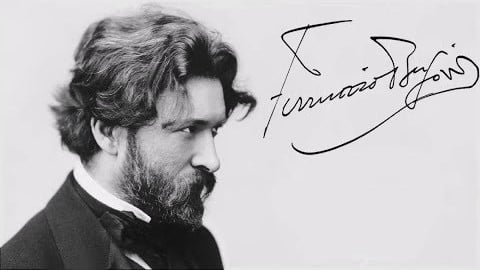
  • Busoni’s Grandiose Piano Concerto

    Busoni’s Grandiose Piano Concerto

    The most grandiose piano concerto of all time?

    With a name like Ferruccio Dante Michelangelo Benvenuto Busoni, I imagine a pianist would do anything to live up to his potential. Ferruccio Busoni’s aspirational Piano Concerto swings for the fences, with an epic, 70-minute running time, large orchestration, demanding solo part, and men’s chorus in the finale.

    The text, from Adam Oehlenschläger’s verse-drama “Aladdin,” begins:

    “Deep and quiet, the pillars of rock begin to sound:
    Lift up your hearts to the power eternal,
    Feel Allah’s presence, behold all his works!”

    In the score, Busoni instructs that the chorus should be invisible. Somehow, this was mistranslated, so that there’s still a widespread misunderstanding that he actually wanted the singers to perform nude. Although whether it’s ever been presented that way is anyone’s guess.

    Oddly, the concerto isn’t designed as a showcase for a fire-eating virtuoso. Beyond it being something of an endurance test for the soloist, there aren’t really any flashy cadenzas or too many opportunities to hot dog. The work is more like a gargantuan piano fever dream.

    I particularly like the movement “All’Italiana,” evocative of Italian folk music and popular song. It always makes me think of Chico Marx.

    To give you a sense of perspective, Rachmaninoff’s ever-popular Piano Concerto No. 2, at less than half the length, was first performed three years earlier, in 1901. The work would later be used on the soundtrack to “Brief Encounter.” There is nothing brief about Busoni’s concerto.

    The pianist here is Marc-André Hamelin, who used to come into my bookshop looking for arcane sheet music, back in the day. Just a few years before this video, as a matter of fact. About a decade later, I saw him perform Busoni’s concerto at Carnegie Hall.

    https://www.youtube.com/watch?v=ohPzurDZzZ4

    Eileen Joyce plays Rachmaninoff’s Piano Concerto No. 2 in “Brief Encounter,” with Celia Johnson and a young Trevor Howard:

    Happy birthday, Busoni and Rachmaninoff!

  • Rachmaninoff Busoni April Fools’ Birthday

    Rachmaninoff Busoni April Fools’ Birthday

    Depending on where you look, Igor Stravinsky described Sergei Rachmaninoff as either “six-foot-two of Russian gloom” or “a six-and-a-half-foot scowl.” Perhaps both. It’s true, you won’t find very many photos of Rachmaninoff smiling. But just to prove that he was not entirely without a sense of humor, I share with you the following anecdote:

    Rachmaninoff was a favorite recital partner of violinist Fritz Kreisler. Once, in the middle of a concert in New York, Kreisler suffered a memory lapse. As he noodled heroically on his violin, trying to appear nonchalant while attempting to grope his way back, he subtly inched closer to his pianist.

    “Where are we?” he whispered.

    Rachmaninoff replied, “Carnegie Hall.”

    On this April Fool’s Day – which also happens to be Rachmaninoff’s birthday – the two friends are reunited, in spirit, in Rachmaninoff’s transcription of Kreisler’s “Liebesfreud,” or “Love’s Joy.”

    Today is also the anniversary of the birth of another of the great pianist-composers, Ferruccio Dante Michelangelo Benvenuto Busoni. With a name like that, clearly his parents had great expectations!

    While Ferruccio Busoni could bust his knuckles with the best of them, and weave a web of counterpoint so dense it would have made Max Reger sweat, here’s something a little lighter, in keeping with the spirit of April Fool’s – the “Lustspielouverture,” or “Comedy Overture.”

    Also, a fantasy on themes from Mozart’s elevated farce, “The Marriage of Figaro.”

    Happy birthday to the Rach (born 1873) and Ferruccio (born 1866) – making fools of aspiring pianists for the better part of 150 years.


    PHOTO: Sergei Rachmaninoff, grim reaper

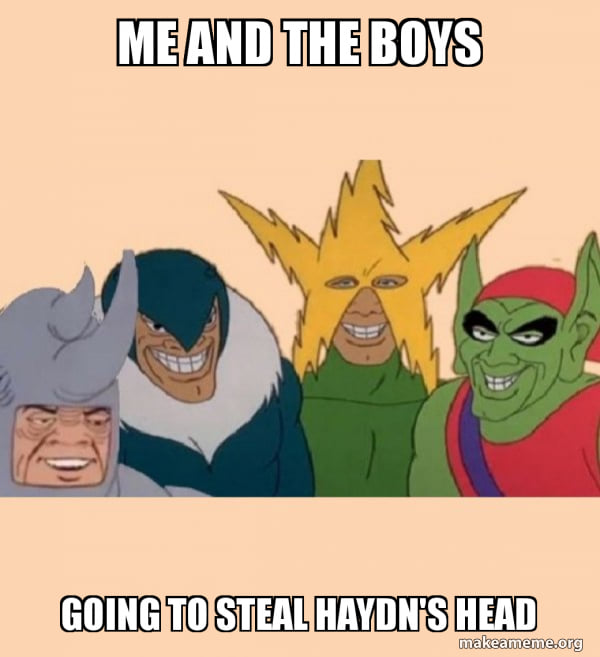
  • Haydn’s Missing Head A Bizarre Skull Story

    Haydn’s Missing Head A Bizarre Skull Story

    It may be Haydn’s birthday, but one of my favorite stories about the composer actually involves his remains. Marvel at the weird tale of Haydn’s skull and how it was kept separate from his body for 145 years – and about how the Father of the Symphony currently rests with two heads.

    https://en.wikipedia.org/wiki/Haydn%27s_head

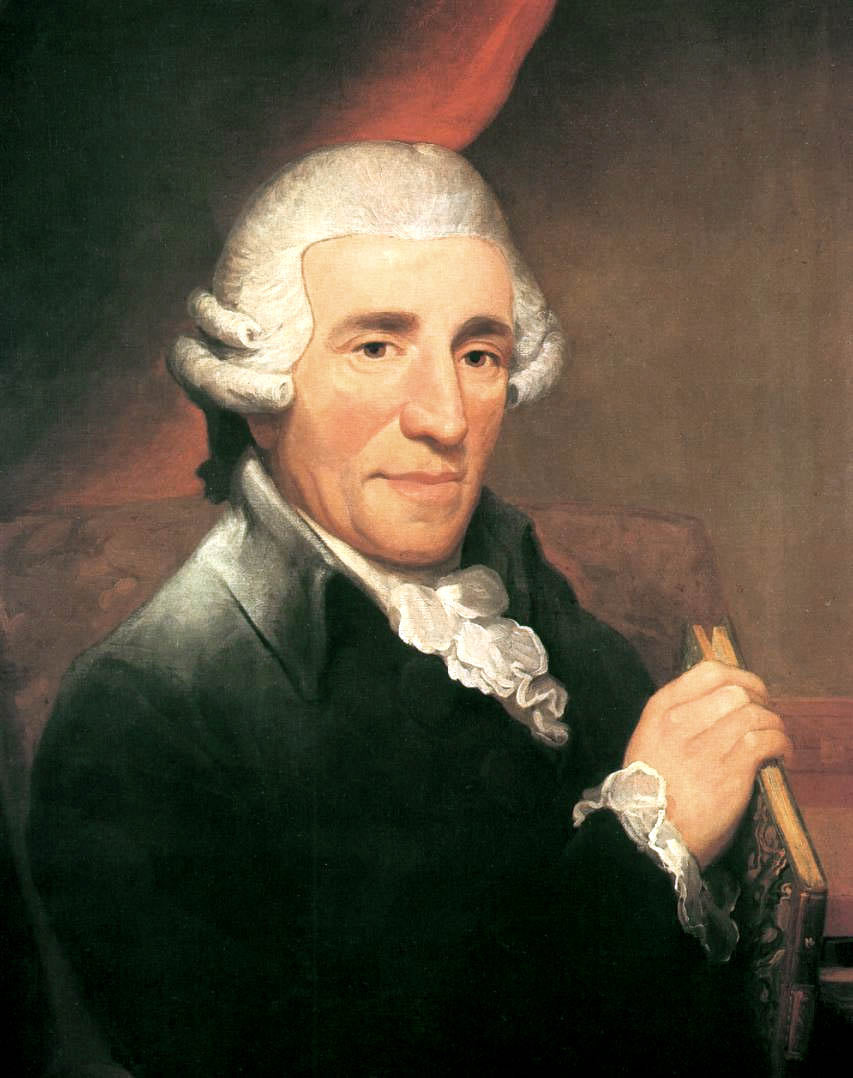
  • Haydn’s Birthday & Holy Week Music

    Haydn’s Birthday & Holy Week Music

    In the name of all that’s holy, it’s Haydn’s birthday!

    Franz Joseph Haydn, father of the modern symphony, progenitor of the modern string quartet. It’s only just that the possessor of such fecund creativity would be dubbed “Papa.”

    On top of all the secular symphonies, concertos, string quartets, operas, and instrumental works, Papa Haydn composed an impressive body of sacred music.

    An obvious choice for Holy Week would be “The Seven Last Words of Christ on the Cross,” an hour-long meditation, culminating in a certainly-taking-its-time-getting-here earthquake. I admit to finding the piece a bit of a slog. Composed in 1786 for a Good Friday service at Cádiz Cathedral in Spain, the work exists in several forms, but is most frequently heard in a version for string quartet. The quartet version was adapted by Haydn in 1787. He also turned it into an oratorio in 1796. Occasionally, you will even encounter it in an authorized piano version. But for me, I need the colors of an orchestra to make it through the piece, which is like being trapped in the world’s longest church service as a kid.

    Here’s the full work, with chorus and orchestra.

    Also appropriately somber, but thankfully a little more varied, is his “Stabat Mater” from 1767.

    More easily digestible are the symphonies, of which Haydn composed 104 (that were numbered). Three are associated with Holy Week.

    Symphony No. 26 “Lamentation” (1768-9)

    Symphony No. 49 “La Passione” (1790)

    Symphony No. 30 “Alleluia” (1765). This one employs in its first movement a Gregorian plainchant melody. Technically, I suppose, you shouldn’t be listening to the “Alleluia” until Easter, but your secret is safe with me.

    I don’t care what day it is, I think I’m going to be listening to as many of the symphonies as I can today.

    Happy birthday, Haydn!

  • Like Microplastics, Wagner Is Everywhere

    Like Microplastics, Wagner Is Everywhere

    Every year during Holy Week, I try to listen to Wagner’s “Parsifal” – whether I need it or not. This year, I am especially interested to do so, since I have been reading Alex Ross’ recent book, “Wagnerism.”

    Ross, music critic at The New Yorker for the past quarter century, makes a convincing case that Richard Wagner was the single most influential artist, not only in music, but in all spheres of life, of perhaps the last 180 years.

    A mite hyperbolic? I thought so too, but as chapter is laid out upon chapter, over the course this 700-page tome, one soon comes to realize – from Tannhäuser’s Venusberg to Lohengrin’s swan-boat, from Alberich’s Ring to Amfortas’ wound – that in fact, he’s absolutely right!

    And not simply because of Wagner’s prominent, recurrent archetypes, but also because of his underlying ideas, and how they’re processed and presented in his overwhelming music dramas.

    Literature, poetry, visual art, architecture, design, theater, dance, movies, politics, economics, religion, philosophy, nationalism, prejudice, psychology, technology, and sexuality – for better or worse, there is almost no one who has not been influenced in some way or other by Wagner. Not only in the West, but in the entire industrialized world.

    This applies even to those who have never heard of Wagner, or even a note of his music. It would seem that one embraces, rejects, or grapples with Wagner, or affects indifference or lives in ignorance, but sooner or later, even the most skeptical will be steamrolled by someone or something driven by his ideas. Seriously, once you take in the evidence, your head will explode.

    To be honest, I found Ross’ approach to be a little lightweight at first, the kind of book that would impress readers who don’t really know that much about a subject. The writing is not particularly stylish. Most of the supporting evidence is not dwelt upon for more than a few pages. Some examples are little more than namedropped. That’s not to say it’s not well-written and that there aren’t plenty of insights along the way.

    But it soon becomes apparent that Ross has a longer, larger aim, and that he knows exactly what he’s doing. The sheer scope of the narrative serves to illustrate the inescapable accumulation of Wagnerian influence on the development of human society.

    I hasten to add, this is not an academic exercise. It is not at all dry or abstruse. The book is geared toward a popular audience, not the ivory tower. Furthermore, it can be ridiculously entertaining.

    From the Department of You Can’t Please Everyone comes this delicious assessment of “Parsifal,” by the Futurist firebrand Filippo Tommaso Marinetti. Without going too much into the history behind it, Marinetti was fed up with the “Parsifal” craze that swept Europe in 1914. Previously, the opera had been permitted only to be performed at Wagner’s own specially-outfitted Festspielhaus in Bayreuth, where it had been staged since 1882. The monopoly was lifted on January 1st. In the next six months, “Parsifal” was performed in no fewer than 50 European opera houses.

    Marinetti responded with a two-page screed, titled “A bas le Tango et Parsifal!” (“Down with the Tango and Parsifal!”), from which this is but an excerpt:

    “If the tango is bad enough, ‘Parsifal’ is even worse, as it inoculates the dancers, swaying to and fro, bored and listless, with an incurable musical neurasthenia. How can we avoid ‘Parsifal,” with its downpours, its puddles, and its floods of musical tears? ‘Parsifal’ is a systematic devaluation of life! A factory cooperative of sadness and despair. Tuneless stretching and straining for weak stomachs. Poor digestion and heavy breathing for forty-year-old virgins. Whining of flabby and constipated old priests. Wholesaling and retailing of bad consciences and a stylish effeminacy for snobs. Blood deficiency, feebleness of the loins, hysteria, anemia, and greensickness. Prostration, brutalization, and violation of Mankind. Ridiculous scraping of failed, mutilated notes. Snoring of drunken organs sprawling in the vomit of foul-tasting leitmotifs. False tears and pearls flaunted by a Mary Magdalene with a plunging neckline more suited to Maxim’s. Polyphonic pus from Amfortas’ festering scabs. Worn-out wailings of the Knights of the Holy Grail. Nonsensical Satanism of Kundry… Antediluvianism! Antediluvianism! Enough of it!”

    Ouch!

    Yeah, that about sums it up. I can’t wait to listen to it again.
Tag Cloud

Aaron Copland (93) Beethoven (95) Composer (114) Film Music (136) Film Score (143) Film Scores (255) Halloween (94) John Williams (195) KWAX (229) Leonard Bernstein (103) Marlboro Music Festival (125) Movie Music (151) Mozart (88) Opera (208) Philadelphia Orchestra (89) Picture Perfect (174) Princeton Symphony Orchestra (108) Radio (88) Ross Amico (244) Roy's Tie-Dye Sci-Fi Corner (290) The Classical Network (101) The Lost Chord (268) Vaughan Williams (103) WPRB (396) WWFM (881)

DON’T MISS A BEAT

Receive a weekly digest every Sunday at noon by signing up here


RECENT POSTS