A world in which scientists are discounted, yet turn out to be the salvation of humankind… in which fear is no substitute for reason… in which the threat of aggression by any group will not be tolerated… in which the only freedom lost by the enforcement of responsible behavior is the freedom to act irresponsibly… this has got to be science fiction, right?
On the eve of Election Day, enjoy last night’s discussion about “The Day the Earth Stood Still.”
Roy and I will be back with a salute to Sean Connery (if there’s still an infrastructure), on the next Roy’s Tie-Dye Sci-Fi Corner, live-streamed on Facebook, this Friday night at 7:00 EST.
Apparently it’s a thing that some people wake on the first day of every month and, before they have even had a cup of coffee, exclaim, “Rabbit rabbit!” This, I am told, is for luck. It is a practice I somehow have never encountered, which is surprising, since surely it is the sort of quaint tradition a lover of twee, old-fashioned books would have run across well before midlife.
Be that as it may, every November 2, it is my practice to wake and the first thing I cry is “Carl Ditters von Dittersdorf!” Not for luck, mind you, but simply because it’s a name that makes me happy. Then, I’ve always had a little bit of Schroeder in me.
Dittersdorf (1739-1799) was one of the closest friends of Franz Joseph Haydn. He played first violin in a superstar string quartet, with Haydn (second violin), Mozart (viola) and Dittersdorf pupil Jan Křtitel Vaňhal – a.k.a. Johann Baptist Wanhal – (cello). Imagine being a fly on a wall at those performances, or even rehearsals! Though wet blanket Michael Kelly, the Irish tenor who created Don Basilio and Don Curzio for Mozart’s “The Marriage of Figaro,” claimed the ensemble played well enough, but was not really anything exceptional. Mee-yow!
Among Dittersdorf’s enormous output, which includes some 120 numbered symphonies (it’s possible he may have composed 90 more) are twelve programmatic works inspired by Ovid’s “Metamorphoses.”
Personally, I find more enjoyment in his chamber music. Here is his String Quartet No. 3 in G major.
But perhaps you’d prefer his Harp Concerto, once his most-frequently encountered work (which admittedly isn’t saying much).
Happy birthday, Carl Ditters von Dittersdorf! Try it. His very name gives me a sense of the kind of cheer his music embodies.
Being such a huge Sibelius fan, I remember being positively charmed on my discovery of the music of Douglas Lilburn. Lilburn is probably New Zealand’s most celebrated composer.
Lilburn studied journalism and music at Canterbury University College (then part of the University of New Zealand), before embarking for London’s Royal College of Music. There he was tutored by Ralph Vaughan Williams. The two remained good friends, with Lilburn sending his former teacher gifts of New Zealand honey.
Lilburn made his mark at home not only as a composer, but also as a conductor and a noted teacher. For decades, beginning in 1947, he was associated with Victoria University in Wellington.
Astonishingly, for one whose own music was so rooted in tradition, Lilburn founded the first electronic music studio in Australasia. This followed visits to electronic facilities at Darmstadt and the University of Toronto.
Actually, his comparatively thorny Third Symphony signaled something of a turning point. Soon after its completion, in 1961, he shifted his attention exclusively to electronics, a field in which he spent the remainder of his career. Many of his works in the medium evoke the New Zealand landscape and the natural sounds he loved so well.
Lilburn died in 2001. He was 85 years old. He has been described as the “elder statesman” and “grandfather” of New Zealand music.
Happy birthday to this Sibelius of the Southern Cross!
Liliburn’s “A Song of Islands” (1946):
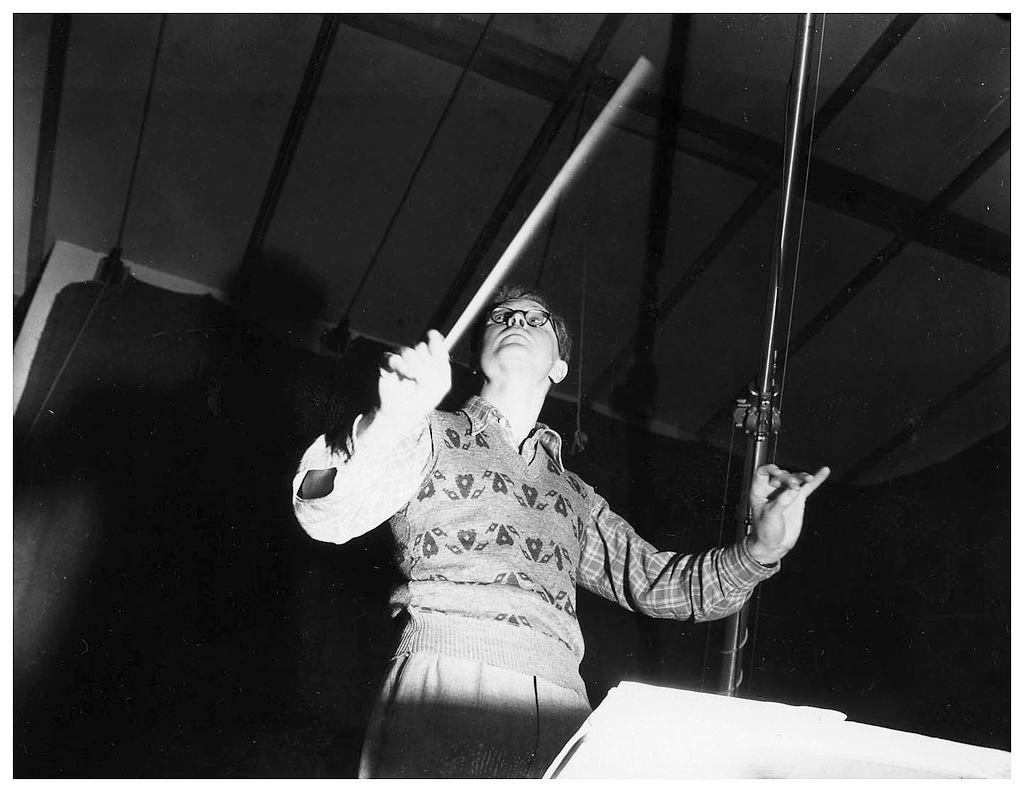
The composer in the electronic music studio he founded:
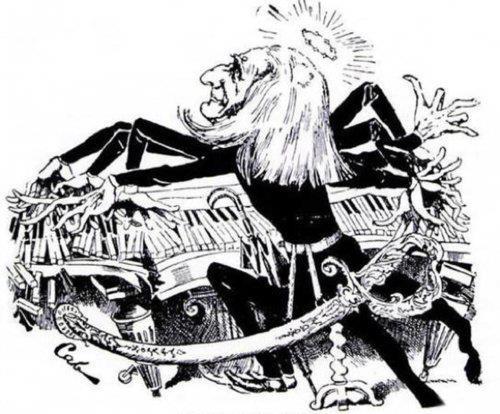
While the adjective “diabolical” could be applied to Franz Liszt, both in terms of his prowess as a pianist and as a ladies’ man, its application is justified, really, by only two aspects of his outsized personality.
Liszt was an especially complex individual, marked by much nobility of character. He was a generous human being, a humanitarian, and an all-around nice guy. He was also quite devout. It was his intention to marry his long-time companion, the Princess Carolyne zu Sayn-Wittgenstein, on his 50th birthday, but his hopes were dashed, after the Church refused to grant her an annulment (she had been estranged from her husband long before she met the handsome touring virtuoso). He reacted by taking minor orders and living in a monastic cell in Rome, where he became known as the Abbé Liszt. (He had also recently lost two of his three children born to him by Marie d’Agoult.)
Liszt’s religiosity was not something he wore lightly. From an early age, he felt certain he would be a musician or a priest. In the end, he became both.
This Sunday night on “The Lost Chord,” we’ll sample from two of at least seven of Liszt’s works inspired by his fascination with the saints – “The Legend of St. Elisabeth” and “St. Stanislaus.” St. Elisabeth was the Hungarian princess much concerned with the welfare of the poor, and St. Stanislaus the patron saint of Poland. These are the subjects of Liszt’s first and last oratorios.
I hope you’ll join me, on All Saints’ Day, for “Liszt of Saints,” this Sunday night at 10:00 EST, on WWFM – The Classical Network and wwfm.org.
THANK YOU to everyone who contributed to WWFM’s fall membership campaign. It’s because of listeners like you that The Classical Network is able to bring you homegrown specialty shows like “The Lost Chord.” If you haven’t had a chance to contribute and have been meaning to do so, you can still make your donation online at wwfm.org. You don’t have to be a saint to make a difference. Thanks again for your support of classical music on WWFM!
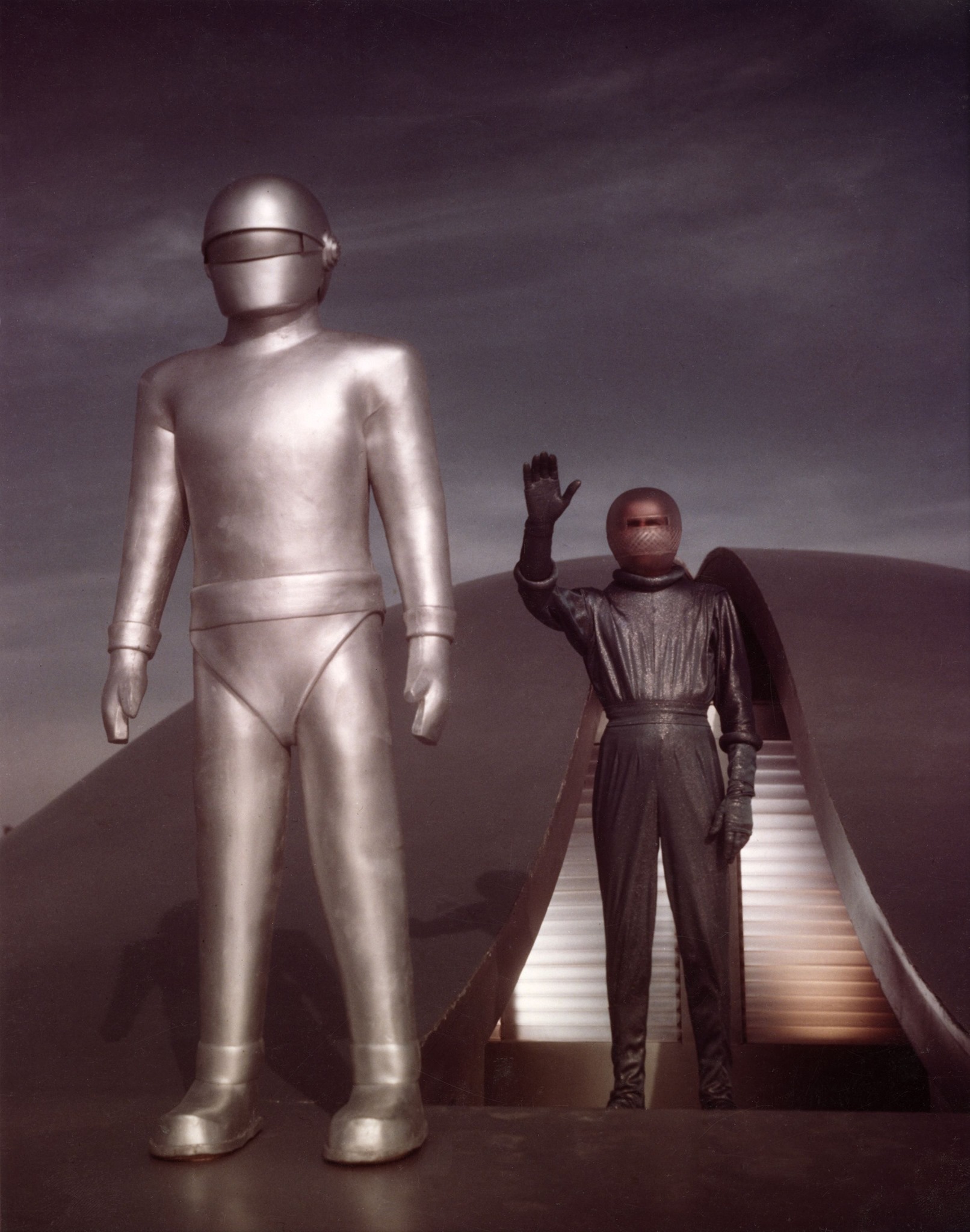
Klaatu, the friendly alien of “The Day the Earth Stood Still” (1951), may come in peace, but his is a message delivered with tough love: if humankind refuses to transcend its aggressive impulses and cooperate, the Earth will be eliminated.
Think of it as kind of a sanity-or-else Election Week special.
Roy Bjellquist and I will discuss this Washington D.C.-based, sci-fi milestone – with an outstanding score by Bernard Herrmann – on the next Roy’s Tie-Dye Sci-Fi Corner. As always, we’ll also be watching for your comments and insights during the Facebook livestream, this Sunday night at 7:00 EST.