Category: Daily Dispatch

  • Remembering Pianist Eric Parkin

    Remembering Pianist Eric Parkin

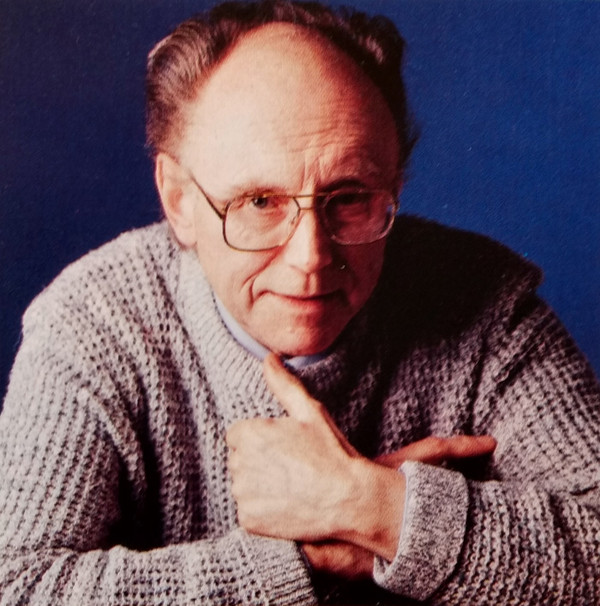
    So sorry to learn of the death of Eric Parkin, one of Chandos Records’ stable of pianists. As such, Parkin recorded much English music. In particular, I have him to thank for introducing me to Billy Mayerl, sometimes described as the English Gershwin. What fun, joyous music his is!

    Parkin also did much to champion the works of Sir Arnold Bax, John Ireland, and E.J. Moeran, alongside those of many others in even greater need of championing.

    I can’t believe he was 96 years-old at the time of his death. I guess many of the recordings I’ve been listening to all these years were made 30-35 years ago. His performances have given me countless hours of pleasure.

    R.I.P., Eric Parkin, and thank you for making my world a brighter place!

    Perhaps appropriate for the Halloween season, Eric Parkin performs Billy Mayerl’s transcription of Guy Desslyn’s “The Pompous Gremlin”:

    Personally, I prefer Mayerl’s “Bats in the Belfry,” but I can’t find Parkin’s recording online.

    Parkin performed John Ireland’s Piano Concerto on several of his numerous appearances at the BBC Proms. The second movement is especially beautiful. Or at least I find it so. And the last movement is suitably jaunty.

    Interestingly, the third movement seems to recall Ravel’s Concerto in G, written at approximately the same time, though Ravel’s concerto didn’t appear until after Ireland’s had already been published. Ireland did meet Ravel once in Paris. Could he have seen the score?

    The work was dedicated to Helen Perkin (one letter off from Parkin!), a pianist Ireland happened to be sweet on. Unfortunately, the attraction was not reciprocated. But no one can fault Ireland for not trying. The slow movement of his concerto contains an allusion to Perkin’s own “Phantasy String Quartet,” though she described it as “more a reminiscence than an exact quotation.”

    Earlier, Ireland had been in attendance as Perkin played Prokofiev’s Third Piano Concerto. So in that case, yes, he was definitely “borrowing.” You can hear the influence especially at the very end of his piece.

    But all of this is getting very far away from Eric Parkin. I hope you will enjoy his recording of Ireland’s concerto.
  • Elsa Lanchester Bride of Frankenstein Birthday

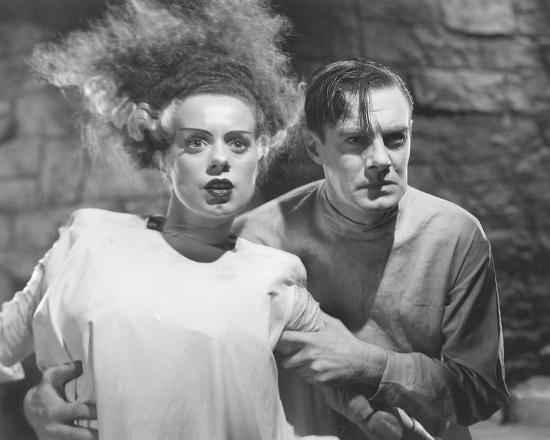
    Elsa Lanchester Bride of Frankenstein Birthday

    Happy birthday, Elsa Lanchester!

    Just watched this classic flick again the other night. One of the greatest sequels ever made, the “Godfather Part II” of Frankenstein films.

    How I love the creation sequence from Franz Waxman’s brilliant score:

  • Bach’s Toccata Cinematic Anthem of Psychopathy

    Bach’s Toccata Cinematic Anthem of Psychopathy

    If we’re to go by “Dr. Jekyll and Mr. Hyde” (1931), “The Black Cat” (1934), “The Raven” (1935), “Sunset Boulevard” (1950), “20,000 Leagues Under the Sea” (1954), “The Great Race” (1965), “Rollerball” (1975), and “The Phantom of the Opera” (1962, and not infrequently 1925), Johann Sebastian Bach’s Toccata and Fugue in D minor is the depraved anthem of cinematic psychopathy, degeneracy, and dystopia.

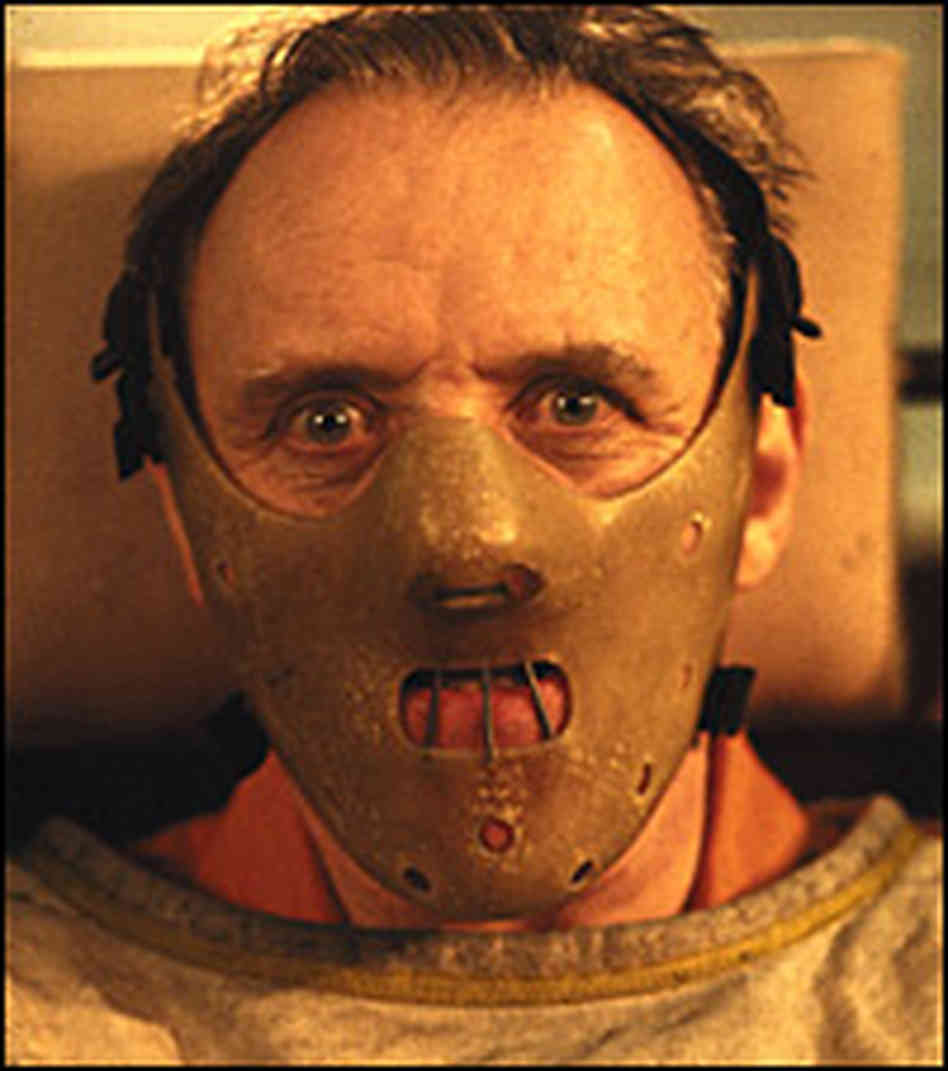
    “The Silence of the Lambs” (1991) opts for something a bit more elegant. Here is an academic essay on Hannibal Lecter’s fondness for the “Goldberg Variations.”

    https://www.tandfonline.com/doi/full/10.1080/02690403.2012.669929


    Dr. Jekyll and Mr. Hyde

    Sunset Boulevard

    20,000 Leagues

    The Phantom of the Opera

    The Great Race

    Rollerball

    The Silence of the Lambs

  • Support WWFM Classical Network’s Fundraiser

    Support WWFM Classical Network’s Fundraiser

    If you think raising money during a pandemic is easy, imagine what it’s like to conduct a fundraiser with no staff!

    WWFM The Classical Network is pulling hard to reach $70,000 by October 31. If classical music on the air waves is important to you, or if you enjoy our webcasts of locally-produced specialty programs, I hope you will consider doing what you can to help support us.

    Hours of on-air pitching are necessarily limited this time around, due to our skeletal staff. Please call 1-888-232-1212, or donate online at wwfm.org:

    https://wwwfm.secureallegiance.com/wwfm/WebModule/Donate.aspx?P=DEFAULT&PAGETYPE=PLG&CHECK=vOU2bz5JCWmgCDbf53nm9ezWDeZ%2BeA1M&fbclid=IwAR11sBx9UcxzlP4TuJWnQ8MRJsWZLt9ejzeAPuMPEKR0Wx1OPTnebdGl-os

    Right now, we are just shy of the halfway mark. Operators (Win, Marcia & Rachel) are standing by to accept your contributions, answering your calls from the safety of their own homes.

    At a time when Halloween horrors aren’t always limited to the imagination, there’s comfort and commonality to be found in great music. From our homes to yours, we thank you for your support of WWFM – The Classical Network!


    Thomas S. Allen, “Dance of the Skeletons” (1901):

  • Conlon Nancarrow’s Haunting Player Pianos

    Conlon Nancarrow’s Haunting Player Pianos

    Automatons are always a little unnerving.

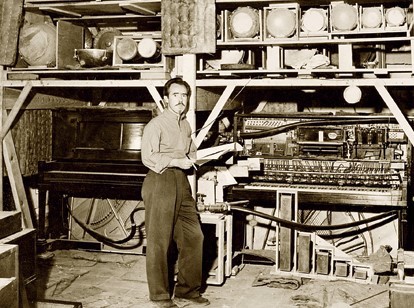
    Conlon Nancarrow was one of the first composers to treat musical instruments as if they were machines, rigging them so that they could perform in a manner far beyond human capability. He worked his experiments in virtual isolation, living in Mexico (where he fled to escape harassment for his political leanings) since the 1940s.

    He remained largely unrecognized until the late ‘60s, when Columbia Records released an album of his music. Indeed, it could be said he wasn’t terribly well known until recordings of his player piano pieces began to appear, on the 1750 Arch label, about ten years later. György Ligeti lauded Nancarrow as “the greatest discovery since Webern or Ives… the best of any composer living today.”

    In 1947, Nancarrow acquired a custom-built, manual punching machine, which enabled him to create his own piano rolls. It was very meticulous work, and time-consuming. He also souped-up his player pianos, increasing their dynamic range, and covering the hammers with materials like leather and metal to create a more percussive sound.

    While his later pieces tend to be abstract, a lot of them extremely intricate canons, his early experiments emulate jazz and blues. This is haunted funhouse music, if there ever was any. Make your breakfast batty with Conlon Nancarrow, on his birthday.

    Study for Player Piano No. 21 (Canon X):

    But when the ghosts really feel like letting their hair down and cutting a rug, they listen to the “Boogie-Woogie Suite”:

    PHOTO: Nancarrow with two player pianos and “percussion orchestra,” Mexico City, 1955

Tag Cloud

Aaron Copland (93) Beethoven (95) Composer (114) Film Music (137) Film Score (143) Film Scores (255) Halloween (94) John Williams (195) KWAX (229) Leonard Bernstein (103) Marlboro Music Festival (125) Movie Music (152) Mozart (88) Opera (208) Philadelphia Orchestra (89) Picture Perfect (174) Princeton Symphony Orchestra (108) Radio (88) Ross Amico (244) Roy's Tie-Dye Sci-Fi Corner (290) The Classical Network (101) The Lost Chord (268) Vaughan Williams (103) WPRB (396) WWFM (881)

DON’T MISS A BEAT

Receive a weekly digest every Sunday at noon by signing up here


RECENT POSTS