Category: Daily Dispatch

  • Jewish Film Music for the High Holy Days

    Jewish Film Music for the High Holy Days

    This week on “Picture Perfect,” to coincide with the Jewish High Holy Days, we’ll have music from movies and television series inspired by aspects of the Jewish experience.

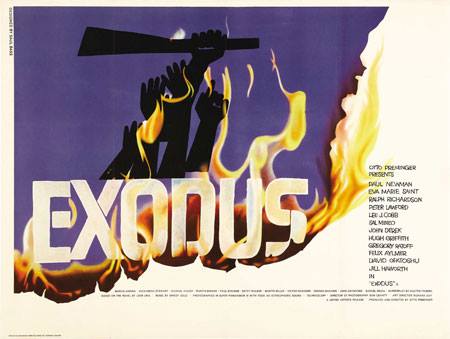
    We’ll begin with “Exodus” (1960), based on the bestselling novel by Leon Uris, about the founding of the State of Israel. The book is said to have been the biggest seller in the United States since “Gone With the Wind.” The film was directed by Otto Preminger. Paul Newman and Eva Marie Saint lead an all-star cast. Ernest Gold’s stirring music was recognized with an Academy Award and is probably his best-known achievement.

    Barry Levinson’s semi-autobiographical “Avalon” (1990) explores the immigrant experience and, for better or worse, the assimilation of a Jewish family into American life. Alongside his work on “The Natural,” Randy Newman’s score is probably one of his best-loved.

    We’ll round out the hour with music from two acclaimed television scores: for the NBC mini-series “Holocaust” (1978), written by the esteemed concert composer Morton Gould, and Emmy Award-winning music from the PBS series “Heritage: Civilization and the Jews” (1984), by John Duffy.

    I hope you’ll join me as we celebrate the Jewish experience this week, on “Picture Perfect” – music for the movies – this Friday evening at 6 EDT, on WWFM – The Classical Network and wwfm.org.
  • Radio Rosh Hashanah Creation Stories

    Radio Rosh Hashanah Creation Stories

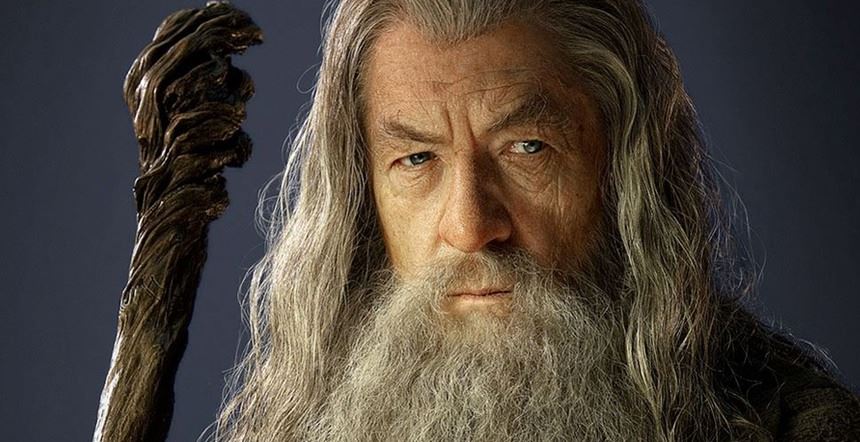
    YOU SHALL NOT PASS!

    Coming up in the 8:00 hour, Sir Ian McKellen weaves his spell as narrator in John Corigliano’s “Creations.” Part One deals with the creation of the Earth, and Part Two with the creation of Adam and Eve. Before that, we’ll hear selections from the Viking oratorio “Edda” by the Icelandic composer Jon Leifs. It’s a full morning of creation stories for Rosh Hashanah, until 11:00 EDT, on WPRB 103.3 FM and wprb.com.

  • Rosh Hashanah Creation Stories on WPRB

    Rosh Hashanah Creation Stories on WPRB

    In the beginning… we’ll hear “In the Beginning.”

    On the recommendation of Benjamin Britten, Aaron Copland set a passage from Genesis for a cappella chorus. A beautiful recording of the work, featuring the Choir of New College Oxford, will kick off five hours of musical creation stories for Rosh Hashanah on WPRB.

    We’ll also hear the Adam and Eve duet from Franz Joseph Haydn’s oratorio “The Creation,” Jerome Moross’ Adam and Eve ballet “The Last Judgment,” and the “Creation Symphony” by Scottish composer William Wallace.

    Not all of the selections will derive from the Judeo-Christian tradition. We’ll also hear Alberto Ginastera’s “Popol Vuh,” after the Mayan creation story; Darius Milhaud’s “La Création du monde,” inspired by African creation myths; “The Creation of the World” from the “Edda Oratorio” by Icelandic composer Jon Leifs; and Jean Sibelius’ “Luonnotar,” after a passage from the Finnish national epic, the Kalevala.

    We’ll round out the morning with a collaborative curio organized by composer and conductor Nathaniel Shilkret. Shilkret managed to cajole a number of the day’s greatest talents, then living in California, into collaborating on the “Genesis Suite,” a seven movement work for narrator, chorus and orchestra. The individual movements were composed by Arnold Schoenberg, Alexandre Tansman, Mario Castelnuovo-Tedesco, Ernst Toch, Igor Stravinsky, Milhaud and Shilkret himself.

    That’s a full morning of creation stories for the Jewish New Year, from 6 to 11 EDT, on WPRB 103.3 FM and wprb.com. When tempted with the Forbidden Fruit, we always ask, “Where’s the honey?,” on Classic Ross Amico.

  • Rosh Hashanah Playlist: Music of Creation

    Rosh Hashanah Playlist: Music of Creation

    L’shana tova! Rosh Hashanah begins at sundown. The Jewish New Year marks the traditional anniversary of the creation of Adam and Eve.

    This Thursday morning, though the observant will likely be in synagogue as I present my weekly show on WPRB, I thought I would try to tie in loosely with the celebrations by assembling a playlist of music about the creation of the world. We’ll hear Aaron Copland’s “In the Beginning,” the Adam and Eve duet from Franz Joseph Haydn’s oratorio “The Creation,” Jerome Moross’ Adam and Eve ballet “The Last Judgment,” and the “Creation Symphony” by Scottish composer William Wallace.

    Not all of the selections will derive from the Judeo-Christian tradition. We’ll also hear Alberto Ginastera’s “Popol Vuh,” after the Mayan creation story; Darius Milhaud’s “La Création du monde,” inspired by African creation myths; “The Creation of the World” from the “Edda Oratorio” by Icelandic composer Jon Leifs; and Jean Sibelius’ “Luonnotar,” after a passage from the Finnish national epic, the Kalevala.

    Some of the music will tie in very loosely indeed. Sir Arthur Bliss’ ballet “Adam Zero” begins with the birth of Adam, then sets him on an allegorical journey through the cycle of life. Romeo Cascarino’s “Pygmalion” is a beautiful metaphor for the artist who falls in love with his own creation.

    One of the morning’s true curiosities will be a collaborative effort organized by composer and conductor Nathaniel Shilkret, who managed to cajole a number of the day’s greatest talents, then living in California, into contributing to a seven movement piece for narrator, chorus and orchestra. The individual movements of the “Genesis Suite” were composed by Arnold Schoenberg, Alexandre Tansman, Mario Castelnuovo-Tedesco, Ernst Toch, Igor Stravinsky, Milhaud and Shilkret himself.

    The creation of the heavens and the earth may have taken six days, but we’ve got only five hours this Thursday morning, from 6 to 11 EDT, on WPRB 103.3 FM and wprb.com. I’ll be sending you best wishes for a sweet new year, from Classic Ross Amico.


    IMAGE: Adam and Eve (1526) by Lucas Cranach the Elder

    “Is there any honey on that apple?”

  • Shostakovich & Jewish Folk Music

    Shostakovich & Jewish Folk Music

    Wrote Dmitri Shostakovich, “Jewish folk music has made a most powerful impression on me. I never tire of delighting in it; it is multifaceted – it can appear to be happy while it is tragic. It’s almost always laughter through tears…. This quality of Jewish folk music is close to my ideas of what music should be….”

    Keeping that in mind, this week on “Music from Marlboro,” we’ll hear Shostakovich’s song cycle “From Jewish Folk Poetry.” The work was conceived in 1948 at great personal risk to the composer (who, by the way, was not Jewish). Under the Zhdanov decree, Shostakovich had already been denounced for the second time with charges of “formalism” for his alleged embrace of decadent Western tendencies in his music. Furthermore, it was a time of heightened anti-Semitism in the Soviet Union, as Stalin targeted Jewish intellectuals and artists. For these reasons, Shostakovich’s songs were not given their first public performance until 1955, two years after Stalin’s death. The first eight of them were performed at a private birthday celebration at the composer’s home in September of 1948. Shostakovich would incorporate Jewish music, whether as an act of solidarity or a gesture of subversion, in many of his major works.

    “From Jewish Folk Poetry” was toured around the United States by Marlboro musicians in 1968. We’ll hear a 1967 performance from the Marlboro Music Festival, featuring soprano Benita Valente, mezzo-soprano Glenda Maurice, and tenor John Humphrey, with Luis Batlle at the keyboard.

    Then we’ll turn to a String Quintet in A major, by a composer Shostakovich knew very well, Alexander Glazunov. Glazunov, who was director of the Petrograd Conservatory, saw to it that the talented young Shostakovich be allowed to bypass preparatory theoretical courses and enter directly into the conservatory’s composition program. In general, Shostakovich was lukewarm on his mentor’s music, but he had very kind words for the man and expressed admiration for his scherzos.

    The String Quintet is full of serene lyricism, generously melodic and beautiful. We’ll hear it performed at Marlboro in 1982, with Sylvie Gazeu and Ernestine Schor, violins; Toby Hoffman, viola; and Peter Wiley and David Soyer, cellos.

    That’s an hour of music from Russia, with love, on the next “Music from Marlboro,” this Wednesday evening at 6 EDT, on WWFM – The Classical Network and wwfm.org.

    Marlboro School of Music and Festival: Official Page


    PHOTO: Once and future cellists of the Guarneri Quartet (David Soyer passing the bow to former student Peter Wiley in 2001) will be heard in music by Alexander Glazunov on this week’s “Music from Marlboro”

Tag Cloud

Aaron Copland (93) Beethoven (95) Composer (114) Film Music (139) Film Score (143) Film Scores (255) Halloween (94) John Williams (195) KWAX (229) Leonard Bernstein (103) Marlboro Music Festival (125) Movie Music (154) Mozart (88) Opera (208) Philadelphia Orchestra (89) Picture Perfect (174) Princeton Symphony Orchestra (108) Radio (88) Ross Amico (244) Roy's Tie-Dye Sci-Fi Corner (290) The Classical Network (101) The Lost Chord (268) Vaughan Williams (103) WPRB (396) WWFM (881)

DON’T MISS A BEAT

Receive a weekly digest every Sunday at noon by signing up here


RECENT POSTS