Category: Daily Dispatch

  • Scarlatti Tributes on The Lost Chord

    Scarlatti Tributes on The Lost Chord

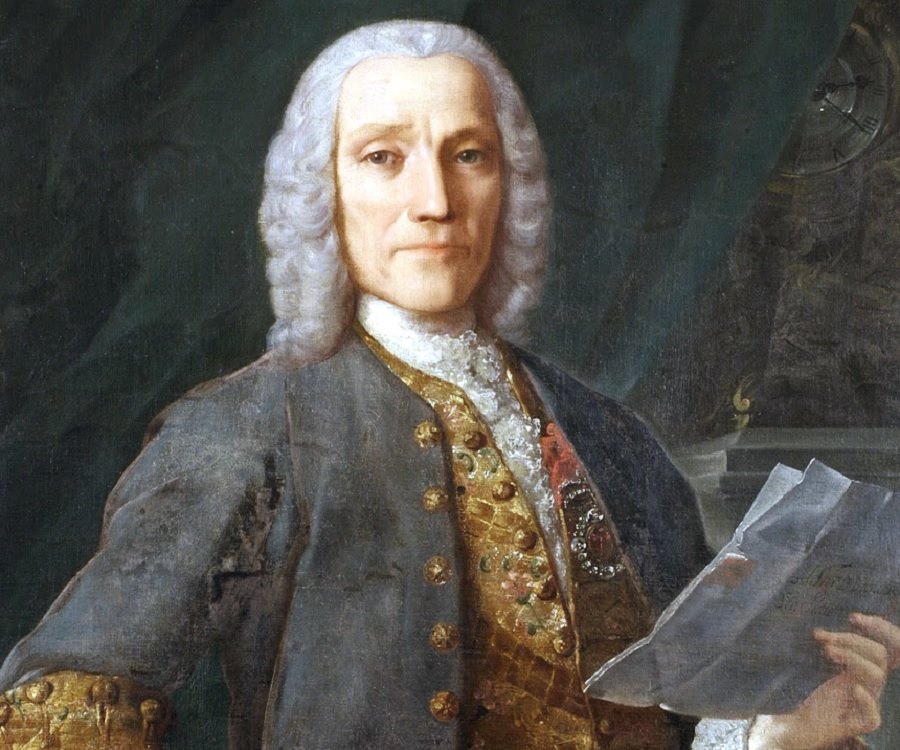
    It seems that any Baroque musician of worth couldn’t help but become embroiled in a musical duel of some sort. In the case of Domenico Scarlatti, he was challenged by none other than George Frideric Handel, in Rome. Handel was deemed superior to his rival on the organ, but on the harpsichord Scarlatti was unsurpassed. In fact, Scarlatti’s unusual facility has had artists “keyed up” for centuries.

    Scarlatti was born in Naples in 1685, the same year as Handel and Bach. He spent much of his career in the service of the Portuguese and Spanish royal families, composing some 555 keyboard sonatas. His works have been admired by composer-performers from Frederic Chopin to Marc-André Hamelin. This Sunday night on “The Lost Chord,” we’ll enjoy four pieces inspired by the Baroque master.

    The English composer Charles Avison, whose life overlapped Scarlatti’s own (he was born in 1709, when Scarlatti would have been 23 years-old) arranged a number of the older composers keyboard works into a set of 12 concerti grossi. We’ll sample one of those, Avison’s Concerto No. 10 in D.

    Then we’ll turn to a tribute by American composer Norman Dello Joio. Dello Joio was the recipient of the Pulitzer Prize for Music in 1957 for his “Meditations on Ecclesiastes.” From 1979, we’ll hear his four movement piano work, “Salute to Scarlatti.”

    Dmitri Shostakovich arranged two of Scarlatti’s keyboard sonatas for small wind ensemble and percussion. We’ll enjoy performances by members of the former USSR Ministry of Culture Symphony Orchestra conducted by Gennady Rozhdestvensky.

    Finally we’ll turn to a work from 1926 by Alfredo Casella – a seven movement suite for piano and orchestra titled “Scarlattiana,” a high-spirited piece that is unabashedly reminiscent of Stravinsky’s “Pulcinella.”

    I hope you’ll join me for “Italian Dressing” – musical tributes to Domenico Scarlatti – this Sunday night at 10:00 EDT, on WWFM – The Classical Network and wwfm.org.

  • Dark Souls’ Ornstein The Composer Connection

    Dark Souls’ Ornstein The Composer Connection

    Don’t ask me how I know this, because I’m not a gamer. I think I stumbled across it while I was putting together my show on nonagenarian conductors. There’s a video game called “Dark Worlds,” which apparently has been acclaimed in some circles as one of the greatest video games ever made. In any case, it is popular enough that it has spawned two sequels. The premise has something to do with dragonslaying during the Age of Fire, an undead asylum, and the spread of the Abyss over the land of Oolacile. Or something like that.

    Anyway, central to the game is a character called Ornstein. Imagine my surprise when I learned that Ornstein was named for Leo Ornstein, the avant-garde composer and pianist, who died in 2002 at the age of 106! To give you an idea of how old that is, Ornstein studied with Alexander Glazunov at the Moscow Conservatory in 1904.

    To escape mounting antisemitic policies and pogroms, he emigrated with his family to the United States in 1906. His New York concert debut took place five years later, and he was hailed as an interpreter of sensitivity, prodigious technical ability, and artistic maturity. However, his reputation was about to take a startling turn.

    Ornstein emerged as an ardent “futurist,” or “ultra-modernist,” taken to the performance of cutting-edge works by contemporary composers, like Bartok, Debussy, Ravel, Schoenberg, Scriabin and Stravinsky. His own compositions instigated near-riots. He is credited as being the first composer to make extensive use of the tone cluster (the dissonant clash of at least three adjacent tones in a scale), a technique soon to be taken up by Henry Cowell. One of his most distinctive compositions to employ tone clusters is titled “Suicide in an Airplane.”

    By the 1920s, however, Ornstein was burnt out on the notoriety and walked away from his performance career. He accepted a teaching post at the Philadelphia Musical Academy, a precursor to the University of the Arts. During that time, he also composed a piano concerto for the Philadelphia Orchestra. In the 1930s, he founded a music school in Philadelphia, the Ornstein School of Music, with his wife, Pauline Cosio Mallet-Prevost. Among the students enrolled at the school were future jazz luminaries John Coltrane and Jimmy Smith.

    The Ornsteins retired in 1953. Thereafter, they essentially lived off the grid. In the mid-1970s, they were discovered to be living at least part of the year in a trailer park in Texas.

    In the video game, Ornstein’s armor resembles a lion. Also, he wears a ring called the “Leo Ring.” Both are clear references to the name of the composer.

    On a video game discussion board, I stumbled across a thread labeled, “Did you guys know that Leo Ornstein was a famous composer?” Hey, whatever works.


    Ornstein’s “Suicide in an Airplane:”

    An example of Ornstein’s later, saner music, from 1978:
    https://www.youtube.com/watch?v=MioWCeIndhI


    IMAGES: The Leos Ornstein

  • Paul Angerer Remembered on WWFM

    Paul Angerer Remembered on WWFM

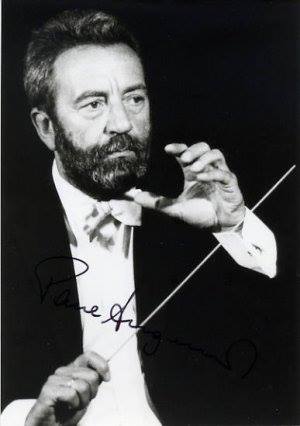
    I don’t know if you remember Paul Angerer. The Austrian violist and later conductor died on Wednesday at the age of 90. We’ll hear him leading a Handel concerto grosso at around 4:35 EDT. Then I’ll follow that up with one of Angerer’s own compositions (yes, he was also a composer). Tune in now to WWFM – The Classical Network and wwfm.org.
  • Riccardo Muti at 76 a Classical Lion

    Riccardo Muti at 76 a Classical Lion

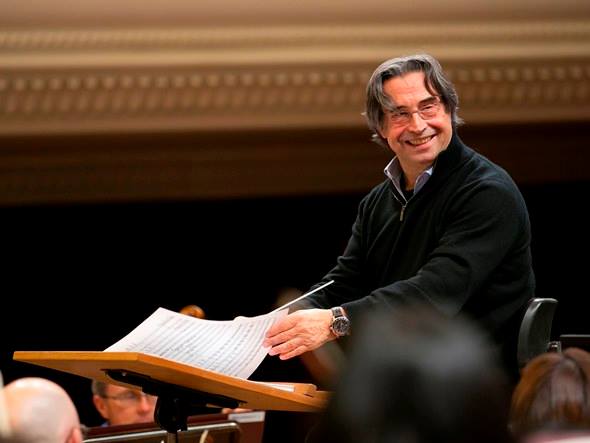
    It’s hard to believe that Riccardo Muti is 76 years-old. It seems like only yesterday that Philadelphians were more interested in talking about his hair than his music-making.

    Yes, yes, Muti is the villain that destroyed the “Philadelphia sound.” He believed that Beethoven maybe shouldn’t sound like Mahler. A lot of the old-timers couldn’t handle that.

    Also, he wasn’t shy about dressing down the audience if he felt someone had crossed a line, as in applauding after the rousing third movement of Tchaikovsky’s “Pathètique” Symphony. I shudder to think what he would have done had there been cell phones then.

    Oddly, the one time an audience member was deliberately confrontational (after a scheduled piece by Varèse was replaced by Prokofiev’s “Classical” Symphony), he merely dropped his arms and waited for the agitator to be carried out.

    What I remember most about the Muti era in Philadelphia was concert after concert of amazing Bruckner, Shostakovich and Scriabin, with the shockwaves being sent straight up to the top of the two-dollar-a-ticket amphitheatre at the old, “dry” Academy of Music.

    Okay, so he wasn’t a magician like Stokowski, and he wasn’t as user-friendly as Ormandy. Muti had passion wrapped up in the veneer of “authenticity.” He gave lip-service to worshipping at the altar of Toscanini, who claimed deference to “the score.” But in performance, a lot of things can happen, and very few of Muti’s performances were museum pieces.

    I confess I haven’t really followed his career in Chicago. They seem to love him there. During important sports milestones, he even leads the symphony while wearing a Blackhawks jersey. I couldn’t imagine him doing something like that during his Philadelphia years, even though there isn’t a city that’s crazier about its teams than Philadelphia.

    The overall impression of his departure was one of contentiousness. He didn’t get his new concert hall, though he did begin the push that resulted in the Kimmel Center for the Performing Arts. He wouldn’t have been caught dead going the populist route of “Yannick,” the maestro in our midst, who is all smiles as he gets tattooed in a t-shirt.

    There was also some broken china when Muti left La Scala. He made waves when he refused to allow star singers to reprise arias, which had been an ingrained custom following a rapturous reception from the audience. More damagingly, he clashed with the general manager and eventually the musicians. Hey, he’s Italian. They’re all Italian, just about. Grant him some temperament.

    And now, suddenly, Riccardo Muti is one of classical music’s old lions. Join me today as we celebrate his birthday with some of his recordings, from 4 to 6 p.m. EDT. “Picture Perfect” will follow at 6 (more on that in a bit), on WWFM – The Classical Network and wwfm.org.


    In case you think Muti doesn’t have a sense of humor, check out this fabulous speech as he accepts an honor (Musician of the Year) from Musical America:

  • Villa-Lobos’s Lost Hollywood Dream

    Villa-Lobos’s Lost Hollywood Dream

    When Heitor Villa-Lobos was contracted by M-G-M to write music for a big screen adaptation of W.H. Hudson’s novel “Green Mansions” (1959), expectations ran high on both sides. The Brazilian master began immediately, diving into the project with characteristic gusto. After all, he had been writing music inspired by the rain forest for his entire career.

    Unfortunately, he had very little affinity for the practicality of the filmmaking process, turning in musical impressions of scenes from the book. The studio was befuddled. Since Villa-Lobos was unable to adapt to the customary way of doing things, he was replaced by MGM house composer Branislau Kaper, who used the Villa-Lobos material as a springboard for his own dramatic conception. The result is part Villa-Lobos, part Kaper, and all MGM gloss.

    Villa-Lobos was a little embittered by his Hollywood experience. He promptly assembled a multi-movement symphonic poem, “Forest of the Amazon” (1958), some 75 minutes in length, which employed his rejected sketches. He made a recording of 45 minutes of the music in 1959, for which the soprano Bidu Sayao came out of retirement.

    This week on “Picture Perfect,” we’ll have selections from both versions of “Green Mansions,” as well as from the Mayan adventure “Kings of the Sun” (1963), composed by Elmer Bernstein, and “The Night of the Mayas” (1939), by Mexican composer Silvestre Revueltas.

    I hope you’ll join me for cinematic evocations of the indigenous peoples of Latin America, this Friday evening at 6 EDT, on WWFM – The Classical Network and wwfm.org.


    PHOTO: The project that left Villa-Lobos feeling green around the gills

Tag Cloud

Aaron Copland (93) Beethoven (95) Composer (114) Film Music (139) Film Score (143) Film Scores (255) Halloween (94) John Williams (195) KWAX (229) Leonard Bernstein (103) Marlboro Music Festival (125) Movie Music (154) Mozart (88) Opera (209) Philadelphia Orchestra (89) Picture Perfect (174) Princeton Symphony Orchestra (108) Radio (88) Ross Amico (244) Roy's Tie-Dye Sci-Fi Corner (290) The Classical Network (101) The Lost Chord (268) Vaughan Williams (103) WPRB (396) WWFM (881)

DON’T MISS A BEAT

Receive a weekly digest every Sunday at noon by signing up here


RECENT POSTS