• Vinyl Week on WPRB: Rare Out-of-Print Records

    Vinyl Week on WPRB: Rare Out-of-Print Records

    by 

    in
    3 responses

    Playing from vinyl is always a tricky proposition (I already had the needle stick on me once), but I think one well worth the risks. I hope you’ll join me this morning on WPRB, as I share selections from my own extensive record collection as part of WPRB’s Vinyl Week.

    All of the recordings we’ll hear today are either out of print or available only as part of costly reissued collections of a composer’s complete works (Hans Werner Henze on the Deutsche Grammophon label). I’ve gone out of my way to select music that, for the most part, is not available even in alternative, digital recordings. What you hear this morning, you may never hear again. If you’ve heard it before, I trust it hasn’t been for a very long time.

    For me, I get to relive my college radio days, cueing records, potting down and flipping LPs mid-piece, agonizing over timings when none are listed. But it’s worth it to be able to get in touch again with the humanizing effect of snap, crackle and pop. Playing vinyl is as much a tactile experience as it is an aural one. Furthermore, I will be discovering a lot of the music, much of it acquired from my days as an antiquarian book dealer, right along with you, since at the moment I don’t happen to have a functioning turntable at home.

    We’re enjoying music in record time this morning, from 6 to 11 EDT, on WPRB 103.3 FM and wprb.com. I’ll be bringing it old school on Classic Ross Amico.

  • Rare Vinyl Finds on WPRB This Week

    Rare Vinyl Finds on WPRB This Week

    by 

    in
    5 responses

    I’ve been lifting heavy boxes and inhaling lungs full of dust mites so you don’t have to. Join me tomorrow morning on WPRB, when I’ll be making my contribution to Vinyl Week, with a full morning played from honest-to-goodness, old-fashioned records.

    I’ve been digging deep this time, and I’ve accumulated a stack of Howard Hanson’s Mercury recordings that never made it to compact disc. I’ve also struck a rich vein of Louisville First Edition Records. There will be music by Mexican microtonalist Julian Carrillo, almost entirely absent from the current catalogue. Also Richard Mohaupt, whose recordings are wholly out-of-print. I have to play some Max Butting, just because I’ve got so much of it. Again, amazingly, there’s only a single disc of his works still in print. In addition, I’ve got a symphony by Romanian composer Sigismond Toduta, issued on authentic Romanian vinyl.

    We’ll hear Norman Dello Joio’s “New York Profiles,” released on a 10-inch red vinyl LP (because I’ve never programmed anything from 10-inch red vinyl). Somehow, I came into the possession of one of Marc-André Hamelin’s records – not one of his recordings mind you, but an LP formerly in his collection – of Hans Werner Henze’s “Muses of Sicily.” If it was rejected by Hamelin (whose taste I respect immensely), then it’s good enough for me! I’ll be giving it a spin tomorrow.

    Many of these records were distributed solely overseas, with liner notes in Czech, German, Portuguese, Romanian, Swedish, and Cyrillic. This ought to be interesting.

    I’m particularly excited for the chance to hear John Addison’s Concerto for Trumpet, Strings and Percussion. Addison is principally remembered as a composer of quirky film scores like those for “Tom Jones” and “Sleuth.” This Louisville record, which I’ve never listened to, looks to be a pristine copy.

    On top of all that, I’ll have a couple of special guests into the studio. At 9:00, I’ll be joined by Benedikt von Schroder from The Princeton Festival. He’ll fill us in on the rest of the season, which runs through June 25. Then, at 10:00, soprano Rochelle Ellis will be by to tell us about a performance of Brahms’ “A German Requiem,” which will take place at Princeton University’s Richardson Auditorium on Friday, the centerpiece of Lyn Ransom’s farewell concert after 30 years as artistic director of VOICES Chorale. (Princeton Festival artistic director Richard Tang Yuk will be taking over from her next season.)

    I hope you’ll join me for some rare LP discoveries, or perhaps a reunion or two with some long lost friends, this Thursday morning from 6 to 11 EDT, on WPRB 103.3 FM and wprb.com. I’ll be giving you the needle, on Classic Ross Amico.


  • Flag Day on The Classical Network

    Flag Day on The Classical Network

    by 

    in
    3 responses

    You’re a Grand Old Flag.

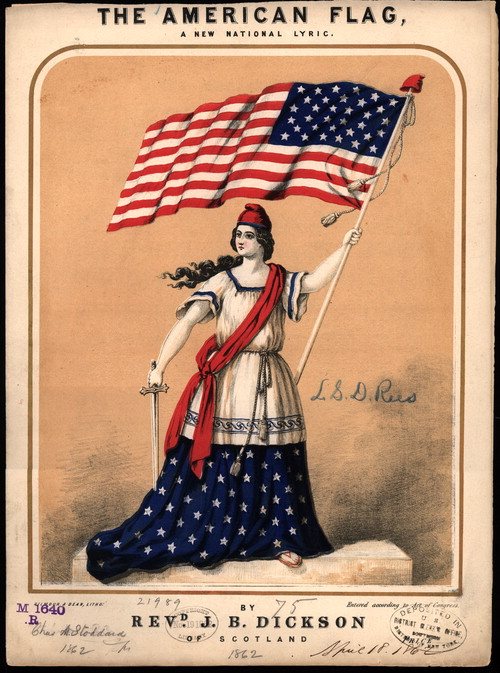
    We celebrate Old Glory on Flag Day on The Classical Network, with Antonin Dvořák’s rarely-heard cantata, “The American Flag,” and Philadelphia composer and arranger Hershy Kay’s John Philip Sousa ballet, “Stars and Stripes.”

    We’ll also mark the birthday anniversaries of composer Coleridge-Taylor Perkinson, conductor Rudolf Kempe, and tenor John McCormack.

    Join me as proudly we hail, from 4 to 7 p.m. EDT, on WWFM – The Classical Network and wwfm.org.

    Did you know, the current star pattern for the American Flag was designed by a 17 year-old? More facts for Flag Day here:

    http://www.nj.com/news/index.ssf/2017/06/flag_day_2017.html


  • Princeton Festival Baroque Orchestra Concerts

    Princeton Festival Baroque Orchestra Concerts

    by 

    in
    2 responses

    Goin’ for Baroque:

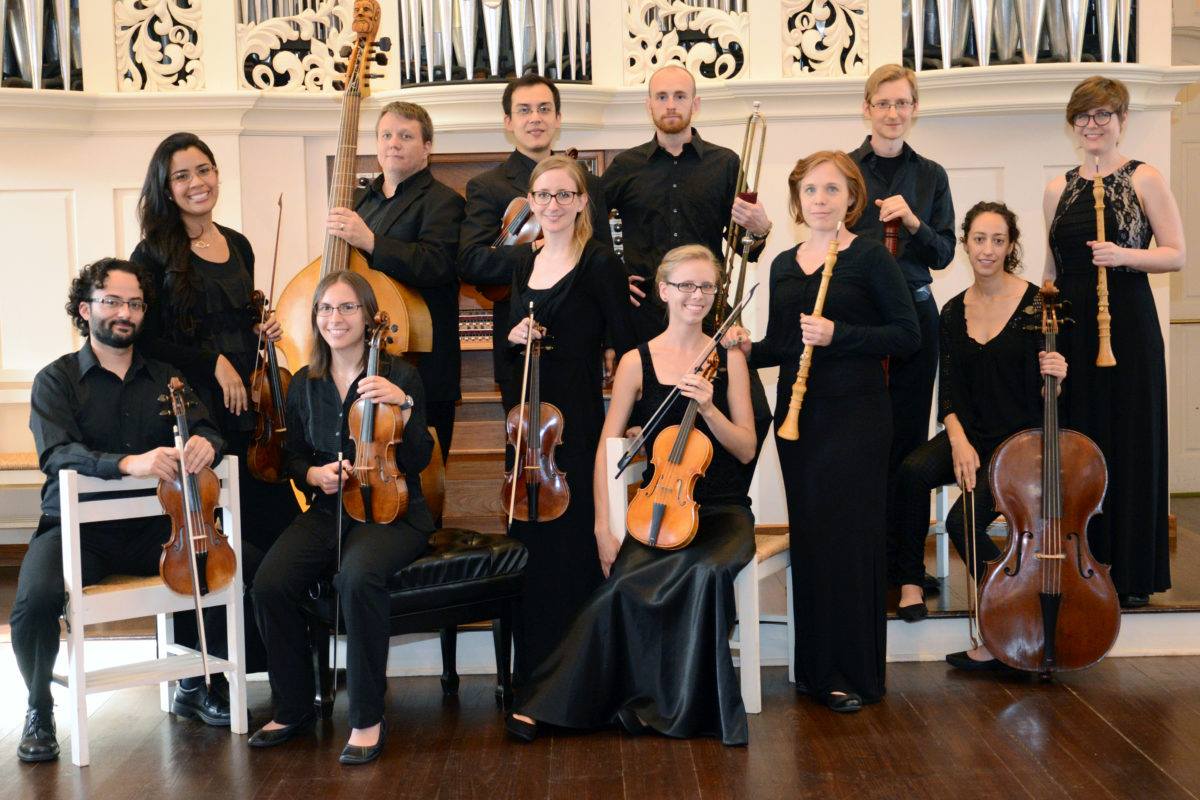
    The Princeton Festival Baroque Orchestra will spread its wings in three concerts, which will take place over a little more than a week.

    This year, for the first time, principals of the ensemble will come together for a chamber music program on June 17. Personnel will include the orchestra’s concertmaster, Juan Carlos Zamudio, violinist Reynaldo Patino, violist Maria Romero, cellist Anna Steinhoff, contrabassist Eric Fisher, and harpsichordist Gregory Geehern.

    Reflective of the broader festival, the concert will feature lesser-heard works by Heinrich Biber, Johann Rosenmüller, and Domenico Gabrielli, alongside heavy hitters Dietrich Buxtehude, George Frideric Handel, and Wolfgang Amadeus Mozart.

    The full ensemble will convene on June 21 to present music by Handel, Alessandro Stradella, Johann Adolph Hasse, Georg Philipp Telemann, and Johann Sebastian Bach. Both concerts will take place at Princeton Abbey And Cemetery.

    Then, on June 24, the group will participate in a concert with chorus and orchestra. Dr. Jan Harrington will share the podium with conductors from the festival’s conducting masterclass. The program will include Handel’s Chandos Anthem 11a, “Let God Arise,” Antonio Vivaldi’s “Kyrie,” RV 587, Claudio Monteverdi’s “Beatus Vir,” and Jan Dismas Zelenka’s “Miserere.” That concert will be held at Miller Chapel on the campus of Princeton Theological Seminary.

    Read more about the Princeton Festival Baroque Orchestra and festival artistic director Richard Tang Yuk in my article in this week’s edition of U.S. 1 Newspaper – PrincetonInfo:

    http://www.princetoninfo.com/index.php/component/us1more/?Itemid=6&key=6-14-17baroque

    The Princeton Festival runs through June 25. More information and a complete schedule are posted at princetonfestival.org.


  • Celebrating Carlos Chávez Birthday Today

    Celebrating Carlos Chávez Birthday Today

    by 

    in
    3 responses

    ¡Feliz cumpleaños, Carlos Chávez!

    Join me this afternoon on The Classical Network, as I celebrate the birthday today of Mexico’s foremost composer and conductor. In the wake of the Mexican Revolution, Chávez (1899-1978) appeared like Quetzalcoatl, the creator-deity of Aztec lore, to forge a distinctive sound in Mexican music.

    He became director of the Orquesta Sinfónica Mexicana, the country’s first permanent symphony orchestra. He was appointed director of the National Conservatory of Music. Later, he served as director-general of the National Institute of Fine Arts. At the same time, he formed the National Symphony Orchestra, which supplanted the old OSM.

    In 1937, he conducted the world premiere of “El Salón México,” the work which essentially launched Aaron Copland into the mainstream.

    Chávez himself was one of the first exponents of Mexican nationalism in music, writing ballets on Aztec themes. His most famous work is probably the Symphony No. 2, composed in 1935-36. Known as the “Sinfonia India,” it is based on melodies by indigenous tribes of northern Mexico.

    The percussion section originally included a large number of traditional Mexican instruments, including the jicara de agua (half of a gourd inverted and partly submerged in a basin of water, struck with sticks), güiro, cascabeles (a pellet rattle), tenabari (a string of butterfly cocoons), a pair of teponaxtles, tlapanhuéhuetl, and grijutian (a string of deer hooves).

    However, when the score was published, the composer sensibly substituted the nearest equivalents commonly used by most orchestras, though he requested that the originals be employed wherever possible. We’ll hear the work this afternoon in the 3:00 hour.

    At noon today, The Classical Network will continue its partnership with Gotham Early Music Scene (GEMS), with a concert from Saint Bartholomew’s Episcopal Church in midtown Manhattan. The program of “Italian Jewels” will feature Nina Stern, recorder, Jeffrey Grossman, harpsichord, and Stephanie Corwin, bassoon, in music by Giovanni Battista Fontana, Tarquinio Merula, Arcangelo Corelli, and Antoniio Vivaldi.

    It’s music from the Old World and the New, from 12 to 4 p.m. EDT, on WWFM – The Classical Network and wwfm.org.


Tag Cloud

Aaron Copland (93) Beethoven (95) Composer (114) Film Music (144) Film Score (143) Film Scores (255) Halloween (94) John Williams (195) KWAX (229) Leonard Bernstein (104) Marlboro Music Festival (125) Movie Music (159) Mozart (91) Opera (213) Philadelphia Orchestra (89) Picture Perfect (174) Princeton Symphony Orchestra (109) Radio (88) Ross Amico (244) Roy's Tie-Dye Sci-Fi Corner (290) The Classical Network (101) The Lost Chord (269) Vaughan Williams (105) WPRB (397) WWFM (881)

DON’T MISS A BEAT

Receive a weekly digest every Sunday at noon by signing up here


RECENT POSTS