“In Xanadu did Kubla Khan
A stately pleasure-dome decree…”
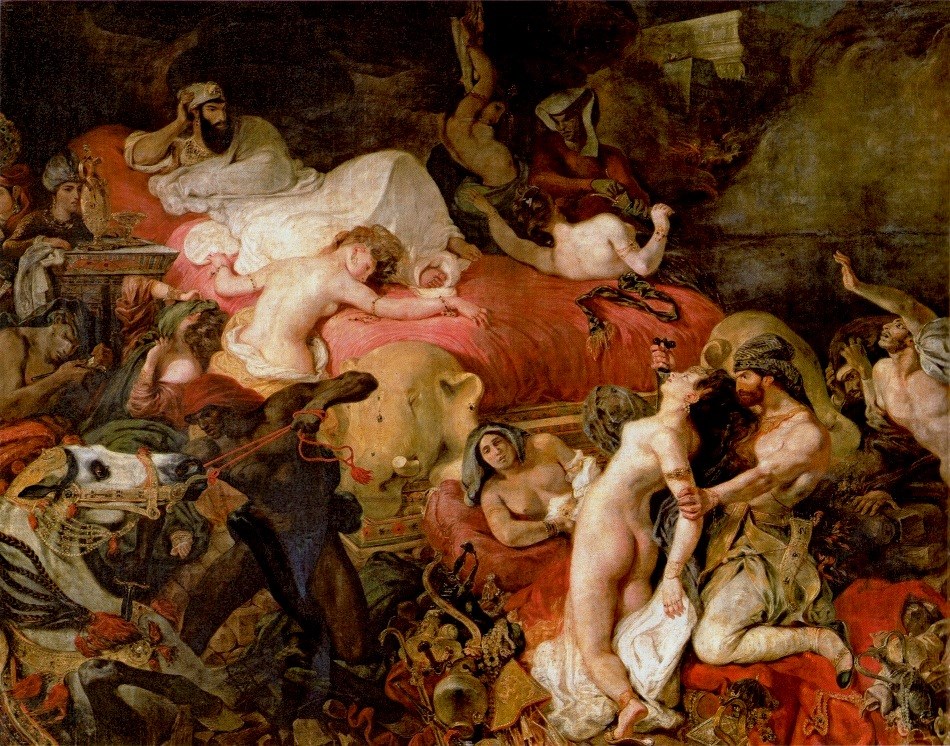
Sounds good to me! As I sit here like Sardanapalus luxuriating amidst my musical treasures, I contemplate the short life and creative promise of Charles Tomlinson Griffes.
Griffes’ was a unique voice in American music. At the beginning of his life, our native composers mostly emulated Mendelssohn, Schumann and Brahms; by the end, they were starting to gravitate toward jazz. By contrast, Griffes, like the painter Mary Cassatt, was attracted to French Impressionism (oddly, he studied in Germany with Engelbert Humperdinck, of “Hansel and Gretel” fame), yet the weird incense of Scriabin also permeates his work.
He is best known for dreamy meditations like “The White Peacock” and “The Pleasure Dome of Kubla Khan,” after Coleridge.
Griffes was born in Elmira, NY, on this date in 1884. He died of influenza in 1920, aged only 35 years. (No flu vaccine then.) Elmira was Mark Twain’s home from 1870. Twain was in Emira putting the finishing touches on “The Adventures of Huckleberry Finn” the year Griffes was born. I’ve sometimes wondered if the two ever met. It has been documented that Griffes saw Twain there when moving about the streets. They certainly adhered to very different aesthetics.
It was Pierre Monteux, who introduced Ravel’s “Daphnis and Chloe,” Debussy’s “Jeux,” and Stravinsky’s “Petrushka” and “The Rite of Spring” with the Ballets Russes, that unlocked the Pleasure Dome for the first time, with the Boston Symphony Orchestra in 1916.
You’ll recall Samuel Taylor Coleridge launched into his famous poem one night in 1797, after waking from an opium-induced dream, only to be interrupted by a knock at the door. When he returned to his desk, he was unable to pick up the thread. According to Coleridge, he envisioned the work as two or three hundred lines, but he found he’d forgotten the words! (Oh, how I can relate to this…) We can thank Lord Byron for convincing him to publish it, finally, in 1816.
Here’s Coleridge’s phantasmagoric fragment, to refresh your memory.
https://www.poetryfoundation.org/poems/43991/kubla-khan
Give yourself over to absolute pleasure with Charles Tomlinson Griffes’ musical impressions of “Kubla Khan.”
________________________________________
IMAGE: Delacroix, “The Death of Sardanapalus.” It’s good to be the king.
Leave a Reply