• Remembering Toshiro Mayuzumi Composer of Nirvana Symphony

    Remembering Toshiro Mayuzumi Composer of Nirvana Symphony

    by 

    in
    4 responses

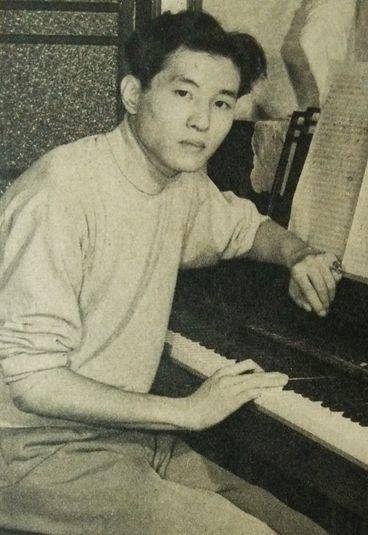
    The Japanese composer Toshiro Mayuzumi died on this date 20 years ago. Born in 1929, his early works are those of an avant-gardist with a marked affection for the music of Edgard Varèse, but already by his late 20s he was settling into a kind of neo-Romantic pan-Asianism. He may be best known to some collectors for his film score to John Huston’s “The Bible.”

    I first encountered his music in the record library of WMUH 91.7 FM Allentown, PA during my bush league days in community radio. The album was of his “Nirvana Symphony,” which he composed in 1958. The work was inspired by the sound of Japanese temple bells. It’s hard to believe at the time (circa 1986) Mayuzumi was still very much alive.

    Mayuzumi’s “Nirvana Symphony,” from the same LP, with artwork by Yoko Ono:

    And in a more vivid, digital remake:

    Learn more about my early days in radio at WWFM – The Classical Network’s snazzy new website, which includes, among other things, short biographies of your favorite radio hosts. Search under “About Us.”

    http://wwfm.org/#stream/0


  • Louis Frémaux Dies at 94 Obituary Notice

    Louis Frémaux Dies at 94 Obituary Notice

    by 

    in
    9 responses

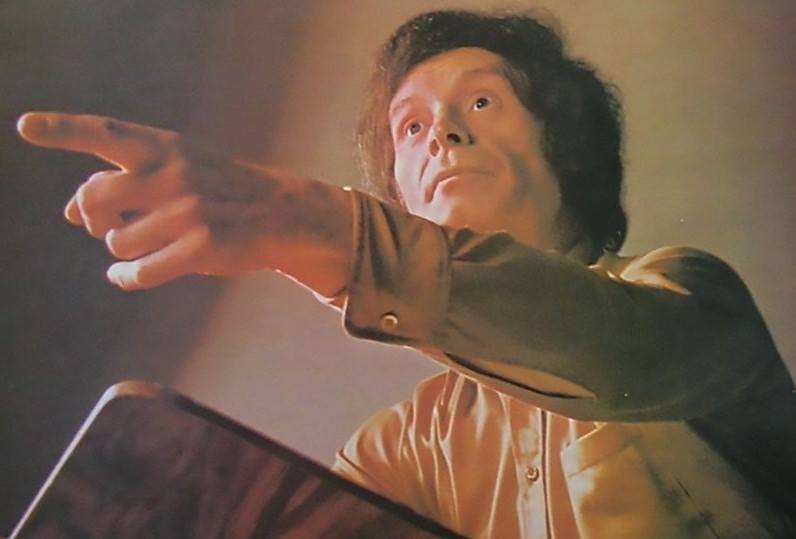
    I can’t find a single obituary posted on the internet in English (there are two in French and Dutch), but news has broken that conductor Louis Frémaux has died. Frémaux made many fine recordings with the City of Birmingham Symphony Orchestra, which he served as principal conductor from 1969 to 1978. He also acted as chief conductor of the Sydney Symphony Orchestra from 1979 to 1982. Frémaux died at his home last Monday. He was 94 years-old. He is the second nonagenarian French conductor to die this year. Georges Prêtre passed in January at the age of 92.

    Frémaux conducts Francis Poulenc’s “Stabat Mater”:

    And Satie’s “Gymnopédie No. 1”:


  • French Women Composers Rediscovered

    French Women Composers Rediscovered

    by 

    in
    9 responses

    On this last Sunday of Women’s History Month, we travel to France on “The Lost Chord” for an hour of neglected music by female composers.

    We’ll hear from Augusta Holmès (1847- 1903), French composer of Irish ancestry. Holmès received encouragement from Liszt and Wagner, as well as multiple marriage proposals from Saint-Saëns (which she declined). She became a pupil of César Franck. It’s said that Franck’s Piano Quintet enshrines the teacher’s ardent longing for his student. Saint-Saëns, who participated in the work’s premiere, was not amused.

    Holmès will be represented by her symphonic poem “Andromède,” from 1883. Andromeda, as you may recall from Greek mythology, is at the receiving end of divine envy because of her extraordinary beauty. She is chained to a rock as a sacrifice to a sea serpent, but rescued from her fate by Perseus, who arrives just in the nick of time, astride the winged horse Pegasus and bearing the severed head of the Gorgon Medusa, with which he turns the serpent to stone.

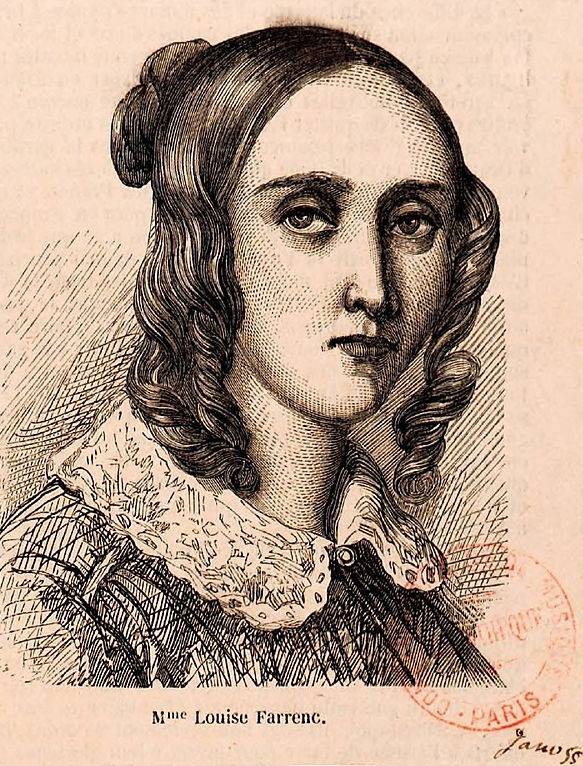
    Louise Farrenc (1804-1875) was remarkable for, among other things, being the only woman on the teaching faculty of the Paris Conservatory during the whole of the 19th century. Beginning in 1842, she served as professor of piano there for 30 years. Of course, she was only allowed to teach women. By the end of the first decade, her stature was such that she was able to demand – and receive – equal pay.

    A pupil of Moscheles (who taught Mendelssohn) and Hummel (who studied with Mozart), she also took composition lessons privately with Anton Reicha, who also taught at the conservatory. She paused in her career as a performer to start a successful publishing house, Éditions Farrenc, which flourished for nearly 40 years. Farrenc composed three symphonies. We’ll hear the third of those tonight.

    Finally, we’ll have music by Marie Gandval (1830-1907). Grandval studied with Flotow, then Chopin, and later Saint-Saëns. Saint-Saëns dedicated his Christmas Oratorio to her. She was the most frequently performed composer on concerts of the Société Nationale de Musique, which Saint-Saëns founded to promote orchestral music, underserved in opera-mad France, where orchestras were tied to the theatres. Grandval herself was a composer of opera and choral music, but we’ll have just enough time for “Deux pièces” for oboe, cello and piano.

    I hope you’ll join me for “Cherchez la Femme,” neglected music by French female composers, this Sunday night at 10:00 EDT, on WWFM – The Classical Network and at wwfm.org.


  • Toscanini at 150 The Maestro’s Rage & Resistance

    Toscanini at 150 The Maestro’s Rage & Resistance

    by 

    in
    7 responses

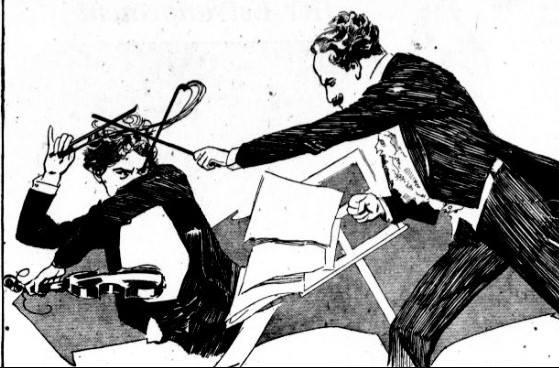
    Today is the 150th birthday of Arturo Toscanini (1867-1957), arguably the most famous conductor of his time. At various points in his career, he was music director of La Scala Milan, the Metropolitan Opera, the New York Philharmonic, and finally the NBC Symphony Orchestra. Radio broadcasts of the latter brought him into millions of American homes. Celebrated for his intensity, perfectionism, and alleged fidelity to the score, he was equally notorious for his rafter-rattling temper tantrums.

    Ironically, he despised authoritarians, refusing to conduct in Germany while Hitler remained in power. In his homeland, he was beaten up by brownshirts and had his passport confiscated for his repeated refusal to conduct the fascist anthem “Giovanezza.” He also worked closely with violinist Bronislaw Huberman in support of the Palestine Orchestra, made up of Jewish exiles from fascist Europe.

    Toscanini confided to a friend, “If I were capable of killing a man, I would kill Mussolini.” It sounds to me like he could have been borderline more than once.

    Hear him rage, with translation, here:

    https://www.youtube.com/watch?v=Sdi0SFyXwKg

    A report of an earlier tantrum, which led to a lawsuit, in the January 18, 1920, edition of The Washington Post:

    http://fonderiausa.com/toscanini-in-a-rage/


  • Western Heroes The Evolution of the Genre

    Western Heroes The Evolution of the Genre

    by 

    in
    3 responses

    The American western must be the most adaptable of cinematic genres. As times have changed, so has the western, to reflect the world around it – which seems funny, in a way, since the figures at its core are so resolute.

    This week on “Picture Perfect,” we reflect on the evolution of the western hero with music from four films.

    “Shane” (1953) depicts a classic western archetype, the reluctant gunfighter, a drifter with a past, who pauses on his way to nowhere to defend a family of homesteaders against injustice at the hands of a greedy cattle baron. Mysterious, laconic, but with an unshakeable moral compass, Shane can be counted on always to do the right thing, resorting to violence only when he’s out of options. Alan Ladd’s mythic turn is supported by one of Victor Young’s best-loved scores.

    Dimitri Tiomkin was once asked how a composer of Ukrainian origin could write such convincing western music. He responded, in accented English, “A steppe is a steppe is a steppe.”

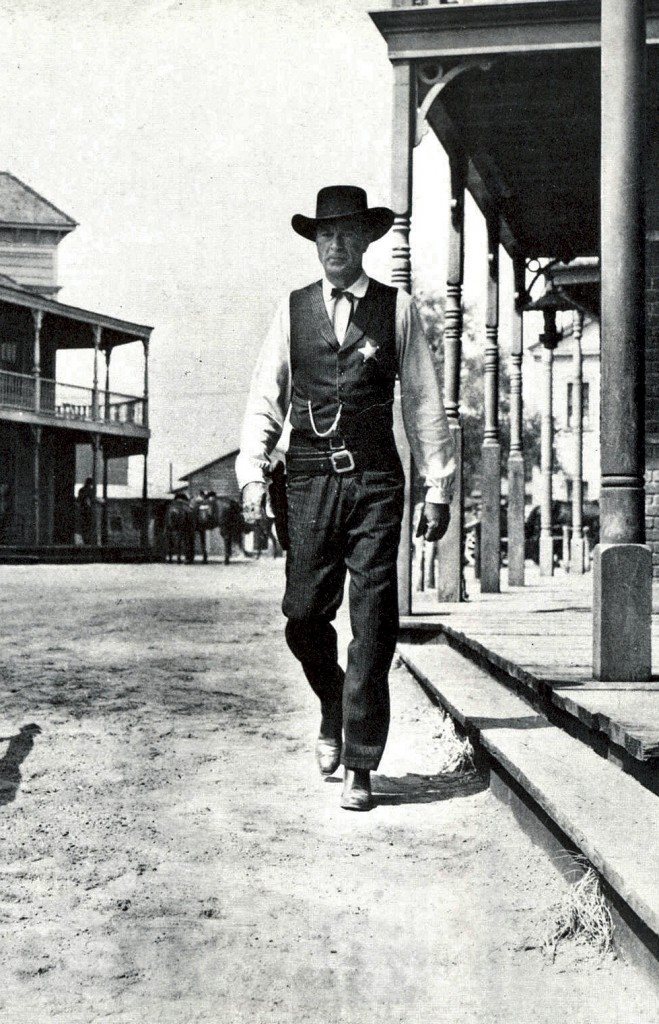
    Tiomkin would become the composer of choice for the American western throughout the 1950s, due to his distinctive handling of “High Noon” (1952). The success of its title song, “The Ballad of High Noon” (otherwise known as “Do Not Forsake Me, Oh My Darlin’”) – with its melody integrated into the orchestral score – provided a western blueprint for well over a decade. Tiomkin was honored with two Academy Awards, for Best Song and Best Scoring of a Dramatic Motion Picture.

    In “High Noon,” we are presented with a very different hero from that of the “Shane” archetype, a hero allowed to show uncertainty. Gary Cooper’s Marshal Will Kane seeks help for the final showdown, but winds up having to stand alone. As Mark Twain observed, “Courage is not the absence of fear. It’s acting in spite of that fear.”

    Clint Eastwood’s The Man With No Name, the anti-hero of Sergio Leone’s “Dollars Trilogy” of spaghetti westerns, is very much a product of the 1960s – cynical and self-serving, with his own moral code, lots of grays clouding up the black and white. The character was introduced in 1964’s “A Fistful of Dollars” (1964), a western remake of Akira Kurosawa’s “Yojimbo,” with a wandering gun-for-hire standing in for Kurosawa’s ronin, or masterless samurai.

    The Man With No Name assumes a mercenary pose, his allegiance shifting with the most profitable wind. However, he is revealed to have his own sense of justice, unorthodox as it may be.

    Ennio Morricone brought a fresh sound to this new kind of hero and earned international attention, which would intensify a few years later with his iconic score for “The Good, the Bad and the Ugly.”

    By the late ‘70s, the western as a genre appeared to be in its death-throes. But never underestimate the durability of a good myth. Even as galloping horses and dusty plains grew increasingly scarce on movie screens, the tropes and iconography of the western endured, transferred to the final frontier of space.

    Following the success of “Star Wars,” in 1977, with its cantinas and space cowboys, shoot-‘em-ups and showdowns were, increasingly, set in distant galaxies, though, regrettably, often without much of the former “western” moral gravitas.

    “Outland” (1981) is a gritty update of “High Noon,” transferred to a mining colony on one of the moons of Jupiter. This time Sean Connery plays the marshal, like Gary Cooper’s Will Kane, determined to do the right thing, even as he is left to stand alone against hired gunman. The score is by Jerry Goldsmith, who, earlier in his career, had written music for a fair number of true westerns, on both big screen and small.

    I hope you’ll join me for four faces of the western hero, on “Picture Perfect” – music for the movies – this Friday evening at 6:00 EDT, on WWFM – The Classical Network and at wwfm.org.
Tag Cloud

Aaron Copland (93) Beethoven (95) Composer (114) Film Music (144) Film Score (143) Film Scores (255) Halloween (94) John Williams (195) KWAX (229) Leonard Bernstein (104) Marlboro Music Festival (125) Movie Music (159) Mozart (91) Opera (213) Philadelphia Orchestra (89) Picture Perfect (174) Princeton Symphony Orchestra (109) Radio (88) Ross Amico (244) Roy's Tie-Dye Sci-Fi Corner (290) The Classical Network (101) The Lost Chord (269) Vaughan Williams (105) WPRB (397) WWFM (881)

DON’T MISS A BEAT

Receive a weekly digest every Sunday at noon by signing up here


RECENT POSTS