• Andrzej Panufnik Polish Giant of Music

    Andrzej Panufnik Polish Giant of Music

    by 

    in
    2 responses

    Andrzej Panufnik is the sleeping giant of Polish music. He’s one of those figures, like Bohuslav Martinu, who always seems perched on the verge of greatness, and yet never quite achieves the full degree of recognition he deserves.

    To begin with, his particular brand of modernism was eclipsed by the avant-garde experiments of his compatriot and friend, Witold Lutoslawski. Panufnik’s relationship with Lutoslawski dated back to the war years. During the Nazi occupation, the two formed a piano duo which played in Warsaw cafes – at the time the only way to share live music in public, since there was a ban on organized gatherings.

    In the meantime, Panufnik quietly produced subversive works celebrating Polish heroism and the resistance. Following the war, he was instrumental in the re-establishment of the Warsaw Philharmonic. However, increasing friction with Poland’s communist regime led to the composer’s defection, under hair-raising circumstances, in 1954. He was granted asylum in England, where he received a knighthood in 1991, the year of his death.

    This Sunday night on “The Lost Chord,” we’ll pay tribute to Panufnik with two of his ten symphonies, both of them markedly Polish in character.

    His “Sinfonia Rustica” (1948, revised in 1955), as the title implies, is a work very much of the people, making use of fragmented Polish themes, meant to reflect the rustic, semi-abstract, paper-cut art of the peasantry. Not only the symphony’s framework, but also the layout of the orchestra, is meant to reflect the symmetry found in Polish folk art. Nevertheless, despite the work’s direct character, it was denounced in 1949 as “alien to the great socialist era.”

    Whenever I listen to Panufnik’s “Sinfonia Sacra” (1963), I always think of Henryk Sienkiewicz’s 1884 epic, “With Fire and Sword,” set in the 17th century Polish-Lithuanian Commonwealth during the Khmelnytsky Uprising. With its evocation of winged hussars in courageous battle against the Cossacks, Sienkiewicz’s monumental page-turner whipped readers living in a partitioned Poland into a patriotic fervor.

    Conceived as a tribute to Poland’s millennium of Christianity and statehood, the symphony reflects the composer’s religious and patriotic sentiments. Panufnik based the work on the first known hymn in the Polish language, “Bogurodzica.” Throughout the Middle Ages, this served as something of a national anthem, sung not only in the church, but also on the battlefields by Polish knights.

    Join me for these two symphonies by Andrzej Panufnik – “Andrzej the Giant” – this Sunday night at 10 EST, on WWFM – The Classical Network or at wwfm.org.


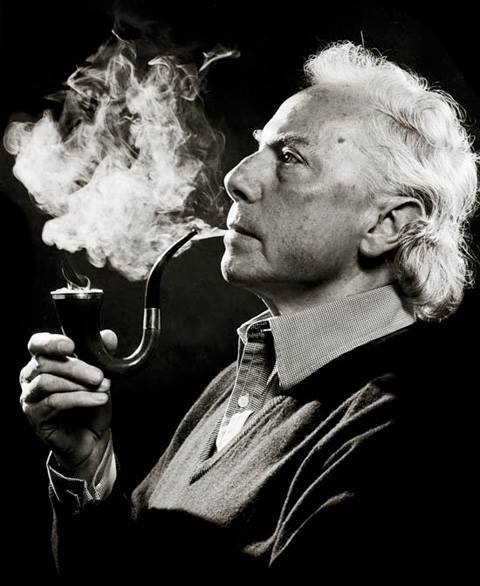
    PHOTO: Panufnik, adjusting to English life


  • Chinese New Year: Remembering Ma Sicong

    Chinese New Year: Remembering Ma Sicong

    by 

    in
    5 responses

    新年好

    It’s Chinese New Year! Welcome the Year of the Rooster by revisiting this article I wrote for the Trenton Times in 2012, about Chinese violinist and composer Ma Sicong, a political exile who lived out his life in Philadelphia, and whose music was revived locally by West Windsor’s Bravura Philharmonic Orchestra.

    http://www.nj.com/times-entertainment/index.ssf/2012/03/bravura_philharmonic_orchestra.html

    Ma Sicong’s Symphony No. 2:

    Ma Sicong works for violin:

    Ma receives a write-up in Life Magazine (as “Ma Sitson”):

    https://books.google.com/books?id=fFYEAAAAMBAJ&pg=PA33-IA7&lpg=PA33-IA7&dq=ma+sitson&source=bl&ots=lIbQrfR9mt&sig=ty77F5853DbQMAH6xFaAGaOqqx0&hl=en&sa=X&ei=jQAVT86gNufu0gGZs5zDAw&ved=0CDcQ6AEwAw#v=onepage&q=ma%20sitson&f=false


  • Silk Road Soundtrack Adventure

    Silk Road Soundtrack Adventure

    by 

    in
    4 responses

    Put on a comfortable pair of walking shoes. This week on “Picture Perfect,” we travel the Silk Road.

    We’ll have music from “The Adventures of Marco Polo” (1938), with Gary Cooper, of all people, as the medieval merchant-explorer. The score was the first by Hugo Friedhofer (born in San Francisco, despite his über-German name). Freidhofer had labored as an orchestrator for bigger-named composers, such as Erich Wolfgang Korngold and Max Steiner. He would go on to win an Academy Award for his music for “The Best Years of Our Lives.”

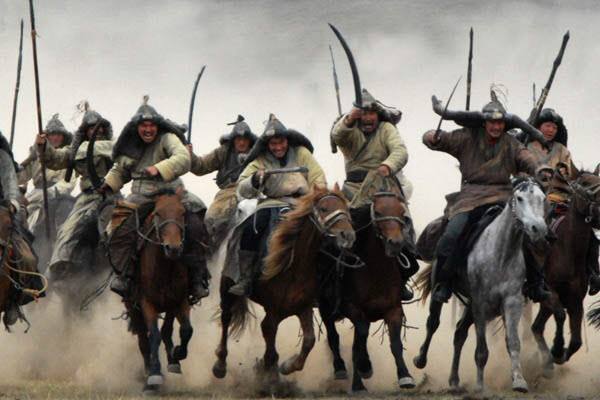
    Then we’ll hear selections from two big screen tellings of the exploits of Genghis Khan. “Genghis Khan” (1965) had quite a multi-national cast, in the best Old Hollywood tradition: Omar Sharif, Stephen Boyd, James Mason, Robert Morley, Francoise Morleac, Telly Savalas, Eli Wallach, Woody Strode, and hordes of extras. The music was by Yugoslavian composer Dusan Radic.

    “Mongol” (2007) was a joint production of Russia, Germany and Kazakhstan, which was actually shot in China. The music was by Finnish composer Tuomas Kantelinen, in the film supplemented with contributions by the Mongolian rock band Altan Urag. (We’ll stick with the orchestral stuff.)

    The score is striking for its use of khöömii throat-singers, female soloists lamenting and ululating over the orchestra, as well as the unique art of “urtiin duu” – traditional Mongolian long-singing. “Mongol” received an Academy Award nomination for Best Foreign Language Film.

    Finally, we’ll have selections from “Crouching Tiger, Hidden Dragon” (2000), with music by Tan Dun. The film was the winner of four Academy Awards, including Best Foreign Language Film and Best Original Score. It was also nominated for Best Picture.

    Yo-Yo Ma performs the cello solos on the soundtrack. One of the tracks is titled “Silk Road.” A couple of years earlier Ma had founded his Silk Road Ensemble.

    I hope you’ll join me for 7000 miles in sensible shoes this week, as we travel the Silk Road, on “Picture Perfect,” this Friday evening at 6:00 EST, on WWFM – The Classical Network and at wwfm.org.


  • PSO Concert Explores Heritage and Identity

    PSO Concert Explores Heritage and Identity

    by 

    in
    4 responses

    Four composers featured on the next concert of the Princeton Symphony Orchestra have traveled far, both geographically and genealogically, yet all manage to retain a strong sense of heritage at their core.

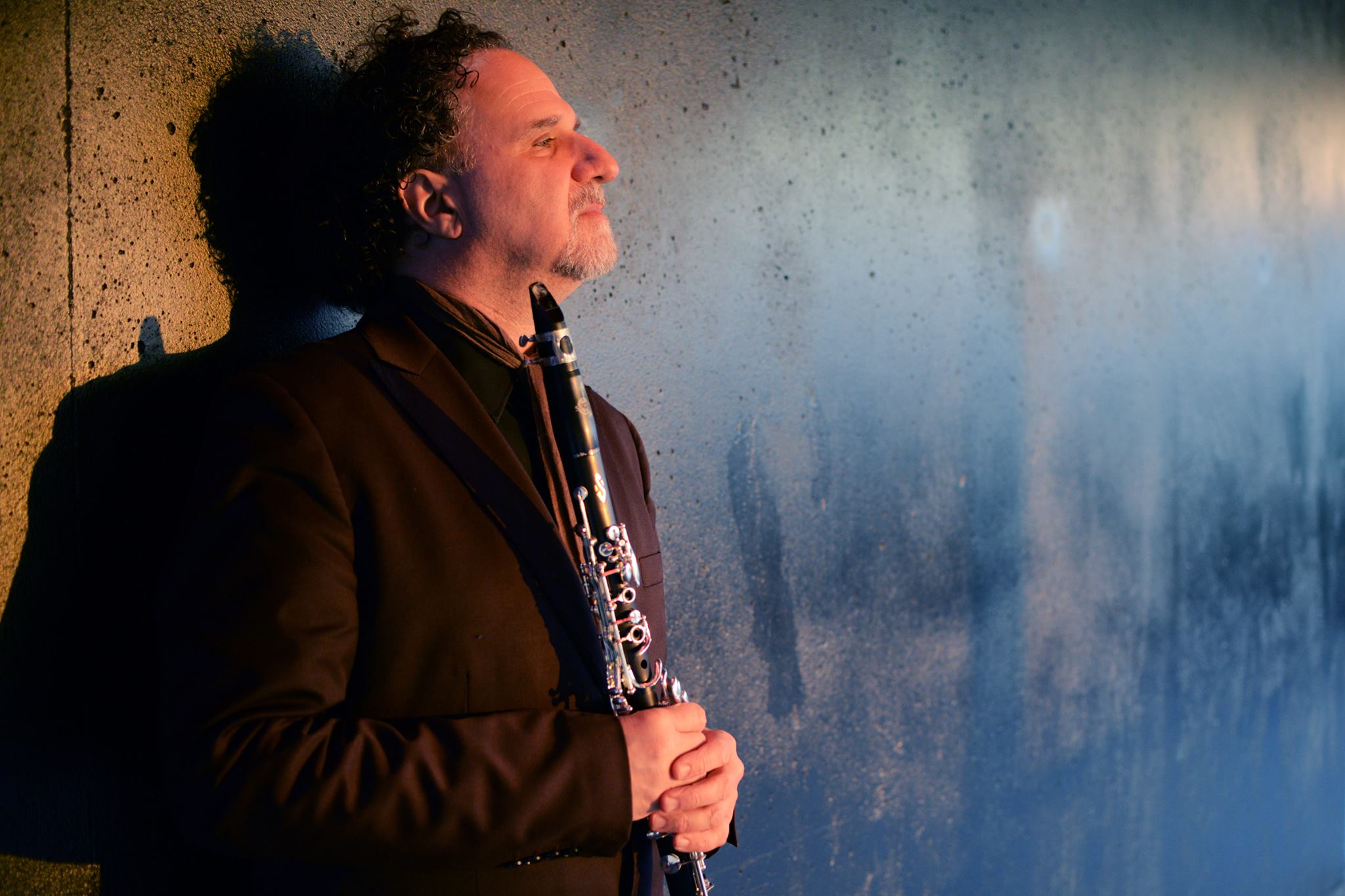
    Celebrated clarinetist David Krakauer will join the PSO and its music director, Rossen Milanov, for a program of music rooted in explorations of personal and cultural identity. The program, “Un/Restrained,” will take place at Princeton University’s Richardson Auditorium this Sunday afternoon at 4:00.

    On the concert will be klezmer-infused works by Krakauer, Osvaldo Golijov and Wlad Marhulets – composer. Saad Haddad, Composer will use live processing of acoustic instruments to suggest the microtonal music of his Arabic past.

    Rounding off the afternoon will be Rudolf Barshai’s arrangement of Dmitri Shostakovich’s String Quartet No. 8 into a Chamber Symphony. Shostakovich’s quartet is deeply personal – intense, harried, neurotic, enigmatic, visceral, and unforgettable. It’s also full of veiled self-references, including allusions to his other works, among them a piano trio that quotes a Jewish folk song.

    Read more about this fascinating program in my article in today’s Trenton Times.

    http://www.nj.com/times-entertainment/index.ssf/2017/01/classical_music_david_krakauer.html


  • Mozart Birthday Bash on WWFM!

    Mozart Birthday Bash on WWFM!

    by 

    in
    5 responses

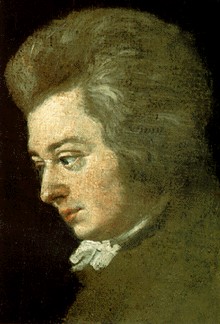
    Well, the day is finally upon us. Get ready for wall-to-wall Mozart, as Alice Weiss (9 to noon), Ross Amico (noon to 3), and David Osenberg (3 to 6) select from their own favorites to celebrate the master’s 261st birthday. I’ve already pulled aside a couple of concertos, a wind serenade, and some rarely-heard incidental music. I’m also flirting with the idea of playing one of the larger choral works. It will all hinge on what Alice comes up with this morning. Also, David has invited me to sit in to talk with him for a little bit about why we love “The Marriage of Figaro,” and to play excerpts from some of the recordings. So my 3:00 quitting time may be a little fluid.

    I’ll be back at 6:00, of course, for “Picture Perfect.” The Mozart celebration is underway right now, on WWFM – The Classical Network, and at wwfm.org.

    Rock me, Amadeus!


Tag Cloud

Aaron Copland (93) Beethoven (95) Composer (114) Film Music (144) Film Score (143) Film Scores (255) Halloween (94) John Williams (195) KWAX (229) Leonard Bernstein (104) Marlboro Music Festival (125) Movie Music (159) Mozart (91) Opera (213) Philadelphia Orchestra (89) Picture Perfect (174) Princeton Symphony Orchestra (109) Radio (88) Ross Amico (244) Roy's Tie-Dye Sci-Fi Corner (290) The Classical Network (101) The Lost Chord (269) Vaughan Williams (105) WPRB (397) WWFM (881)

DON’T MISS A BEAT

Receive a weekly digest every Sunday at noon by signing up here


RECENT POSTS