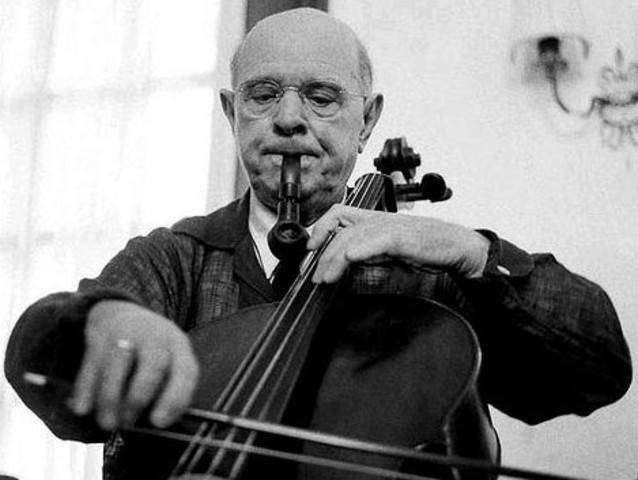
• Music for Casals Giants Among Friends

    Music for Casals Giants Among Friends

    by 

    in
    4 responses

    It’s hardly surprising that anyone would be moved to write music for Pablo Casals. Regarded by many as the greatest cellist of his time, perhaps ever, he was certainly a giant-of-an-artist, and of a man. Born in Catalonia, he stood up to the Franco regime, entering into self-imposed exile and refusing to perform in countries that recognized Franco’s authority. He rediscovered the Bach cello suites in a secondhand bookshop and made them famous. Over the span of his career, he played for both Queen Victoria and John F. Kennedy.

    As a conductor and administrator, he founded the Prades Festival and the Casals Festival. He established the Puerto Rico Symphony and the Conservatory of Music in Puerto Rico. He gave master classes, conducted and recorded at Marlboro. He was even a talented composer.

    This Sunday night on “The Lost Chord,” we’ll hear three works written for Casals by his notable friends and colleagues.

    Ralph Vaughan Williams wrote his seldom-heard “Fantasia on Sussex Folk Tunes” around the time he was at work on his Piano Concerto and “Job: A Masque for Dancing.” Casals performed the piece in 1930. It was not heard again until 1983, the year of its world-premiere recording (featuring Julian Lloyd Webber). The composer later undertook a full-scale concerto for Casals. It was never completed, but the sketches for its slow movement were realized for a 2010 performance at the BBC Proms, under the title “Dark Pastoral.”

    Donald Francis Tovey, who would achieve fame as a musicologist and writer on music, wrote quite a lot of music himself, most of it now forgotten. In 1935, he composed a concerto for Casals. At nearly an hour in length, the work may be the longest cello concerto ever written.

    In 1912, Tovey was a houseguest of Casals and cellist Guilhermina Suggia, at their summer home at Playa San Salvador on the Mediterranean coast. There, he played tennis, swam and performed chamber music with the likes of Enrique Granados and Mieczyslaw Horzsowski. He also made great strides on his opera, “The Bride of Dionysus.” As a show of thanks, he composed for his hosts a Sonata for Two Cellos in G major, which became part of the evenings’ entertainments. The work’s second movement is a set of variations on a Catalan folk song. We’ll hear it performed by Marcy Rosen and Frances Rowell, from a Bridge Records, Inc. release.

    Finally, Arnold Schoenberg, himself an amateur cellist, had done editorial work on three pieces by the 18th century composer Georg Matthias Monn for inclusion in the publication “Monuments of Music in Austria.” When Casals invited Schoenberg to conduct his orchestra in Barcelona, the composer set about arranging a “new” concerto, based upon a harpsichord work by Monn, written in 1746. We’ll hear Schoenberg’s transformation of the piece performed by Yo-Yo Ma.

    Join me for “Casals’ Pals” – music written for Casals by notable composers, friends and colleagues – this Sunday night at 10 EDT, on WWFM – The Classical Network and at wwfm.org.
  • Support WPRB Opera Radio & Fall Membership Drive

    Support WPRB Opera Radio & Fall Membership Drive

    by 

    in
    3 responses

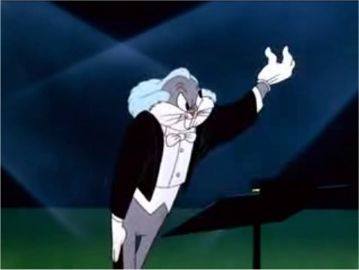
    Keeping opera on the air these days takes more than just a spear and magic helmet.

    We’re looking to raise funds for “Sunday Morning Opera,” as WPRB 103.3 FM continues with its Fall Membership Drive. I’ll be answering phones for Sandy until 10:00. Nobody knows more about opera than she. If her thoughtful blend of the classic and the unusual gets your Sundays off to a good start, call 609-258-1033, or pledge your support at wprb.com.

    Sandy will be my co-host this Thursday as we sample from more than two dozen unique thank you gifts in an attempt to lure you into supporting Classic Ross Amico. I hope you will do your part to fuel the diverse, creative, and idiosyncratic programming on this community-driven, independent radio station. Call 609-258-1033, and thank you!

    http://wprb.com/wprb-membership-drive-2016


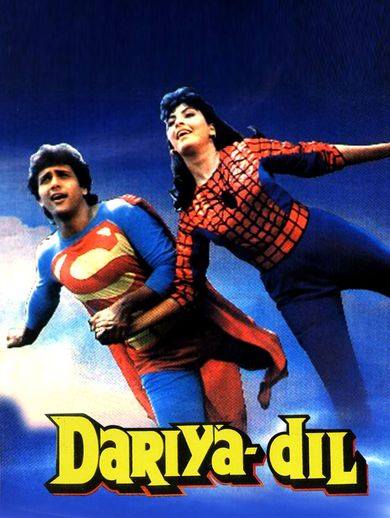
  • Superhero Movie Savior Found Hope Restored

    Superhero Movie Savior Found Hope Restored

    by 

    in
    One response

    Just when I despaired that there are no more good superhero films…

    https://www.youtube.com/watch?v=f5Pjo0WjBcs


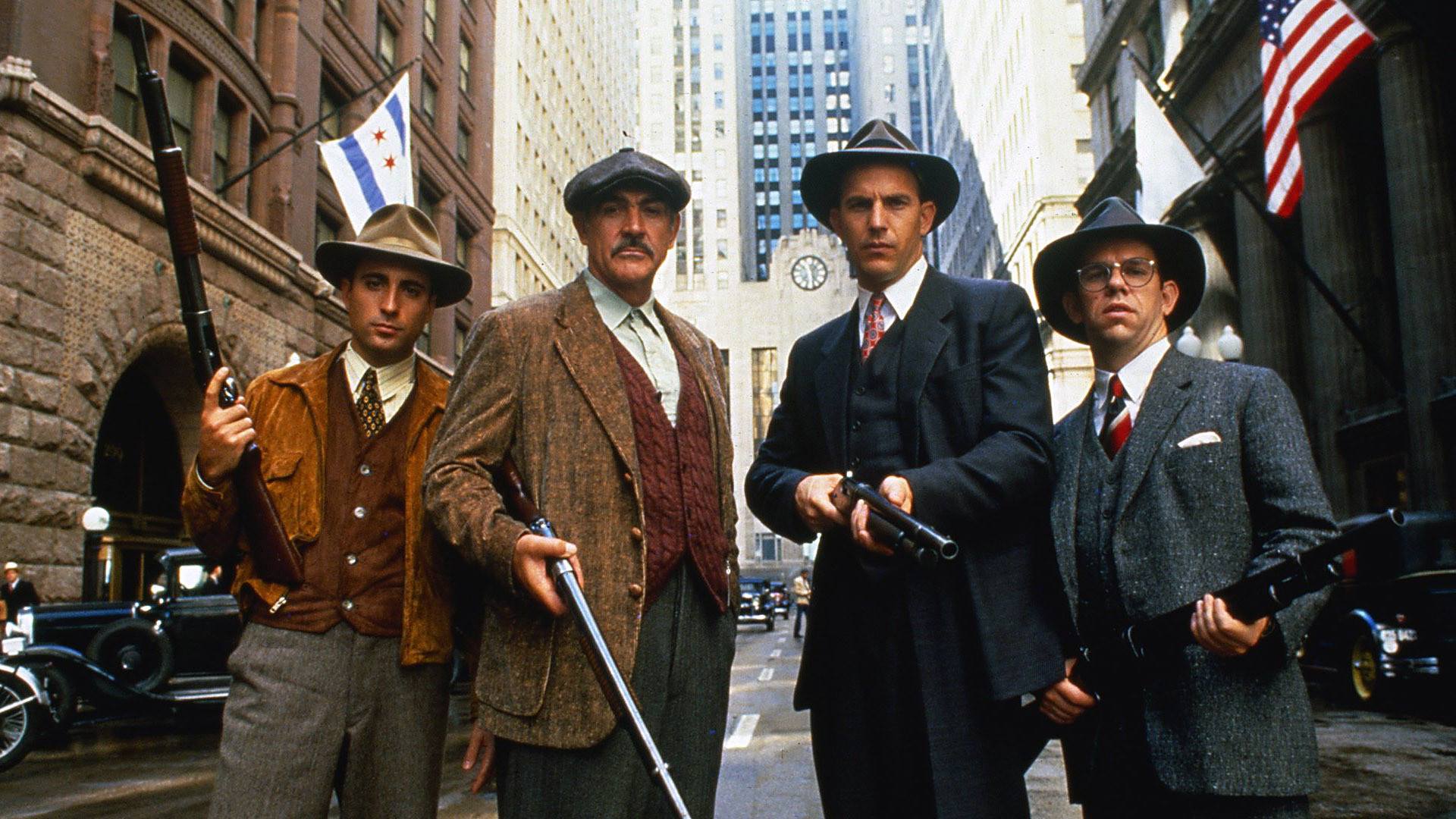
  • De Palma’s Thrilling Scores Perfect Music

    De Palma’s Thrilling Scores Perfect Music

    by 

    in
    6 responses

    Brian De Palma is an extraordinarily adept filmmaker, who has been criticized for his adherence to what has been perceived in some circles as genre trash. He has always been attracted to suspense and crime thrillers, usually of a particularly violent nature, many of them tinged with horror.

    This week on “Picture Perfect,” with Hallowe’en right around the corner, we’ll hear music from four of De Palma’s films.

    It’s hardly surprising that such an admirer of Alfred Hitchcock would also hire Hitchcock’s signature composer. Bernard Herrmann scored two films for De Palma – the first, “Sisters,” in 1973, and the second, “Obsession,” in 1976.

    “Obsession” is a spin on Hitchcock’s “Vertigo,” with a botched rescue attempt resulting in the death of a businessman’s kidnapped wife, and a seemingly chance encounter, years later, with a woman who is her doppelganger. The film stars Genevieve Bujold, John Lithgow, and a very tan Cliff Roberston.

    “The Fury,” from 1978, based on the novel by John Farris, is a supernatural thriller about two teenagers, endowed with the powers of telekinesis and extra-sensory perception, and the researchers who plan to use them for their own nefarious ends. For a time, Kirk Douglas has fun as a former CIA agent, and John Cassavetes is a particularly slimy villain. Cassavetes’ comeuppance makes for one of the most memorable movie endings of its era – and we’ll leave it at that!

    Critic Pauline Kael praised the music, which is by none other than John Williams – hot off his third Academy Award, for “Star Wars” – characterizing it as “as elegant and delicately varied a score as any horror film has ever had.”

    Of course, “The Fury” was not the first De Palma film to deal with telekinesis. His adaptation of Stephen King’s “Carrie,” from 1976, became one the decade’s landmark horror films. It broadened the popularity of King, whose first novel “Carrie” was, and propelled De Palma into the A-list of Hollywood directors. It also essentially launched the careers of Amy Irving, John Travolta, and Nancy Allen, among others. Sissy Spacek was nominated for an Academy Award for her performance in the title role, as was Piper Laurie as Carrie’s fundamentalist mother.

    The music was by Pino Donaggio. The director had wanted to continue his collaboration with Herrmann, but the composer died before the film could be completed. Donaggio, though classically trained, made his fortune writing popular songs. His biggest hit was “You Don’t Have to Say You Love Me,” as it is known in English. It was recorded by Dusty Springfield, with a well-known cover by Elvis Presley. Donnagio went on to become a regular De Palma collaborator, providing the music for seven of his films.

    Finally, we’ll turn our back on horror, to listen to music from a successful period crime thriller, loosely based on the real-life exploits of Eliot Ness and his fellow prohibition agents, “The Untouchables,” from 1987. Kevin Costner plays the by-the-book FBI agent who is given a valuable lesson in street smarts by an Irish beat cop played by Academy Award winning Sean Connery. (“He pulls a knife, you pull a gun. He sends one of yours to the hospital, you send one of his to the morgue. That’s the Chicago way, and that’s how you get Capone.”) Capone is played, incidentally, by a baseball bat wielding Robert De Niro.

    The score is by Ennio Morricone. Morricone, of course, was propelled to fame through his work on Sergio Leone’s spaghetti westerns. He applies some of that same mythmaking skill to this big screen adaptation, which had previously been published as a memoir and developed into a popular television series starring Robert Stack. The high point of the film must be the director’s nail-biting homage to Sergei Eisenstein, a slow motion shoot-out around a baby carriage as it teeters down the steps of Chicago Union Station.

    I hope you’ll join me for music from the films of Brian De Palma, on “Picture Perfect,” this Friday evening at 6:00 EDT, on WWFM – The Classical Network and at wwfm.org.

  • Early Music Festival at Grounds For Sculpture

    Early Music Festival at Grounds For Sculpture

    by 

    in
    2 responses

    You don’t have to be a Libra, have a grasp of “astrological houses,” or even know that the moon will be full on Sunday in order to reap the benefits of the zodiac. All you need to know is that the Guild for Early Music will be presenting its 12th annual Early Music Festival at Grounds For Sculpture in Hamilton from 12:15 to 5 p.m.

    “Our theme this year is ‘The Zodiac and the Night Sky,’ which was chosen to reflect the 12th festival,” says Judith Klotz, the Guild’s president. “We felt we had to do something with the number 12. Many of the groups will give nods in the titles of their pieces or the texts of their pieces to this theme. There are also many sculptures at the Grounds that relate to it. As always, there will be free sculpture tours to coordinate with the music.”

    The festival will feature over a dozen ensembles in performances of vocal and instrumental works from the Medieval, Renaissance and Baroque eras. The mini-concerts will take place in the East and West Galleries of the Seward Johnson Center for the Performing Arts. The event is free with admission to the park.

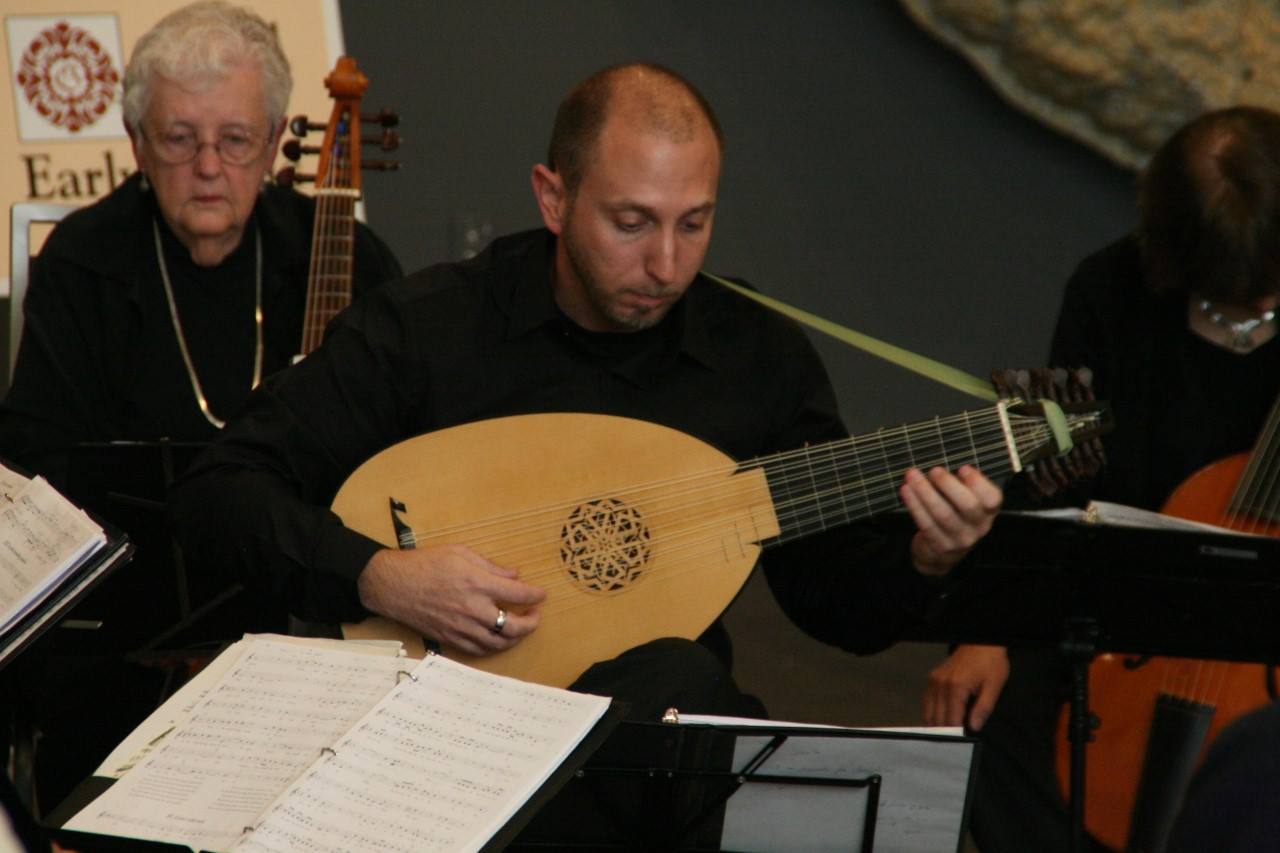
    Radio hosts from WWFM – The Classical Network will introduce and take part in the performances. An Early Music “petting zoo” will provide an opportunity to become familiar with instruments of yore such as the vielle, the viola da gamba, the dulcian and the cornetto. The atmosphere will be informal and relaxed, so feel free to take a break to stroll the grounds and enjoy the sculpture, the peacocks, the food and the foliage.

    Interested in learning more? The details are not in our stars, dear Brutus, but in my article in today’s Trenton Times.

    http://www.nj.com/times-entertainment/index.ssf/2016/10/classical_music_12th_annual_ea.html


    Lutenist John Orluk Lacombe will be among the featured performers at Sunday’s Early Music marathon


Tag Cloud

Aaron Copland (93) Beethoven (95) Composer (114) Film Music (144) Film Score (143) Film Scores (255) Halloween (94) John Williams (195) KWAX (229) Leonard Bernstein (104) Marlboro Music Festival (125) Movie Music (159) Mozart (91) Opera (213) Philadelphia Orchestra (89) Picture Perfect (174) Princeton Symphony Orchestra (109) Radio (88) Ross Amico (244) Roy's Tie-Dye Sci-Fi Corner (290) The Classical Network (101) The Lost Chord (269) Vaughan Williams (105) WPRB (397) WWFM (881)

DON’T MISS A BEAT

Receive a weekly digest every Sunday at noon by signing up here


RECENT POSTS