“Without music to decorate it, time is just a bunch of boring production deadlines or dates by which bills must be paid.”
-Frank Zappa
by
“Without music to decorate it, time is just a bunch of boring production deadlines or dates by which bills must be paid.”
-Frank Zappa

by
“Whoso pulleth out this sword of this stone and anvil is rightwise king born of all England.” So wrote Sir Thomas Malory in his account of the Arthurian legends, “Le Morte d’Arthur.”
This Sunday night on “The Lost Chord,” the focus will be on treatments of the Arthurian legends by a couple of American Romantics.
We’ll hear “Excalibur,” a symphonic poem after Arthur’s enchanted sword, by Louis Coerne (pronounced “Kern”). Coerne was born in Newark, NJ, in 1870. As was the custom at the time, he studied abroad, in France and Germany, then closer to home with John Knowles Paine. In Munich, he pursued organ and composition studies with Josef Rheinberger.
After that, it was back and forth to Germany, between church and conducting appointments in the United States, and then the assumption of a series of academic posts throughout the American Northeast and Midwest. Despite all the worn shoe leather, in his 52 years he managed to produce 500 works.
The remainder of the hour will be taken up by the Straussian tone poem “Le Roi Arthur,” a work in three movements by George Templeton Strong, son of the famous Civil War diarist, born in 1856. Strong, Jr., studied at the Leipzig conservatory, where Joachim Raff was among his teachers. For a time, he played viola in the Gewandhaus Orchestra. He rubbed shoulders with Liszt and Wagner, then was lured back to the United States by the offer of a teaching position (by former European transplant Edward MacDowell) at the New England Conservatory.
However, in part because the work didn’t agree with him, and in part because of health issues, Strong soon took off for Switzerland, where he settled on the banks of Lake Geneva. There, he dedicated the remainder of his life to painting watercolors and composing. Even after musical fashion had changed, he continued to play an active role in Geneva’s musical life.
I hope you’ll join me for “Kinetic Yankees in King Arthur’s Court” – treatments of the Arthurian legends by peripatetic American composers – this Sunday night at 10 EDT on WWFM – The Classical Network; or that you’ll listen to it later as a webcast, at wwfm.org.
by
Today is the birthday of Leo Arnaud, born in Lyon, France, on this date in 1904. You may not know his name, but from August 5 to August 21, yet again his most famous music will resound everywhere, as the 2016 Summer Olympics take place in Rio de Janeiro.
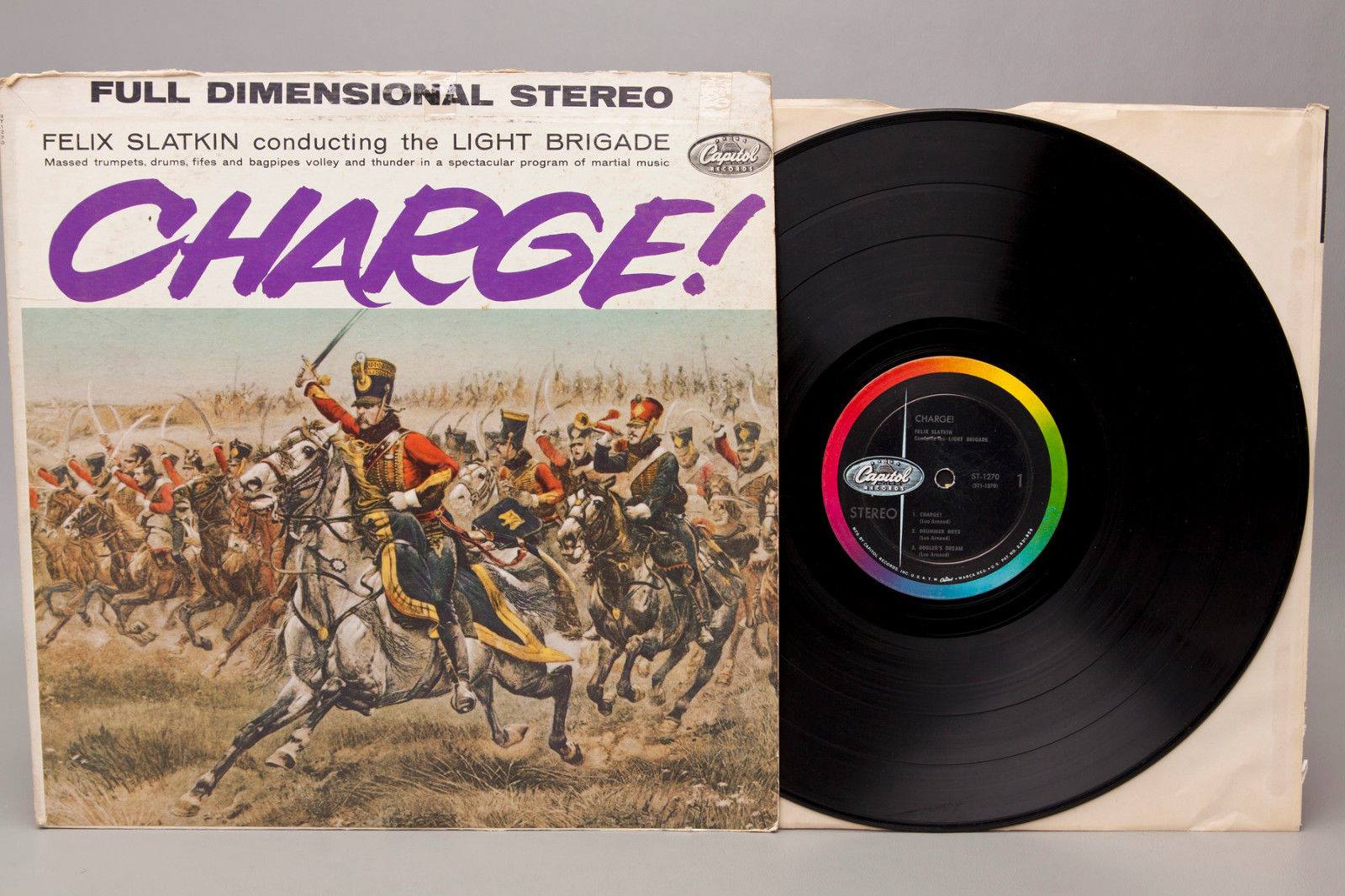
Arnaud composed the most widely recognized of Olympic fanfares, “The Bugler’s Dream,” for Felix Slatkin, to be included on his 1958 album, “Charge!” It was originally part of a larger work, the “Charge Suite.” However, in 1968, it was picked up by ABC, for use in its coverage of the Winter Olympics from Grenoble. As a result, the fanfare entered the popular consciousness, and it has been used by ABC in all its subsequent Olympics coverage. When the games moved to another network, the fanfare fell into dormancy for a time, but was revived by NBC for the Barcelona games in 1992.
Arnaud, who worked as an orchestrator in Hollywood for many years, studied with Maurice Ravel and Vincent d’Indy. His orchestrations can be heard in films ranging from “The Wizard of Oz” to “Ryan’s Daughter.”
In the 1980s, he revisited “The Bugler’s Dream” for a new recording on the Telarc label with legendary symphonic band director Frederick Fennell. This is a very interesting recording, since the composer not only expanded the fanfare into an Olympic triptych – adding a second movement, called “La Chasse,” and a third, titled “Olympiad” (written only a few days before the recording session) – but he also appears with the ensemble as a percussionist.
In more recent years, Arnaud’s fanfare has often been heard in an amalgam with John Williams’ “Olympic Fanfare and Theme,” written for the 1984 Summer Olympics in Los Angeles.
Happy birthday, Leo Arnaud (1904-1991)!
Slatkin’s recording of “The Bugler’s Dream” (Olympic Fanfare at 2:52):
The third of Arnaud’s fanfares, “Olympiad,” for Fennell:
https://www.youtube.com/watch?v=MR-1F3ZHylU
John Williams’ “Olympic Fanfare and Theme”:
The amalgam:
by
“Music is the art which is most nigh to tears and memory.”
– Oscar Wilde, “The Burden of Itys”

by
It was announced last week that the JACK Quartet will be undergoing a major personnel shift, with violinist Ari Streisfeld and cellist Kevin McFarland departing the group after August 5. The ensemble will make one of its final appearances with all its original members on a free concert at Rutgers’ Mason Gross School of the Arts in New Brunswick on July 27 at 7 p.m.
On the program will be works by Streisfeld, Hannah Lash, Caroline Shaw, and Derek Bermel. Bermel was artist-in-residence at the Institute for Advance Study in Princeton from 2009 to 2013. Shaw, at 30 the youngest recipient of the Pulitzer Prize for Music in 2013, is a Ph.D. candidate at Princeton University.
Though the compositions will be “new,” the music will be influenced by works and styles of the Middle Ages and the Renaissance.
As one of today’s premiere contemporary music ensembles, the JACK Quartet is unsurpassed in its ability to navigate unusual challenges. If you think a simple personnel shift is going to change anything, then you really don’t know JACK.
You can read more about the group, the upcoming concert, and the impending transition in my article in today’s Trenton Times.
http://www.nj.com/times-entertainment/index.ssf/2016/07/classical_music_jack_quartet_p.html
Aaron Copland (93) Beethoven (95) Composer (114) Film Music (145) Film Score (143) Film Scores (255) Halloween (94) John Williams (195) KWAX (229) Leonard Bernstein (104) Marlboro Music Festival (125) Movie Music (160) Mozart (91) Opera (213) Philadelphia Orchestra (89) Picture Perfect (174) Princeton Symphony Orchestra (109) Radio (88) Ross Amico (244) Roy's Tie-Dye Sci-Fi Corner (290) The Classical Network (101) The Lost Chord (269) Vaughan Williams (105) WPRB (397) WWFM (881)
4 responses