• Mahler’s Birthday Grimm Fairy Tales on WPRB

    Mahler’s Birthday Grimm Fairy Tales on WPRB

    by 

    in
    5 responses

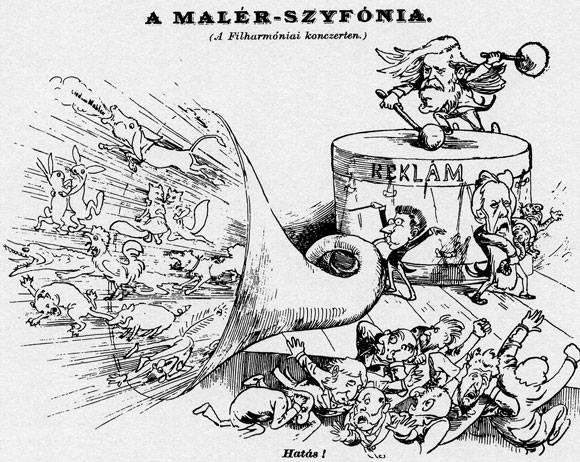
    Tomorrow is the birthday of Gustav Mahler. Rather than pummel you with the expected symphonies, I thought I would take a more circuitous route on WPRB and celebrate the great composer by way of the influence of seminal German romantic Clemens Brentano.

    Brentano (1778-1842) was the force not only behind the collection of folk poems which were published as “Des Knaben Wunderhorn” (“The Youth’s Magic Horn”) – which he compiled and embellished with his brother-in-law Achim von Arnim – but also the spark that set the Brothers Grimm to work on their imaginative quest to document fairy tales of the German people.

    The influence of “Des Knaben Wunderhorn” on Mahler is well-known. He set many of the poems, both individually and as parts of song cycles, and the melodies of a good number of those pervade his symphonies.

    Less well known is the influence of the Brothers Grimm. We’ll hear Mahler’s rarely-performed cantata “Das klagende Lied” (“Song of Lamentation”), inspired by the Grimm tale, “The Singing Bone.” The work is an early one, dating from Mahler’s final year at the Vienna Conservatory, and it underwent heavy revisions over the years, with the composer even dropping the first third of the piece. A two-part version entered the repertoire, but since the late 1960s, when the excised material again came to light, it has often been the practice to perform the cantata in its original three-part form. How Mahler would have felt about that is anyone’s guess – it probably would have infuriated him – but artists are not always the best judges of their own work. Anyway, the more Mahler, the merrier (or maybe not).

    For the rest of the morning, we’ll have music inspired by other tales from the Brothers Grimm, including Hansel and Gretel, Snow White, Aschenputtel (Cinderella), Little Briar Rose (Sleeping Beauty), Little Red Riding Hood, Rapunzel, Rumpelstiltskin, The Brave Little Tailor and The Juniper Tree.

    It will be a very Grimm playlist indeed, from 6 to 11 a.m. EDT on WPRB 103.3 FM and at wprb.com. We’re always at our grimmest when the heat index hits 100, on Classic Ross Amico.

  • Michael Torke July Saxophone Quartet

    Michael Torke July Saxophone Quartet

    by 

    in
    7 responses

    It’s getting rather late in the day on July 5. I’m kind of tapped out after the holiday, so here’s a brief essay for saxophone quartet by Michael Torke, called “July.”


  • William Billings Revolutionary Tunesmith

    William Billings Revolutionary Tunesmith

    by 

    in
    7 responses

    William Billings was the greatest of the Yankee tunesmiths to spring up in the Boston area during the 18th century. Most of them were composers by avocation, pursuing more respectable trades like tanner, blacksmith and horse breeder.

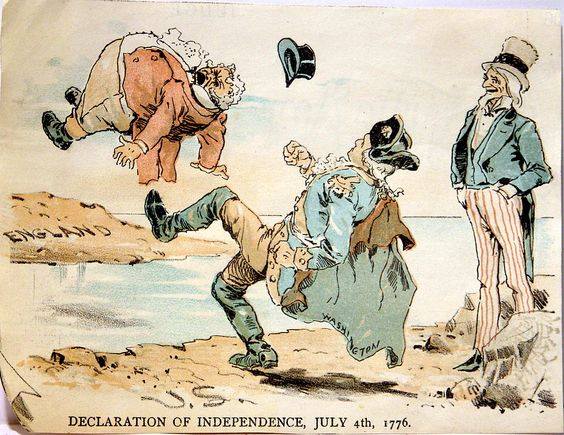
    Billings’ “Chester” became one of the firebrands of the American Revolution. Like most of the anthems composed during the era, it has little to do with the town of its name. Instead, it rails against the tyranny of British occupation and trumpets the inevitability of American victory.

    This might be my favorite verse:

    “The Foe comes on with haughty Stride;
    Our troops advance with martial noise,
    Their Vet’rans flee before our Youth,
    And Gen’rals yield to beardless Boys.”

    A happy (and safe) Independence Day to you!

    https://www.youtube.com/watch?v=IzRhFH5OyHo


  • Blitzstein’s Airborne Symphony WW2 Relic

    Blitzstein’s Airborne Symphony WW2 Relic

    by 

    in
    5 responses

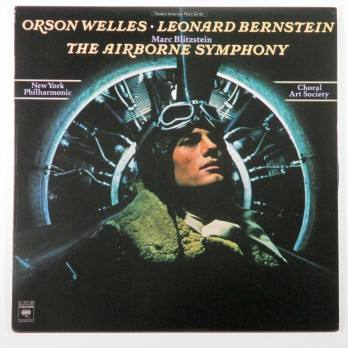
    This Sunday night on “The Lost Chord,” we’ll highlight a single, patriotic work: Marc Blitzstein’s “Airborne Symphony.” Written on a commission from the U.S. Army while Blitzstein was serving in its Air Force, the work traces the evolution of flight from its conception in theory to its use in modern warfare.

    The work was envisaged by the composer as a big symphony on the theme of “the sacred struggle of airborne free men of the world… to crush the monstrous fascist obstructionist in their path.”

    Blitzstein began the work in 1943, at the height of World War II. It would not be completed until after the war, in 1946. Leonard Bernstein conducted the premiere virtually while the ink was still wet on the page. He recorded it twice. We’ll be listening to the second of the two recordings, from 1966, with Orson Welles as the narrator, vocal soloists, the New York Philharmonic, and the men of the Choral Arts Society.

    Join me for this forgotten relic of WWII – “Flight of Fancy” – tonight at 10 EDT on WWFM – The Classical Network; or listen to it later as a webcast at http://www.wwfm.org/


  • Great Achievements Plan and Urgency

    Great Achievements Plan and Urgency

    by 

    in
    3 responses

    “To achieve great things, two things are needed: a plan, and not quite enough time.”

    • Leonard Bernstein

Tag Cloud

Aaron Copland (93) Beethoven (95) Composer (114) Film Music (144) Film Score (143) Film Scores (255) Halloween (94) John Williams (195) KWAX (229) Leonard Bernstein (104) Marlboro Music Festival (125) Movie Music (159) Mozart (91) Opera (213) Philadelphia Orchestra (89) Picture Perfect (174) Princeton Symphony Orchestra (109) Radio (88) Ross Amico (244) Roy's Tie-Dye Sci-Fi Corner (290) The Classical Network (101) The Lost Chord (269) Vaughan Williams (105) WPRB (397) WWFM (881)

DON’T MISS A BEAT

Receive a weekly digest every Sunday at noon by signing up here


RECENT POSTS