• Star Wars Music Return of the Jedi & Prequels

    Star Wars Music Return of the Jedi & Prequels

    by 

    in
    2 responses

    This week on “Picture Perfect,” we conclude our multi-part retrospective of music from the “Star Wars” movies, in anticipation of the theatrical release of “Star Wars: The Force Awakens” on December 18.

    We spent the past two weeks listening to highlights from the finest of the scores, those for “Star Wars” (later subtitled “Episode IV: A New Hope”) and “The Empire Strikes Back.” This week, we’ll hear selections from “Return of the Jedi,” which rounded off the original trilogy in 1983, and music composed for the prequels, issued between 1999 and 2005.

    Already in 1983, there was, in some respects, an air of fatigue that hung about the third installment, “Return of the Jedi,” the most episodic of the original films that also seemed to recycle quite a bit of material from the first. The landspeeder was replaced by speeder bikes, the Wookie was usurped by teddy bear-like Ewoks, and the threat of the Death Star was replaced by – well, an even bigger Death Star.

    For one of the scenes, which occurs fairly early in the film, the score even recycled battle music heard the first time around, perhaps in homage, but also, from a practical standpoint, to get it in on deadline.

    That said, “Jedi” sported plenty of imaginative touches, fleshing out the villainous Emperor and giving us the belated onscreen debut of Jabba the Hutt. All told, while not quite on the same exalted level as its predecessors, the film got the job done and rounded off the trilogy in satisfying fashion.

    Unfortunately, George Lucas couldn’t let well enough alone, and 16 years later, as if against our will (how could we help ourselves?), we were propelled back to a galaxy far, far away. The “Star Wars” prequels generated some pretty impressive box office, but also a fair amount of controversy. The films were criticized by some for their overreliance on computer generated imagery, inane dialogue peppered with impenetrable jargon, and wooden performances, with some particularly painful love scenes.

    Though “Star Wars” composer John Williams crafted some lovely thematic interludes, the emphasis this time around seemed to be on epic bombast and ponderous premonitions of a date with destiny that the story and visuals required. Because everything in the film could be manipulated digitally and reedited virtually right up until the moment of release, the scores suffered through excessive tinkering in post-production.

    I’ve selected just over a half an hour worth of cues from the prequel trilogy – “Episode I: The Phantom Menace,” “Episode 2: Attack of the Clones,” and “Episode 3: Revenge of the Sith” – which I’ve assembled into an extended suite. Williams indulges in nearly ten minutes of unabashed sentiment during the end credits of “Sith,” recalling some of the most beloved “Star Wars” themes and pushing things completely over the top by evoking the pomp of Sir William Walton to provide a euphoric coda to the series.

    At the time, it was thought this would be the last of the “Star Wars” films, so who could blame him? Of course, we now know that not to be the case…

    I hope you’ll join me this Friday evening at 6, with a repeat Saturday morning at 6, for a conclusion to our “Star Wars” retrospective; or that you’ll listen to it later as a webcast at wwfm.org.

  • Sibelius Celebrated on WPRB 103.3 FM

    Sibelius Celebrated on WPRB 103.3 FM

    by 

    in
    3 responses

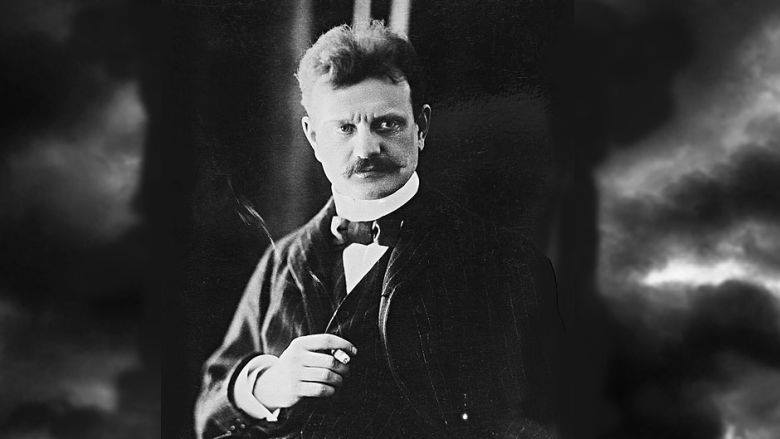
    We continue our celebration of the 150th anniversary of the birth of Jean Sibelius (which occurred on December 8, 1865). Right now, we’re in the middle of an hour of his final masterworks, including incidental music from “The Tempest,” the tone poem “Tapiola,” and the Symphony No. 7.

    Then at 10:00 we’ll ricochet back to one of his early successes, “Four Legends from the Kalevala,” in a fantastic recording with Eugene Ormandy and the Philadelphia Orchestra.

    It’s all-Sibelius until 11 ET, on WPRB 103.3 FM and at wprb.com.

    #Sibelius150

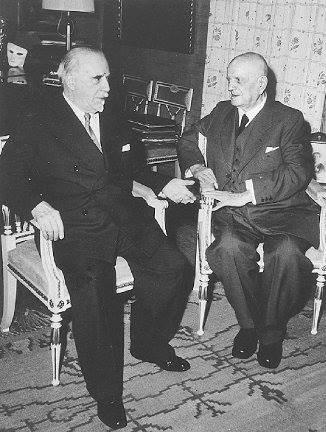
    PHOTO: Sibelius with Eugene Ormandy


  • Sibelius The Silence From Järvenpää

    Sibelius The Silence From Järvenpää

    by 

    in
    5 responses

    For the last 30 years of his life, Sibelius was gripped by what became known as “The Silence from Järvenpää.” Järvenpää is the Finnish market town outside which the composer made his home, which he called Ainola (after his wife, Aino, who in turn was named for a character in the Kalevala, the Finnish national epic).

    After the completion of the 7th Symphony and the tone poem “Tapiola” in the mid-1920s, Sibelius created no more major works, though he grappled with the composition of an 8th symphony, which he eventually destroyed. He spent his later years being lionized by visiting conductors and listening to performances of his music over the radio.

    Until then, however, he wrote prolifically, and this morning on WPRB, we’ll have another chance to sample from his unique output, with major works like the symphonies, of course (we have yet to hear Symphonies No. 2, 6 and 7), but we’ll also listen to some of the tone poems, miniatures, and reams of incidental music he composed for the Swedish Theater in Helsinki.

    Our guests this morning will be Melissa Malvar and Fernando Malvar-Ruiz of The American Boychoir, who will be dropping by at around 7:30 to tell us a little bit about the group’s upcoming Christmas concert, “Home for the Holidays,” a Princeton tradition, which will take place at Richardson Auditorium on December 20 at 4 p.m.

    Otherwise, it’s wall-to-wall Sibelius, as we wrap up loose ends from the sesquicentennial celebrations of his birth, on December 8, 1865. Join me from 6 to 11 ET, on WPRB 103.3 FM or at wprb.com. We’ll rail against The Silence, on Classic Ross Amico.

    #Sibelius150 #12DaysOfSibelius

    PHOTO: Sir Thomas Beecham drops in on Sibelius


  • More Sibelius? A Sesquicentennial Celebration Part II

    More Sibelius? A Sesquicentennial Celebration Part II

    by 

    in
    5 responses

    When is too much enough? Clearly NOT when it comes to Jean Sibelius.

    Even as the music world is sleeping off yesterday’s sesquicentennial anniversary bash, Classic Ross Amico is gearing up for Part II of its #Sibelius150 celebration.

    Last week’s playlist was not intended to be a “Part I.” However, the positive feedback received by way of Facebook, via email, and through genuine, old-fashioned, face-to-face conversation had a kind of chemical reaction with the immediate regret I felt at the end of last week’s show of not being able to get around to so much of the music I had wanted to share. Thus, the idea for an ambitious follow-up was spawned.

    Last Thursday, we enjoyed classic recordings of Symphonies Nos. 3, 1, 4, and 5; this week, we’ll hear great performances of Symphonies 6, 2, and 7, and possibly even the original 1915 version of No. 5, which is in many respects quite a different piece from the finished (or Finnished?) masterwork of 1919.

    And of course, we’ll have plenty of other surprises, many in superb recordings, along the way.

    How much Sibelius is too much Sibelius? Tune in tomorrow morning from 6 to 11 ET to test your stoic endurance, on WPRB 103.3 FM or at wprb.com. It ain’t Tapiola until it’s Tapiola this week, on Classic Ross Amico.


  • Sibelius’ 150th: Celebrating Finland’s Musical Titan

    Sibelius’ 150th: Celebrating Finland’s Musical Titan

    by 

    in
    7 responses

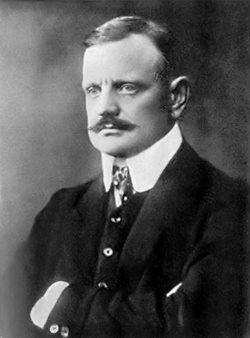
    At last the day is upon us – the 150th anniversary of the birth of Jean Sibelius. Sibelius, of course, was Finland’s most revered artist and, though arguably underestimated for much it, one of the most influential composers of the 20th century.

    With his 50th birthday imminent in 1915, the Finnish government commissioned from him a 5th symphony. The work was given its premiere one hundred years ago today, with the composer conducting the Helsinki Philharmonic Orchestra – though the original version was quite different, in many respects, from the masterpiece that has entered the standard repertoire. In a remarkable feat of objectivity, Sibelius revised the symphony twice, in 1916 and then again in 1919.

    One of the work’s major innovations (showing the influence of Liszt, whom Sibelius greatly admired) involved the elimination of the break between the first two movements of the original, four-movement structure. The demarcations are blurred so that the first movement slips inexorably into the scherzo, and the listener is swept along, as if caught in a powerful current or precipitated into an avalanche, to thrilling effect.

    This transition is always a challenge for conductors, since the changeover should appear entirely organic. Sibelius would further experiment with the telescoping of movements and the subversion of classical expectations in his 7th Symphony.

    Perhaps the most striking revision is in how the final movement builds to a climax of impressive grandeur, a sublime apotheosis of the ennobling “swan theme,” only to come up against a series of powerful, monolithic chords, each isolated from the other by a moment of silence. The first five suspend the effect, before coming down with an indisputable sense of finality on the sixth. This is music of the gods.

    On this day, one hundred years ago, the Finnish government declared Sibelius’ birthday a national holiday. You would do yourself a favor if you put in a call to your boss to tell him or her that you’ll be staying home today so that you can enjoy Sibelius’ Symphony No. 5.

    Happy birthday, Jean Sibelius!


    Karajan conducts the 5th Symphony:
    https://www.youtube.com/watch?v=V8qiAMOiygs

    Vänskä conducts the original 1915 version!

    More Sibelius this Thursday morning, from 6 to 11 ET, when I continue with the second half of my sesquicentennial salute on WPRB 103.3 FM and at wprb.com.

    #Sibelius150 #12DaysOfSibelius


Tag Cloud

Aaron Copland (93) Beethoven (95) Composer (114) Film Music (144) Film Score (143) Film Scores (255) Halloween (94) John Williams (195) KWAX (229) Leonard Bernstein (104) Marlboro Music Festival (125) Movie Music (159) Mozart (91) Opera (213) Philadelphia Orchestra (89) Picture Perfect (174) Princeton Symphony Orchestra (109) Radio (88) Ross Amico (244) Roy's Tie-Dye Sci-Fi Corner (290) The Classical Network (101) The Lost Chord (269) Vaughan Williams (105) WPRB (397) WWFM (881)

DON’T MISS A BEAT

Receive a weekly digest every Sunday at noon by signing up here


RECENT POSTS