• Mahler & Menotti: A Tale of Two Birthdays

    Mahler & Menotti: A Tale of Two Birthdays

    by 

    in
    4 responses

    Okay, today is the birthday anniversary of the seething Austrian genius Gustav Mahler (1860-1911), who declared on a walk with Sibelius that “the symphony must be like the world; it must embrace everything” and confided to his wife, “My time will come.” We all know about him.

    It is also the birthday of Italian-American Gian Carlo Menotti (1911-2007), a prolific composer of opera and the recipient of two Pulitzer Prizes (for “The Consul,” in 1950, and “The Saint of Bleecker Street,” in 1955); yet somehow Menotti is basically remembered for his one-act Christmas opera, “Amahl and the Night Visitors,” written for NBC in 1951.

    “Amahl,” broadcast live on Christmas Eve, was the first opera commissioned for television. The composer continued to work on the score until perilously close to air time. In fact, his partner, Samuel Barber, had to be brought in to help complete the orchestrations. Despite the time crunch, the opera was a ratings smash, and for the next 15 years “Amahl” became a Christmas broadcast tradition.

    Chet Allen, who originated the role of Amahl, was a chorister with the Columbus Boychoir, which was founded in Columbus, OH, in 1937. By the time of the opera’s telecast, the choir had relocated to Princeton, NJ. In 1980, the group would be renamed The American Boychoir. Since the opera fell a few minutes short of the top of the hour, the choir was brought on to perform carols appropriate for the season.

    Though he wrote the work for television, Menotti shrewdly realized its potential for the stage. Allen would reprise the role of Amahl at the New York City Opera in 1952. Since then, “Amahl” has enjoyed a robust history of professional and community performances.

    Menotti will always be remembered as an opera composer (in his day, he was regarded as the heir of Puccini, admiringly by some, derisively by others), but his concert works are certainly worthy of interest. Join me on WPRB 103.3 FM, or at wprb.com, this Thursday morning between 6 and 11 ET to hear Menotti’s Piano Concerto from 1945, in a 1961 performance by the great Earl Wild.

    In the meantime, for you lovers of licorice, “This is my box”:


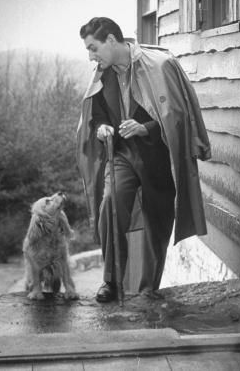
    PHOTO: Menotti (right) and friend

  • Princeton’s Mega Music Events and Gemma New’s Triumph

    Princeton’s Mega Music Events and Gemma New’s Triumph

    by 

    in
    5 responses

    Apologies if any of you were stuck sitting in a cubicle somewhere hoping for a few seconds of escapism courtesy of Classic Ross Amico. Unfortunately, I was up to my eyeballs trying to figure out how to synthesize all the abundant material for a newspaper article about two mega-events coming up in Princeton, beginning this weekend: the Golandsky Institute International Piano Festival, and the Edward T. Cone Composition Institute, a workshop for young composers, with JoAnn Falletta and the New Jersey Symphony Orchestra.

    The reminders from my editors that they were expecting an article from me began to arrive around 4:00, four hours past deadline. I uploaded the last of the photos around 6. All in a day’s work.

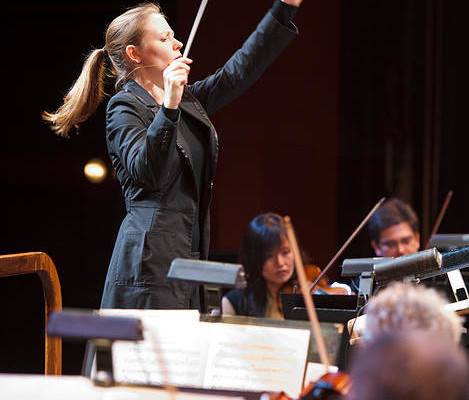
    Speaking of the New Jersey Symphony Orchestra, belated congratulations to Gemma New, associate conductor of the NJSO, who has been named music director of Ontario’s Hamilton Philharmonic Orchestra. New, 28, is also founder/director of the Baltimore-based new music collective, the LUNAR ensemble.

    Apparently, the announcement was made back in May, but you know how it is when you’re working. You’ll find the press release here:

    http://hpo.org/gemma-new-music-director/

    At least this article was published by the CBC only three days ago:

    http://www.cbc.ca/news/canada/hamilton/news/gemma-new-of-hamilton-philharmonic-is-1-of-continent-s-few-female-conductors-1.3137925


  • Philadelphia Orchestra on WRTI Today

    Philadelphia Orchestra on WRTI Today

    by 

    in
    One response

    Tune in this afternoon to WRTI for the first of my Philadelphia Orchestra interviews. As part of the intermission features on this week’s concert broadcast, conductor-in-residence Cristian Măcelaru, born in Romania, will talk about his great composer-compatriots George Ensecu and György Ligeti.

    Ligeti, born in Transylvania, will be represented by his rarely-heard “Concert românesc” (hear Măcelaru talk about the interesting use of the horns in the piece). Măcelaru concludes the concert with a roof-raising performance of Enescu’s “Romanian Rhapsody No. 1.” He comments that it has always been his dream to perform the work with The Philadelphia Orchestra.

    Sarah Chang will be the soloist in Dvořák’s Violin Concerto. The program will also include Beethoven’s Symphony No. 1.

    The broadcast begins at 1 ET. Listen in the Philadelphia area at 90.1 FM, search for additional frequencies at wrti.org, or avail yourself of the station’s internet streaming.

    Other commitments this afternoon? Listen to the interview (already posted) here:

    http://wrti.org/post/philadelphia-orchestra-concert-wrti-sarah-chang-soloist-sunday-july-5-1-pm

    Also on the website: Susan Lewis’ interview with Sarah Chang. Gregg Whiteside is the producer and host of the Philadelphia Orchestra broadcasts.


  • Diamond Perle Centenary Celebration

    Diamond Perle Centenary Celebration

    by 

    in
    6 responses

    Happy Independence Day!

    Is there a more neglected composer among symphonists of the “Greatest Generation” of American composers than David Diamond? I think not. Diamond composed 11 symphonies, and every one that I’ve heard has been wholly worthwhile. Yet, criminally, some of them have not even been recorded.

    This Sunday night on “The Lost Chord,” we celebrate Diamond’s centenary (he was born on July 9, 1915), with his Symphony No. 4 and the orchestral fantasia “The Enormous Room,” after the autobiographical novel of E.E. Cummings.

    In between, we observe the centenary of a seemingly disparate figure, George Perle (born on May 6, 1915). Diamond would occasionally construct a theme on a tone row, but his music was essentially tonal. Perle, by contrast, was twelve tone all the way, yet he managed, much like his musical hero, Alban Berg, to keep it lyrical. Despite their different approaches, both composers, Diamond and Perle, are quite direct in their appeal to the receptive listener.

    I had been toying with the idea of programming Perle’s “Lyric Intermezzo,” a piano suite that manages to convey a romantic sensibility by way of serialism (it was inspired by Schumann’s “Waldszenen”). In the end, however, I opted for his eminently listenable – and Pulitzer Prize-winning – Wind Quintet No. 4.

    I hope you’ll join me for “Pearls from Perle, Diamonds from Diamond,” this Sunday night at 10 ET, with a repeat Wednesday evening at 6; or that you’ll listen to it later as a webcast at http://www.wwfm.org.


    An exhaustive analysis of Diamond’s symphonies by one of his former pupils:
    http://alanbelkinmusic.com/Diamond/DD.html

    David Diamond interview, conducted by Bruce Duffie:
    http://www.bruceduffie.com/diamond.html

    George Perle’s obituary in the New York Times:
    http://www.nytimes.com/2009/01/24/arts/music/24perle.html?pagewanted=all&_r=0

    George Perle in conversation with David Dubal:

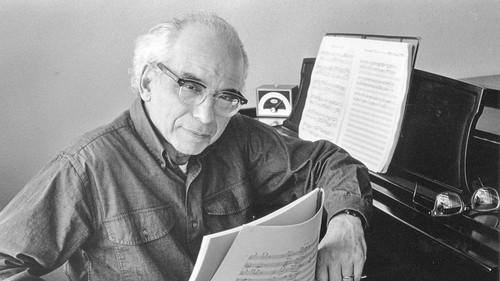
    PHOTOS: Perle before swine (top); Diamond is forever


  • Remembering James Horner’s Iconic Film Scores

    Remembering James Horner’s Iconic Film Scores

    by 

    in
    3 responses

    The prolific film composer James Horner died on June 22, when his single-turboprop plane went down in Los Padres National Forest in Southern California. He was 61 years-old.

    This week on “Picture Perfect,” we honor his memory, with music from but a handful of his over 100 scores. Horner was the recipient of two Academy Awards – for Best Original Score and Best Original Song (“My Heart Will Go On”) – for his work on “Titanic” (1997). “Titanic” went on to become the bestselling soundtrack of all time.

    Horner received eight additional Academy Award nominations. We’ll hear music from at least two of the scores so recognized: “A Beautiful Mind” (2001) and “Braveheart” (1995). “A Beautiful Mind,” of course, dramatized the life of late Nobel Laureate (formerly of Princeton University) John Nash, who died in a car accident in May.

    We’ll also have music from Horner’s breakout success, “Star Trek II: The Wrath of Khan” (1982).

    I hope you’ll join me, as we honor James Horner this week, on “Picture Perfect,” music for the movies, this Friday evening at 6 ET, with a repeat Saturday morning at 6; or that you’ll listen to it later as a webcast at http://www.wwfm.org.


    Horner’s obituary in the New York Times:

    http://www.nytimes.com/2015/06/24/us/james-horner-whose-soaring-film-scores-included-titanic-dies-at-61.html?_r=0

    PHOTO: His heart will go on


Tag Cloud

Aaron Copland (93) Beethoven (95) Composer (114) Film Music (144) Film Score (143) Film Scores (255) Halloween (94) John Williams (195) KWAX (229) Leonard Bernstein (104) Marlboro Music Festival (125) Movie Music (159) Mozart (91) Opera (212) Philadelphia Orchestra (89) Picture Perfect (174) Princeton Symphony Orchestra (109) Radio (88) Ross Amico (244) Roy's Tie-Dye Sci-Fi Corner (290) The Classical Network (101) The Lost Chord (269) Vaughan Williams (105) WPRB (397) WWFM (881)

DON’T MISS A BEAT

Receive a weekly digest every Sunday at noon by signing up here


RECENT POSTS