• American Composers & July 4th Music

    American Composers & July 4th Music

    by 

    I can’t guarantee any fife and drum music (I didn’t bring any), but you never know.

    Nonetheless, I can promise wall-to-wall American composers, as we anticipate Independence Day. These may include (and won’t be limited to) George Antheil, Paul Bowles, Romeo Cascarino, John Corigliano, Daniel Dorff, Irving Fine, Lou Harrison, Bernard Herrmann, Jennifer Higdon, Ruth Crawford Seeger, Peter Schickele, Caroline Shaw, Michael Torke, and George Walker.

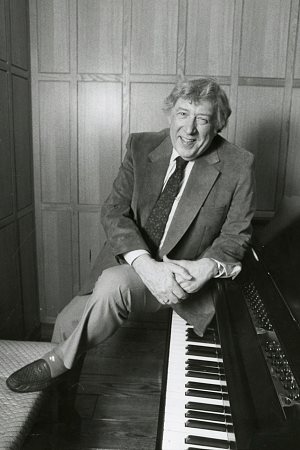
    I am very pleased to add that Jerry Rife, for 30 years conductor of The Blawenburg Band, has found time in his busy schedule to join me around 9:00 to share just a little bit about the band’s upcoming concerts at Princeton Shopping Center (tonight at 7 p.m.), Yardley Community Centre in Yardley, Pa. (July 4 at 4 p.m.), and Hopewell Train Station (July 6 at 7:30 p.m.).

    It’s pure Americana this week, when you tune in Classic Ross Amico, this morning from 6 to 11 a.m. ET, at WPRB 103.3 FM or online at wprb.com – classical music radio as the Founding Fathers intended.

  • American Music for Independence Day on WPRB

    American Music for Independence Day on WPRB

    by 

    in
    4 responses

    I’ve been following Marvin Rosen’s Classical Discoveries playlist with particular interest this morning, since I too plan to play all American music tomorrow, in anticipation of the Independence Day holiday.

    Marvin is a much better planner than I, but at this point I can say with relative certainty that we MAY hear music by George Antheil, Paul Bowles, Romeo Cascarino, John Corigliano, Daniel Dorff, Irving Fine, Lou Harrison, Bernard Herrmann, Jennifer Higdon, Ruth Crawford Seeger, Peter Schickele, Caroline Shaw, Michael Torke, George Walker and many others.

    Jerry Rife, for 30 years conductor of The Blawenburg Band, will join me around 9:00 to tell us just a little bit about the band’s upcoming concerts at Princeton Shopping Center (tomorrow at 7 p.m.), Yardley Community Centre in Yardley, Pa. (July 4 at 4 p.m.), and Hopewell Train Station (July 6 at 7:30 p.m.).

    Tune in, wrap yourself in the flag, and feel the cool grass between your toes, as we celebrate America’s independence this week. Keep it classy with Classic Ross Amico, tomorrow morning from 6 to 11 a.m. ET, on WPRB 103.3 FM or online at wprb.com.


  • Discover Lajtha Hungarian Music’s Lost Voice

    Discover Lajtha Hungarian Music’s Lost Voice

    by 

    in
    4 responses

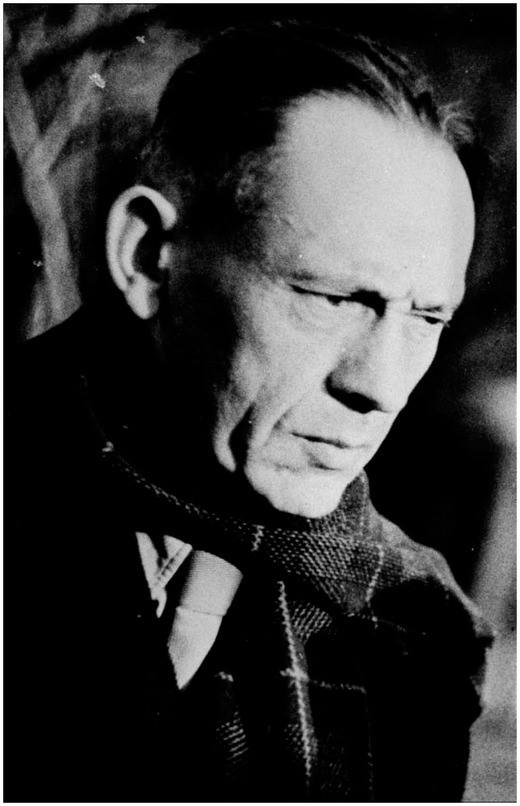
    Hungry for Hungarian music? Give László Lajtha a shot.

    A forgotten colleague of Béla Bartók and Zoltán Kodály, Lajtha (pronounced “Loy-tah”) too busily collected and transcribed folk music from the Hungarian countryside prior to World War I.

    Later, he was appointed Director of Music for Hungarian Radio, Director of the Museum of Ethnography, and Director of the Budapest National Conservatory. He was summarily removed from all three posts and his passport confiscated by the Communist regime after remaining in the West too long while at work on the film score to a British screen adaptation of T.S. Eliot’s “Murder in the Cathedral” (which went on to win the Grand Prix at the Venice Film Festival in 1951). He hadn’t even provided a film score in the truest sense, instead composing three concert works (the Symphony No. 3, the Orchestral Variations, and the Harp Quintet No.2), which were excerpted in the film.

    Anyway, he was awarded the Kossuth Prize in 1951 for his achievements as a folk researcher. At least that’s something. I devoted my life to Hungarian music, and all I got was this lousy t-shirt.

    Happy birthday, László Lajtha (1892-1963)!

    An interesting assessment of Lajtha’s music:
    http://www.crisismagazine.com/2001/music-laszlo-lajtha-music-from-a-secret-room

    Lajtha’s Symphony No. 4 “Le printemps”:


    PHOTO: Not even that scarf could insulate him from the Cold War


  • Anderson & Herrmann American Music Legends

    Anderson & Herrmann American Music Legends

    by 

    in
    3 responses

    Today marks the birthday anniversaries of two composers who, in their own individual ways, gained fame through their invaluable contributions to American popular culture. Interestingly, both died 40 years ago.

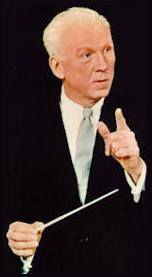
    Leroy Anderson (1908-1975), whose fluency in foreign languages (especially those of Scandinavia) made him an asset to the U.S. Army during the Second World War, was more or less staff composer for the Boston Pops.

    His early work for the Pops was as an arranger. It was Arthur Fiedler who recognized his talent and began requesting original work. Good call. Anderson turned out to be the Irving Berlin of American light orchestral music, producing hit after hit after hit: “Blue Tango,” “The Typewriter,” and “Plink! Plank! Plunk!” among them. Johnny Mathis scored a gargantuan success with his vocal rendition of “Sleigh-Ride,” for over half a century a holiday staple. Anderson’s “The Syncopated Clock,” a favorite from the start, became further entrenched in the popular consciousness as the theme music for “The Late Show,” the late night movie, shown on CBS.

    Bernard Herrmann (1911-1975) was staff conductor on CBS radio. In this role, he introduced American audiences to an impressive array of comparatively arcane music for the era, including works by Charles Ives, Nikolai Myaskovsky, Gian Francesco Malipiero, Edmund Rubbra, and Richard Arnell (Classical Discoveries’ Marvin Rosen!).

    He fell in with Orson Welles, with whom he worked on radio shows like “Mercury Theatre on the Air.” When Welles went to Hollywood, he brought Herrmann with him to write the music for “Citizen Kane.” This led to decades of finely-crafted film scores, always orchestrated by Herrmann himself (an unusual practice in Hollywood) and always perfectly suited to the images on screen, or their psychological underpinnings.

    Of course, Herrmann is best-known for his collaborations with Alfred Hitchcock, but he also wrote top-notch, ear-opening scores for producer Charles Schneer and special effects artist Ray Harryhausen (including that for “Jason and the Argonauts”). Amazingly, he won only a single Oscar, for his work on “The Devil and Daniel Webster,” in 1941. Herrmann died of a heart attack shortly after conducting the recording sessions for Martin Scorsese’s “Taxi Driver,” in 1975.

    Happy birthday, gentlemen! Thanks for the music.


  • Gunther Schuller A Third Stream Pioneer

    Gunther Schuller A Third Stream Pioneer

    by 

    in
    2 responses

    He was a composer, a performer, a conductor, an educator, and an administrator. At 15, he played French horn professionally with the American Ballet Theatre. The next year, he became principal horn of the Cincinnati Symphony. Then he joined the Metropolitan Orchestra, where he played for well over a decade.

    In the ‘60s and ‘70s, he was president of the New England Conservatory. He was also involved with Tanglewood, the summer home of the Boston Symphony, for over 20 years, serving as its artistic director from 1970 to 1984.

    He was awarded the Pulitzer Prize for Music in 1994.

    In addition, he cofounded the Modern Jazz Society. He recorded with Miles Davis. He edited and gave the premiere of Charles Mingus’ final work. He wrote two major books on the history of jazz. To describe what he saw as “a new genre of music, located about halfway between classical music and jazz,” he coined the term “Third Stream.”

    An American polymath, he was clearly a man who just loved music.

    This Sunday night on “The Lost Chord,” we honor Gunther Schuller, who died on June 21, at the age of 89.

    We’ll hear his Bassoon Concerto from 1982. The work, more of a five-movement suite, manages to synthesize atonality, lyricism, blues and Baroque, with some sly quotations from “The Magic Flute,” “The Rite of Spring” and “Peter and the Wolf” along the way.

    Schuller also loved the music of Scott Joplin and did much to contribute to the Joplin revival of the 1970s. He founded the New England Ragtime Ensemble, with which he recorded some bestselling albums of Joplin rags. We’ll hear highlights from Joplin’s opera , “Treemonisha,” which Schuller orchestrated for a revival at Houston Grand Opera.

    I hope you’ll join me as we salute Third Stream artist Gunther Schuller, on “A Midsummer Night’s Stream,” tonight at 10 ET, with a repeat Wednesday evening at 6; or that you’ll listen to it later as a webcast at http://www.wwfm.org.


Tag Cloud

Aaron Copland (93) Beethoven (95) Composer (114) Film Music (144) Film Score (143) Film Scores (255) Halloween (94) John Williams (195) KWAX (229) Leonard Bernstein (104) Marlboro Music Festival (125) Movie Music (159) Mozart (91) Opera (212) Philadelphia Orchestra (89) Picture Perfect (174) Princeton Symphony Orchestra (109) Radio (88) Ross Amico (244) Roy's Tie-Dye Sci-Fi Corner (290) The Classical Network (101) The Lost Chord (269) Vaughan Williams (105) WPRB (397) WWFM (881)

DON’T MISS A BEAT

Receive a weekly digest every Sunday at noon by signing up here


RECENT POSTS