• César Franck and His Belgian Legacy

    César Franck and His Belgian Legacy

    by 

    in
    10 responses

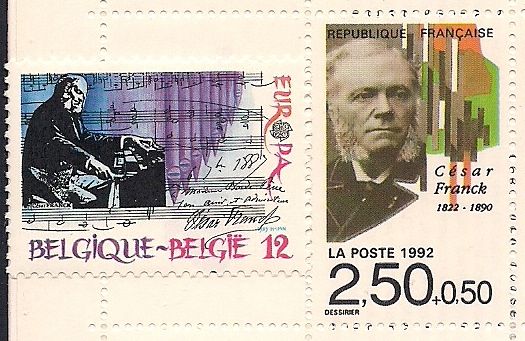
    César Franck was a strangely charismatic outsider. A Belgian abroad, he was required to take French citizenship in order to teach at the Paris Conservatory. A renowned organist, his unexpected genius for composition blossomed late.

    His enduring fame rests on a handful of fairly late works. He managed to reinvigorate the French symphonic and chamber music traditions through his use of “cyclic form,” with themes throughout generated from a single motif. He also embraced the symphonic poem. In these regards he certainly bore the influence of Franz Liszt. In turn, he himself became highly influential among a generation of French and Belgian composers.

    This week on “The Lost Chord,” we’ll examine music by two Belgians who fell under his sway.

    Armand Marsick, born in 1877, trained as a violinist at the Liège Conservatory, before studying abroad in Nancy with Franck enthusiast Guy Ropartz. Then he moved to Paris, where he studied with another Franckian, Vincent d’Indy. His career led him to Athens, and then Bilbao, where he founded a conservatory and an orchestra. He returned to Liège at the age of 50, settling in to teach and direct the concert society there. He died in 1959. The bulk of Marsick’s compositional output, which consisted of some forty works, was written between the ages of 23 and 37. We’ll enjoy a symphonic poem from 1908, titled “La Source.”

    Guillaume Lekeu was born in Verviers in 1870. He studied with Franck in Paris, then, like Marsick, with d’Indy following Franck’s death. Lekeu, unfortunately, is also remarkable for his very short life. He became ill with typhoid fever after consuming contaminated sherbet at a restaurant, and died in 1894, one day after his 24th birthday. Despite his sadly shortened existence, he managed to make important contacts and to write music of considerable promise. At the time of his death, he had already been composing for nine years, from the age of 15. In 1891 he was recipient of a second prize in the celebrated Prix de Rome competition.

    In all, Lekeu composed about 50 works. We’ll hear his Violin Sonata from 1892, written for the great Belgian virtuoso Eugene Ysaye, and his Adagio from 1891, originally composed for quartet and string orchestra. The score to the latter bears an epigraph from a poem by Georges Vanor, “The pale flowers of memory.”

    I hope you’ll join me for music by these Belgian followers of César Franck. That’s “Franckly Belgian,” on “The Lost Chord,” now in syndication on KWAX, the radio station of the University of Oregon!


    Clip and save the start times for all three of my recorded shows:

    PICTURE PERFECT, the movie music show – Friday at 8:00 PM EDT/5:00 PM PDT

    SWEETNESS AND LIGHT, the light music program – ALL NEW! – Saturday at 11:00 AM EDT/8:00 AM PDT

    THE LOST CHORD, unusual and neglected rep – Saturday at 7:00 PM EDT/4:00 PM PDT

    Stream them, wherever you are, at the link!

    https://kwax.uoregon.edu/


  • Malkovich as Celibidache? “The Yellow Tie” Biopic

    by 

    in
    6 responses

    Haha! It looks like it’s actually on its way! A Sergiu Celibidache biopic starring who? Why, JOHN MALKOVICH, of course!

    I first shared news of this in 2021, assuming of course that the film, being produced in Romania, would never happen. Then again, if it weren’t being produced in Romania – Celibidache’s homeland – where would it be?

    Written and directed by the conductor’s son, Serge Ioan Celibidache, the title is “The Yellow Tie.” It’s not difficult to understand why they’re not calling it “Celibidache,” as it would have native English speakers everywhere trying to remember it and then grappling with the correct pronunciation (roughly “Cheh-lee-bee-DAH-keh.”).

    Celibidache, one-time conductor of the Berlin Philharmonic, gained notoriety for his uncompromising pursuit of “the transcendent moment,” his exhaustive rehearsals, and his refusal to record.

    Of course, the market is flooded with Celibidache recordings, many of them from his years in Munich, but these are all byproducts of actual live concerts. Few of them could be described as pedestrian.

    Equally, few would be described as “definitive.” When Celibidache was “on,” he could be like nobody else; but when he was “off” – again, he could be like nobody else.

    Last year, I posted about Malkovich conducting an orchestra before 4000 extras in Bucharest, reenacting a concert that Celibidache gave in Philadelphia with the Munich Philharmonic in 1989.

    Also in the film will be Sean Bean as (the younger) Celibidache’s father and Miranda Richardson as his wife, Ioana.

    The release date is yet to be announced. I missed this article about it, which ran in Variety in May:

    https://variety.com/2024/film/global/john-malkovich-celibidache-first-look-image-the-yellow-tie-1235996010/

    Of course, the most perfect title for John Malkovich fans would be “Being John Malkovich Being Sergiu Celibidache.”


    One of my earlier posts on the subject:

    Celi conducts Anton Bruckner’s Symphony No. 7

    Celi documentary, “The Garden of Celibidache”

    Malkovich interviewed on Romanian television

    Celibidache has a fever, and the only prescription is more viola!


  • Schoenberg’s Ironic 150th Birthday

    Schoenberg’s Ironic 150th Birthday

    by 

    in
    7 responses

    Even those who don’t enjoy his music will surely appreciate the irony that Arnold Schoenberg, whose twelve-tone method of composition continues to strike fear in the hearts of many, himself dreaded the number 13.

    Not only did his triskaidekaphobia likely hasten his demise – the superstitious Schoenberg died on Friday, July 13, 1951, at the age of 76 (he had been out of sorts all year, as his astrologer had alerted him that 7 + 6 = 13) – the irony is compounded, as today the world marks the sesquicentennial of his birth, on yet another Friday the 13th.

    Winston Churchill’s assessment of Russia in 1939 could just as easily have been applied to this most influential composer of the 20th century. Schoenberg was a riddle, wrapped in a mystery, inside an enigma – a man cloaked in irony and contradiction.

    For one thing, his very name, “Schoenberg,” translates as “beautiful mountain,” yet those who would characterize his music as such are distinctly in the minority.

    He was the greatest prophet of dodecaphonic music, yet he claimed an artistic kinship with Johannes Brahms.

    He preached the death of tonality, even as he orchestrated his share of Viennese operettas and arranged Strauss waltzes for performance by his friends.

    He was a Jew, who converted to Lutheranism, but swung back hard to Judaism, in defiance of Hitler.

    He was probably the least “popular” composer in the world, but his tennis partner was none other than George Gershwin. The two also shared a love of painting.

    Adding to this beautiful mountain of contradictions, Schoenberg, like that other titan of 20th century music, Igor Stravinsky, wound up living in Hollywood.

    Both men were suspicious of the movies (and each other), yet both were hoping to break into films. Stravinsky wrote cues for “The Song of Bernadette,” “Jane Eyre,” and “The North Star” (the latter ultimately scored by Copland). None of his music was used in the pictures – Stravinsky was too slow and demanded too much money – but some of it was recycled in his concert works.

    Likewise, Schoenberg was courted for a film adaptation of “The Good Earth,” but his proposed $50,000 fee put an end to that.

    Twelve-tone music did eventually make it into the movies, thanks to composers like Leonard Rosenman and David Raksin. Rosenman’s landmark score for “The Cobweb” (1955) is credited as the first predominantly twelve-tone score written for a motion picture. Raksin, the composer of “Laura,” also employed a tone row in the Edgar Allan Poe mystery, “The Man with a Cloak” (1951).

    Interestingly, Schoenberg, the creator of “Pierrot Lunaire” and “Moses und Aaron,” was also a great fan of Hopalong Cassidy. Like Walt Whitman, an admittedly strange comparison, Schoenberg contained multitudes.

    13 cheers for Arnold Schoenberg on the sesquicentennial of his birth!


    “Variations for Orchestra,” conducted by Bruno Maderna

    “Pierrot Lunaire”

    With goats!

    A kinder, gentler Schoenberg – the Suite for String Orchestra, given its premiere in Los Angeles in 1935:

    Schoenberg in home movies – on the tennis court, naturally – with Gershwin and others. (Gershwin appears around 2:20.)

    Still think Schoenberg’s not your bag? Put aside your trepidation and join me for an hour of his lighter music on “Sweetness and Light,” this Saturday morning at 11:00 EDT/8:00 PDT, on KWAX. Stream it wherever you are at the link!

    https://kwax.uoregon.edu/


  • Maurice Jarre’s Epic Scores for David Lean

    Maurice Jarre’s Epic Scores for David Lean

    by 

    in
    3 responses

    Today marks the 100th anniversary of the birth of film composer Maurice Jarre. For over 40 years, Jarre provided memorable scores for dozens of motion pictures, but he will always be most closely associated with his Academy Award-winning music for the epics of David Lean. This week on “Picture Perfect,” we’ll take the long view and enjoy selections from two them.

    One of the most celebrated filmmakers of all time, Lean had already spent two decades in the director’s chair, overseeing such treasurable films as “Blithe Spirit,” “Brief Encounter,” “Great Expectations,” “Oliver Twist,” “Hobson’s Choice,” and “Summertime,” when he turned his attention to the form for which he would ultimately be best remembered: the cinematic epic.

    His first such attempt, “The Bridge on the River Kwai” (1957) went on to win seven Academy Awards, including those for Best Picture, Best Director, Best Actor (for Alec Guinness), Best Screenplay, and Best Original Score. It was not Jarre, but rather Malcolm Arnold that wrote the music. Lean had worked with Arnold before on “Hobson’s Choice.”

    Ironically, it is “Colonel Bogey’s March,” the tune whistled by the English prisoners of war as they enter the Japanese camp, that most people associate with the film. This is actually a pre-existing piece by Kenneth Alford (a pseudonym for British bandmaster Frederick J. Ricketts). Composed in 1914, over the years, the march became outfitted with all manner of bawdy lyrics, which is why the number is whistled, not sung, in the film.

    Lean had hoped that he and Arnold would be able to collaborate once more on “Lawrence of Arabia” (1962). Unfortunately, Arnold, who somehow managed to write so much glorious music over the course of his career, for both film and concert hall, suffered a hellish personal life. At the time of “Lawrence,” he was deep in the throes of psychological and emotional turmoil. Under the circumstances, Lean had no choice but to enlist Jarre. Jarre certainly rose to the occasion, and thereafter became the director’s composer of choice.

    Lean followed up his success with “Lawrence” – decorated with seven Oscars – with yet another story rendered on an epic scale, “Doctor Zhivago” (1965). By this time, it was practically a forgone conclusion that the Academy would shower Lean with statuettes. Sure enough, “Doctor Zhivago” was honored with five more Academy Awards. Seemingly, the director had become too big to fail.

    It’s hardly surprising that when he stumbled with his next project, “Ryan’s Daughter” (1970) – a film that boasted a similar running time, without perhaps a story of a scope to support it – the critics were there with their knives out. The backlash was such that it would be a good ten years before Lean would find the strength to direct again. The subject of the new film was to have been “Captain Bligh and Mr. Christian,” a retelling of the famous “Mutiny on the Bounty” story. Sadly, the project was plagued with misfortune, so that finally he was unable to hold on to the funding. The film would ultimately be made – by other hands – as “The Bounty.”

    Happily, Lean bounced back with “A Passage to India” (1984). His adaptation of the novel of E.M. Forster was widely acclaimed, with 11 Academy Award nominations. It garnered two wins – one for Dame Peggy Ashcroft, for Best Supporting Actress, and the other for its composer, again Jarre. It would be Jarre’s third and final Oscar. All three resulted from his work with Lean.

    Shortly before his death, the director embarked on yet another epic, an adaptation of Joseph Conrad’s “Nostromo.” Frustratingly, this was left incomplete at the time of his passing in 1991.

    We’re lucky to have what we’ve got. Close your eyes and get the big picture on “Lean and Epic” – music by Maurice Jarre from the films of David Lean, with an interpolation by Malcolm Arnold – on “Picture Perfect,” music for the movies, now in syndication on KWAX, the radio station of the University of Oregon!


    Clip and save the start times for all three of my recorded shows:

    PICTURE PERFECT, the movie music show – Friday at 8:00 PM EDT/5:00 PM PDT

    SWEETNESS AND LIGHT, the light music program – ALL NEW! – Saturday at 11:00 AM EDT/8:00 AM PDT

    THE LOST CHORD, unusual and neglected rep – Saturday at 7:00 PM EDT/4:00 PM PDT

    Stream them, wherever you are, at the link!

    https://kwax.uoregon.edu/


  • 9/11: Remembrance, Reflection, and Hope

    9/11: Remembrance, Reflection, and Hope

    by 

    in
    2 responses

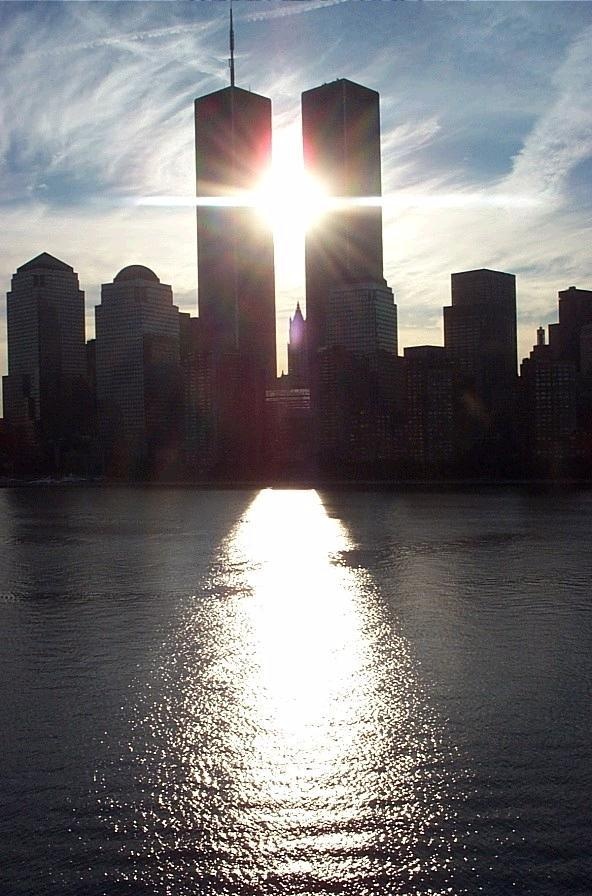
    In common with just about everyone else in this country who lived through it, for the past 23 years, I have awoken on this morning to the enormity of 9/11. And every year I dig deep and try to rise to the challenge of writing something meaningful. And you know me. Once I start typing, my fingers are like long-distance runners.

    This year, I am sorry to say, the needs of the present intrude. With multiple projects I am being relied on to complete or prepare, I am unable to devote as much time to reflection on these matters as I would like. But briefly…

    I am thankful that, even though I know people who were there, or nearly there, at Ground Zero, and as someone who had family in the air as the horrors in New York, Pennsylvania, and D.C. unfolded, that I didn’t lose anyone in the attacks or their aftermath. But none of us who lived through 9/11 emerged unscathed.

    Today, honor the memory of those who perished and spare a thought for those who continue to suffer loss, chronic ill-health, or PTSD. Be extra mindful of being kind. Even on the morning after the presidential debate. Remember we’re all Americans. And we’re all human beings. Just because someone disagrees with you doesn’t mean he or she is your enemy.

    Also, seek beauty in the world. Be reminded of the positive and even uplifting things we are all capable of, to a greater or lesser extent. We can’t all write symphonies, but some of us can. Others can help a stranger change a tire. It’s happened to me, and I have paid it forward.

    Most of all, count your blessings and try to live with appreciation. It’s easy to say, and even trite, but every day is a miracle.

    We all come with our own vulnerabilities and our own struggles. Most of us fail to live up to our ideals. But we can want to be better and try to facilitate that in burying our spiteful impulses and in behaving constructively, even if it’s to make only one person feel better. A smile or a wave of recognition could make a difference to somebody.

    It’s hard to fathom the kind of psychological state or extreme ideology that could drive anyone to willingly kill and terrorize innocent bystanders, no matter what the rationale. But the impulses that create monsters are dormant in all of us. It’s up to each us to harness that power and to turn it to positive ends.

    Dona nobis pacem. Pax in terra.


    Selections from Robert Moran’s “Trinity Requiem,” composed for Trinity Church, the “Ground Zero church” in lower Manhattan, to mark the tenth anniversary of the attacks:


Tag Cloud

Aaron Copland (93) Beethoven (95) Composer (114) Film Music (144) Film Score (143) Film Scores (255) Halloween (94) John Williams (195) KWAX (229) Leonard Bernstein (104) Marlboro Music Festival (125) Movie Music (159) Mozart (91) Opera (213) Philadelphia Orchestra (89) Picture Perfect (174) Princeton Symphony Orchestra (109) Radio (88) Ross Amico (244) Roy's Tie-Dye Sci-Fi Corner (290) The Classical Network (101) The Lost Chord (269) Vaughan Williams (105) WPRB (397) WWFM (881)

DON’T MISS A BEAT

Receive a weekly digest every Sunday at noon by signing up here


RECENT POSTS