• Fritz Reiner: Genius and Grinch

    Fritz Reiner: Genius and Grinch

    by 

    in
    6 responses

    You’re a mean one, Mr. Reiner.

    Classical music has had its share of Grinches, but few were as cactus-cuddly as Fritz Reiner. From a musician’s standpoint, Reiner was one of the most dreaded conductors, in an era when tyrants of the podium still very much roamed the earth. With a glower that could make Karloff quake (though he resembled more Bela Lugosi), Reiner was forged in Hungary at the twilight of the Austro-Hungarian Empire. Hungary at the time had quite the reputation for churning out great conductors. George Szell, Eugene Ormandy, Antal Doráti, Ferenc Fricsay, Sir Georg Solti, and István Kertész all achieved considerable international success.

    Among Reiner’s own teachers was Béla Bartók, with whom he studied piano. Reiner would later repay the favor with what many consider to be the benchmark recording of Bartók’s “Concerto for Orchestra.” He also worked closely with Richard Strauss in Dresden, and his recordings of Strauss’ works are equally revered. All in all, the Chicago Symphony under Fritz Reiner was a surefire choice to give the ol’ hi-fi a good workout in the early days of stereo.

    In 1928, Reiner became a naturalized American citizen. He began to teach conducting at the Curtis Institute of Music in Philadelphia, where among his pupils was Leonard Bernstein. His first American post was as principal conductor of the Cincinnati Symphony. He took over the Pittsburgh Symphony for a decade, beginning in 1938. Then he spent several years at the Met. But it was as music director of the Chicago Symphony that he attained legendary status.

    For a master interpreter of some of the largest and most challenging works in the repertoire, his baton technique was notable for its precision and economy. Much of what he achieved, unfortunately, was through the brutality he exuded in rehearsals. Reiner emerged from an Old World steeped in aristocratic privilege. At the top of their profession, conductors then were regarded as gods-on-earth. When drive and ego were bolstered by absolute power, working conditions could become downright perilous. Before strong musicians’ unions, conductors exercised the authority to fire anyone on a whim. So when musicians played for Reiner, they played as if their lives depended on it – or at the very least their livelihoods.

    Did it make for better musicmaking? You can’t argue with the excellence of Reiner’s Chicago Symphony.

    Fritz Reiner: A Marriage of Talent and Terror

    https://drgeraldstein.wordpress.com/2013/10/12/fritz-reiner-a-marriage-of-talent-and-terror/?fbclid=IwAR1ylzD3gidbYGdYCgeUq7WF57_O1tzX1JqV6Nc0JNezy3DWwkc6R_bRob4

    His heart grew three times that day: Fritz Reiner’s perfect concert

    125 Moments: 101 Fritz Reiner’s “Perfect Concert”

    He found the strength of ten Reiners, plus two. I guess even autocrats have their cuddly moments. Happy birthday, Fritz Reiner.


    Reiner conducts Beethoven

    Big band Bach

    Benchmark Bartók

    Strauss’ “Salome”

    And, to keep it seasonal, “Waltz of the Flowers” from “The Nutcracker”
    https://www.youtube.com/watch?v=mgaS9CZ7KsQ


  • Lost Christmas Classics & Rita Streich

    Lost Christmas Classics & Rita Streich

    by 

    in
    5 responses

    For much of the time I worked at a certain radio station (for nearly three decades, in fact), it was the rule, for some reason, not to program any Christmas music until after December 16 – Beethoven’s birthday. Beethoven was the demarcation for classical music Advent to commence. Sure, you don’t want to hammer listeners with a month of brass arrangements of the usual ho ho ho; but for those of us with a little more imagination, who would really like to relax into the repertoire, nine days isn’t a heck of a lot of time.

    Most of the grand and contemplative Christmas works (Franz Liszt’s “Christus,” Berlioz’s “L’enfance du Christ,” Vaughan Williams’ “Hodie,” Saint-Saëns’ “Christmas Oratorio,” Casals’ “El Pessebre,” Charpentier’s “Messe de Minuit,” Respighi’s “Laud to the Nativity,” Schütz’s “Christmas Story”) – basically, those that aren’t “Messiah” – are slipping away, as playlists pander to an increasingly A.D.D. society.

    Over the years it’s been suggested to me that people “don’t like singing.” Or that they might find the religious content exclusionary or off-putting. (Somehow it’s never a consideration when we play Bach.) The squeaky wheel gets the grease, and the wider listenership has been trained to expect little more than consumer-friendly arrangements of the less-demanding carols. This sets a frustrating precedent, but at a time when even Beethoven symphonies are broadcast less and less frequently in their entirety (except perhaps for the shorter ones), what are you going to do?

    Brass renditions of “Rudolph” and “Frosty” are sweetmeats that can give you a lift between meals, but on their own they offer very little sustenance. They are great palate-cleansers, for sure, and they are perfect for a parade or a public tree-lighting or as background for a holiday party, but you don’t necessarily want to down box after box of them.

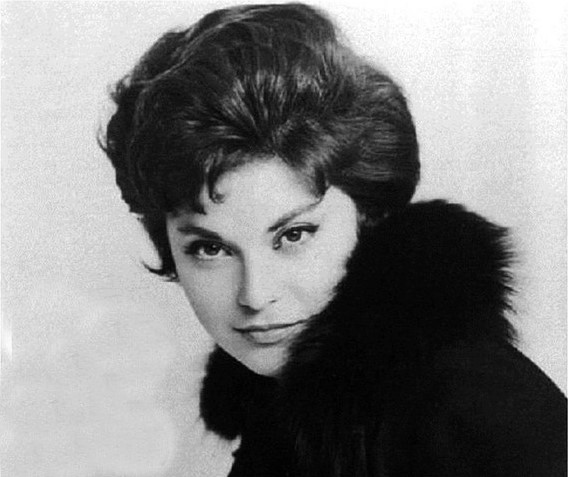
    I muse on this every year, but especially so around the birthday of soprano Rita Streich (1920-1987), whose crystalline voice I have always admired. If you’re going to do traditional carols, Streich is a paragon of how they really should be done. She sang them most enchantingly. Whenever I programmed one of her carol medleys on December 18, for the duration of the performance, it really felt like Christmas.

    Streich is also the soprano soloist in a recording that has become dearer and dearer to me over the years of Josef Rheinberger’s “The Star of Bethlehem.” Rheinberger (1839-1901), everyone’s favorite composer from Liechtenstein, is likely remembered, if at all, primarily for his organ works. But he was also a distinguished teacher and left an uplifting piano concerto that really should be much better known. How I would love to hear it in concert!

    https://www.youtube.com/watch?v=MDrgSQIIaFA

    I used to encounter “The Star of Bethlehem” on the radio every year. Of course, as one of the last of my kind, I myself picked up the standard and bore it proudly, working it into my programs when I still had a regular air shift. Streich’s recording originally appeared on vinyl, on the EMI label. It was reissued on compact disc on Carus. Good luck finding the CD for a reasonable price now that it’s out-of-print and in the talons of the secondhand market. (You’ll have better luck if you own a turntable and aren’t too finicky about condition.) Dietrich Fischer-Dieskau is the baritone and Robert Heger conducts.

    A thousand years of Christmas music, and how much of it is ever played? It all seems to have disappeared so quickly.

    As far as the radio is concerned, you’re likely to find more satisfyingly rounded programming at the link below, especially when Peter van de Graaff or Rocky Lamanna are on the air. Keep in mind, KWAX is a West Coast station, so all times are PST.

    https://kwax.uoregon.edu/

    Merry Christmas, and happy birthday, Rita Streich!


  • Saturnalia Ancient Roman Holiday & Playlist

    Saturnalia Ancient Roman Holiday & Playlist

    by 

    in
    2 responses

    December 17. Io Saturnalia!

    In keeping with winter solstice tradition, it is a day to visit friends and bear gifts, especially candles. Schools are closed. Courts are not in session. Oh yeah, there’s also a sacrifice to Kronos (a.k.a. Saturn) and a riotous feast with benefits.

    On this most popular holiday to emerge from Ancient Rome, the social order is inverted and strictures are loosened. Slaves are served by their masters. Gambling is permitted in public. There is drinking, noise, mirth, and wantonness. The populace is showered with figs, nuts, and dates, women fight in the arena, and cranes are hunted by dwarfs. In short, it’s an old-fashioned Christmas, before there was even such a thing as Christmas. Hey, if the Flintstones can celebrate the birth of Jesus, why not?

    In the interest of converting rather than alienating, Christianity kept the candles, but frowned on the orgies, or at least looked the other way. But Saturnalia traditions continued to be practiced down the centuries, as evidenced in the medieval Feast of Fools, in the Victorian revival of gift-giving, in the lighting of candles, and in the eating, drinking, singing, and dancing.

    Saturnalia, at its peak, was practiced through December 23. Wishing you and yours a merry one!


    I think classical music is still waiting for its great Saturnalia piece. However, here’s a game attempt at assembling a playlist, to set the mood as you prepare the table for Saturn.

    Anthony O’Toole, “Saturnalia”

    Paul Büttner, “Saturnalia”

    David W. Solomons, “Io! Saturnalia” (instrumental version)

    Adam Torkelson, “Grapes en Saturnalia”

    Caspar Diethelm, Symphonic Suite “Saturnalia”

    Aram Khachaturian, “Spartacus,” Act II, scene 1: “Saturnalia”

    Lou Harrison, “Solstice”: “Saturnalia”

    Robert W. Butts, “Saturnalia Strings”

    I appreciate the efforts, but none of them hold a candle to John Ireland’s “Satyricon Overture”


  • Beethoven’s Lost Theatrical Music

    Beethoven’s Lost Theatrical Music

    by 

    in
    6 responses

    Only the other day, I was reading about Eleonore Prochaska, a German soldier who fought in the Prussian army against Napoleon during the War of the Sixth Coalition. Prochaska was able to enlist in 1813 by disguising herself as a man, serving first as drummer, but soon entering the infantry. Her true identity was discovered only after she was severely injured at the Battle of Göhrde. She would succumb to her wounds three weeks later.

    Prochaska was actually one of a number of women who served in actual battle during the Napoleonic Wars. Rather puts our Molly Pitcher in the shade.

    Prochaska’s memory would be celebrated in music in literature. Somehow I never knew that Johann Friedrich Duncker’s drama, “Leonore Prohaska,” for which Ludwig van Beethoven composed incidental music in 1815, was inspired by a real person. I’ve always seen her described as something of an idealized warrior-maiden, a kind of Joan of Arc, who disguises herself as a man in order to fight in an unspecified war of liberation. The fact that Leonore is the also the name of the heroine of Beethoven’s only opera, “Fidelio,” and that in the opera the character also disguises herself as a man – to fight for liberation – probably had a lot to do with it.

    “Fidelio” was given its premiere, in its original version, in 1805, but the final revision was performed only in 1814, the year after Prochaska’s death. Certainly, Beethoven’s conception of Leonore predated the actions of the historical Eleonore. In fact, from the start, the composer’s preferred title had been “Leonore, or The Triumph of Married Love” – the title of Jean-Nicolas Bouilly’s play, on which the libretto was based. This was changed only at the insistence of the theater to avoid confusion with at least two rival operas that had drawn from the same source material. Though Beethoven’s work had nothing at all to do with Prochaska, I think it’s an interesting coincidence.

    In the end, Duncker’s play was cancelled, and Beethoven’s incidental music was never performed in the context for which it was intended. It wasn’t even published until 1888, 62 years after the composer’s death. Beethoven’s efforts were not for nothing, however, as Duncker, who served as cabinet secretary to Friedrich Wilhelm III, King of Prussia, was able to persuade his Royal Highness to underwrite the “Missa solemnis.”

    This is a roundabout preamble to my announcement that this week on “The Lost Chord,” we’ll honor Beethoven, on his presumed birthday, with an hour of his incidental music for the theater, including a funeral march from “Leonore Prohaska,” which he arranged from the slow movement of his Piano Sonata No. 12 in A-flat Major.

    In 1811, Beethoven was approached to write music for two Hungarian-themed plays by August von Kotzebue. “The Ruins of Athens” and “King Stephen” were scheduled to celebrate the opening of a magnificent new theater in the city of Pest (now the eastern part of unified Budapest). Of the two, “King Stephen” is the less well-known. Stephen I, the 11th century sainted national hero of Hungary, was instrumental in converting the Hungarian people and neighboring tribes to Christianity. We’ll hear Beethoven’s music for the latter play, shorn of its frequently-performed overture.

    Eleven years later, the composer was enlisted to provide music for the reopening of Vienna’s Theater in der Josefstadt. For the occasion, the theater’s director, Carl Friedrich Hensler, recalling the success of the Pest double-bill, requested a revival of “The Ruins of Athens.” Beethoven offered to revise the existing numbers and compose new ones to Hensler’s specifications. The result was “The Consecration of the House.”

    A new text was provided by Carl Meisl, about whose talents Beethoven was less than enthusiastic. Meisl’s occasional poem describes an exchange between the actor Thespis and the god Apollo and contrasts Greece under the Ottoman Turks to the freedom of Vienna. A chorus celebrates dance, altars are decorated for the entry of the Muses, and the work ends with the obligatory chorus, “Heil unserm Kaiser.” Beethoven wrote a new overture for the piece, which is performed fairly frequently, but for our purposes it will be omitted to allow time for some of the lesser-heard numbers.

    Can anything about Beethoven truly be described as incidental? We’ll set aside the symphonies and concertos, for a revelatory evening at the theater with the Master from Bonn. Beethoven treads the boards on “Beethoven, Incidentally,” this week on “The Lost Chord,” now in syndication on KWAX, the radio station of the University of Oregon!


    Remember, KWAX is on the West Coast, so there’s a three-hour difference for the Trenton-Princeton area. Here are the respective air-times of my recorded shows (with East Coast conversions in parentheses):

    PICTURE PERFECT, the movie music show – Friday on KWAX at 5:00 PACIFIC TIME (8:00 PM EST)

    THE LOST CHORD, unusual and neglected rep – Saturday on KWAX at 4:00 PACIFIC TIME (7:00 PM EST)

    Stream them here!

    https://kwax.uoregon.edu/


    Eleonore Prochaska (left) and the birthday boy from Bonn


  • Beethoven’s 9th CD Length Surprise

    Beethoven’s 9th CD Length Surprise

    by 

    in
    5 responses

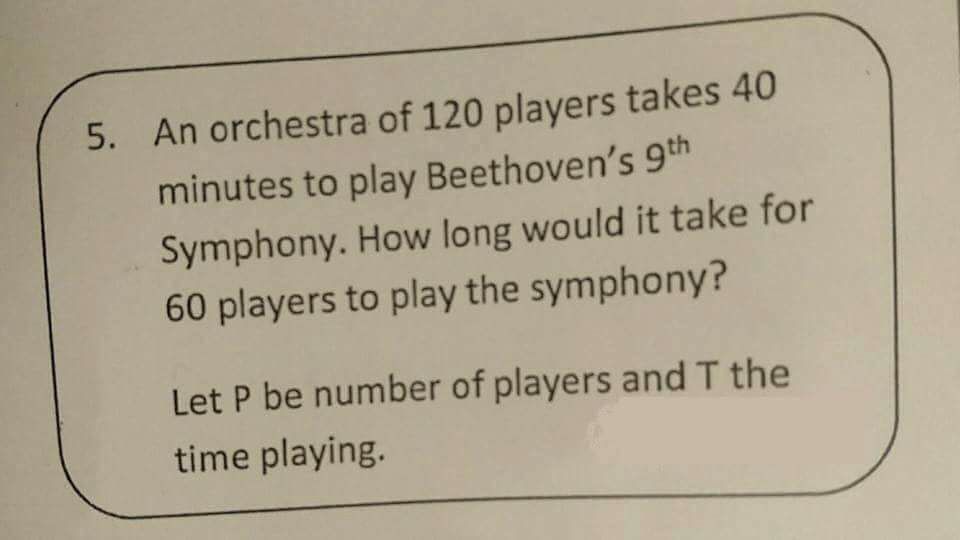
    Careful! It’s a trick question, and not for the reason you might think. In 1980, the compact disc was actually standardized at 74 minutes to accommodate the length of Beethoven’s 9th Symphony – specifically using Wilhelm Furtwängler’s 1951 Bayreuth Festival performance as a template. No orchestra in the world would be able to get through it in 40 minutes – not even conducted by Charles Munch, as in this astonishing recording:

    Yet one more way, albeit it unintended on the part of the composer, in which Beethoven caused the world to hear music differently.

    Hey, teacher! Leave them kids alone!


Tag Cloud

Aaron Copland (93) Beethoven (95) Composer (114) Film Music (145) Film Score (143) Film Scores (255) Halloween (94) John Williams (195) KWAX (229) Leonard Bernstein (104) Marlboro Music Festival (125) Movie Music (160) Mozart (91) Opera (213) Philadelphia Orchestra (89) Picture Perfect (174) Princeton Symphony Orchestra (109) Radio (88) Ross Amico (244) Roy's Tie-Dye Sci-Fi Corner (290) The Classical Network (101) The Lost Chord (269) Vaughan Williams (105) WPRB (397) WWFM (881)

DON’T MISS A BEAT

Receive a weekly digest every Sunday at noon by signing up here


RECENT POSTS