• Yma Sumac Queen of Exotica at 100

    Yma Sumac Queen of Exotica at 100

    by 

    in
    5 responses

    Peruvian soprano Yma Sumac was born 100 years ago today. Marketed as an Incan princess (an assertion supported by the Peruvian government), Sumac possessed a preternatural five-octave range. That’s a Guinness record.

    She was a pioneer in the world music genre, dubbed the Queen of Exotica. At times, she emulated bird song, at others she sounded like a didgeridoo. She attributed her extraordinary range to having been reared in the Andes, where the high altitude caused her to develop her exceptional lung power.

    She was certainly one of a kind. I imagine her as having stepped out of the pages of W.H. Hudson’s “Green Mansions.”

    Here, she sings “Chuncho” (“The Forest Creatures”), from 1954, by her husband, Moisés Vivanco.

    On June 25, 1953, Sumac appeared on a Lewisohn Stadium concert, conducted by Leonard Bernstein. The program included the Piano Concerto No. 4 by Heitor Villa-Lobos, with Bernardo Segall the soloist, Aaron Copland’s “Danzon Cubano,” and “Three Brazilian Dances” by Camargo Guarnieri, with Sumac performing works by Vivanco and others. Here, she’s like a human theremin as she lends her voice to Debussy’s “Clair de lune.”

    She appeared in “Secret of the Incas” with Charlton Heston, in 1954, a primary inspiration for “Raiders of the Lost Ark.”

    Decades later, in 1987, she appeared on “Late Night with David Letterman.”

    She received a late-career boost from the lounge revival of the 1990s, as her albums began to be reissued on compact disc. Her recording of “Ataypura” was used to introduce Ben Gazzara as Jackie Treehorn in the “The Big Lebowski.” (It’s the second song she sings at the “Secret of the Incas” link above).

    “Gopher Mambo,” from 1954, again by Vivanco, has been used many times, including at the 2018 Olympics.

    Sumac’s final concert appearance was at the Montreal Jazz Festival, on July 1, 1997, when she was 74 years-old. “The Peruvian Songbird” died in 2008 at the age of 86.


  • Hans Zimmer Celebrates 66 Years

    Hans Zimmer Celebrates 66 Years

    by 

    in
    10 responses

    Hans Zimmer, 66(6) today.


  • 9/11, Art, and a World in Crisis

    9/11, Art, and a World in Crisis

    by 

    in
    8 responses

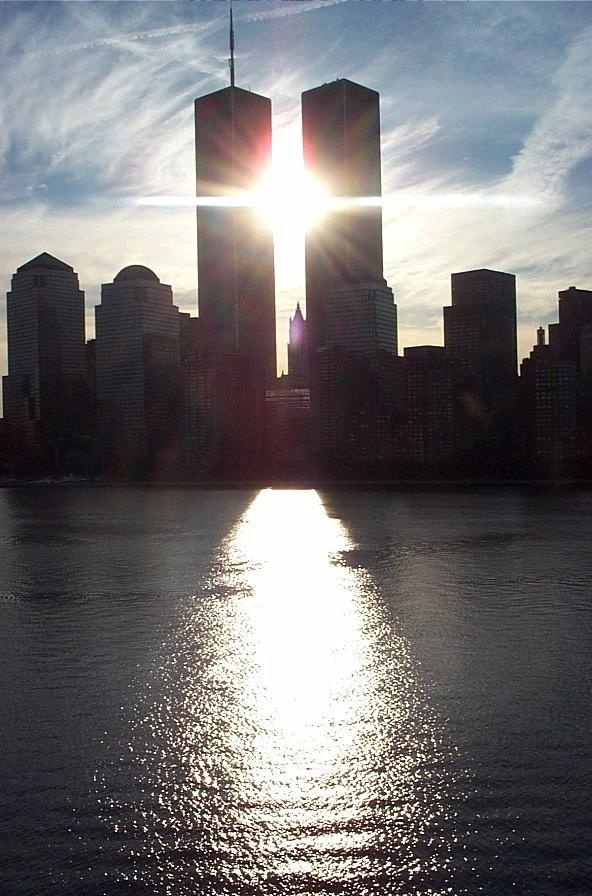
    There was some debate at the time as to whether 2000 or 2001 was the proper start of the new millennium. And in 2000, there was a scramble for generators, as anxiety mounted over whether shortsighted computer programming would cause elevators to plummet and airplanes to drop from the skies for Y2K. Whether or not you felt a touch of annoyance at all the knuckleheads in their New Year’s Eve “2000” novelty glasses who believed they really were welcoming in a new millennium (a year early, in fact), in the end it proved to be as immaterial as a lover’s quarrel. Because the 21st century really began on September 11, 2001.

    22 years on, we live in the world 9/11 made, or at any rate embodied. We continue to grapple with uncertainty, and anxiety, and hopelessness, as humankind gives in to its baser instincts and lessons seemingly are never learned. War, terrorism, nuclear weapons, disease, heedless technology, and shady politics had been with us already in the 20th century, of course; but with the destruction of the World Trade Center, and the horror of the attacks, brought to us live, in real time, it really did seem as if everything was running off the rails.

    In a society where the arts and education are marginalized and brutishness and nihilism are celebrated and exploited as means to power and economic gain, injustice and aggression are on the rise, and we all pay the price.

    This is not to diminish the horror and suffering of those who perished in the attacks or their survivors. Nothing I could write could ever do honor to those who died or convey enough sympathy or solace to their families. But none of us who lived through 9/11 emerged unscathed.

    In response to the assassination of John F. Kennedy in 1963, Leonard Bernstein famously declared, “This will be our reply to violence: to make music more intensely, more beautifully, more devotedly than ever before.”

    But you know the old philosophical thought experiment: if a tree falls in the woods and no one is around to hear it, does it still make a sound?

    If beautiful music is made intensely and devotedly, will it still reach those for whom it might prove transformative in a world where it has been dismissed and even denigrated?

    In Bernstein’s day, classical music was still on television. It was on the radio. It was not chopped up and presented as a string of pretty tunes to be promoted as “relaxing.” Beethoven, Mahler, and Shostakovich did not write elevator music. These were soulful outpourings of people with their own struggles. Now, outside the concert hall, lamentably, they are mostly silent.

    Would classical music have prevented 9/11? Of course not. But anything that promotes reflection and beauty and solace and empathy can only help. Our artistic monuments are what connect us to one another and reassure us and encourage us in how we relate to our fellow human beings. And you don’t have to be a dead white European male to benefit.

    The years pass quickly and it doesn’t take long for people to forget. A generation has already reached adulthood that has no firsthand memory of 9/11. Nor of Leonard Bernstein for that matter.

    Horror and human tragedy can always be found in abundance, whether the cause be natural, as in the recent earthquake in Morocco, or the wildfires in Maui, or manmade, as in the misery of the war in Ukraine, or any number of mass shootings in public places. At home, in the United States, there are dangerous undercurrents of social and political unrest.

    Classical music is not simply the means to a lofty escape. There is a difference between elitism and elevation. The arts are not all ivory tower, after all; they also have a practical application. With the ever-present threat of injustice, oppression, and violence, they are evidence of our shared humanity at its most transcendent.

    Also, I expect they make you feel a hell of a lot better about everything than would an empty diet of soul-crushing noise, vapid flash, and glorified violence.


  • Star Trek’s The Menagerie Deep Dive with Pike Actors

    Star Trek’s The Menagerie Deep Dive with Pike Actors

    by 

    in
    3 responses

    There’s more intense weather in the forecast for New Jersey, but provided Roy’s studio doesn’t go dark (as on Friday), we’ll grab our umbrellas and pull on our wellies for another intrepid attempt to address the “Star Trek” two-parter, “The Menagerie” (1966).

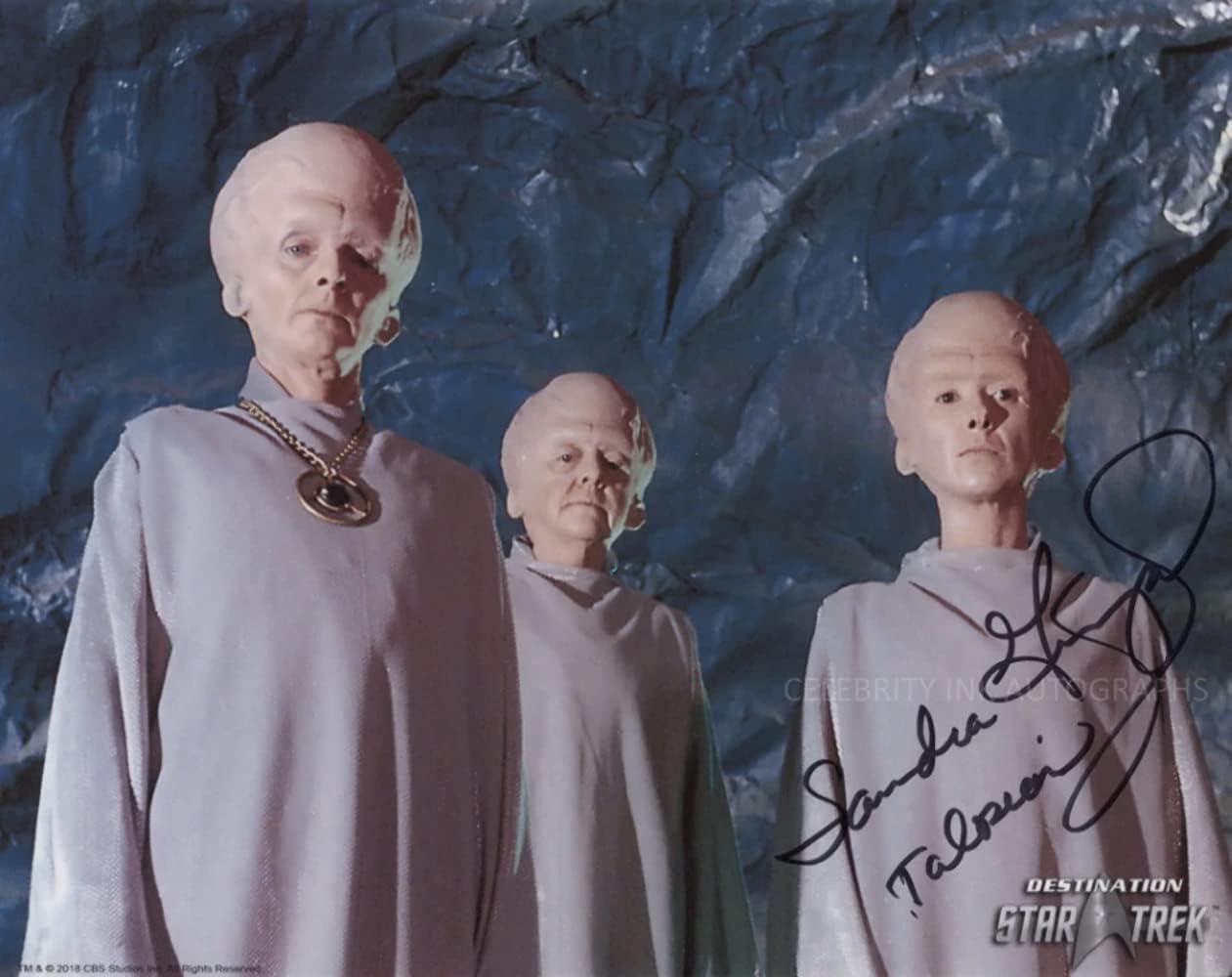
    Every thundercloud has a silver lining, and Friday’s delay has allowed us to add a couple more names to the guest list. Therefore, in addition to Chris Hunter, son of Jeffrey Hunter (who plays strapping Captain Pike in the series’ pilot, “The Cage” – ample scenes from which are ingeniously interpolated into “The Menagerie” as flashbacks), we’ll also host Sean David Kenney (who plays Pike when he’s all messed up) and everyone’s favorite Talosian, Sandra Lee Gimpel.

    With so many chefs in the kitchen, I’ll mostly sit respectfully and flash “yes” or “no.” Keep tossing us the red meat from the comments section. We’ll have a veritable menagerie to discuss “The Menagerie” on the next Roy’s Tie-Dye Sci-Fi Corner, when we livestream on Facebook, YouTube, etc., this Sunday evening at 7:00 EDT!

    https://www.facebook.com/roystiedyescificorner


  • Chicago Symphony in Princeton Stripped Down

    Chicago Symphony in Princeton Stripped Down

    by 

    in
    4 responses

    The Chicago Symphony, stripped down in Princeton!

    https://drgeraldstein.wordpress.com/2023/09/10/solti-and-the-orchestra-with-nothing-to-hide/

    It’s not for nothing that Solti’s musicians nicknamed him the Screaming Skull. I was alerted to this story this morning on Norman Lebrecht’s blog, Slipped Disc.

    Even more fearsome was CSO music director Fritz Reiner. And yet even Reiner had his soft side. Here’s a very different account of the CSO on tour:

    125 Moments: 101 Fritz Reiner’s “Perfect Concert”

    To understand what a bastard Reiner could be, again with a Princeton connection (admittedly, supplied by me), read this:

    Be sure to follow the link to “Fritz Reiner: A Marriage of Talent and Terror” at the bottom of the post!


Tag Cloud

Aaron Copland (93) Beethoven (95) Composer (114) Film Music (145) Film Score (143) Film Scores (255) Halloween (94) John Williams (195) KWAX (229) Leonard Bernstein (104) Marlboro Music Festival (125) Movie Music (160) Mozart (91) Opera (213) Philadelphia Orchestra (89) Picture Perfect (174) Princeton Symphony Orchestra (109) Radio (88) Ross Amico (244) Roy's Tie-Dye Sci-Fi Corner (290) The Classical Network (101) The Lost Chord (269) Vaughan Williams (105) WPRB (397) WWFM (881)

DON’T MISS A BEAT

Receive a weekly digest every Sunday at noon by signing up here


RECENT POSTS