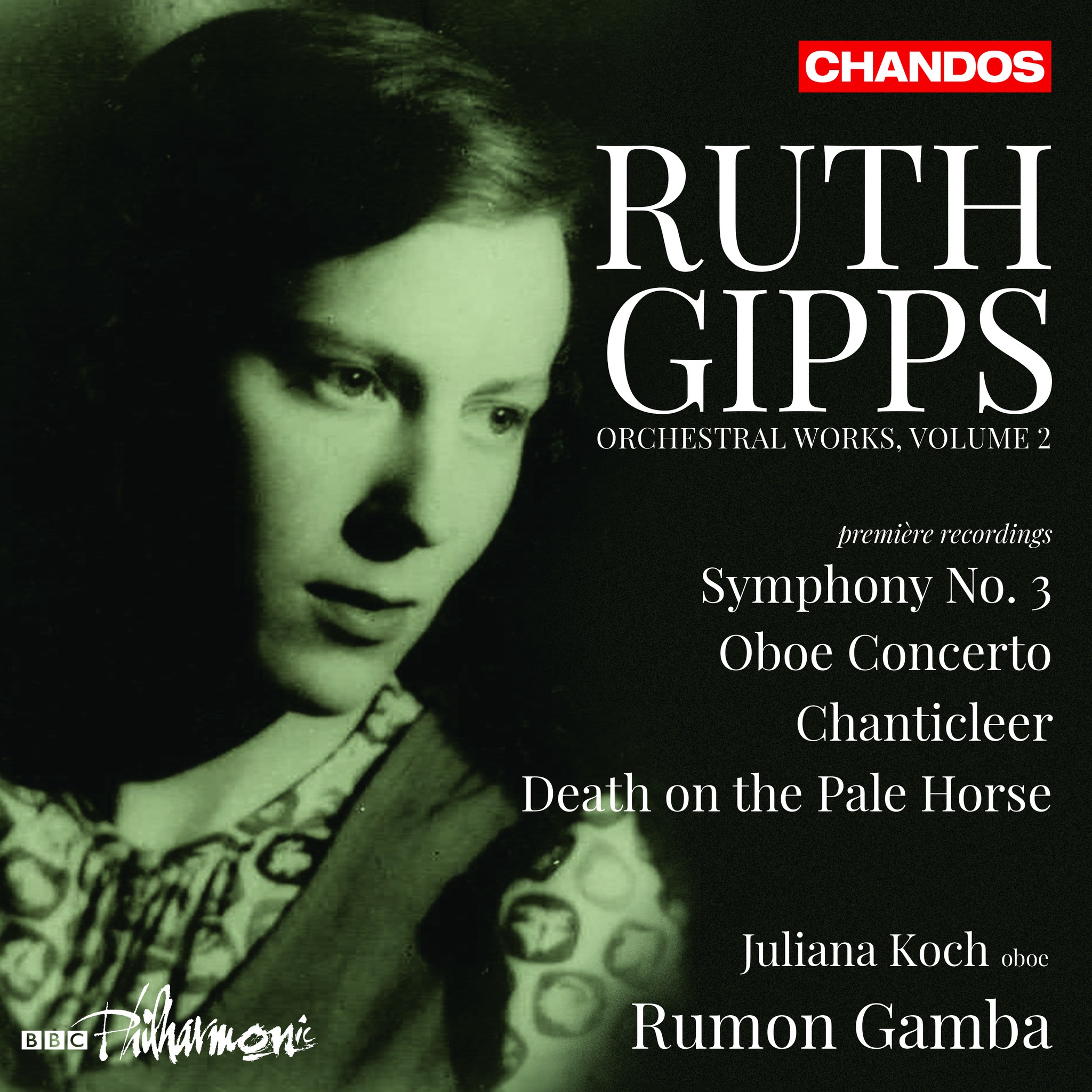
Too late to post anything of substance today, so I’m just sharing some highlights from my Christmas booty: two CDs of unusual and neglected repertoire (orchestral works by English composer Ruth Gipps and piano music by Norwegian composer Agathe Backer Grøndahl) and two books (“Mad Music: Charles Ives, the Nostalgic Rebel” by Stephen Budiansky and “Vaughan Williams” by Eric Saylor) — all new except the Ives bio, which was issued in 2014. Something must have happened to Santa’s naughty list!
-
Christmas Music Book Haul Gipps Grondahl Ives
by
-
“Twelve Days of Christmas” Alternatives
by
3 responses
My most despised Christmas carol? Why, “The Twelve Days of Christmas,” of course. Fun to sing, maybe, but maddening to listen to. Like “99 Bottles of Beer on the Wall,” with the beer replaced by wassail and eggnog.
But at least it serves to remind us that the Christmas season does not end on Christmas Day.
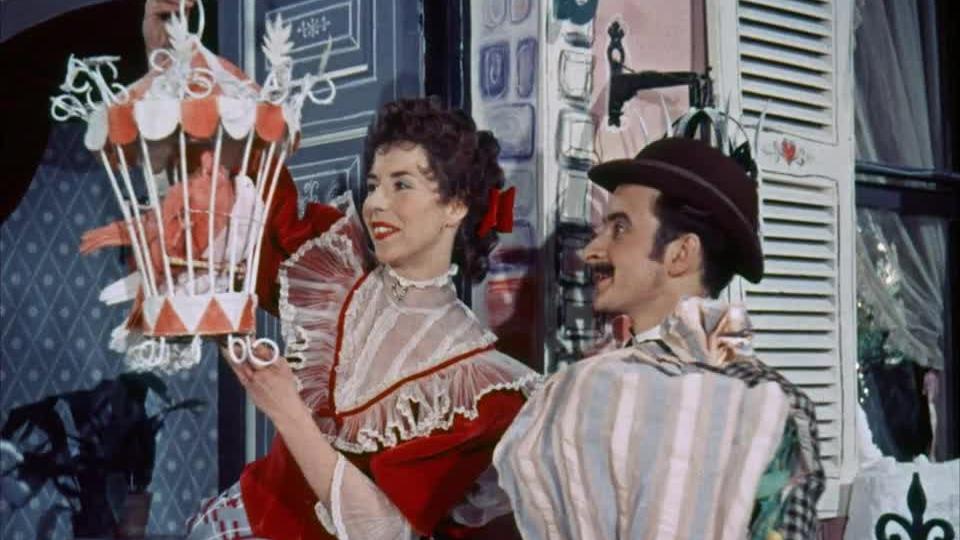
Here’s a real curio: a short film I discovered from the U.K. called “On the Twelfth Day” (1955). I came to it by way of the “back door,” as it were, since I’m familiar with the film’s score, by Doreen Carwithen. Some credit Carwithen with having been the first female full-time film composer. In 20 minutes, the short subject demonstrates what a living hell life would be if someone were actually to receive all those gifts. Even worse than having to listening to the actual carol!
Wendy Toye was the film’s director and devised its scenario. She’s also the unfortunate object of her truelove’s munificence.
Also perhaps of interest, the designs are by Ronald Searle. Searle was the creator of the St. Trinian’s School cartoons, which became the basis for the popular film series. With Albert Finney’s “Scrooge” still fresh in everyone’s minds, Searle also designed and did the paintings for that film’s opening credits.
Previously, Toye and Searle collaborated on the stage play “Wild Thyme” (1955) and subsequently a film, “The King’s Breakfast” (1963). For these projects, Searle designed the décor and costumes and painted the sets. For the films, obviously, he also did the credits. Toye, who was also a dancer and choreographer, included in her projects elements of slapstick, dance, and mime.
Watch “On the Twelfth Day” here:
The carol itself is traditional, its origins reaching way back, but it was English composer Frederic Austin who gave us its modern form in 1909. He codified the melody and lyrics, replacing “colly birds” with “calling birds,” and – the masterstroke – extending the cadence of “five go-old rinnnnnnnnngs.” That’s the part everyone really likes to sing, isn’t it?
Now, Austin is not the best-known of English composers (nor is Carwithen, for that matter), but I’ve always been a bit of a musical Anglophile, so I do have some of his concert works in my collection.
Here’s Austin’s “The Sea Venturers,” from 1935:
And Carwithen’s film score:
I know of two other treatments of this insufferable carol that manage to make it somewhat interesting, and I try to play them every year. The first is “Partridge Pie,” by English composer Richard Rodney Bennett. It’s a piano suite, consisting of wholly original music for each of the twelve days. Thankfully, unlike in the carol as it is sung, the material is not repeated from verse to verse.
Book I
Book II
The other is “A Musicological Journey Through ‘The Twelve Days of Christmas,’” by American composer Craig Courtney. Courtney arranges each of the verses in the style of a different composer or historical era, reaching back to Gregorian chant and culminating in a pseudo-Sousa march. It tickles the ear as no recording of the traditional “Twelve Days” ever does. Here’s my preferred recording, with the Bach Choir of Pittsburgh and the Pittsburgh Brass. Each of the movements is posted separately, so you have to let the playlist run through to enjoy each of the twelve days.
Let the gratuitous gift-giving continue!
-
Good King Wenceslas Snowball Secrets
by
3 responses
Good King Wenceslas looked out, on the Feast of Stephen. We all know the carol, which tells of the good king’s generosity – how he brought flesh and wine and fuel to a needy peasant, his faltering page literally treading in his master’s footsteps.
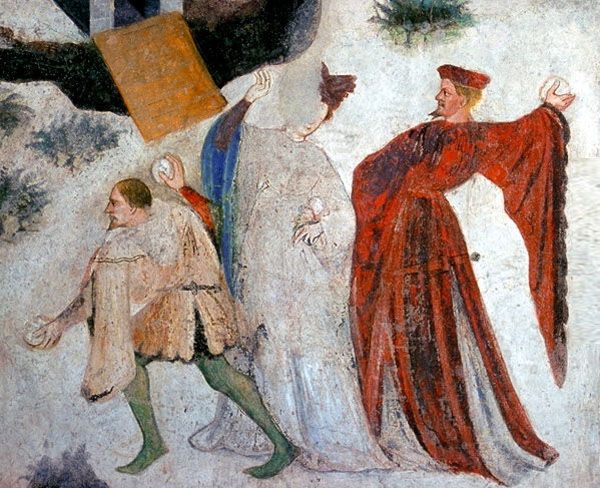
What the carol doesn’t tell us is that, with all the snow lying round about, deep and crisp and even, Wenceslas could pack a wicked snowball, as seen in this medieval fresco. Woe betided the lord or lady who caught one of the king’s frigid projectiles.
On this St. Stephen’s Day, the second day of Christmas, I hope that you too are continuing to enjoy your midwinter festivities.
Here’s a “Meditation on the Old Czech Chorale ‘St. Wenceslas’” (which has little to do with the immortal carol), by Josef Suk. Suk was a pupil – and eventually the son-in-law – of Antonin Dvořák. I’ve never heard this arrangement before. The piece was originally conceived for string quartet.
https://www.youtube.com/watch?v=SL0MiuKZ1Ik
And the carol itself, with lyrics, so sing along!
Just watch your back.
Detail from “Winter” (before 1407), by Master Wenceslas of Bohemia
-
Super Christmas Wishes for Everyone!

by
4 responses
Have a super Christmas, everybody!
-
Christmas Music Parry Vaughan Williams WWFM
by
5 responses
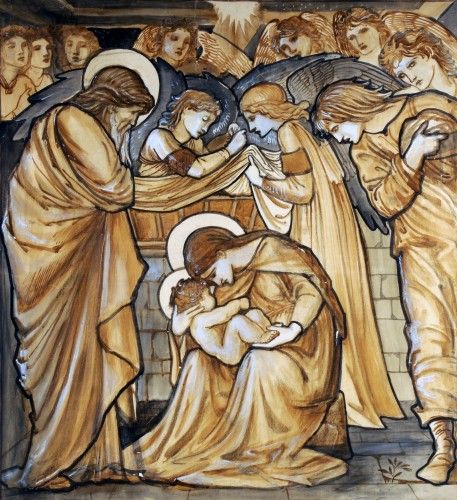
Later tonight, with all the cooking, conviviality, and hopefully clean-up winding down, settle in for an hour of reflection, with two works by English composers inspired by the Nativity.
Alongside Sir Charles Villiers Stanford and Sir Edward Elgar, Sir Hubert Parry was one of the key figures of the so-called “English Musical Renaissance.” He influenced a whole generation of much better-known composers, including Ralph Vaughan Williams and Gustav Holst. We’ll hear his “Ode on the Nativity,” given its first performance on the same concert, at the Hereford Three Choirs Festival in 1912, as Vaughan Williams’ “Fantasia on Christmas Carols.”
Vaughan Williams, the great-nephew of Charles Darwin, and an atheist in his youth, later softened into a kind of “cheerful agnosticism.” He dearly loved the King James Bible, and he especially enjoyed Christmas. Of course, he wrote much music on the subject. In fact, his very last composition was “The First Nowell.” He worked diligently at the piece, inspired by medieval pageants, during his final month, but died suddenly before its completion.
However, even at 85 years-old, RVW retained a remarkable level of concentration. He managed to pound out the whole thing in short score in only a few weeks. Furthermore, he had fully orchestrated the first two-thirds. The finishing touches were applied by his assistant, Roy Douglas – he of “Les Sylphides” fame.
If you like the “Fantasia on Christmas Carols,” I think you’ll really enjoy this. It’s pastoral music for a pastoral scene. I hope you’ll join me for “A Play in a Manger,” THIS SUNDAY NIGHT, ONE HOUR LATER THAN USUAL, AT 11:00 EST, on WWFM – The Classical Network and wwfm.org.
Until then, best wishes for a happy and meaningful Christmas!
Tag Cloud
Aaron Copland (93) Beethoven (95) Composer (114) Film Music (145) Film Score (143) Film Scores (255) Halloween (94) John Williams (195) KWAX (229) Leonard Bernstein (104) Marlboro Music Festival (125) Movie Music (160) Mozart (91) Opera (213) Philadelphia Orchestra (89) Picture Perfect (174) Princeton Symphony Orchestra (109) Radio (88) Ross Amico (244) Roy's Tie-Dye Sci-Fi Corner (290) The Classical Network (101) The Lost Chord (269) Vaughan Williams (105) WPRB (397) WWFM (881)
11 responses