This has been a bad month for Wagnerians.
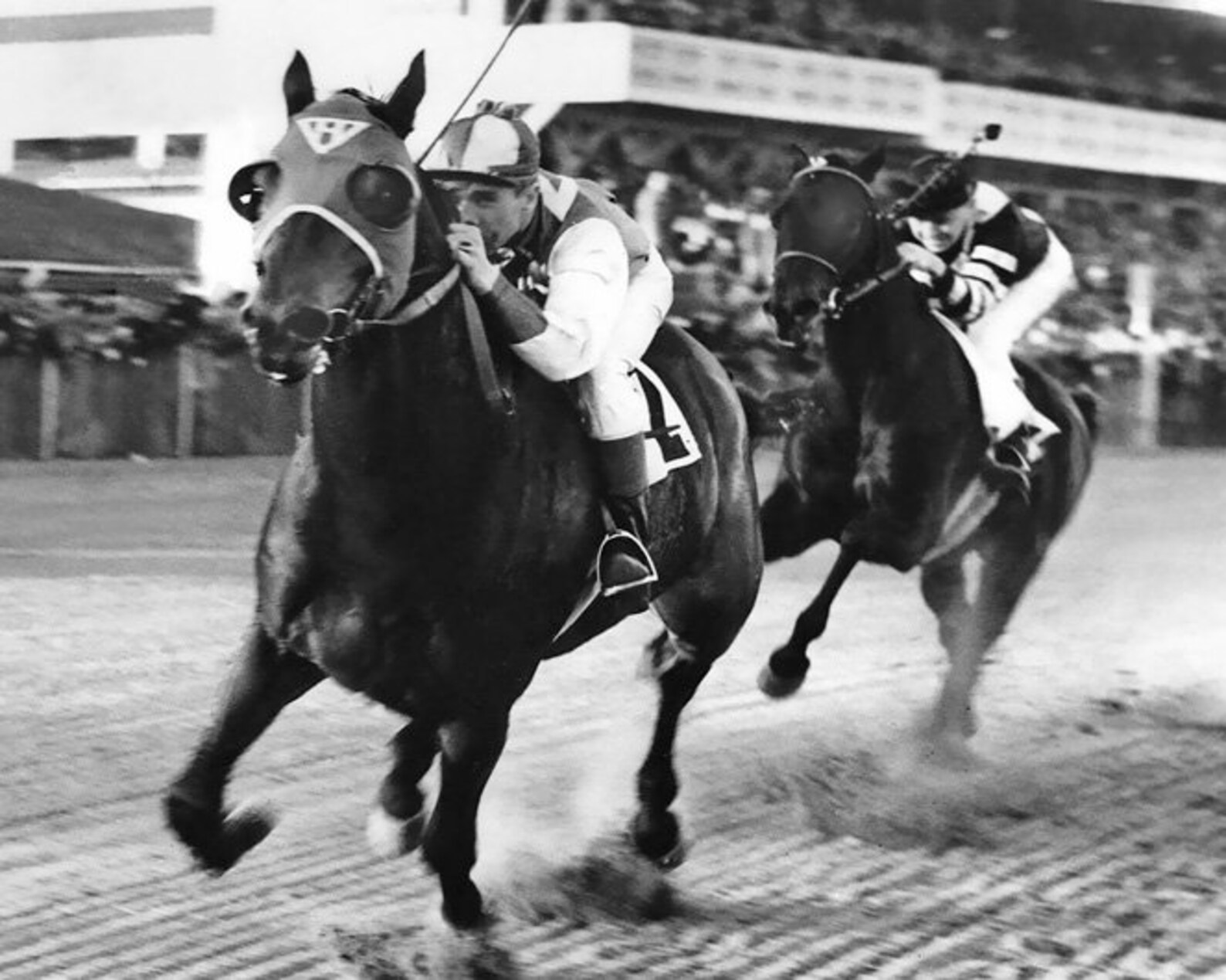
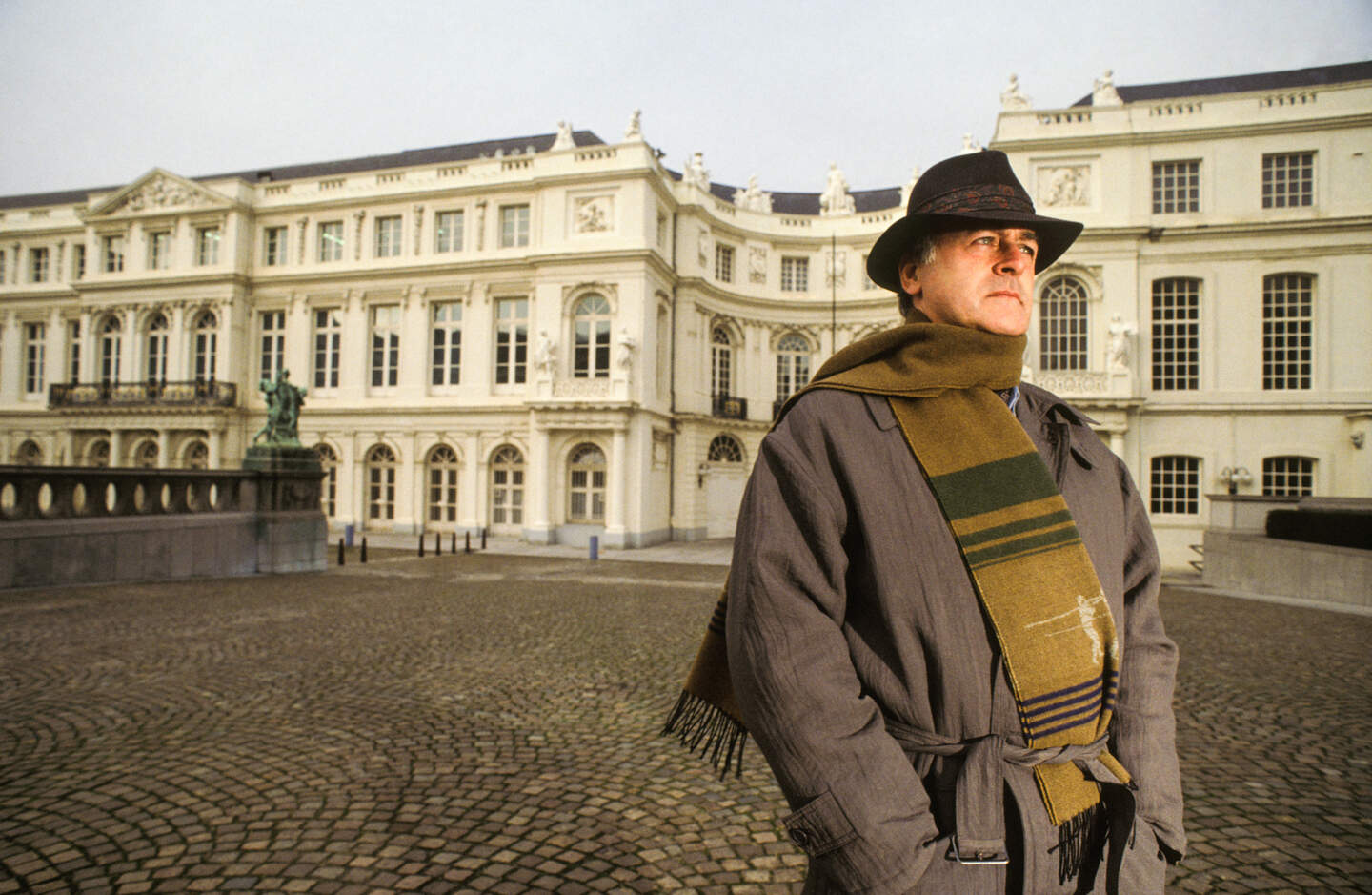
It was New Zealand bass-baritone Donald McIntyre’s original ambition to become a professional rugby player. Instead, he became one of the leading Wagner singers of his generation. For over two decades, he ruled the waves as the Flying Dutchman. He also sang Wotan, the king of the gods, in Patrice Chéreau’s landmark production of the “Ring,” conducted by Pierre Boulez, for the Bayreuth centennial in 1976. McIntrye died in Germany on November 13 at the age of 91.
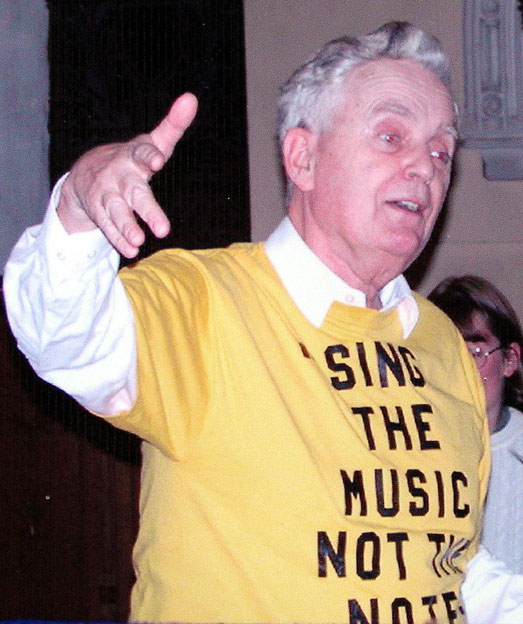
Two days earlier, we lost Oklahoma-born, Texas-raised heldentenor Gary Lakes. In common with McIntyre, Lakes’ early ambition had been to pursue a sport (in his case, American football). He was a defensive tackle in high school, but his life’s course changed after he cracked a vertebra.
Lakes sang Siegmund opposite Jessye Norman’s Sieglinde in the Otto Schenk production of “Die Walküre,” conducted by James Levine at New York’s Metropolitan Opera. This was widely-seen on PBS in June 1990. (The Chéreau-McIntrye “Ring” had been broadcast on PBS in 1983.) Among Lakes’ other Wagnerian roles were Siegfried, Tristan, and Parsifal. He died in Pittsburgh on November 11 at the age of 75.
In this noteworthy photo, taken for the Chicago Symphony Orchestra’s 100th season, your eyes will travel right to Lakes. He dominates the assemblage of top-flight conductors and performers who gathered for the orchestra’s gala opening concert on October 6, 1990.
In the front row, we’ve got, left to right, Isaac Stern, Mstislav Rostropovich, Susanne Mentzer, and Murray Perahia; in the middle, Music Director Designate Daniel Barenboim, Lady Valerie Solti, Music Director Sir Georg Solti, Leonard Slatkin, and Yo-Yo Ma; and in the back, to the left of hulking Gary Lakes, Associate Conductor Kenneth Jean, András Schiff, and Lorin Maazel; and to his right Sylvia McNair and Samuel Ramey.
It says something that even among these giants, Lakes, at 6’ 4”, towers.
-
Mountainous Lakes

by
-
James Joyce and Jeff Goldblum: Be Afraid. Be Very Afraid.

by
15 responses
A word about my Facebook posts.
Those of you who have been quick on the draw recently and hopped over to read what I’ve posted as soon as you’ve gotten a notification may have noticed a puzzling tendency of late for the text, instead of being organized into clean sentences and digestible paragraphs with my usual care and impeccable taste, to resemble the run-on ramblings of a madman.
Here’s the deal: after years of empty promises, I’ve finally got a website under construction, thanks in large part to my friend Paul Moon, who is a technological whiz, and who, unlike me, does not shut down when confronted with seemingly insurmountable programming challenges. I’ll write more about this in another post, when I offer a kind of official launch.
For today, I want to explain that for the past few weeks, I have been writing my posts in Word, as I always do, but then cut-and-paste them at the website. Once everything is tidily arranged there, with an image, category, and search words selected, I hit post, and then voila, a minute or two later it is copied over onto Facebook.
Unfortunately, like sending Jeff Goldblum through a teleporter with an undetected fly, something happens in the translation, and most of the time, what turns up on Facebook is a misshapen abomination. Be afraid. Be very afraid.
The bugs are still being worked out, so to speak, so for now, for several minutes after the post appears on Facebook, know that I am hastily at work behind the scenes, scrambling to shore up paragraphs, divide sentences, ensure all the hyperlinks work, and in general get everything in the aesthetically-pleasing form you have come to expect from Classic Ross Amico.
So if you click on a link and what comes up is Joycean stream-of-consciousness, please check back in a few minutes to enjoy another lucidly laid-out, well-crafted post as it was originally conceived.
For now, I thank you for your patience!
-
Get Shaking on “The Lost Chord”

by
6 responses
Classical music lovers are best acquainted with the Shakers by way of the hymn “Simple Gifts,” employed by Aaron Copland, of course, as the basis for a set of variations at the climax of his ballet “Appalachian Spring.” But the Shaker tradition predates Copland by nearly 200 years.
This week on “The Lost Chord,” we’ll hear ample selections from “Simple Gifts: Shaker Chants and Spirituals,” an unusual album of traditional Shaker melodies, spearheaded by Joel Cohen in 1995. With this remarkable project, Cohen sought to preserve music of the Shakers in somewhat authentic performances, augmenting his Boston Camerata and Schola Cantorum with members of the actual dwindling population of Sabbathday Lake, Maine, the last active Shaker community, established in 1783.
Music has always been an integral part of Shaker worship. There are over ten thousand songs extant. In Shaker society, musical revelation is considered a spiritual gift. As such, it was important to document these inspirations as they occurred. Since many of the scribes had no musical education, a system of notation reliant on letters of the alphabet evolved. These were often not positioned on a staff, and simple rhythmic values were employed. Lyrics sometimes involve syllables and words of unknown tongues.
The second half of tonight’s program will consist of “Shaker Loops,” a modern American classic by John Adams. This kaleidoscopic example of Minimalism was originally composed in 1978, as a four-part work for seven solo strings (three violins, one viola, two cellos, and double bass). It bears the influence of Adams’ early electronic experiments. On its surface, it may seem somewhat repetitive – each instrument assigned a loop of oscillations – but when heard simultaneously, the various strands are continually shifting. The resultant mesmeric quality neatly parallels the ecstatic writhings of the Shakers.
The work falls into four movements, flowing into one another without break: “Shaking and Trembling;” “Hymning Slews;” “Loops and Verses;” and “A Final Shaking.” Adams arranged the piece for string orchestra in 1983. We’ll hear the world premiere recording, with the San Francisco Symphony conducted by Edo de Waart.
Time to get shaking! Give thanks for simple gifts, on “All Shook Up,” on “The Lost Chord,” now in syndication on KWAX, the radio station of the University of Oregon!
——–
Clip and save the start times for all three of my recorded shows:
PICTURE PERFECT, the movie music show – Friday at 8:00 PM EST/5:00 PM PST
SWEETNESS AND LIGHT, the light music program – Saturday at 11:00 AM EST/8:00 AM PST
THE LOST CHORD, unusual and neglected rep – Saturday at 7:00 PM EST/4:00 PM PST
Stream them, wherever you are, at the link!
https://kwax.uoregon.edu/
-
Classical Cornucopia for Thanksgiving on “Sweetness and Light”

by
4 responses
This week on “Sweetness and Light,” I’ll do my level best to fill our heads with visions of pumpkin pie and cranberry bread and, yes, even Thanksgiving turkey.
We’ll hear works by Rick Sowash, Thomas Canning, Edvard Grieg, Howard Hanson, and Aaron Copland, and a concerto by Antonio Vivaldi that bears the nickname “The Turkey” – not because it’s a dud, mind you, but rather because of the cascading broken third passages in the solo lines of the work’s third movement, which apparently reminded someone of the ungainly bird. Gobble gobble!
Join me for an hour of hymn tunes and harvest dances and most of all music of gratitude. It’s a program of hope and thanksgiving. We’ll be reaching deep into the cornucopia on “Sweetness and Light,” this Saturday morning at 11:00 EST/8:00 PST, exclusively on KWAX, the radio station of the University of Oregon!
Stream it where you are at the link:
https://kwax.uoregon.edu/
-
Hail! Bright Cecilia

by
3 responses
A tip of the halo to St. Cecilia on her feast day! Keep looking up with this evergreen playlist of Cecilia inspirations. All hail, music’s patron saint!
William Boyce, “Ode for St. Cecilia’s Day” (overture also published as Boyce’s Symphony No. 5)Benjamin Britten, “Hymn to St. Cecilia” (Britten was born on this date)
Ernest Chausson, “La légende de Sainte Cécile”
Norman Dello Joio, “To Saint Cecilia”
Gerald Finzi, “For St. Cecilia”
Charles Gounod, “St. Cecilia Mass”
George Frideric Handel, “Ode for St. Cecilia’s Day”
Franz Joseph Haydn, “Missa Sanctae Caecilia”
https://www.youtube.com/watch?v=QhA7LEd56ts
Herbert Howells, “A Hymn for St. Cecilia” (text by Ursula Vaughan Williams)
Franz Liszt, “Hymn to St. Cecilia”
Arvo Pärt, “Cecilia, vergine romana”
Henry Purcell, “Ode on St. Cecilia’s Day (Hail! Bright Cecilia)”
Various, “Bright Cecilia: Variations on a Theme by Henry Purcell,” a 2002 BBC commission for the Last Night of the Proms sporting contributions by Colin Matthews, Judith Wier, Poul Ruders, David Sawer, Michael Torke, Anthony Payne, and Magnus Lindberg
Joaquin Rodrigo, “El Album de Cecilia” (written for the composer’s daughter; Rodrigo was born on this date)
Alessandro Scarlatti, “St. Cecilia Mass”
———-
PAINTING: “St. Cecilia” (1647), by Frans Francken the Younger and Cornelis de Baeilleur
Tag Cloud
Aaron Copland (93) Beethoven (95) Composer (114) Film Music (125) Film Score (143) Film Scores (255) Halloween (94) John Williams (189) KWAX (229) Leonard Bernstein (101) Marlboro Music Festival (125) Movie Music (140) Opera (202) Philadelphia Orchestra (89) Picture Perfect (174) Princeton Symphony Orchestra (106) Radio (87) Ralph Vaughan Williams (85) Ross Amico (244) Roy's Tie-Dye Sci-Fi Corner (290) The Classical Network (101) The Lost Chord (268) Vaughan Williams (103) WPRB (396) WWFM (881)
8 responses