• Superman II & THX 1138 Movie Discussion

    Superman II & THX 1138 Movie Discussion

    by 

    in
    7 responses

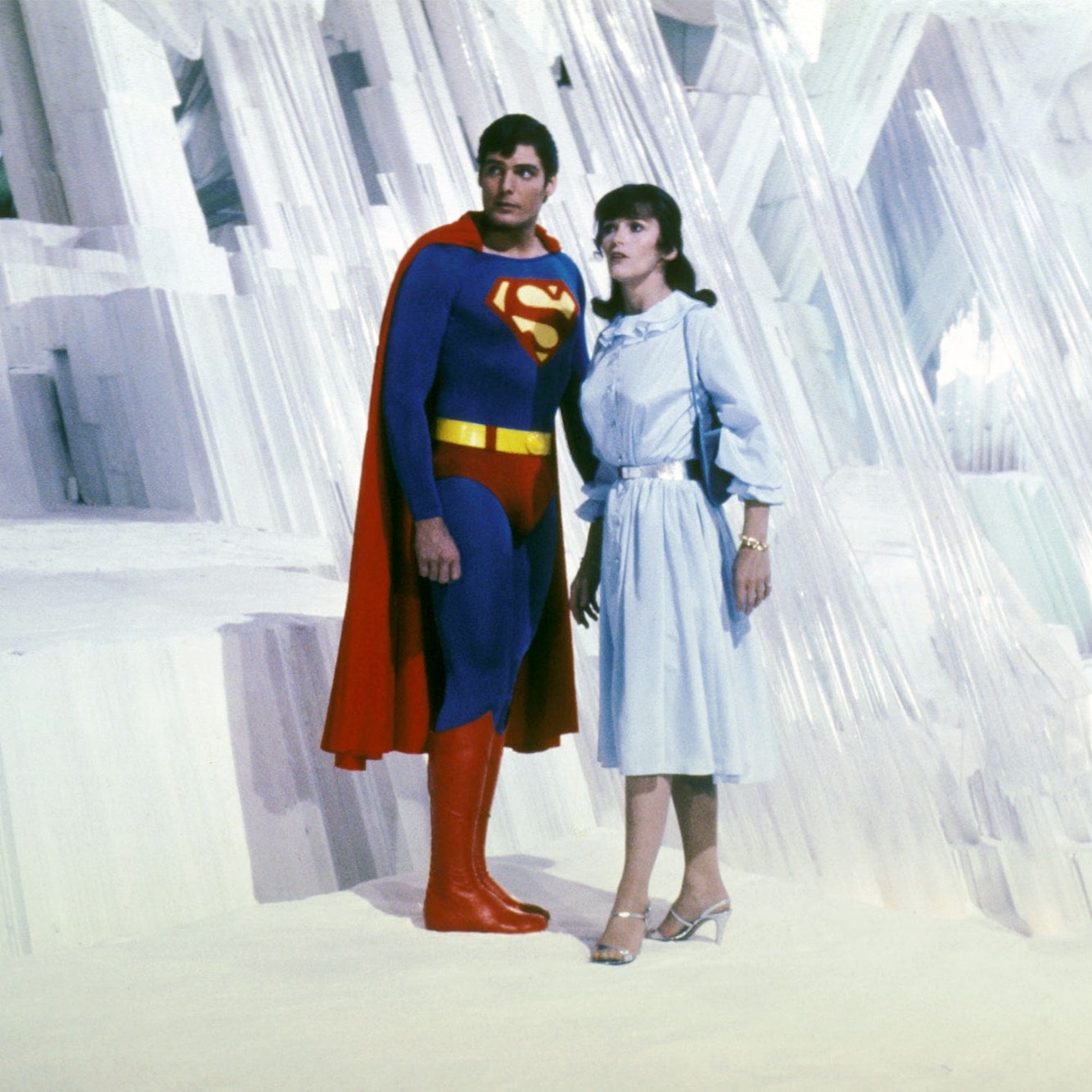
    It turns out that low blood sugar is my kryptonite, so I’m not sure if we ever came to a consensus on “Superman II: The Richard Donner Cut.” It sure was fun talking about all the behind-the-scenes drama, though. If you missed it, the show has been archived on a crystal at the Fortress of Solitude, but through the miracle of the internet, you can view it here:

    Next time, we’ll tackle George Lucas’ first feature film, “THX 1138” (1971). This sci-fi curio, produced by Francis Ford Coppola, features Robert Duvall, Donald Pleasence, and Don Pedro Colley as the future’s hungriest hologram. It’s been decades since either of us have last seen it, but I recall it being a rather chilly piece of dystopia, light years away from intergalactic exuberance of “Star Wars.”

    We’ll be reading off everyone’s license plate numbers during our discussion of “THX 1138,” on the next Roy’s Tie-Dye Sci-Fi Corner. Shave your heads in the comments section and maintain obedience to the state, when we livestream on Facebook, next Friday evening at 7:00 EST!

    https://www.facebook.com/roystiedyescificorner


  • Viking Movie Music Swords Fjords and Soundtracks

    Viking Movie Music Swords Fjords and Soundtracks

    by 

    in
    4 responses

    We’ve got the need for mead!

    This week on “Picture Perfect,” it’s an hour of swords and fjords, as we travel north for music from movies about the Norsemen.

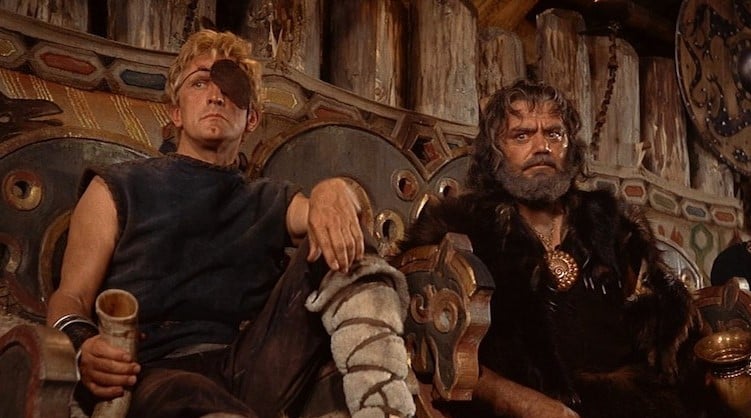
    In “The Long Ships” (1963), two Viking brothers, played by the unlikely pair of Richard Widmark and Russ Tamblyn, make off with a king’s funeral ship – and the king’s daughter – as they set sail on a quest for the fabled “Mother of Voices,” an enormous solid gold bell – also coveted by a Moorish prince, played by the late Sidney Poitier. Needless to say, camp value is high. The music for this British-Yugoslavian production is by the Serbian composer Dusan Radic.

    “Prince Valiant” (1954), based on the enduring comic strip by Hal Foster, is set in the days of King Arthur, though Val himself is a Viking prince of the kingdom of Scandia. And indeed Vikings play an important role in the film. Victor McLaglen is Val’s Viking pal Boltar, Janet Leigh is Princess Aleta, James Mason the villainous Sir Brack, and Sterling Hayden a ridiculous Gawain. Robert Wagner dons the signature page-boy haircut.

    The score is every bit as vivid as the film’s Technicolor. We’ll hear selections from a very special recording, with the composer himself, Franz Waxman, conducting.

    Michael Crichton’s 1976 novel, “Eaters of the Dead,” presents an unlikely, fish-out-of-water alliance, between historic Persian ambassador of the 10th century, Ahmad ibn Fadlan, and a band of Vikings. They overcome their cultural differences to face off against the Wendol, humanoid creatures who periodically emerge from the mist to feed on human flesh.

    Crichton’s story was filmed in 1997 and ultimately released as “The 13th Warrior” (1999), with Antonio Banderas as Ibn Fadlan. The production was plagued by misfortune. The original director, John McTiernan, who found success with “Die Hard,” was fired for running over-budget, and Crichton himself was brought in to re-shoot a number of the scenes. Nevertheless, the film proved to be a box office failure. But any movie to feature a Jerry Goldsmith score – and Vikings! – can’t be all bad.

    The legendary Jack Cardiff, who actually directed “The Long Ships,” provided the stunning cinematography for “The Vikings” (1958). The film stars Kirk Douglas, Tony Curtis, Janet Leigh, and Ernest Borgnine. Although unintentionally amusing on several levels, “The Vikings” is highly regarded for its attention to detail and stabs at historical accuracy – particularly in regard to its Viking dragon boats.

    Also impressive is the haunting score by Mario Nascimbene, which we’ll hear in a digital re-recording, issued on the Prometheus Records label, featuring the City of Prague Philharmonic Orchestra and Chorus, conducted by Nic Raine. The recording is like mead from Valhalla.

    I hope you’ll join me for an hour of runes and tunes. It’s the definitive mix-tape for your dragonship, on “Picture Perfect, music for the movies, this Saturday evening at 6:00 EST, on WWFM – The Classical Network and wwfm.org.
  • Happy Birthday Robert Moran Composer & Legend

    Happy Birthday Robert Moran Composer & Legend

    by 

    in
    9 responses

    Happy birthday, Robert Moran, the only composer who’s had the wisdom to repeatedly top off my wine glass with chilled vodka in the middle of recording an interview at his home. Keep on flying high (over Albania)!

    An aria from Bob’s opera “Desert of Roses”

    Selections from “Trinity Requiem”

    “Alice” for Scottish Ballet

    Looking groovy and introducing his “Lunchbag Opera” for the BBC

    “Buddha Goes to Bayreuth”

    “Modern Love Waltz” by Philip Glass, arranged by Robert Moran for accordion and cello

    “Waltz. In Memoriam Maurice Ravel”


  • Poulenc Two Pianos Concerto Film Discovery

    Poulenc Two Pianos Concerto Film Discovery

    by 

    in
    11 responses

    Neat discovery on Francis Poulenc’s birthday! The composer and Jacques Février play Poulenc’s Concerto for Two Pianos. The orchestra is conducted by Georges Prêtre, one of Poulenc’s most authoritative interpreters. Of course, this same team made a classic recording of the work for EMI. I’m just pumped that there’s a film, and that it’s so pristine! While it’s undeniably fun to watch the interplay between the two pianists in the fleeter passages, my favorite part of the piece has always been the second movement, clearly indebted to Mozart, but also touched by Poulenc’s characteristic wistfulness.


  • Paris Blues Armstrong Newman Poitier & Racism

    Paris Blues Armstrong Newman Poitier & Racism

    by 

    in
    6 responses

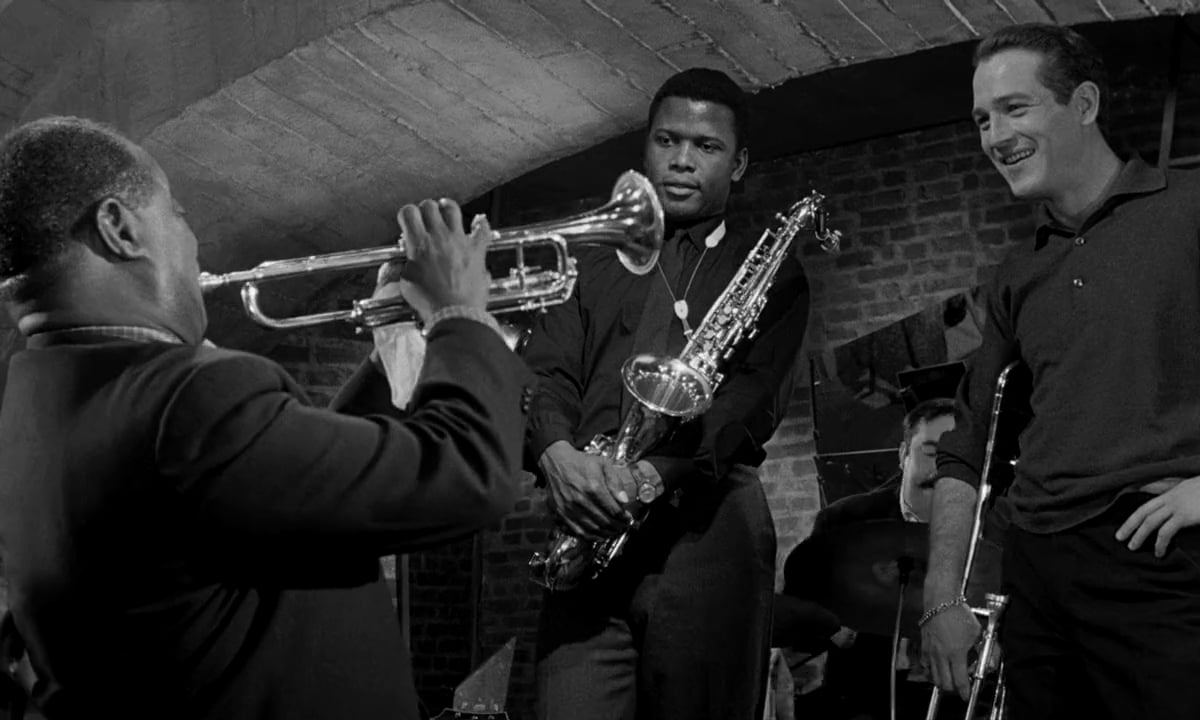
    Here’s a link to the “Battle Royal” scene from “Paris Blues” (1961). Louis Armstrong raises the roof of a subterranean jazz bar with Paul Newman and the late Sidney Poitier.

    Duke Ellington was nominated for an Academy Award in the category of “Best Music, Scoring of a Musical Picture,” but to no one’s surprise, lost to Saul Chaplin, Johnny Green, Sid Ramin, and Irwin Kostal for “West Side Story.” Poitier’s onscreen saxophone playing was recorded by Paul Gonsalves. Newman’s trombone part was recorded by Murray McEachern.

    The film contrasts American racism of the era with Paris’ comparative acceptance of Black people. “Here in Paris, I’m Eddie Cook, musician – period,” observes Poitier’s character, “not Eddie Cook, negro musician.”

    However, the interracial romance of Harold Flender’s 1957 novel was an extra mile United Artists was unwilling to go. Instead, the film version takes a more conservative route of pairing Poitier with Diahann Carroll. Poitier, disappointed with the change, later remarked that “cold feet… took the spark out of it.”


Tag Cloud

Aaron Copland (93) Beethoven (95) Composer (114) Film Music (145) Film Score (143) Film Scores (255) Halloween (94) John Williams (195) KWAX (229) Leonard Bernstein (104) Marlboro Music Festival (125) Movie Music (160) Mozart (91) Opera (213) Philadelphia Orchestra (89) Picture Perfect (174) Princeton Symphony Orchestra (109) Radio (88) Ross Amico (244) Roy's Tie-Dye Sci-Fi Corner (290) The Classical Network (101) The Lost Chord (269) Vaughan Williams (105) WPRB (397) WWFM (881)

DON’T MISS A BEAT

Receive a weekly digest every Sunday at noon by signing up here


RECENT POSTS