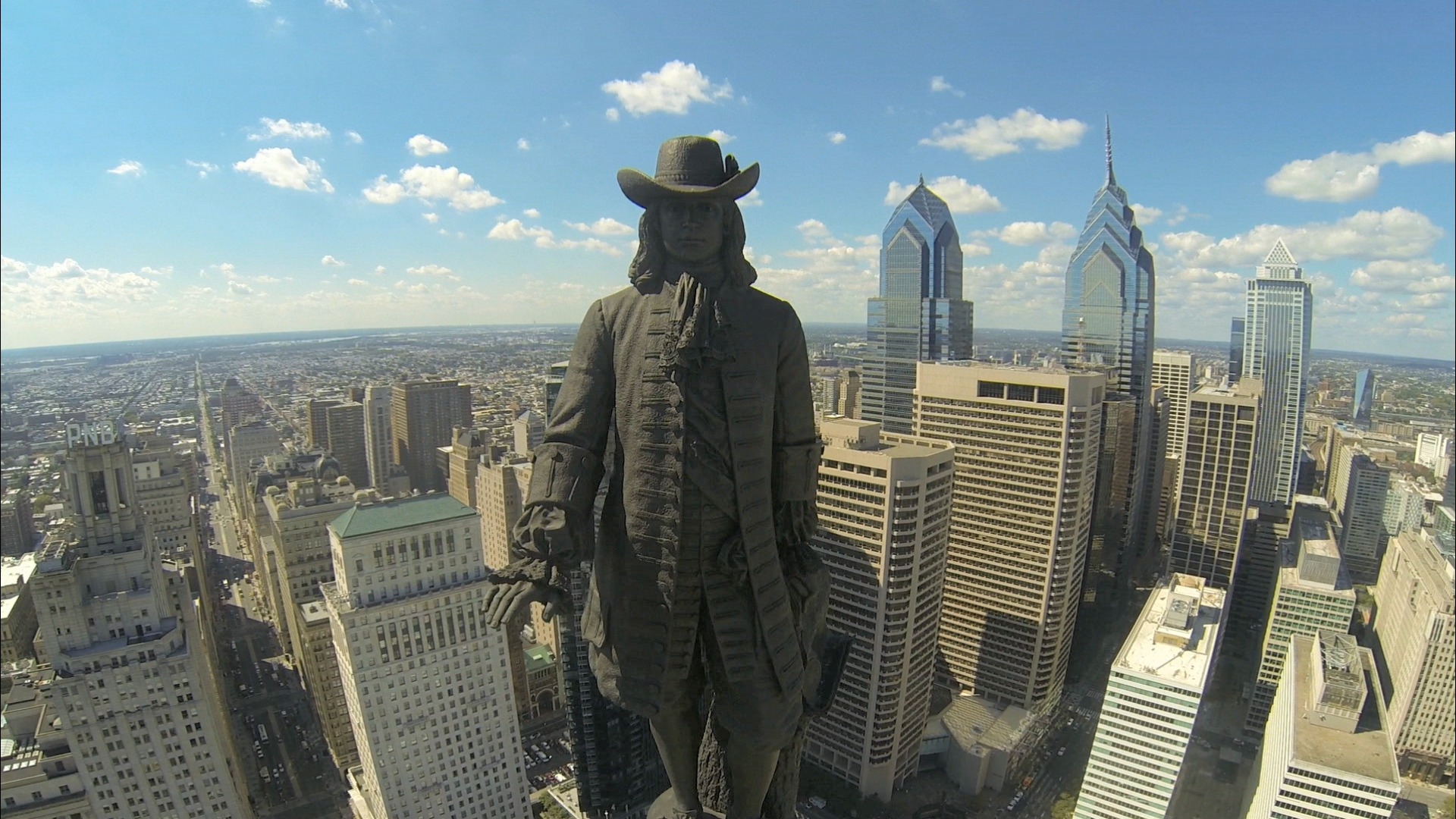
• William Penn: Music From Philadelphia

    William Penn: Music From Philadelphia

    by 

    in
    6 responses

    This Sunday night on Then we’ll turn to “The Lost Chord,” round out your Thanksgiving weekend with two works inspired by William Penn.

    An early hero of American liberty, Penn founded Philadelphia (the “City of Brotherly Love”), named the state of Pennsylvania in honor of his father, and signed a landmark treaty with the Lenape. He was enshrined in music by at least two Philadelphia composers.

    We’ll hear a selection from the opera “William Penn,” by Romeo Cascarino. Cascarino, born in South Philadelphia in 1922, was largely self-taught as a composer. His fascination with Penn took root at an early age, when he was moved by a plaque posted on City Hall of “Penn’s Prayer for Philadelphia.” He first set the Prayer to music as a choral work in 1950, and later set the Treaty, as well.

    These led naturally to the conception of an opera on a grand scale, for which Cascarino asked poet Peg Gwynn to craft a libretto, based on Penn’s life and writings. He spent the next quarter century crafting his magnum opus, even as he composed other works and continued to teach harmony and composition at Philadelphia’s now-defunct Combs College of Music.

    The opera was heard twice in concert, performed by the Orchestra Society of Philadelphia at Drexel University, in 1975 and 1977. Tom DiNardo, critic for the Philadelphia Bulletin, recognized the exceptional quality of the music, and surprised the composer by arranging for a couple of staged performances at the Academy of Music in 1982.

    The chorus is especially prominent, but arguably the most powerful moments are the intimate glimpses of Penn with his family. These were the days of immense and hazardous ocean voyages, remember, and when a man went to sea, there was no telling when – or even if – he’d be reunited with his loved ones. This knowledge lends an added poignancy to our experience of Penn the man.

    Tonight, Metropolitan Opera singer John Cheek assumes the title role, and Penn’s wife, Gulielma, is portrayed by Dolores Ferraro, then married to the composer.

    The second half of the program will be devoted to “Four Squares of Philadelphia,” by Louis Gesensway. Gesensway was born in Latvia in 1906. A violin prodigy, he was one of the founders of the Toronto Symphony. He arrived in Philadelphia, at the age of 19, where he played in the Philadelphia Orchestra under both Stokowski and Ormandy.

    In his mid-20s, he took a leave of absence to study composition with Zoltán Kodály. “Four Squares” was described by the composer as a “symphonic poem for large orchestra, narrator and street criers.”

    The piece opens with Penn’s prayer for the city and celebrates the distinctive characteristics of each of the public spaces he planned: “Washington Square” in early morning during Colonial times, with street criers hawking their wares; “Rittenhouse Square” on a bright and cheerful afternoon; “Logan Square” with its fountains at dusk; and “Franklin Square” at night, evocative of noisy bridge traffic, with a side excursion into Chinatown and musical interjections from the honky-tonk joints located around the square in the 1950s.

    We’ll hear it performed by Gesensway’s colleagues of the Philadelphia Orchestra, with Eugene Ormandy conducting.

    Penn’s influence is not stationary. As the days grow shorter and the nights colder, warm yourself with a nice steaming bowl of “Quaker Notes,” this Sunday night at 10:00 EST, on WWFM – The Classical Network and wwfm.org.
  • Stephen Sondheim Broadway Legend Dies at 91

    Stephen Sondheim Broadway Legend Dies at 91

    by 

    in
    5 responses

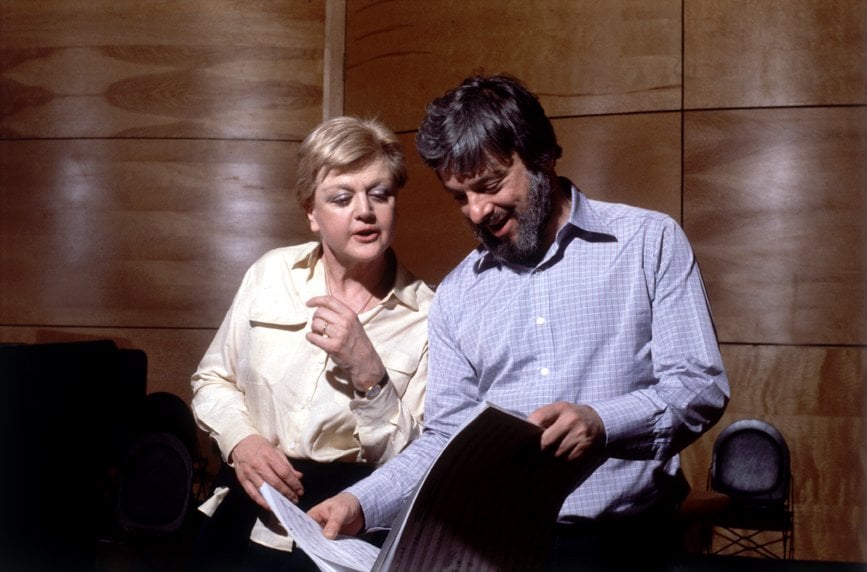
    Tragedy tonight! Broadway legend Stephen Sondheim has died.

    The composer and lyricist credited with having reinvented the American musical was the recipient of every major honor, including nine Tony Awards, an Academy Award, eight Grammy Awards, a Pulitzer Prize, a Laurence Olivier Award, and a 2015 Presidential Medal of Freedom.

    Sondheim’s passing occurs only two weeks before Steven Spielberg’s “West Side Story” is set to introduce him to a whole new generation of fans. He was only 27 when he collaborated with Leonard Bernstein and Arthur Laurents on the original 1957 production.

    It was the beginning of a storied career that included music and lyrics for “A Funny Thing Happened on the Way to the Forum,” “Company,” “Follies,” “A Little Night Music,” “Sweeney Todd: The Demon Barber of Fleet Street,” “Sunday in the Park with George,” and “Into the Woods.” He also provided the words for Laurents’ “Gypsy,” with music by Jule Styne.

    Following an early mentorship with Oscar Hammerstein II – whom he had known since the age of 10, since Hammerstein turned out to be his best friend’s father – he fell in with Princeton University’s total serialist Milton Babbitt, whom he described as “a frustrated show composer.” It was an unlikely pairing, but the two clicked. Together, they dissected everything from Rodgers and Hart to Mozart.

    Sondheim’s uncanny facility with words – imbued with virtuosic wit, insight, and humanity – frequently added up to more than just a stunt lyric. In any case, he always regarded himself foremost as a composer. His revitalizing approach to the American musical theater made him the most revered and influential composer-lyricist of the second half of the 20th century.

    At the time of his death, he was 91 years-old.

    https://www.nytimes.com/2021/11/26/theater/stephen-sondheim-dead.html?fbclid=IwAR0-CWvvBfk2JWFVsXRI3H8NjSzTbFHeWzl_pUaYUwsv-pbAnDKIeMlFf7o


  • Fairy Tale Film Scores Nostalgic Movie Magic

    Fairy Tale Film Scores Nostalgic Movie Magic

    by 

    in
    2 responses

    This week on “Picture Perfect,” we’ll play on the inherent nostalgia of the holidays by recalling the magic of childhood, through our collective and personal interactions with the world of fairy tales.

    George Pal’s “The Wonderful World of the Brothers Grimm” (1962) was filmed in Cinerama and features the producer-director’s trademark stop motion effects. Its all-star cast includes Laurence Harvey, Claire Bloom, Barbara Eden, Russ Tamblyn, and Buddy Hackett. The narrative incorporates a number of familiar Grimm tales, while dealing with the brothers’ real-life struggles.

    The music is by Leigh Harline. Harline was an integral part of the Disney team that scored an earlier fairy tale adaptation, “Snow White and the Seven Dwarfs.” He would win two Academy Awards for his work on “Pinocchio,” including one for Best Original Song, for “When You Wish Upon a Star.”

    “The Company of Wolves” (1984), one of Neil Jordan’s earlier films, explores the psychological underpinnings of the tale of “Little Red Riding Hood,” which is presented as an allegory of adolescence and the loss of innocence. Angela Carter co-wrote the screenplay, based upon a selection of her original short stories. The film features Angela Lansbury, any number of werewolves, and Terence Stamp as the Devil. The music is by George Fenton.

    With the advent of computer animation, a snarkier, post-modern take on the fairy tale predominates, most notably with the “Shrek” series, beginning in 2001. The “Shrek” films were so successful, they led to a spin-off, centered on the character of “Puss in Boots” (2011).

    Voiced by Antonio Banderas, Puss provides ample opportunity to vamp on the actor’s swashbuckler image, especially as depicted in “The Mask of Zorro.” Likewise, the composer, Henry Jackman, chooses to rib James Horners’ “Zorro” score.

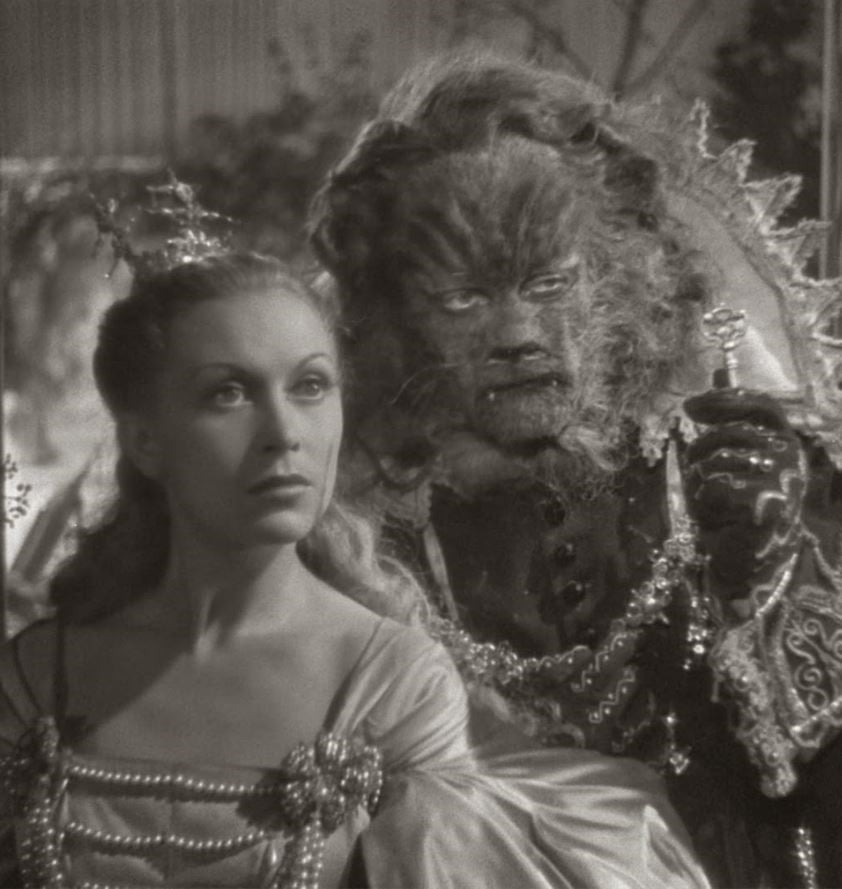
    Finally, we’ll hear selections from perhaps the finest fairy tale ever committed to film, Jean Cocteau’s “La Belle et la Bête” – “Beauty and the Beast” (1946). Moody, atmospheric, dreamy, clever, hypnotic, funny, and romantic, sporting production design that looks like something Gustav Doré might have dreamed up while smoking Dutch Masters cigars, Cocteau’s masterpiece stars Jean Marais and Josette Day.

    The alternately mysterious and majestic score is by Georges Auric. Cocteau, you’ll recall, was the one-man publicity machine that propelled Auric and his composer-colleagues, Francis Poulenc, Darius Milhaud, Arthur Honegger, Germaine Tailleferre, and Louis Durey, to fame in Paris, circa 1920, dubbing them “Les Six.”

    I hope you’ll join me for an hour of once-upon-a-time and happily-ever-after, on “Picture Perfect,” music for the movies, this Saturday evening at 6:00 EST, on WWFM – The Classical Network and at wwfm.org.


  • Thomas Nast’s Santa How Did You Sleep?

    Thomas Nast’s Santa How Did You Sleep?

    by 

    in
    3 responses

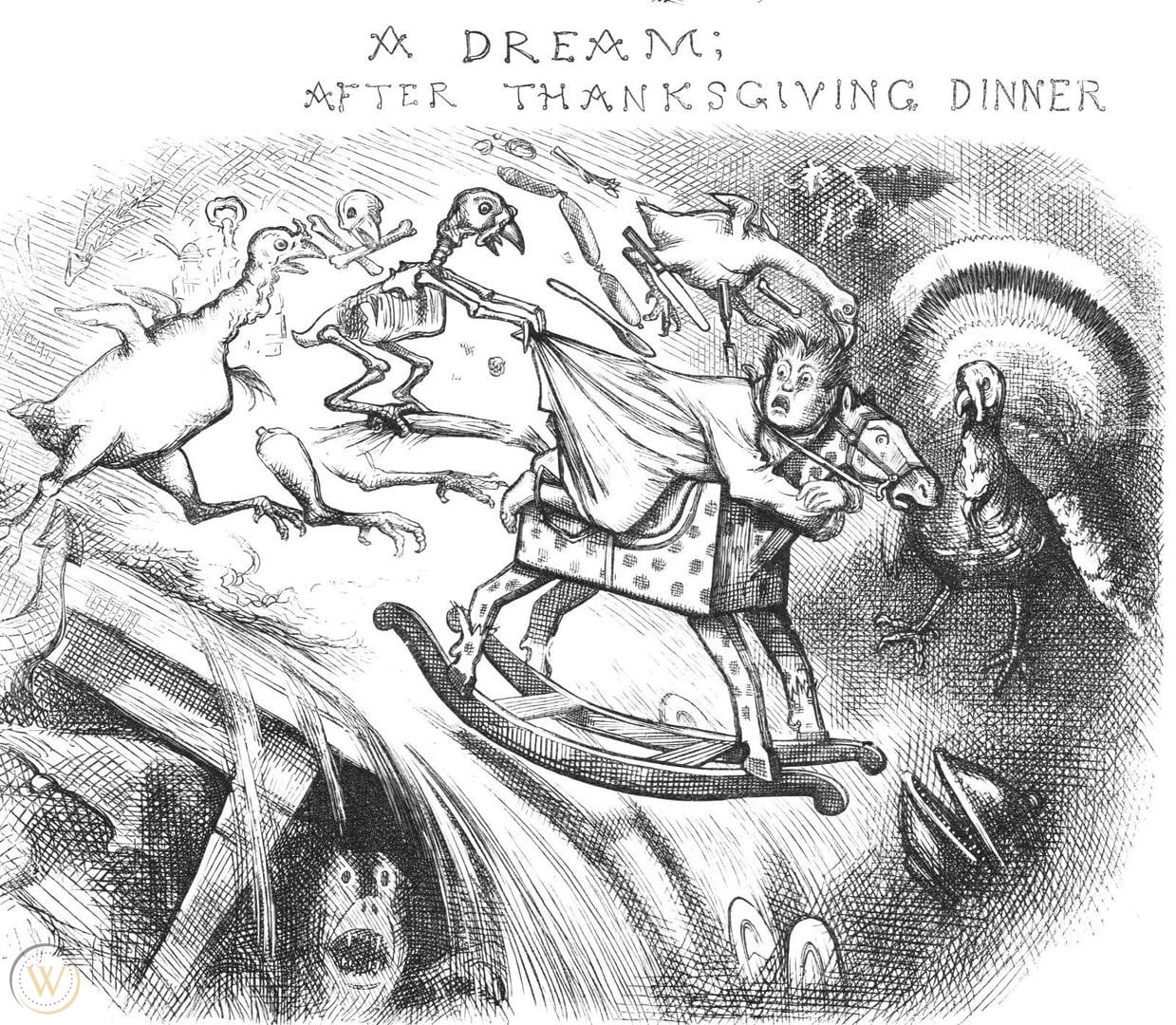
    So how’d you sleep?

    The illustration is by Thomas Nast, an artist whose influence is still felt as surely as yesterday’s Thanksgiving dinner.

    Nast, of course, is the political cartoonist credited with having knocked the pins out from under Boss Tweed’s Tammany Hall machine. He’s also responsible for the popularization of Uncle Sam and the Democratic donkey, the creation of the Republican elephant, and the personification of Columbia, symbol of American values.

    But this time of year his legacy is most pervasive, as foremost he is credited with having been the first to synthesize the traditional imagery employed in Clement Moore’s “A Visit from St. Nicholas” in codifying the look of our modern Santa.

    What better way, then, to kick off the holiday season? Enjoy those Thanksgiving leftovers!


  • Rankin Bass Hobbit Thanksgiving Special Review

    Rankin Bass Hobbit Thanksgiving Special Review

    by 

    in
    8 responses

    The day after Thanksgiving, I think we all know what it is to be as portly and contented as Bilbo Baggins. Yet, inevitably, as we emerge from our tryptophan-induced stupors, there are still the cracked plates and lingering dwarfs to be reckoned with.

    Therefore, you’ll excuse us, I hope, as we defer until SUNDAY the pleasure of our discussing the Rankin-Bass adaptation of J.R.R. Tolkien’s “The Hobbit” (1977). You know, the one featuring the vocal talents of Orson Bean, John Huston, Hans Conried, Otto Preminger, Cyril Ritchard, and Brother Theodore as Gollum. This fondly-remembered television special was first broadcast on Thanksgiving weekend, 44 years ago.

    Joining Roy and me on this greatest adventure will be my good friend and Tolkien connoisseur, Paul Miller. When it comes to Middle Earth, don’t even try to guess what he’s got in his “pocketses.”

    We’ll be blowing smoke rings and combing out the hair on our feet, for the next Roy’s Tie-Dye Sci-Fi Corner. Leave your riddles in the comments section, as we livestream on Facebook, THIS SUNDAY EVENING AT 7:00 EST!

    https://www.facebook.com/roystiedyescificorner


Tag Cloud

Aaron Copland (93) Beethoven (95) Composer (114) Film Music (145) Film Score (143) Film Scores (255) Halloween (94) John Williams (195) KWAX (229) Leonard Bernstein (104) Marlboro Music Festival (125) Movie Music (160) Mozart (91) Opera (213) Philadelphia Orchestra (89) Picture Perfect (174) Princeton Symphony Orchestra (109) Radio (88) Ross Amico (244) Roy's Tie-Dye Sci-Fi Corner (290) The Classical Network (101) The Lost Chord (269) Vaughan Williams (105) WPRB (397) WWFM (881)

DON’T MISS A BEAT

Receive a weekly digest every Sunday at noon by signing up here


RECENT POSTS