Alfred Hitchcock’s most celebrated musical collaborator was Bernard Herrmann. Herrmann scored just about every one of Hitch’s films over the span of a decade, enhancing the impact and memorability of such classics as “Vertigo,” “North by Northwest,” and “Psycho.” But Hitchcock also worked with any number of other notable composers.
This week on “Picture Perfect,” we’ll cast some light into Herrmann’s shadow with selections from “Rebecca” (Franz Waxman), “Strangers on a Train” (Dimitri Tiomkin), “Spellbound” (Miklós Rózsa), and “Family Plot” (John Williams).
Herrmann goes on hiatus, and the suspense is killing us, on “Picture Perfect,” music for the movies, this Saturday evening at 6:00 EDT, on WWFM – The Classical Network and wwfm.org.
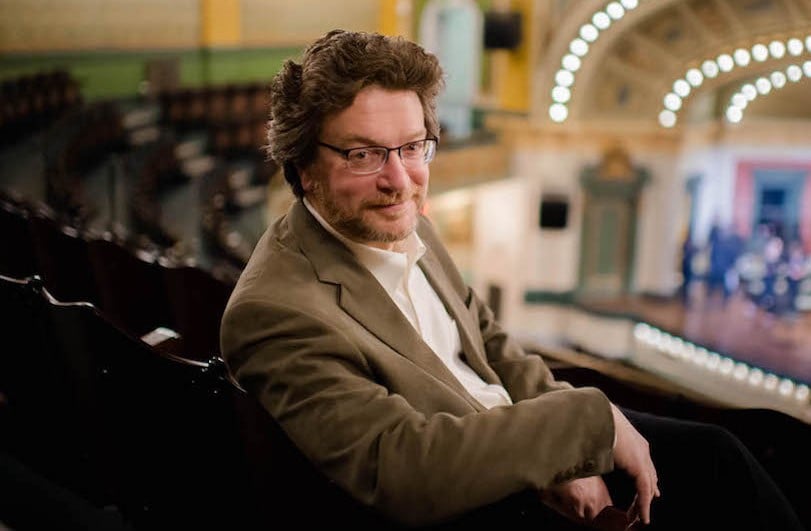
Yesterday, I forgot to mention the world premiere of a new piece by my friend, Kile Smith – “Ave Maris Stella” – to be performed three times this weekend by Piffaro, The Renaissance Band and the vocal ensemble Variant 6. The Center City Philadelphia performance took place last night, but there are still two more chances to hear it live: tonight at 7:30 pm, at the Presbyterian Church of Chestnut Hill (Philadelphia’s “garden district”), and tomorrow at 3 pm, at Sts. Andre and Matthew, 719 N. Shipley St., in Wilmington, DE.
If these times don’t work for you, a concert video will be made available on-demand from 10/16 to 10/26. Access to the video for ticker holders is free.
You’ll find more information about the program at the Piffaro website.
Be forewarned: “The Car” (1977) is a movie you won’t want to watch alone. Not because it’s scary, but because it’s hilarious!
Stock up on plenty of alcohol and chips and call your best buddy in the world, and get ready for a fun evening of so-bad-it’s-good, “Mystery Science Theater 3000”-style one-upsmanship. Then join Roy and me tomorrow night for an exhaustive discussion, which will fortify us with more than we thought we ever needed to know about this motorized cult classic.
James Brolin (father of Josh, husband of Barbra) plays the deputy sheriff upon whom it falls to rid a sleepy desert community of an implacable, homicidal, seemingly driverless Lincoln Continental with tinted windows. Who cares about horse power, when it’s fueled by Satan! No one is safe – not even indoors. And those ‘70s cop cars are just so flammable.
Even in the surprisingly crowded field of possessed vehicle entertainment (“Duel,” “Killdozer,” “My Mother the Car”), “The Car” has dirt in its carburetor. But that’s what makes it so damned fun.
If you don’t have any beer and you don’t have any friends, or if you have zero tolerance for this kind of thing (in which case I am sorry for you), you really get all you need from this trailer, which never fails to brighten my day:
“The Car” is one of those movies that hurts so good.
We continue with our celebration of Halloween, on Roy’s Tie-Dye Sci-Fi Corner, as we check under the hood of “The Car.” Hitch a ride in the comments section, when we livestream on Facebook, this Friday evening at 7:00 EDT!
Wow, look what I found! The soundtrack by Leonard Rosenman (“East of Eden,” “Rebel without a Cause,” “Fantastic Voyage”). It opens, appropriately, if not unpredictably, with a quotation of the “Dies Irae,” which is woven throughout the score. Rosenman does his best to rachet up the tension – remember, he’s the one credited as the first composer to bring twelve-tone music to the movies (in “The Cobweb,” in 1955) – but nothing can really help “The Car.” Can it?
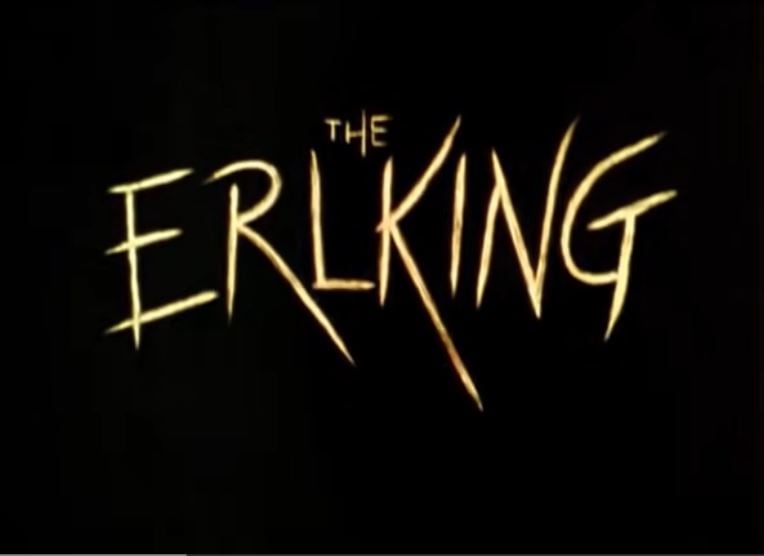
In case you didn’t happen to see it in the comments under last night’s post, a shared video of a shadow-puppet interpretation of Franz Schubert’s “Erlkönig,” John M Polhamus has one-upped me with his discovery of this one, rendered in sand-art! It’s spooky, more imaginative in concept and execution, and truer to Goethe’s text (well, maybe except for the wolves, which were a nice touch). Thanks, John, for the Halloween chill!
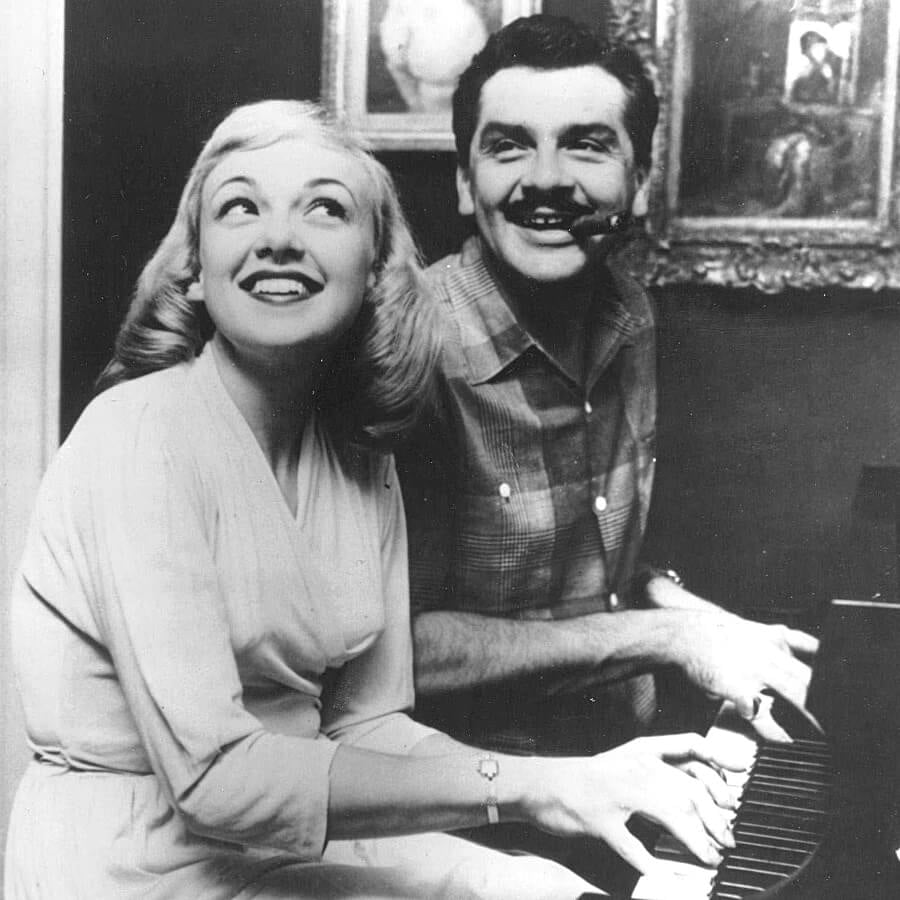
Yesterday I shared Ernie Kovacs’ irreverent demolition of Victor Herbert at the hands of an inexperienced Italian television crew (on “Enna-B-C,” no less), with an orchestra of improbable musical instruments, like a Gerard Hoffnung cartoon brought to life.
Kovacs was born in Trenton, New Jersey, in 1919. He got his start in radio there, on WTTM, in 1941. It was in Philadelphia that he first broke into television, at WPTZ, in 1950. It wasn’t long before he moved into the New York and national markets. Though none of his shows seemed to last very long (the network quashed his morning show to make way for “Today”), it seems like he was everywhere at once, reincarnated on show after show, doing freeform television specials, appearing as a panelist on “What’s My Line,” and filling in for Steve Allen on “The Tonight Show.” There was no one zanier or more surreal on American television.
As a young man doing summer stock in Vermont, in 1939, Kovacs became seriously ill with pneumonia and pleurisy – so ill, in fact, that he was not expected to survive. During his convalescence, he developed a lifelong love of classical music, thanks to broadcasts over the radio. Kovacs would go on to use or parody the classics in many of his silent skits and abstract visual routines.
Here, Ernie puts some of the zing back into Tchaikovsky’s “1812 Overture”:

5 responses