• 9/11 Trinity Requiem Moran’s Consoling Masterpiece

    9/11 Trinity Requiem Moran’s Consoling Masterpiece

    by 

    in
    6 responses

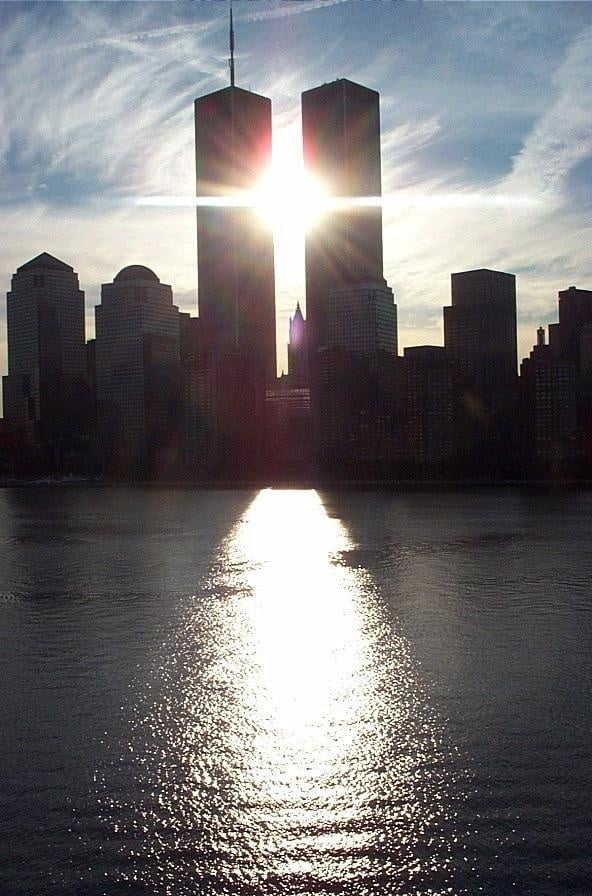
    For the tenth anniversary of the surreal, unforgettable events of September 11, 2001, Philadelphia composer Robert Moran wrote his “Trinity Requiem” for the youth chorus of Trinity Wall Street, the so-called “Ground Zero church” in Lower Manhattan. This Sunday night on “The Lost Chord,” we’ll revisit this beautiful, consoling work and reflect on that September morning of twenty years ago – a morning that still feels like yesterday.

    Moran may not be the first artist that would spring to mind for anyone seeking musical solace. The merry prankster ethos runs deep in this pupil of Hans Erich Apostel, Darius Milhaud, and Luciano Berio. Moran gained early notoriety for his compositions on a grand scale, incorporating entire cities (including San Francisco, Graz, Austria, and Bethlehem, Pennsylvania), their automobiles, airplanes, skyscrapers, radio and television stations, marching bands, dancers, theatrical groups, and tens of thousands of performers.

    He’s written works for harpsichord and electric frying pan, and any number of performance art pieces, including one, archived on YouTube, that involves musicians walking around a financial district with slide whistles inside giant paper bags.

    Flirting with respectability, he collaborated on an opera, “The Juniper Tree,” perhaps the grimmest of Grimm fairy tales, with Philip Glass, and he has composed a number of other works for the stage, including “Desert of Roses” (after Beauty and the Beast), for Houston Grand Opera, and “Alice” (after Lewis Carroll), for the Scottish Ballet. He’s currently at work on a monodrama about God.

    Given Moran’s freewheeling reputation, I thought it only appropriate to title this week’s show after one of Salvador Dali’s most famous paintings, “The Persistence of Memory” – both for its surreal associations (a dreamscape of melting watches) and for the deep psychological scars left by the deadliest attacks ever perpetrated on American civilians.

    Moran rises to the occasion to provide an ethereal masterpiece, a 30-minute journey to Paradisum, worthy to stand alongside the transcendent Requiem of Gabriel Fauré.

    “Trinity Requiem” received its first performance at Trinity Wall Street on September 7, 2011. The second performance took place in St. Paul, Minnesota, on the actual anniversary of the attacks. Locally, it was performed by Mendelssohn Club, at the Basilica of Saints Peter and Paul, on Logan Square in Philadelphia, in 2012.

    A compact disc was released on the innova Recordings label, with the Trinity Youth Chorus and members of the Trinity Choir, Trinity Wall Street, under the direction of Robert Ridgell.

    Among the handful of miracles that occurred on a day of unthinkable tragedy, a hundred-year-old sycamore tree preserved the church’s St. Paul Chapel, constructed in 1766, from destruction by debris from the World Trade Center, including what would have been a direct hit from a falling I-beam.

    On tonight’s broadcast, “Trinity Requiem” will be prefaced by a conversation with the composer. In the time remaining we’ll also hear Moran’s dreamlike “Notturno in Weiss” (“Nocturne in White”), on an aphoristic text by Christian Morgenstern.

    Find solace in the purity of music, as we continue to grapple with the legacy of 9/11, this Sunday night at 10:00 EDT, on WWFM – The Classical Network and wwfm.org.


  • Labor Day Movie Music Working Stiffs on Film

    Labor Day Movie Music Working Stiffs on Film

    by 

    in
    7 responses

    Heigh-ho! This week on “Picture Perfect,” we celebrate Labor Day with music from movies about the working stiff.

    “The Molly Maguires” (1970), set in and around the anthracite mines of Pennsylvania, illustrates the unfair labor practices imposed on immigrant workers there, which triggered violent strikes and acts of sabotage. Sean Connery is the ringleader and Richard Harris the Pinkerton detective brought in to infiltrate the gang.

    The film was directed by Martin Ritt, a number of whose projects deal with labor, corruption, and intimidation, and his own experiences living through the era of the Hollywood blacklist – among these, “Edge of the City,” “The Front,” and “Norma Rae.”

    The music is by Henry Mancini, a far cry from his work on “The Pink Panther,” “Peter Gunn,” and “Breakfast at Tiffany’s,” with a decidedly Celtic lilt.

    Charlie Chaplin was a brilliant comedian, of course, but his perfectionism often resulted in uncomfortably close supervision over every aspect of his films. The young David Raksin found this out the hard way, when he accepted the job of assisting Chaplin in the writing of the score to “Modern Times” (1936).

    Chaplin, a violinist and cellist himself, would whistle tunes and then stand over Raksin’s shoulder as he figured out how to make them fit the action. Alfred Newman, a much more seasoned hand, resented the micromanagement and stormed out of the film’s recording sessions. Raksin was actually fired once, after only a week and a half, but he was quickly rehired. Despite the creative friction, Chaplin and Raksin became friends, and Raksin recollected his work on “Modern Times” as some of the happiest days of his life.

    The film begins with an iconic factory scene, Chaplin working an assembly line at an increasingly hectic pace, literally being put through the gears of the machinery. He suffers a breakdown, goes berserk, and throws the entire mechanized dystopia into chaos.

    Speaking of dystopias, few can match the OSHA-flouting nightmare of Fritz Lang’s “Metropolis” (1927). One of the landmarks of silent cinema, “Metropolis,” unfortunately, is eerily prescient of a world divided between the haves and the have-nots. Once seen, the subterranean hell of the workers’ hive is not soon to be forgotten.

    Lang’s vision continues to resonate in more ways than one, with its iconography shamelessly recycled by dewy-eyed fans and film students down the generations. Similarly, Gottfried Huppertz’s influential, Straussian score led the way for the opulent symphonic canvases of Max Steiner, Erich Wolfgang Korngold, and John Williams.

    Finally, we’ll accept a helping hand – as well as claw, tail, beak, and tongue – from the benevolent woodland creatures of “Snow White and the Seven Dwarfs” (1937). Frank Churchill and Larry Morey’s songs are justifiably immortal.

    The “picks” are all “mine” for Labor Day. Whistle along to music from movies about work, on “Picture Perfect,” this Saturday evening at 6:00 EDT, on WWFM – The Classical Network and wwfm.org.


  • Moon Zero Two A Groovy Space Western Surprise

    Moon Zero Two A Groovy Space Western Surprise

    by 

    in
    4 responses

    With a dry name like “Moon Zero Two” (1969), I was expecting the worst. But you know what? It turned out to be a damned entertaining movie!

    Groovier than “Barbarella” and less somber than “Journey to the Far Side of the Sun,” “Moon Zero Two” is a compelling adventure that pits Bill Kemp (“The Andromeda Strain”s James Olson) – an on-the-rocks, faded American hero, the first astronaut to land on Mars, now reduced to collecting space junk – against a nefarious millionaire, who presents him with an offer he can’t refuse.

    Along for the ride is “Space: 1999”s Catherine Schell (here billed as Catherina von Schell), as Clementine Taplin, who also enlists Kemp for what he thinks will be a quick side-job. Their efforts to reach her brother’s claim on the far side of the moon prove to be a source of friction against Kemp’s previous arrangement.

    Any movie that sports Pink Panther-esque opening credits animation and intergalactic go-go dancers (the Go-Jos!) can’t be all bad. With a whacked-out jazz score by Don Ellis of “The French Connection” and a title song sung by Julie Driscoll, this is one crazy Hammer film.

    Marketed in the U.S. as a space western, there are also noir elements, but little of the grit desired by the writers. Personally, I think it would make a satisfying double feature with “Outland” (1981), Sean Connery’s “High Noon”-in-outer-space.

    All in all, one of the less-deserving targets of “Mystery Science Theater 3000,” “Moon Zero Two” is wholly self-aware in providing an hour-and-forty-minutes of diverting entertainment.

    Check it out here (https://www.youtube.com/watch?v=IEftsDL4Shc), and let us know what you think in the comments section, as we livestream on Facebook. We’ll salvage what we can in our discussion on the next Roy’s Tie-Dye Sci-Fi Corner, this Sunday evening at 7:00 EDT!

    (PLEASE NOTE: Because of the upheaval of Hurricane Ida – and the resultant worn nerves – there will be no show tonight.)

    https://www.facebook.com/roystiedyescificorner


  • Mikis Theodorakis Dies Zorba’s Dance Ends

    Mikis Theodorakis Dies Zorba’s Dance Ends

    by 

    in
    4 responses

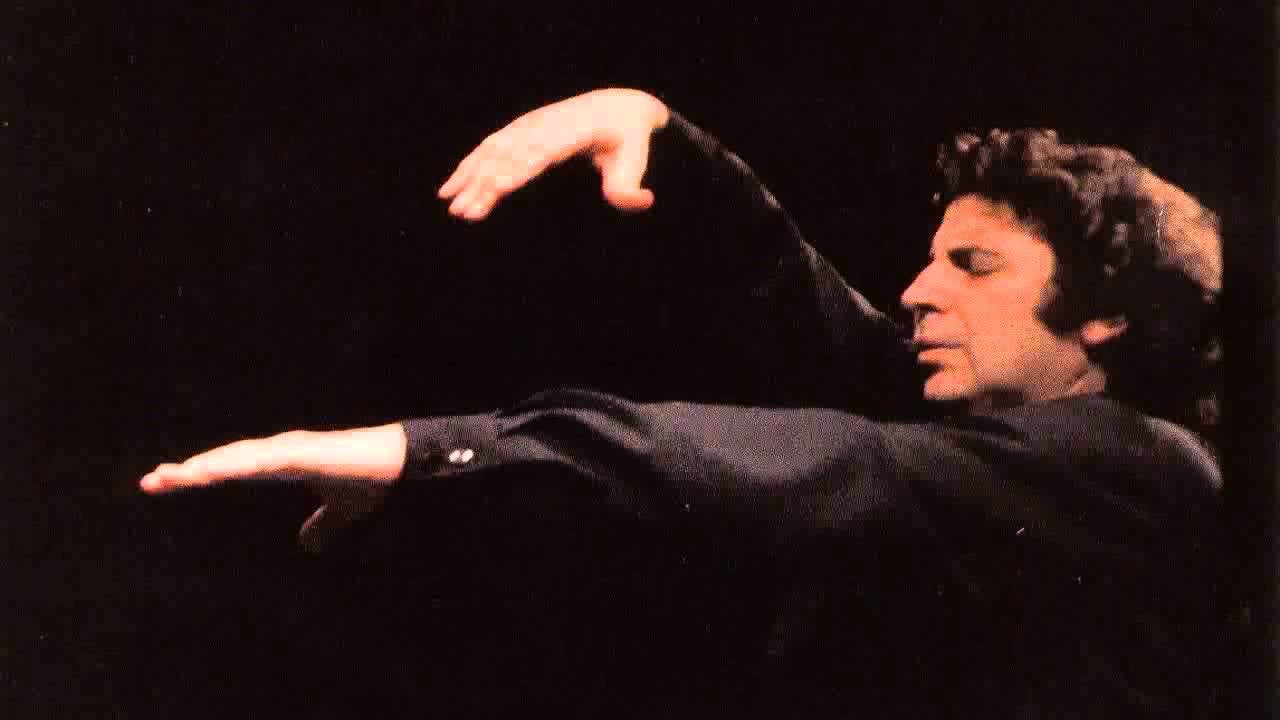
    The world mourns, as Mikis Theodorakis has danced his last. Theodorakis, one of Greece’s best-known musical exports – world famous for his score to the film “Zorba the Greek” (1964) – died this morning at the age of 97.

    Theodorakis also composed dozens of concert and dramatic works, even as he continued to attract international attention with his over one thousand songs. All the while, he remained politically active, variously jailed, exiled, and elected to the Greek Parliament.

    Never afraid to speak his mind, Theodorakis was a controversial figure. No one can deny that he also brought a lot of beauty into the world.

    He certainly did his best to live up to his surname. “Theodorakis” derives from the Ancient Greek “Theódōros,” composed of “theós” (divine, deity, god) and “dôron” (gift). Essentially, “God’s gift.” Unquestionably, he gave generously of himself.

    Theodorakis may be gone, but his dance goes on. R.I.P.


    Theodorakis’ obituary from the BBC

    https://www.bbc.com/news/world-europe-58419832

    The music that sealed Theodorakis’ immortality

    His Symphony No. 2, with Cyprien Katsaris at the piano.
    Theodorakis studied with Olivier Messiaen at the Paris Conservatory.

    “Honeymoon” (from the Michael Powell film)

    Covered by The Beatles

    The theme from “Z”

    “Antonis,” on which it was based

    As heard in the song cycle, “Mauthausen Trilogy,” on poems by Iakovos Kambanellis, survivor of the Mauthausen-Gusen concentration camp

    Zorba flash mob


  • Schikaneder The Magic Flute’s Impresario

    Schikaneder The Magic Flute’s Impresario

    by 

    in
    5 responses

    Today is the birthday of Emmanuel Schikaneder (1751-1812). Schikaneder was the impresario who provided the libretto for Mozart’s “Die Zauberflöte,” or “The Magic Flute.” He was also the driving force behind the construction of the Theater an der Wien, the better to house his lavish spectacles. “The Magic Flute” received its first performance there in September 1791. Schikaneder created one of the opera’s lead roles, that of the fallible, if sympathetic birdcatcher Papageno. Mozart’s untimely death occurred only two months later. He was 35 years-old.

    Schikaneder enjoyed life. During his leisure hours, he was also known to play at bölzlschiessen (dart-shooting) with the Mozarts. Projectiles were launched at paper targets hand-decorated with satirical images and verse about each of the game’s participants. Schikaneder was parodied for his fondness for the ladies.

    Interestingly, “The Magic Flute” was not unique among Schikaneder’s productions, merely the apex of a vogue for allegorical fairy tale operas, frequently incorporating Masonic symbols. Some of these were collaborative efforts, with Mozart, only one in a veritable bullpen of Schikaneder composers, providing music for a few of the numbers. (“The Philosopher’s Stone,” recorded on the Telarc label, is a blast!)

    In all, Schikaneder wrote 56 libretti and 45 spoken-language plays. Among the other composers he attempted to woo was Beethoven, even to the extent of providing him with free housing within the theater. Ultimately, Beethoven would reject the project, though by then he had already set the opening scene, which he later incorporated into his opera “Fidelio” (as the duet “O namenlose Freude”). Beethoven being Beethoven, he continued to live in the theater for as long as possible.

    Although many of Schikaneder’s productions were popular successes, the sheer expense of realizing his fanciful visions eventually drove the company into debt. In the end, he wound up selling the theater to a consortium of nobles and fled Vienna for the provinces. He died insane and impoverished at the age of 61.

    Schikaneder’s memory is preserved in statuary as part of the so-called Papagenotor, or Papageno Gate, immortalized in character, complete with feathers and panpipe, over a side portal of his former theater. He was also memorably played by Simon Callow in the film version of Peter Shaffer’s play, “Amadeus” (1984). Callow had created the role of Mozart, opposite Paul Scofield as Salieri, in the original London production in 1979.

    Here’s a Schikaneder text that was set by Arnold Schoenberg, of all people. Schoenberg, the dour father of dodecaphony, wrote a number of cabaret songs. This one is called “Aria from ‘The Mirror of Arcadia.’” Schikaneder’s complete libretto was set in 1794 by Franz Xaver Süssmayr, as the opera “Der Spiegel von Arkadien.” Süssmayr is remembered primarily for having completed Mozart’s unfinished Requiem. Schoenberg’s setting dates from 1901.

    The refrain of “Boom… boom… BOOM boom boom…” signifies the heartbeat of an ardent, if indiscriminate lover – more in line with a character like Cherubino than Papageno!

    Since seeing so many women,
    My heart beats so ardently,
    It hums and buzzes here and there,
    Just like a swarm of bees.

    And if her ardour resembles mine,
    And her eyes are lovely and limpid,
    Then my heart, like a hammer,
    Beats on and on.
    Boom, boom, boom, etc.

    I wish I could have a thousand women,
    If it so pleased the gods,
    I’d dance like a marmot
    In every direction.

    That would be a life worth living,
    Then I’d have joy and fun,
    I’d hop like a hare through the field,
    And my heart would skip along.
    Boom, boom, boom, etc.

    A man who does not value women
    Is neither cold nor warm,
    And lies like a block of ice
    In a young girl’s arms.

    I’m a different sort of man,
    I circle women in a dance;
    My heart beats happily against hers,
    Going boom, boom, boom, etc.

    Schikaneder employs a similar gimmick in “The Magic Flute.” Allegedly, it was his suggestion, made during rehearsals, that Papageno stammer in excitement at his recognition of Papagena, during their famous duet, as seen here in the classic Bergman film.

    Papageno plays his bells in “Amadeus”

    A precursor to “The Magic Flute”: “The Philosopher’s Stone” (1790), with musical contributions by Johann Baptist Henneberg, Benedikt Schack, Franz Xaver Gerl, Mozart, and Schikaneder himself


Tag Cloud

Aaron Copland (93) Beethoven (95) Composer (114) Film Music (145) Film Score (143) Film Scores (255) Halloween (94) John Williams (195) KWAX (229) Leonard Bernstein (104) Marlboro Music Festival (125) Movie Music (160) Mozart (91) Opera (213) Philadelphia Orchestra (89) Picture Perfect (174) Princeton Symphony Orchestra (109) Radio (88) Ross Amico (244) Roy's Tie-Dye Sci-Fi Corner (290) The Classical Network (101) The Lost Chord (269) Vaughan Williams (105) WPRB (397) WWFM (881)

DON’T MISS A BEAT

Receive a weekly digest every Sunday at noon by signing up here


RECENT POSTS