• Sibelius Rediscovered: Maiden in the Tower Overture

    Sibelius Rediscovered: Maiden in the Tower Overture

    by 

    in
    3 responses

    Yesterday’s modern premiere of a Sibelius overture, said to have been rediscovered in the manuscript of the composer’s one-act opera, “The Maiden in the Tower,” sent me back to a complete recording of the stage work.

    At 35 minutes, Sibelius’ grandiose music is too much for the slight libretto – a simple story about a damsel in distress, a lecherous bailiff who abuses his authority, the maiden’s devoted lover, ready to defend her to the death, and a deus ex machina in the form of the castle’s justice-loving chatelaine. As a secular cantata, I can see how this might be regarded as something of an action-packed potboiler, a pre-Raphaelite painting in sound; but as “opera,” there’s no way. The whole thing just buckles. How I wish the composer had followed through on his earlier design of a grand opera after the Kalevela.

    What I didn’t understand until today’s reencounter with a work I have not listened to in years is that the resurrected overture – not to be confused with the opera’s brief orchestral prelude – is basically a compilation of material that already exists within the larger piece. It doesn’t, however, explain away the overture’s potpourri character, since the prelude and first scene are presented, as near as I can tell, as is, within the “new” work. It rather puts me in the mind of the overture to Vaughan Williams’ “The Poisoned Kiss,” in form rather than character, since both are basically constructed on tunes from the opera.

    It was the conductor of yesterday’s modern premiere, Tuomas Hannikainen, who, as a doctoral candidate, discovered not a separate score, but rather handwritten clues left by the composer on the opera itself suggesting a new orchestral work, or “overture,” hidden within the piece. So basically, that’s the story behind this Sibelius rediscovery. The composer is said to have conducted a couple of performances of the work back in 1900. The 12-minute overture should not be confused with the three-minute prelude to the opera.

    Sibelius suppressed “The Maiden in the Tower” after a few early performances in 1896, with the intention of revising the entire work, which he never got around to addressing. Indications for the new overture may have been the composer’s attempt to salvage some of the best bits from the opera. After all, material from an earlier, incomplete opera, “The Building of the Boat,” was recycled in his “Four Legends from the Kalevala” – with “The Swan of Tuonela” forming the opera’s original prelude – and his symphonic poem “The Wood Dove.”

    Yesterday’s performance of the overture reconstructed from “The Maiden in the Tower” is now posted on the YouTube channel of the Avanti Chamber Orchestra. If I understand correctly, a complete concert will be made available there on May 30, which will include not only this “premiere,” but also Sibelius’ melodrama “The Countess’ Portrait” and a suite from his incidental music to “Belshazzar’s Feast.” Also featured will be André Caplet’s “Conte fantastique” for harp and string orchestra, after Edgar Allan Poe’s “The Masque of the Red Death.”

    For more information, visit the Avanti website.

    Avanti! conducted by Tuomas Hannikainen resurrects Sibelius work dormant for 120 years

    Whatever this overture is, I am glad to have heard it!

    A complete recording of “The Maiden in the Tower”


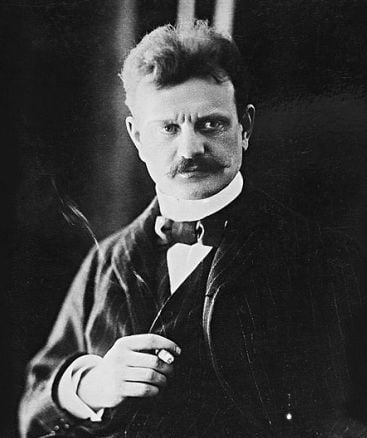
    Sibelius, enjoying a smoke, circa 1900

  • Lost Sibelius Overture Rediscovered & Performed

    Lost Sibelius Overture Rediscovered & Performed

    by 

    in
    3 responses

    We’re only a few hours away from the first modern performance of a long-lost work of Jean Sibelius.

    News of the 2019 rediscovery of the score of this “Concert Overture” (found with the manuscript of Sibelius’ only completed opera, “The Maiden in the Tower”) somehow eluded my notice. The overture was last performed in 1900. This is not to be confused with either the Concert Overture in E (1891) or the Concert Overture in A minor (1902), both recorded by Neeme Järvi and others.

    You can watch a performance of the “new” work live on the YouTube channel of the Avanti! kamariorkesteri / Avanti! Chamber Orchestra today at 12 pm EDT:

    Or wait for the video to be posted on May 30. Learn more about it here:

    Avanti! conducted by Tuomas Hannikainen resurrects Sibelius work dormant for 120 years

    The complete concert program will feature two more Sibelius rarities – the melodrama “The Countess’ Portrait” and a suite from “Belshazzar’s Feast” – as well as André Caplet’s “Conte fantastique” for harp and string orchestra, after Edgar Allan Poe’s “The Masque of the Red Death.”

    News of the rediscovery in 2019:

    Concert Overture by Sibelius rediscovered

    The Concert Overture in E major (1891)

    The Concert Overture in A minor (1902)

    An earlier attempt at a grand opera, “The Building of the Boat,“ was abandoned in 1893, though much of the material was reworked by the composer into “Four Legends from the Kalevala” and the symphonic poem “The Wood Nymph.” One of his most frequently-programmed pieces, “The Swan of Tuonela,” was originally planned as the prelude to this opera.


    UPDATE: Having just watched the modern premiere, here’s my assessment. The overture won’t change anyone’s fundamental understanding of Sibelius, but it is by turns evocative, dramatic, charming, exciting, and beautiful. If you’re a fan of the “Lemminkäinen” symphonic poems, I think you will enjoy this. A magical treat, and at 12 minutes, not an insignificant one. I’ll be checking back for the full concert on May 30. Just what I needed on a 90-degree day. Thank you, Avanti!

    UPDATE #2: The performance of the overture is now posted.


  • Stranger in Paradise Hidden Classical Origin

    Stranger in Paradise Hidden Classical Origin

    by 

    in
    3 responses

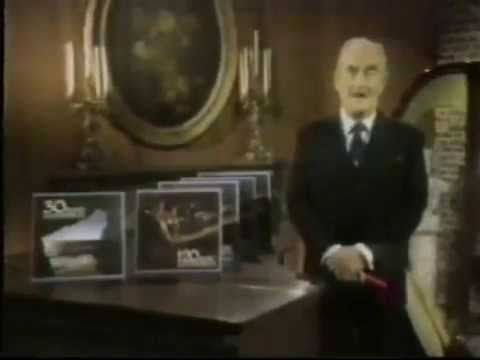
    “I’m sure you recognise this lovely melody as ‘Stranger in Paradise.’ But did you know that the original theme is from the ‘Polovtsian Dance No. 2’ by Borodin?”

    There’s probably no one who was born in the United States, who is over the age of 45, who has not seen this television commercial. But did anyone actually buy the product? Bonus points if you bought it on 8-track.

    According to Wikipedia, it was the longest-running nationally-seen commercial in U.S. television history, airing for 13 years, from 1971 to 1984. So basically the entire span of my development.

    That’s not John Williams, the film composer, by the way, but John Williams, the actor, who worked with Hitchcock (“Dial M for Murder,” “To Catch a Thief”) and Billy Wilder (“Sabrina,” “Witness for the Prosecution”), and briefly as the other Mr. French on “Family Affair.”

    “So many of the melodies of well-known popular songs were actually written by the great masters… like THESE familiar themes…”

    I hope Mr. Williams made a mint in royalties. He died in 1983 at the age of 80.


  • Bob Dylan at 80: Musical Influences

    Bob Dylan at 80: Musical Influences

    by 

    in
    7 responses

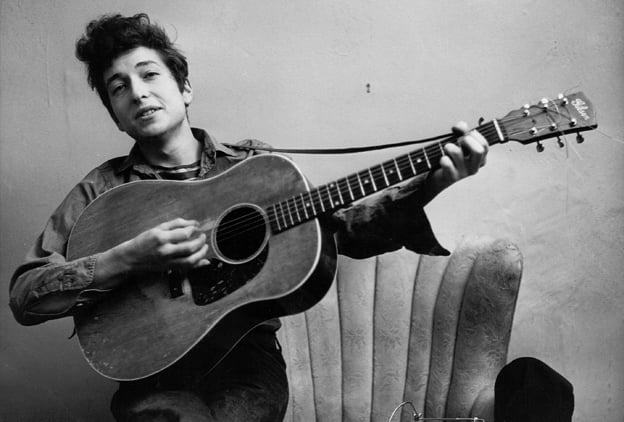
    Happy birthday to Bob Dylan, 80 years-old today.

    Dylan sings “Blowin’ in the Wind” (television, 1963):

    George Crumb’s “Blowin’ in the Wind,” from his “American Songbook VI: Voices from the Morning of the Earth” (2008):

    Dylan sings “Mr. Tambourine Man” (Newport Folk Festival, 1964):

    John Corigliano’s “Mr. Tambourine Man: Seven Poems of Bob Dylan” (2000):

    As the title indicates, there are seven songs in all, original settings of Dylan’s verse. If you let it run too long, it will go into Corigliano’s music for “Altered States.”

    Both Crumb and Corigliano are Pulitzer Prize winners. Dylan said hold my beer – in 2016, he was awarded the Nobel Prize for Literature.

    The times they are a-changin’.


  • Cristóbal Halffter RIP

    Cristóbal Halffter RIP

    by 

    in
    5 responses

    The composer Cristóbal Halffter died yesterday at the age of 91. A major figure in Spanish contemporary music – the most highly-regarded of the co-called “Generación del 51” – he was the nephew of two other notable composers, Rodolfo and Ernesto Halffter.

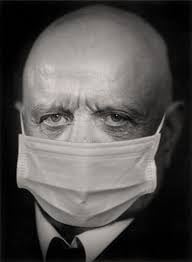
    Cristóbal often looked quite severe in his photos. I confess, I rarely found much to smile about in his music (though his opera, “Don Quijote,” does sound promising).

    “Secuencias ” (1964)

    Rostropovich plays the Cello Concerto No. 2 (1985)

    From “Don Quijote” (1996-99)

    An early obituary:

    https://then24.com/2021/05/24/cristobal-halffter-the-composer-who-broke-the-musical-silence-of-the-franco-regime/

    R.I.P.


Tag Cloud

Aaron Copland (93) Beethoven (95) Composer (114) Film Music (145) Film Score (143) Film Scores (255) Halloween (94) John Williams (195) KWAX (229) Leonard Bernstein (104) Marlboro Music Festival (125) Movie Music (160) Mozart (91) Opera (213) Philadelphia Orchestra (89) Picture Perfect (174) Princeton Symphony Orchestra (109) Radio (88) Ross Amico (244) Roy's Tie-Dye Sci-Fi Corner (290) The Classical Network (101) The Lost Chord (269) Vaughan Williams (105) WPRB (397) WWFM (881)

DON’T MISS A BEAT

Receive a weekly digest every Sunday at noon by signing up here


RECENT POSTS