• Howard Ferguson’s Easter Dream of the Rood

    Howard Ferguson’s Easter Dream of the Rood

    by 

    in
    4 responses

    This Sunday night on “The Lost Chord,” it’s a Howard Ferguson Easter.

    Born in Belfast in 1908, Ferguson had ambitions to become a composer. To this end, he traveled to London, where he studied at the Royal College of Music with, among others, Ralph Vaughan Williams. He also met and befriended fellow student Gerald Finzi. He achieved early success with works like the Octet of 1933, and no less a personage than Jascha Heifetz recorded his Violin Sonata No. 1.

    Even so, over the decades his music has slipped from consciousness, no doubt helped by the fact that, by mid-life, he felt he had already said everything he had to say as a composer. He devoted his last four decades to musicological pursuits, editing and promoting works of Purcell, Schubert and Finzi. In the 1990s, he also wrote a cookbook, “Cooking Solo.” Ferguson died in 1999, not long after his 91st birthday.

    Thankfully, he lived long enough to hear some fine recordings as part of a modest revival of his music in the 1980s and ‘90s. A number of his chamber works were released on the Hyperion label by fine musicians like Thea King and members of the Nash Ensemble; his Piano Concerto was recorded for EMI by Howard Shelley; and Richard Hickox conducted a disc of his orchestral works for Chandos.

    Also on the latter album is what turned out to be Ferguson’s last completed work, “The Dream of the Rood,” for chorus and orchestra, composed in 1958. After that, the composer embarked on a string quartet, but became frustrated by the lack of a fresh perspective and tore the thing up.

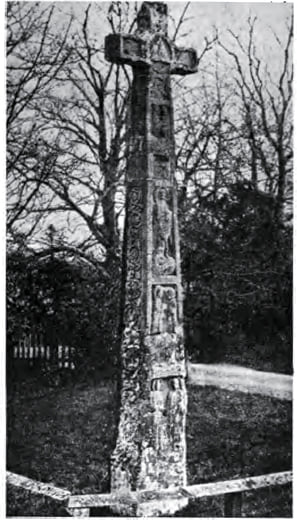
    “The Dream of the Rood” is based on an 8th century Anglo-Saxon poem that marries the Passion story with characteristics of the secular heroic tradition. The poem is framed by a narrator’s vision of a magnificent bejeweled tree. Upon closer inspection, however, he finds its jewels bespattered with blood. It becomes apparent that this tree was the very same upon which Christ was crucified.

    The middle portion of the poem is told from the tree’s perspective, with the tree being cut down and carried away for the purpose of the Crucifixion. The nails pierce the tree, yet man and tree endure, refusing to fall, bearing unimaginable pain for the sake of mankind. Just as Christ is resurrected, so is the Cross resurrected, now adorned with gold and silver. It is honored above all trees, just as Christ is honored above all men. The narrator gives praise to God, filled with hope at the prospect of eternal life and a desire to be nearer the glorious Cross.

    I hope you’ll join me for music of Howard Ferguson on “Rood Awakening,” this Sunday night at 10:00 EDT, on WWFM – The Classical Network and wwfm.org.


    PHOTO: Portions of the poem are engraved on the 8th century Ruthwell Cross (left, as it appeared between 1823 and 1887; and right, at its current location at Ruthwell Church, Dumfriesshire, Scotland)

  • Roy’s Tie-Dye Sci-Fi Corner Anniversary & Marooned

    by 

    in
    7 responses

    Last night’s celebration of the one-year anniversary of “Roy’s Tie-Dye Sci-Fi Corner” was marked by misty reminiscences, some highlights slides, and plenty of laurels from the fans. Thank you so much for live appearances by, and well wishes from, Phil, Bill, Jon, Mary Ann, Eva, Liz, Ry, Lew, and Michelle.

    The show ran to three hours, probably a little long for anyone except perhaps “Tie-Dye” die-hards. But the first third or so contains some solid background info about how Roy and I met, 40+ years ago, and how he arrived at the idea for a weekly livestream, as a way to alleviate lockdown anxiety and to reunite with friends he’s made on the sci-fi fan circuit. The show has attracted viewers from the all over the U.S., Canada, the UK, France, Australia, and Hell, Norway.

    Cohosts for the first two months were drawn from Roy’s vast pool of acquaintances. Other guests continue to cohost on occasional Sunday evenings, and a number of actors, authors, and film and television technicians have visited for interviews.

    By coincidence, last night happened to be my 50th show. Roy first invited me in June 2020, and I haven’t left since. Prior to my first appearance, we hadn’t seen one another in probably 34 years!

    If, by Hour 3, you start to feel a little depleted, well, we’ve got the perfect movie for you. Next week, we’ll begin our second year by chatting about “Marooned” (1969). John Sturges’ slow-burn sci-fi thriller received clearance to launch thanks to first-man-on-the-moon mania. But don’t go into it expecting “The Right Stuff.” Think of it more as a proto-“Apollo 13,” but a lot more static. The central premise is the attempted rescue of three astronauts stranded in space.

    You have to admit, it does have quite the cast: Gregory Peck, Richard Crenna, David Janssen, James Franciscus, Gene Hackman, Lee Grant, Nancy Kovack, and a pre-Kodak Mariette Hartley.

    It’s guaranteed to be more exciting than watching paint dry. I hope you’ll join us for our next slow-burn conversation, on Roy’s Tie-Dye Sci-Fi Corner, livestreamed on Facebook, next Friday evening at 7:00 EDT!

    https://www.facebook.com/roystiedyescificorner/


  • Faith & Film Scores: Black Robe to The Mission

    Faith & Film Scores: Black Robe to The Mission

    by 

    in
    6 responses

    This week on “Picture Perfect,” in this season of wall-to-wall Biblical epics, enjoy a bit of counterprogramming in the form of music from films about faith, conscience, and grappling with self-abnegation.

    Bruce Bereford’s “Black Robe” (1991), based on a novel by Irish-Canadian writer Brian Moore, tells the tale of a Jesuit priest who treks through 1500 miles of Canadian wilderness on a mission to convert the native tribes of the Huron and the Algonquin. The evocative score is by Georges Delerue.

    “Black Narcissus” (1947), a Powell-Pressburger classic, is one of those startling films that just sort of sneaks up on you. Psychological tension abounds in a tale of repressed nuns struggling to maintain their composure in a voluptuous Himalayan valley. Eventually, the wheels begin to spin off the tracks, to spinetingling effect. The stunning cinematography is by Jack Cardiff. Incredibly, the entire film was shot in England, mostly on soundstages at Pinewood Studios. The music is by Brian Easdale, of “The Red Shoes” fame.

    Audrey Hepburn gave one of her most impressive performances in Fred Zinnemann’s “The Nun’s Story” (1959). A young woman enters a convent of sister-nurses and undergoes many trials in the hopes of becoming a missionary in the Belgian Congo. The film also features Peter Finch, Edith Evans, Peggy Ashcroft, and, in a memorable early role, an unhinged Colleen Dewhurst. The music is by Franz Waxman.

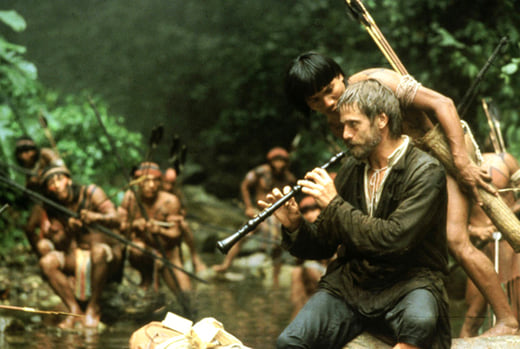
    Finally, Ennio Morricone composed on of his most-beloved scores for “The Mission” (1986). Jeremy Irons plays a Jesuit priest, who ventures into the South American rainforest to convert the Guarani to Christianity. Robert DeNiro is a reformed slave hunter, who seeks redemption. The moving music has received a great deal of exposure over the years through its use in television commercials and by figure skaters, who have made “Gabriel’s Oboe” a recognizable hit.

    Join me in seeking grace in an imperfect world, with music from films about nuns and missionaries this week, on “Picture Perfect,” music for the movies, this Saturday evening at 6:00 EDT, on WWFM – The Classical Network and wwfm.org.


  • Parsifal Good Friday Music from Wagner & Stokowski

    Parsifal Good Friday Music from Wagner & Stokowski

    by 

    in
    7 responses

    For Good Friday, here’s my annual posting of Leopold Stokowski’s sublime Houston recording of the “Good Friday Spell” from Wagner’s “Parsifal.”

    As an added bonus, enjoy a fascinating 1927 recording of the Transformation Music and Grail Scene from Act I, set down at the Bayreuth Festspielhaus. The recording employs the original bells designed by Wagner, which were later melted down by the Nazis for ammunition during World War II. A rare opportunity to experience “Parsifal” as Wagner actually knew it. (The bells begin at 5:57.)

    Muck had been associated with the Bayreuth Festival since 1892. He became its principal conductor in 1903. Between 1901 and 1930, he conducted “Parsifal” at Bayreuth 14 times.


    IMAGE: Set design by Paul von Joukowsky for the 1882 Bayreuth debut of “Parsifal”


  • Rachmaninoff Busoni April Fools’ Birthday

    Rachmaninoff Busoni April Fools’ Birthday

    by 

    in
    4 responses

    Depending on where you look, Igor Stravinsky described Sergei Rachmaninoff as either “six-foot-two of Russian gloom” or “a six-and-a-half-foot scowl.” Perhaps both. It’s true, you won’t find very many photos of Rachmaninoff smiling. But just to prove that he was not entirely without a sense of humor, I share with you the following anecdote:

    Rachmaninoff was a favorite recital partner of violinist Fritz Kreisler. Once, in the middle of a concert in New York, Kreisler suffered a memory lapse. As he noodled heroically on his violin, trying to appear nonchalant while attempting to grope his way back, he subtly inched closer to his pianist.

    “Where are we?” he whispered.

    Rachmaninoff replied, “Carnegie Hall.”

    On this April Fool’s Day – which also happens to be Rachmaninoff’s birthday – the two friends are reunited, in spirit, in Rachmaninoff’s transcription of Kreisler’s “Liebesfreud,” or “Love’s Joy.”

    Today is also the anniversary of the birth of another of the great pianist-composers, Ferruccio Dante Michelangelo Benvenuto Busoni. With a name like that, clearly his parents had great expectations!

    While Ferruccio Busoni could bust his knuckles with the best of them, and weave a web of counterpoint so dense it would have made Max Reger sweat, here’s something a little lighter, in keeping with the spirit of April Fool’s – the “Lustspielouverture,” or “Comedy Overture.”

    Also, a fantasy on themes from Mozart’s elevated farce, “The Marriage of Figaro.”

    Happy birthday to the Rach (born 1873) and Ferruccio (born 1866) – making fools of aspiring pianists for the better part of 150 years.


    PHOTO: Sergei Rachmaninoff, grim reaper


Tag Cloud

Aaron Copland (93) Beethoven (95) Composer (114) Film Music (145) Film Score (143) Film Scores (255) Halloween (94) John Williams (195) KWAX (229) Leonard Bernstein (104) Marlboro Music Festival (125) Movie Music (160) Mozart (91) Opera (213) Philadelphia Orchestra (89) Picture Perfect (174) Princeton Symphony Orchestra (109) Radio (88) Ross Amico (244) Roy's Tie-Dye Sci-Fi Corner (290) The Classical Network (101) The Lost Chord (269) Vaughan Williams (105) WPRB (397) WWFM (881)

DON’T MISS A BEAT

Receive a weekly digest every Sunday at noon by signing up here


RECENT POSTS