• Where Did All the Inspirational Movies Go?

    Where Did All the Inspirational Movies Go?

    by 

    in
    3 responses

    Where are all the inspirational movies? Now, more than at any time in recent memory, there should be a wave of optimistic films to lift us up, out of all the dread, gloom, and rancor.

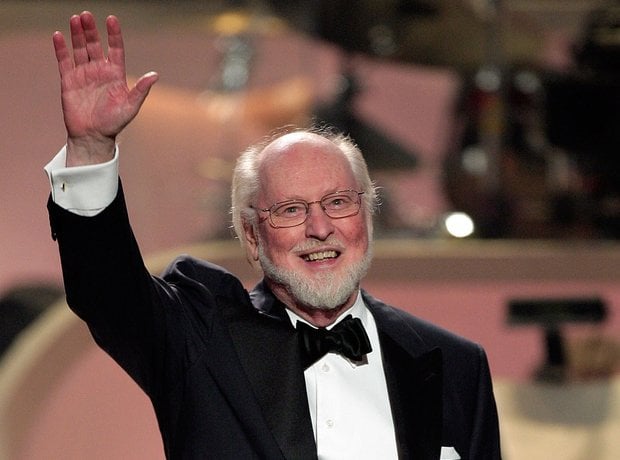
    Over the course of his unparalleled career, John Williams almost always managed to convey the exhilaration of being alive, even in the darkest thrillers. Everyone remembers his theme for the great white, but it’s the swashbuckling third act that made “Jaws” a monstrous hit.

    Not that everything has to be a march, necessarily, but how about a few interludes of light and beauty? Must these be totally absent from the movies these days? Is the best in life really reflected in the hip, the dark, the badass, and the ironic? Must the pace always be relentless?

    The 1970s was far from the most hopeful decade. In the wake of Vietnam, Watergate, and all the political and social unrest of the 1960s, who could have predicted that a young generation of filmmakers would embrace imagination, wit, and adventure? After a hot afternoon of sweating it out on a gas line, the American public was hungry for affirmation and escape. They could still find it in a darkened theater, and these movies became enormous moneymakers.

    But then, as usual, the Man got a hold of it and squeezed hard. A corporate mindset took root and bled everything of its fun and turned the world into a bleak thrill-ride.

    There was plenty of grit in American movies of the 1970s, to be sure. But at some point, you’ve got to look away from all the crime and conspiracy, the dystopias and divorces, the horrors, real and supernatural, and celebrate the simple pleasures of biking to a friend’s house, sitting in a park with the sun on your face, or standing on a lawn in your bare feet.

    Who knows, maybe it’s just not practical to expect any kind of soul, patience, or reflection anymore, with all the smartphones and computers. And the tighter deadlines for composers, and the ability to manipulate films virtually until the day they are released.

    Does anyone watch the birds or the snow or the clouds, or even dream? Or breathe? Or is that considered boring? All I’m asking for is a little poetry, or even a smile.

    Even when the movies weren’t the best, John Williams put his stamp on the music, so that you felt you were actually watching something ennobling. He’s one of few who still knows how to convey that life is worth living.

    Happy birthday, Maestro. Now at work on a violin concerto for Anne-Sophie Mutter, John Williams turns 89.

    The Reivers (1969):

    The Fury (1978):

    Jaws 2, for crying out loud (1978):

    The Rise of Skywalker (2019):


  • Rollerball 1975 Review Roy’s Tie-Dye Sci-Fi Corner

    Rollerball 1975 Review Roy’s Tie-Dye Sci-Fi Corner

    by 

    in
    3 responses

    In the not-so-distant future (?) – 2018, to be exact – corporations rule world. They see to it that all mankind’s needs are met. There is no crime, there is no war, there is no disease, there is no famine. For the populace, the ultimate distraction is Rollerball, a brutal contact sport engineered to remind everyone that no individual is greater than the system. Champion Jonathan E. thinks otherwise.

    Norman Jewison’s bread-and-circus parable has all the subtlety of a studded glove in the face, and James Caan proves that Sonny can hold a job after all, if only he can make it through the next toll booth.

    A special shout-out to André Previn for his music supervision. Previn conducts the London Symphony Orchestra in selections by Tchaikovsky, Albinoni, and Shostakovich. But it’s Simon Preston who makes the most lasting impression with Bach’s “Toccata and Fugue in D minor.”

    The Super Bowl holds no fear, as Roy and I take on the Man, with “Rollerball” (1975), on the next Roy’s Tie-Dye Sci-Fi Corner. We’ll be looking for your chants of “Jonathan” in the comments section, as we live-stream on Facebook, this Sunday evening at 7:00 EST.

    https://www.facebook.com/roystiedyescificorner

    “GAME??? THIS WASN’T MEANT TO BE A GAME!!!”


    The trailer:

    To get you in the mood – the Puppy Bowl:

    https://www.discovery.com/shows/puppy-bowl/puppy-bowl-xvii#:~:text=PUPPY%20BOWL%20airs%20on%20discovery%2B,February%207%20at%202p%20ET.


  • William Grant Still American Composer Rediscovered

    William Grant Still American Composer Rediscovered

    by 

    in
    5 responses

    They say that still waters run deep.

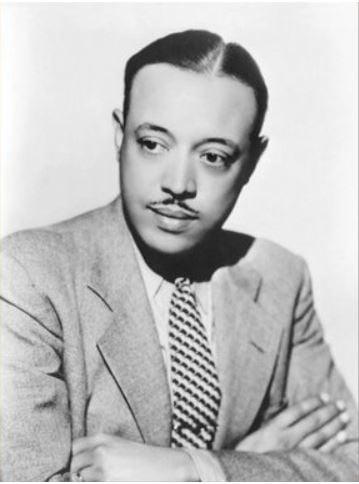
    William Grant Still, frequently described as the “Dean of Afro-American Composers,” wrote a lot of attractive music, much of it informed by the black experience. This Sunday night on “The Lost Chord,” we’ll hear some of it, including the delightful Symphony No. 2, subtitled “Song of a New Race.” Also, a more serious work fueled by racial injustice, “And They Lynched Him on a Tree,” for double-choir, narrator and orchestra.

    Still, who lived from 1895 to 1978, emerged from unlikely circumstances – born in Woodville, Mississippi and raised in Little Rock, Arkansas – to become a major force in American music. Having abandoned a career in medicine for studies at the Oberlin Conservatory of Music and the New England Conservatory in Boston, where he studied with George Whitefield Chadwick, Still was a “first” in many respects.

    His Symphony No. 1, the “Afro-American Symphony” was the first written by a black composer to be performed by a major orchestra (the New York Philharmonic). He was the first to be given the opportunity to conduct a major orchestra (the Los Angeles Philharmonic, at the Hollywood Bowl). His opera, “Troubled Island,” became the first to be produced by a major company (the New York City Opera). Another of his operas, “A Bayou Legend,” was the first to be performed on national television (as late as 1981). His works were performed internationally by the Berlin Philharmonic, the London Symphony Orchestra, the BBC Symphony, and the Tokyo Philharmonic.

    Perhaps the least likely pupil of Edgard Varèse, Still incorporated jazz and blues elements into his concert music. He cut his teeth writing arrangements for Paul Whiteman, W.C. Handy, and Artie Shaw. According to Eubie Blake, one of Still’s improvisations in the pit during Blake’s revue “Shuffle Along” became the basis for Gershwin’s hit tune “I Got Rhythm.” (Blake conceded the appropriation was probably inadvertent.) Still and Gershwin were on friendly terms and made it a point to attend one and another’s performances.

    Listen to Still’s Symphony No. 2 – first performed in 1936 by Leopold Stokowski and the Philadelphia Orchestra – and see if you don’t agree that Gershwin could only wish that he had composed its elegant second movement.

    We’ll follow that with a very different piece, Still’s choral ballad “And They Lynched Him on a Tree,” composed in 1940. Poet Katherine G.C. Biddle, niece of Charlotte Mason, “Godmother of the Harlem Renaissance,” provided the libretto. The work is scored for contralto soloist, as mother of the victim, a “white chorus” to depict the mob, a “black chorus” to discover the lynching, a narrator (William Warfield in this recording), and small orchestra. The piece is almost exactly contemporary with Abel Meeropol’s “Strange Fruit.” It was given its first performance by the New York Philharmonic, conducted by Artur Rodzinski.

    Finally, at the end of the hour, we’ll decompress with Still’s beautiful and contemplative “Summerland.”

    I hope you’ll join me for “Still Runs Deep” – music by William Grant Still – this Sunday night at 10:00 EST, on WWFM – The Classical Network and wwfm.org.


  • Batman 1966 Marathon Turns Painful A Review

    Batman 1966 Marathon Turns Painful A Review

    by 

    in
    5 responses

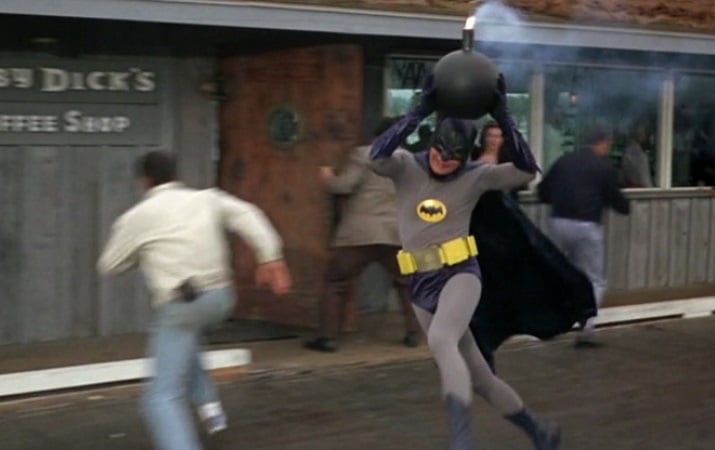
    Holy urban sprawl, Batman!

    Or as Adam West observes, “Some days, you just can’t get rid of a bomb.”

    Last night’s painful discussion of “Batman” (1966) ran 2 ½ HOURS. It was a perfect storm of Roy having an emotionally draining week, my not having eaten dinner, our struggling to adapt to a three-person format, and computer woes causing us to start 40 MINUTES LATE. That’s right, we didn’t finish until NEARLY 10 PM. Somebody stop the madness, please!

    I haven’t watched it yet, but how good could it be? Thanks to Vinny Foti for sticking it out on a night when clearly we weren’t at our best, and thank you to our long-suffering viewers.

    BIF! BAM! POW! Zzzzz…

    Joker, Penguin, and Riddler weren’t the only ones taking it on the chin.

    You’ll be guaranteed a more concise beating – if for no other reason than we’d like to get back to our hoagies and buffalo wings – as we tackle the dystopian sports classic “Rollerball” (1975), on the next Roy’s Tie-Dye Sci-Fi Corner, livestreamed on Facebook, this Super Sunday at 7PM EST.

    https://www.facebook.com/roystiedyescificorner

    In the meantime, here’s a direct link to Bat-torture:


  • Black Composers Rediscovered

    Black Composers Rediscovered

    by 

    in
    8 responses

    During Black History Month, I thought it would be good time to share this archived episode of “The Lost Chord,” the first of a four-part series celebrating the efforts of conductor Paul Freeman in reviving 200 years’ worth of neglected repertoire by composers of color.

    The Black Composer Series was originally issued on Columbia Records back in the 1970s, its individual volumes much sought-after by collectors. I almost passed out when I found it had finally been reissued on compact disc as a boxed set, though with astonishingly little fanfare, by Sony Classical. I hadn’t seen anything about it until I discovered it on the shelf at Princeton Record Exchange.

    Some of the composers have since found a toehold on the fringes of the concert repertoire – William Grant Still, George Walker, and the Chevalier de Saint-Georges are being heard with more frequency these days – but there are still many fascinating discoveries to be savored.

    The series originally aired on WWFM – The Classical Network in 2019. I’ll post another segment each Saturday in February. Or you can just binge on all four now.

    Part One features selections by Chevalier de Saint-Georges, Olly Wilson, and Fela Sowande. Follow the link, click “listen,” and enjoy.

    https://www.wwfm.org/post/lost-chord-february-3-black-future


Tag Cloud

Aaron Copland (93) Beethoven (95) Composer (114) Film Music (145) Film Score (143) Film Scores (255) Halloween (94) John Williams (195) KWAX (229) Leonard Bernstein (104) Marlboro Music Festival (125) Movie Music (160) Mozart (91) Opera (213) Philadelphia Orchestra (89) Picture Perfect (174) Princeton Symphony Orchestra (109) Radio (88) Ross Amico (244) Roy's Tie-Dye Sci-Fi Corner (290) The Classical Network (101) The Lost Chord (269) Vaughan Williams (105) WPRB (397) WWFM (881)

DON’T MISS A BEAT

Receive a weekly digest every Sunday at noon by signing up here


RECENT POSTS