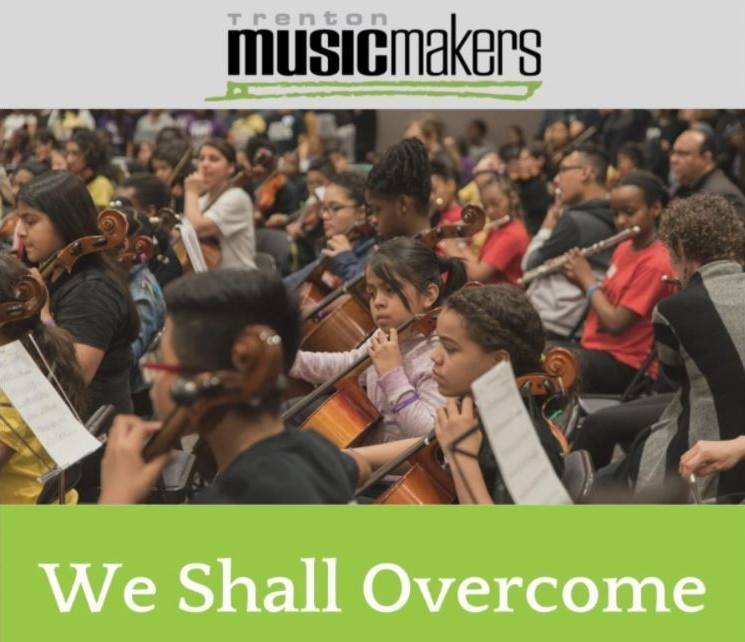
While the country is set to observe Martin Luther King Jr. Day on Monday, today is the actual anniversary of King’s birth. It appears that Trenton Music Makers will continue with its annual MLK concert, this year to be streamed virtually, via YouTube, on Monday at 6 pm EST. Learn more about this extraordinary organization and its mission by visiting trentonmusicmakers.org
-
Trenton Music Makers MLK Concert Streams Monday
by
-
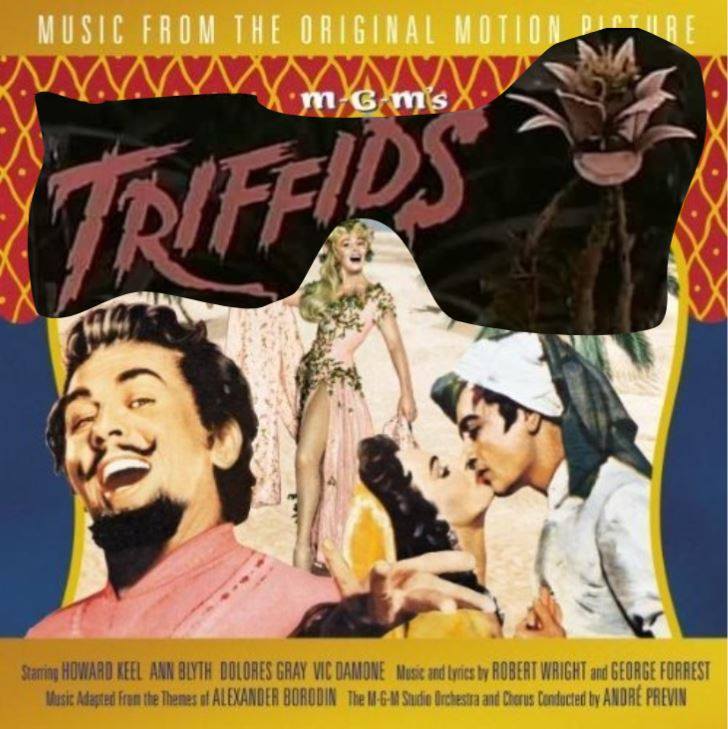
Triffids Meet Musicals Roy’s Tie-Dye Sci-Fi
by
3 responses
Writer John Wyndham specialized in apocalyptic science-fiction: alien invasions, dystopian societies, and global calamity.
Howard Keel specialized in musicals: “Annie Get Your Gun,” “Show Boat,” and “Kiss Me Kate.”
Put ‘em together, and what have you got? “The Day of the Triffids!”
Call it Kismet.
We’re strangers in paradise, on the next Roy’s Tie-Dye Sci-Fi Corner. Join us in a lighthouse full of ambulatory, carnivorous plants, and leave your sea water in the comments section, as we livestream on Facebook, this Friday evening at 7:00 EST!
-
Day of the Triffids Howard Keel Sci-Fi
by
7 responses
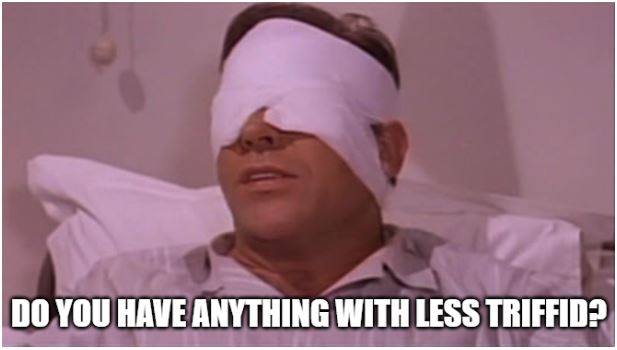
ANNIE GET YOUR TRIFFID
SEVEN BRIDES FOR SEVEN TRIFFIDS
PLANT ONE ON ME KATEMusical superstar of stage and screen Howard Keel gives his voice a rest in the sci-fi horror classic “The Day of the Triffids” (1962). Triffids, of course, are ambulatory carnivorous plants that hitch a ride to earth during a meteor shower to feast on human flesh.
All I know is, Keel better be gargling with salt water.
Drop by as we cultivate a healthy distrust of space-plants on the next Roy’s Tie-Dye Sci-Fi Corner. Stalk us, or “leave” a comment, as we livestream on Facebook, this Friday evening at 7:00 EST.
-
Unearthing My Lost Stories & Childhood Memories
by
5 responses
Yesterday, after much procrastination, I finally exhumed the casket containing all the stories I wrote up through the early-1990s. Much of the stuff I penned in elementary school is lost, but from about eighth grade on, I think I probably have everything, except perhaps two or three items, including one particularly twisted opus about a killer robot that generated enough notoriety that I suspect it was probably stolen by one of my classmates. The box has literally not been opened for decades.
The primary reason for its neglect, at least at first, is largely emotional. There are a lot of memories tied up in these creations. Some people keep journals; I wrote stories. And each one of them is like a snapshot or a home movie, in that it conjures all sorts of associations. The few journals that I did start are there, too, but invariably I’d either get too convoluted, or I’d write them as if they were intended for someone else – some future reader – so that soon the entire enterprise would become more work and less fun than writing proper fiction. I wish I had kept even a book of lists or simple observations for each day, as I’m sure it would have been enough, in some cases, to sharpen my memories. I’ve been able to recall so much simply from related notes and marginalia.
Of course, my handwriting (including my signature) has undergone so many changes over the years that I wind up doing a doubletake, from time to time, wondering at first if I am the true author of some of these items. But aside from a few comparable treasures from friends, I most certainly am.
The other reason I have avoided going back is that opening any folder in this vessel is a guaranteed time-sucker. Every story, every script, every cartoon, comic, or fragment is an invitation to amusement, but also, sporadically, to embarrassment and inexhaustible nostalgia. It’s bound to be an absorbing business, and I was hesitant to be consumed.
The impetus for my finally digging it out, after a quarter of a century, is my having reconnected with my cousin, with whom I had not spoken in probably 35 years. Growing up, he and I were like extraterrestrials in the family, both of us imaginative, creative, and artistically inclined. Like me, he was always involved in some project or another, and our regular exchange of stories helped fuel our mutual productivity. He was also instrumental in furthering my interest in classical music.
There was a lot of a cross-fertilization going on there, as we stole gleefully from one another. But we were already raiding the same sources of inspiration – popular movies, current events, writers we were reading in school, and abundant autobiographical material. Interestingly, we never had a falling out over creative issues. It was only later, when we started to get interested in girls, that we began to get competitive. Or at least I did. The result was that, by the time we graduated from our rival high schools, we really didn’t have all that much to do with one another.
I tried to reach out to him a couple of times within the past 15 years or so, but it was only through the diplomacy of a mutual friend – with whom I’d also lost touch for 30-some years, until we reconnected on Facebook – that peace has been brokered. So we are now talking again, by telephone (he is married and living with his family halfway across the country), and the conversations have been epic, most recently pushing three hours.
He has been in a similar situation, where all of his writing for the past few decades has been in the service of work. But lately he has had a hankering to return to the kind of freewheeling fiction we both wrote when we were younger. So he set himself a challenge. And around the turn of the year, I received a very impressive piece of work. Somehow, he’s been able to recapture that youthful joie de vivre. It was like reading something we might have written circa 1980, only rendered with the mastery of an adult. Since then, he tells me, he’s written another 190 pages. So the gauntlet has been thrown!
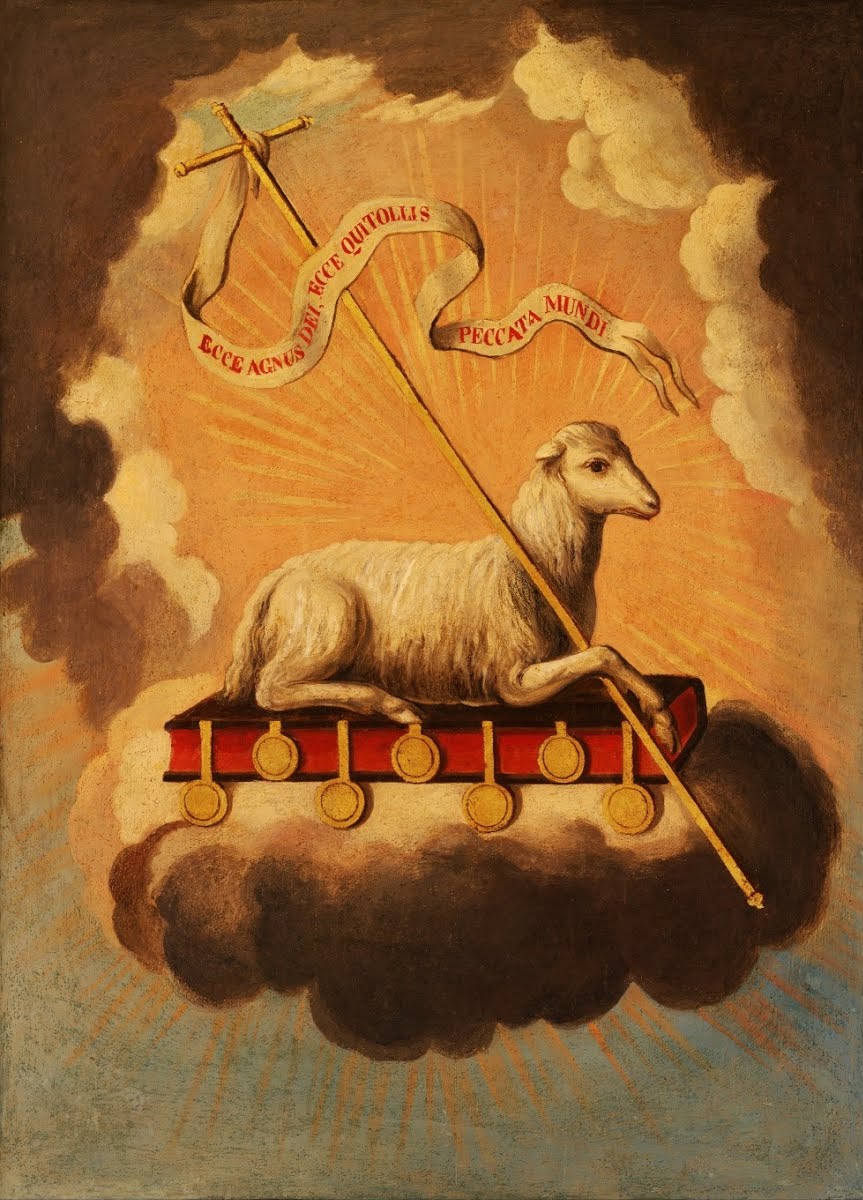
Whatever the motivation, like St. John’s Lamb, I have now broken the seal – literally, as the box was wrapped in packing tape. Who knows what thunderings, lightning, and earthquakes will come of it.
-
Leo Smit Philadelphia Composer Centennial

by
5 responses
Leo Smit was born in Philadelphia 100 years ago today.
Not to be confused with the Dutch composer of the same name (born in 1900), Smit was the son of Russian immigrants. His father was a violinist who performed with Leopold Stokowski in Philadelphia, Fritz Reiner in Cincinnati, and Arturo Toscanini in New York (with the NBC Symphony).
A child prodigy, Leo took to the piano by the age of 5. When he was about 8, his mother took him to Moscow, where he studied for a year with composer Dmitri Kabalevsky.
Back home, he was accepted into the Curtis Institute of Music. He was taught there by Isabella Vengerova. Vengerova was a Leschetizky pupil. Her other students included Gary Graffman, Gilbert Kalish, Leonard Pennario, Menahem Pressler, and Abbey Simon.
Smit also learned from José Iturbi, the Spanish conductor, pianist, and harpsichordist, who achieved wider recognition in Hollywood films of the 1940s. Iturbi stood in for Cornel Wilde on the soundtrack to the Chopin biopic “A Song to Remember.”
He received further instruction in composition from Nicolas Nabokov, who was the first cousin of Vladimir Nabokov.
At 15 or 16, Smit became a rehearsal pianist for George Balanchine. He first worked with Igor Stravinsky while preparing for the world premiere of “Jeu de Cartes.” He was a devoted champion of the music of Aaron Copland, all of whose works for the keyboard he recorded. He once had the opportunity to play privately for Béla Bartók, for whom he turned pages at Carnegie Hall. Following the Carnegie concert, Copland introduced him to Leonard Bernstein. Smit also did much to revive the reputation of boogie-woogie master Pete Johnson.
In 1951, the Boston Symphony Orchestra performed Smit’s First Symphony. He also composed two operas, “The Alchemy of Love,” on a libretto by British astronomer Fred Hoyle (who also provided the text for an oratorio about Copernicus), and “Magic Water.” Among his other compositions was a collection of 100 songs after poems of Emily Dickinson. His works were programmed by Bernstein, Stokowski, and Serge Koussevitzky.
For three decades, he made his home in Buffalo, where he served on the faculty of the State University of New York. Earlier, he taught at Sarah Lawrence College and the University of California. As a photographer, he captured images of some of the era’s most notable musicians. He sometimes performed recitals to curated slide shows of his work.
Smit died in 1999 at the age of 78.
Leo Smit, Symphony No. 1:
Interesting interview with Bruce Duffie, including a great recollection of Stravinsky:
http://www.bruceduffie.com/leosmit.html
Smit speaks with David Dubal, now host of WWFM – The Classical Network’s “The Piano Mattters”:
Smit and Copland play “Danzon Cubano,” in its original two-piano version:
PHOTO: Smit (standing), with Copland and Bernstein, photobombed by some guy in a hair helmet
Tag Cloud
Aaron Copland (93) Beethoven (95) Composer (114) Film Music (145) Film Score (143) Film Scores (255) Halloween (94) John Williams (195) KWAX (229) Leonard Bernstein (104) Marlboro Music Festival (125) Movie Music (160) Mozart (91) Opera (213) Philadelphia Orchestra (89) Picture Perfect (174) Princeton Symphony Orchestra (109) Radio (88) Ross Amico (244) Roy's Tie-Dye Sci-Fi Corner (290) The Classical Network (101) The Lost Chord (269) Vaughan Williams (105) WPRB (397) WWFM (881)
6 responses