
• Christmas Music from the English Renaissance

    Christmas Music from the English Renaissance

    by 

    in
    3 responses

    With Christmas only days away, there’s still much to be done. Even so, this Sunday night on “The Lost Chord,” we pause to remember the story of the first Christmas, with music by a couple of English composers inspired by the Nativity.

    Alongside Sir Charles Villiers Stanford and Sir Edward Elgar, Sir Hubert Parry was one of the key figures of the so-called “English Musical Renaissance.” He influenced a whole generation of much better-known composers, including Ralph Vaughan Williams and Gustav Holst. We’ll hear his “Ode on the Nativity,” given its first performance on the same concert, at the Hereford Three Choirs Festival in 1912, as Vaughan Williams’ “Fantasia on Christmas Carols.”

    Vaughan Williams, the great-nephew of Charles Darwin, and an atheist in his youth, later softened into a kind of “cheerful agnosticism.” He dearly loved the King James Bible, and he especially enjoyed Christmas. Of course, he wrote much music on the subject. In fact, his very last composition was “The First Nowell.” He worked diligently at the piece, inspired by medieval pageants, during his final month, but died suddenly before its completion.

    However, even at 85 years-old, RVW retained a remarkable concentration. He managed to pound out the whole thing in short score in only a few weeks. Furthermore, he had fully orchestrated the first two-thirds. The finishing touches were applied by his assistant, Roy Douglas – he of “Les Sylphides” fame.

    If you like the “Fantasia on Christmas Carols,” I think you’ll really enjoy this. It’s pastoral music for a pastoral scene. Join me for “A Play in a Manger,” this Sunday night at 10:00 EST, on WWFM – The Classical Network and wwfm.org.
  • Santa Claus Conquers the Martians Movie Night

    Santa Claus Conquers the Martians Movie Night

    by 

    in
    3 responses

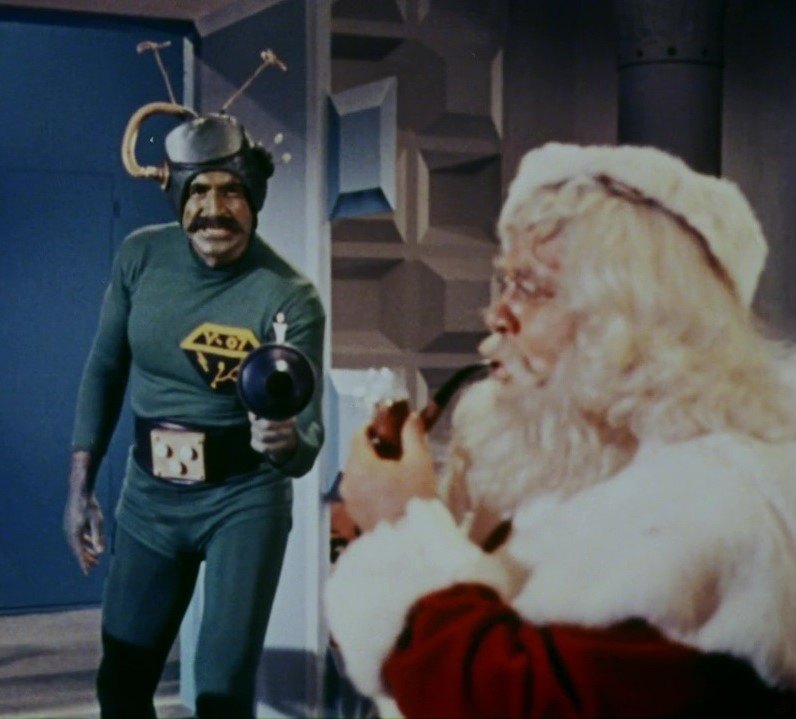
    Peace on Earth! Pia Zadora on Mars!

    Not even H.G. Wells, who projected that intellects, vast and cool and unsympathetic, regarded this earth with envious eyes, dreamed that they would ever come for our Christmas. And like that other Welles, Orson – who started out at the top with “Citizen Kane,” only to wind up doing wine commercials – Zadora never made a better film.

    It’s just not Christmas until Santa Claus is on Mars. Join us for our stunned reactions to the cult camp classic “Santa Claus Conquers the Martians” (1964), on the next Roy’s Tie-Dye Sci-Fi Corner, live-streamed on Facebook, this Sunday evening at 7:00 EST!

    https://www.facebook.com/roystiedyescificorner


  • Fritz Reiner Tyrant Genius of the CSO

    Fritz Reiner Tyrant Genius of the CSO

    by 

    in
    2 responses

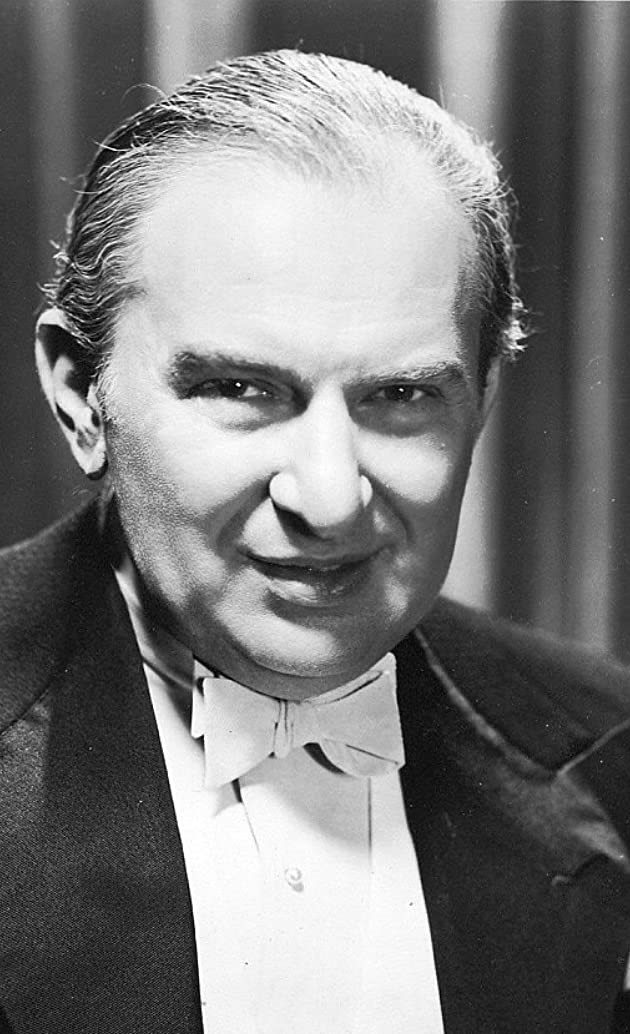
    At a time when tyrant conductors still very much roamed the earth, Fritz Reiner was one of the most feared. With a glower that would make Bela Lugosi quake – and sporting quite the similar hairline – Reiner was forged in Hungary at the twilight of the Austro-Hungarian Empire. Hungary at the time had quite the reputation for churning out great conductors. Among those to achieve considerable international success were George Szell, Eugene Ormandy, Antal Doráti, Ferenc Fricsay, Sir Georg Solti, and István Kertész.

    Among Reiner’s own teachers was Béla Bartók, with whom he studied piano. Reiner would later repay the favor with what many consider to be the benchmark recording of Bartók’s “Concerto for Orchestra.” He also worked closely with Richard Strauss in Dresden, and his recordings of Strauss’ works are equally revered. All in all, the Chicago Symphony under Fritz Reiner was a surefire choice to give the ol’ hi-fi a good workout in the early days of stereo.

    Reiner became a naturalized American citizen in 1928, and began to teach conducting at the Curtis Institute of Music in Philadelphia. Among his pupils was Leonard Bernstein. His first American post was as principal conductor of the Cincinnati Symphony. He led the Pittsburgh Symphony for ten years, from 1938 to 1948, then spent several years at the Met. But it was as music director of the Chicago Symphony that he attained legendary status.

    For a master interpreter of some of the largest and most challenging works in the repertoire, his baton technique was notable for its precision and economy. Much of what he achieved, unfortunately, was through the brutality he exerted in rehearsals. Reiner emerged from an Old World steeped in aristocratic methods. At the top of their profession, conductors then were regarded as gods-on-earth. When drive and ego were bolstered by absolute power, working conditions became downright perilous. Before strong musicians’ unions, conductors exercised the authority to fire anyone on the spot. So when musicians played for Reiner, they played as if there lives depended on it – or at the very least their livelihoods.

    Did it make for better musicmaking? You can’t argue with the excellence of Reiner’s Chicago Symphony.

    Read this account of the day Reiner finally gave his “perfect concert.”

    https://csosoundsandstories.org/125-moments-101-fritz-reiners-perfect-concert/#:~:text=In%20October%201958%2C%20Fritz%20Reiner,New%20Brunswick%2C%20and%20Washington%2C%20D.C.

    Even autocrats have birthdays. Happy birthday, Fritz Reiner.


    Reiner conducts Beethoven

    Reiner conducts Kodály and Bartók, with Rudolf Serkin at the piano
    https://www.youtube.com/watch?v=TOE83a1FrwA

    Reiner conducts Strauss’ “Salome”


  • Christmas Film Scores Toy Shop On WWFM

    Christmas Film Scores Toy Shop On WWFM

    by 

    in
    One response

    It’s a fantastic toy shop of Christmas film scores! Enjoy selections from “Miracle on 34th Street” (Cyril J. Mockridge), “A Christmas Carol” (Franz Waxman), “Home Alone” (John Williams), “Ben-Hur” (Miklós Rózsa), “The Bishop’s Wife” (Hugo Friedhofer), and “The Holly and the Ivy” (Malcolm Arnold). It’s the last weekend before Christmas, and the elves are in overdrive! There’s no assembly required, on “Picture Perfect” – music for the movies – this Saturday evening at 6:00 EST, on WWFM – The Classical Network and wwfm.org.

  • Musical Stocking Stuffers A Movie Christmas

    Musical Stocking Stuffers A Movie Christmas

    by 

    in
    One response

    This week on “Picture Perfect,” join me for an hour of musical stocking stuffers.

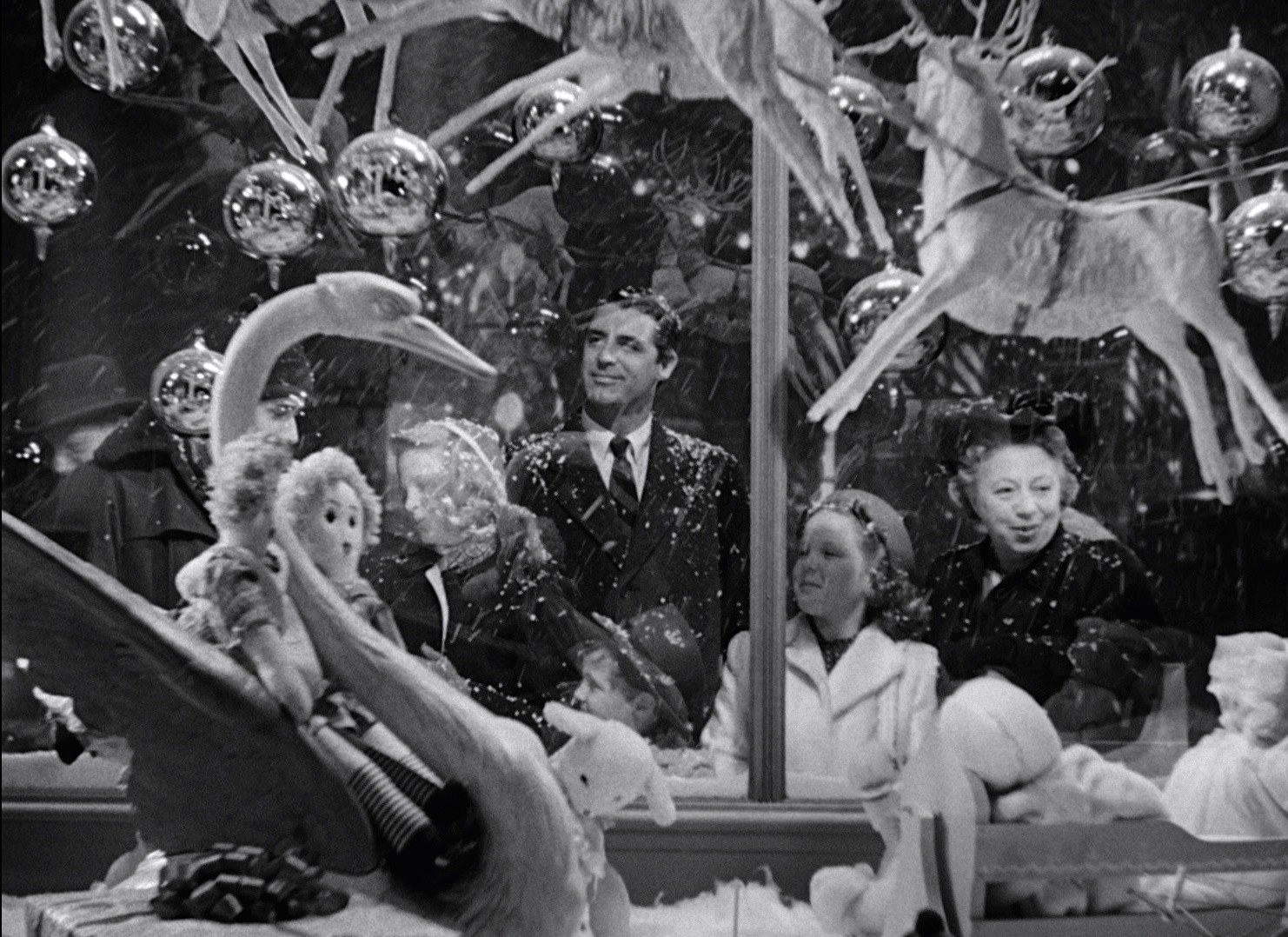
    We’ll begin with selections from “Miracle on 34th Street,” from 1947. Maureen O’Hara, Natalie Wood, and Edmund Gwenn star. Gwenn won an Academy Award for his portrayal of Kris Kringle. Cyril J. Mockridge’s alternately bustling and sentimental score employs “Jingle Bells” as its Santa motif.

    Then, drawing from the countless adaptations of Charles Dickens’ “A Christmas Carol,” we’ll turn to a 1938 version, featuring Reginald Owen as Scrooge. Franz Waxman’s music draws on traditional carols and, when Scrooge undergoes his Christmas morning transformation, a sly riff on Georges Bizet’s “Jeux d’enfants.”

    For those who enjoy a little carnage with their Christmas, we’ll also hear selections from “Home Alone.” The 1990 film, in which diminutive Macaulay Culkin subjects would-be burglars Joe Pesci and Daniel Stern to a battery of cartoon violence, features a candy-coated score by John Williams.

    There are those who consider “Ben-Hur” to be among the greatest film scores of all-time. From Miklós Rózsa’s work on the 1959 Oscar champ, we’ll hear music from the film’s opening Nativity sequence.

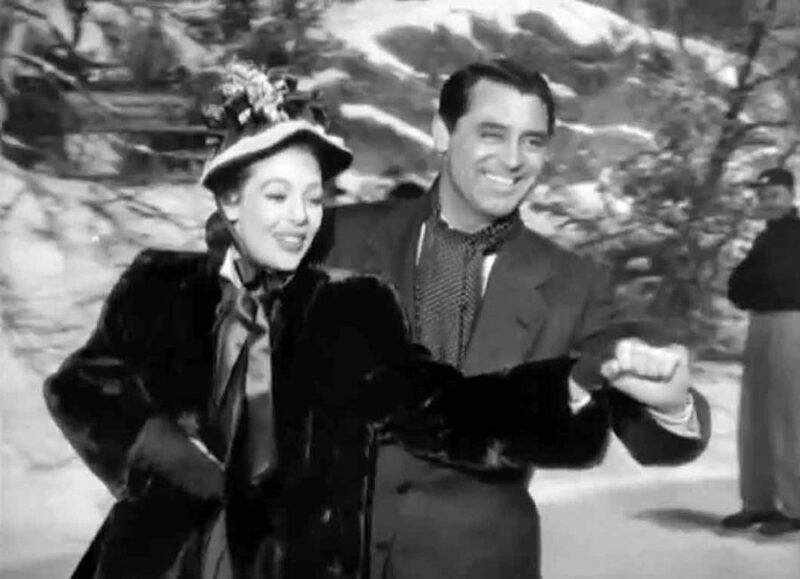
    Then, Cary Grant plays an angel who answers the prayers of David Niven, attempting to raise funds for a new cathedral, in “The Bishop’s Wife.” Along the way, Grant also happens to fall for Lauretta Young. Monty Woolley, Elsa Lanchester, and James Gleason add to the whimsy. This charming 1947 romantic fantasy sports a memorable score by Hugo Friedhofer.

    Finally, any sentiment in “The Holly and the Ivy,” from 1952, is hard-earned. Ralph Richardson plays the clueless patriarch of a troubled family, a village parson more concerned with his parishioners than those living under his own roof. When the family reunites for Christmas, longstanding frictions continue to wear, but they are gradually resolved. Malcolm Arnold’s score gives little hint of the film’s inherent drama. However, he does provide some boisterous arrangements of some familiar carols.

    I hope you’ll join me for a cinematic Christmas this week, on “Picture Perfect,” music for the movies. Yule be glad you did, this Saturday evening at 6:00 EST, on WWFM – The Classical Network and wwfm.org.


Tag Cloud

Aaron Copland (93) Beethoven (95) Composer (114) Film Music (145) Film Score (143) Film Scores (255) Halloween (94) John Williams (195) KWAX (229) Leonard Bernstein (104) Marlboro Music Festival (125) Movie Music (160) Mozart (91) Opera (213) Philadelphia Orchestra (89) Picture Perfect (174) Princeton Symphony Orchestra (109) Radio (88) Ross Amico (244) Roy's Tie-Dye Sci-Fi Corner (290) The Classical Network (101) The Lost Chord (269) Vaughan Williams (105) WPRB (397) WWFM (881)

DON’T MISS A BEAT

Receive a weekly digest every Sunday at noon by signing up here


RECENT POSTS