It’s George Gershwin’s birthday! Here’s the funhouse dance sequence from “A Damsel in Distress” (1937) – Fred Astaire, George Burns, and Gracie Allen monkey around in a barrel, on a lazy susan, down a slide, and opposite their distorted reflections – including some rather Milhaud-like bitonality in the funhouse mirror dance!
Astaire had known Gershwin for years. He and his sister, Adele, headlined two Broadway musicals – “Lady Be Good!” (1924) and “Funny Face” (1927) – by George and his brother, Ira. Adele married in 1932 and retired from show business. Fred later starred not only in “A Damsel in Distress,” but also in the silver screen musical “Shall We Dance”(1937), both at least partially scored by Gershwin.
Here are a couple of fascinating documents, set down in 1926, of Fred and Adele singing with Gershwin at the piano.
Four months before the release of “A Damsel in Distress,” Gershwin died of a brain tumor at the age of 38. Reportedly, his last words were… “Fred Astaire.”
What has often been regarded in the United States as “hack work,” in England has been accepted as just another aspect of what it means to be a working artist. There is no disgrace in a composer earning a living, and some of the nation’s greatest musicians – including those in the employ of the Royal Family – have contributed finely-crafted scores to its body of cinema.
This week on “Picture Perfect,” it’s an hour of English documentary music. We’ll hear selections by Ralph Vaughan Williams, from “The People’s Land” (1941), Benjamin Britten, from “The King’s Stamp” (1935), William Alwyn, from “The Green Girdle” (1941), and Sir Arthur Bliss, from “The Royal Palaces of Britain” (1966). All four films are patriotic utterances on distinctly English themes.
You may not have seen any of these shorts, but the music is beautiful. I hope you’ll join me for music from English documentaries, this Saturday evening at 6:00 EDT, on WWFM – The Classical Network and wwfm.org.
In the meantime, if you’re having a slow afternoon, why not get a taste of the films themselves?
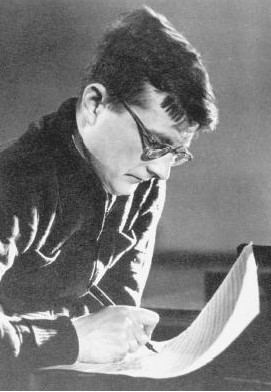
Dmitri Shostakovich, of course, is celebrated for his monumental symphonies and confessional string quartets, which are regarded as some of the most important of the 20th century.
But early on, he eked out a living as a pianist in movie houses, enlivening silent images with his mercurial improvisations. This was great practice for his later work with a number of notable Soviet filmmakers.
Shostakovich would go on to compose some 30 original film scores. Far and away his “greatest hit” in the field, at least in the West, is the romance from “The Gadfly” (1955), based on the novel of Ethel Lillian Voynich. The music enjoyed a revival of sorts in the 1980s as the theme for the miniseries “Reilly, Ace of Spies.”
But my personal favorite among his film scores is that for a zany fairy story after Pushkin, called “The Tale of the Priest and His Worker Balda.” Shostakovich, about 27 years-old in 1933, was hired by experimental animator Mikhail Tsekhanovsky to supply the manic underscore for his visionary creations. But Tsekhanovsky probably didn’t count on just how manic Shostakovich could be. The music flowed like water down the Neva, and Tsekhanovsky struggled to keep up, all the while pushing himself to create images worthy of his collaborator.
Then, in 1936, following the debut of the opera “Lady Macbeth of Mtsensk,” Shostakovich was condemned by the Soviet authorities in an infamous “Muddle Instead of Music” denunciation in Pravda, and the composer decided he had better cool his jets. The potentially inflammatory Symphony No. 4 went into a drawer, and he halted work on the film, which he had already been involved with, on and off, for nearly three years. When the denunciation came, he was in the process of wholly reorchestrating the existing music, at the studio’s request, for smaller forces.
While the feature would remain unfinished, Tsekhanovsky compiled what he had – some 40 minutes in all – and the work was put into storage at the Lenfilm archives. Unfortunately, nearly all of it would be destroyed by fire during the Nazi siege of Leningrad in 1941.
Only the bizarre bazaar scene survives. Watch this, and count your blessings.
Shostakovich regarded his music for “Balda” as some of the best he’d ever written. Here’s a complete recording, with restorations. Alas, it doesn’t have quite the pungency of the earlier suite recorded by Gennady Rozhdestvensky.
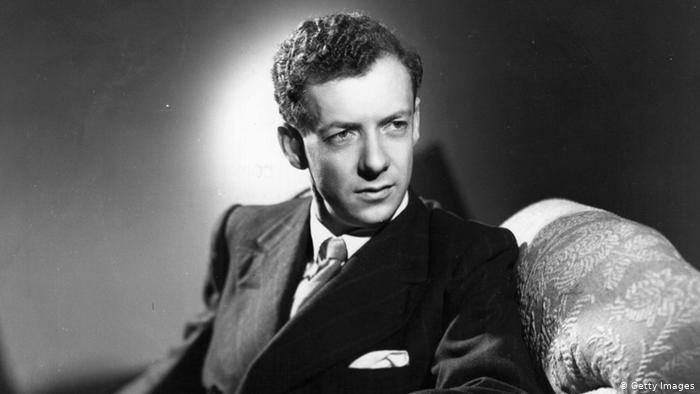
With the postal service more and more resembling “snail mail,” look back with nostalgia to “The King’s Stamp.” In 1935, Benjamin Britten composed a score for a short film about the design and production of a commemorative postage stamp to mark George V’s Silver Jubilee. It’s one of four documentaries with music by notable English composers (Britten, Ralph Vaughan Williams, William Alwyn, and Sir Arthur Bliss) that I’ll be highlighting this week on “Picture Perfect,” now at its new time, Saturday evening at 6:00 EDT, on WWFM – The Classical Network and wwfm.org.
To be any pulpier than this, it would have to be a grapefruit!
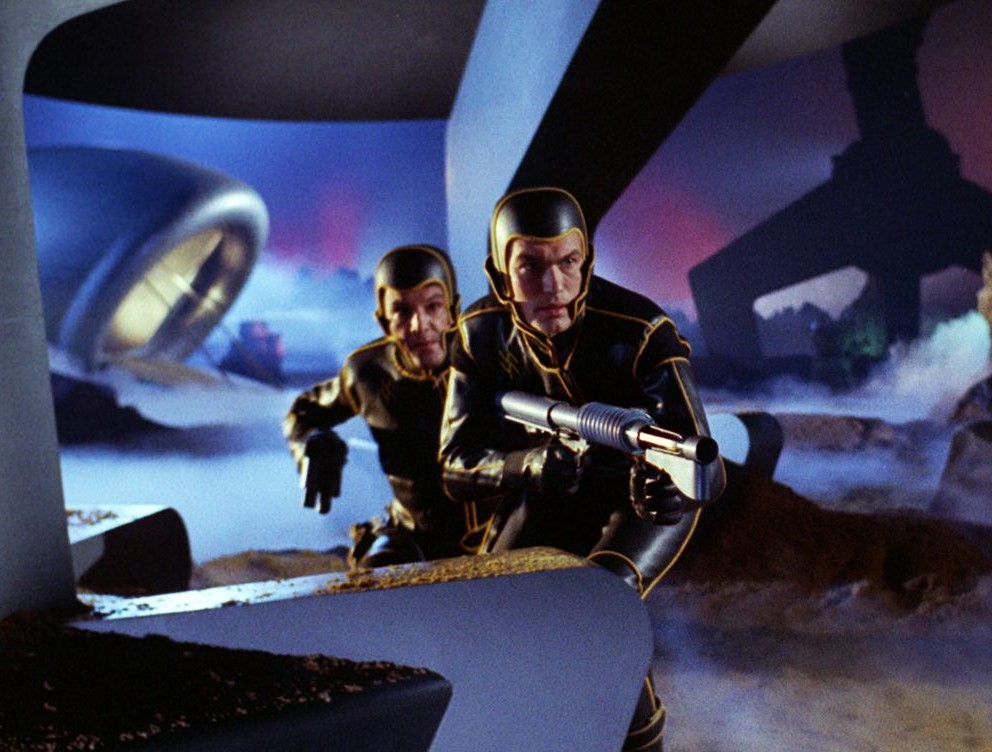
Join Roy Bjellquist and me, as we fortify ourselves with plenty of vitamin C and holy water for “Planet of the Vampires” (1965).
Allegedly, this Mario Bava cult classic went through 15 working titles (the original, in Italian, was “Terrore nello spazio,” or “Terror in Space”) before arriving at the one under which it was finally released in the U.S. Interestingly, there aren’t any vampires in it! But don’t let that get in the way of a good time.
Roy and I will try to “liven things up” a bit with our batty conversation. Share your insights in the comments section. Roy’s Tie-Dye Sci-Fi Corner live-streams on Facebook this Friday evening at 7:00 EDT!


4 responses