• Time After Time A Sci-Fi Romance Gem

    Time After Time A Sci-Fi Romance Gem

    by 

    in
    3 responses

    Is it a science fiction movie? A chase thriller? A fish-out-of-water comedy?

    It turns out it’s all three, AND a quirky Mary Steenburgen romance.

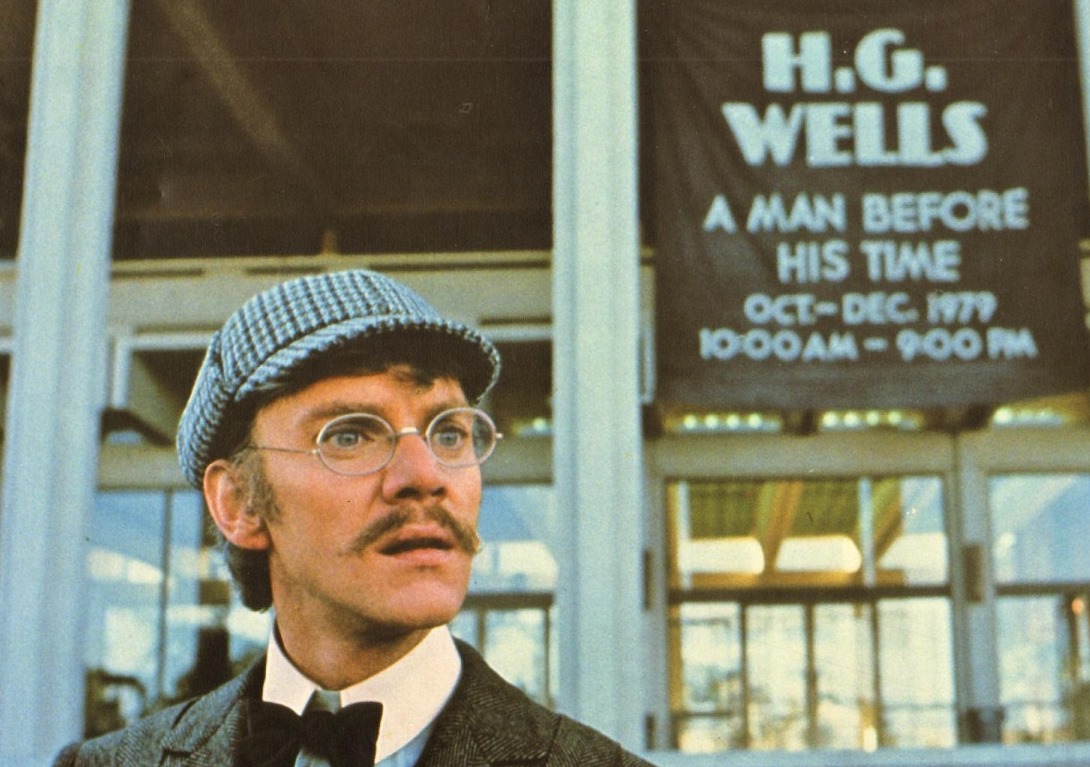
    Malcolm McDowell, usually an incorrigible hooligan – or at best an anti-hero – gets his chance to play sweet-natured, as H.G. Wells, in pursuit of perennial bad guy David Warner, as Jack the Ripper, in “Time After Time” (1979). This playful piece of high concept postmodernism marked the directorial debut of Nicholas Meyer, who had rocketed to fame, just a few years earlier, on his revisionist psychological study of another notable Victorian, Sherlock Holmes, in “The Seven-Per-Cent Solution.”

    Roy Bjellquist and I will round out our time-travel weekend (which begin on Friday, with a discussion of George Pal’s “The Time Machine”), with a little table talk about “Time After Time,” on a special Sunday edition of Roy’s Tie-Dye Sci-Fi Corner.

    All’s Wells that ends Wells. Chime in and join the conversation. This timely exchange will be live-streamed on Facebook, Sunday evening at 7:00 EDT.

    https://www.facebook.com/roystiedyescificorner/


  • Shana Tova High Holy Days Music

    Shana Tova High Holy Days Music

    by 

    in
    6 responses

    Shana tova!

    This Sunday night on “The Lost Chord,” we welcome the year 5781 with an hour of music for the Jewish High Holy Days.

    Herman Berlinski (1910-2001) was a prolific composer, who made his mark largely in the field of liturgical music. His “Shofar Service” (1964) is scored for baritone, shofar, two trumpets, organ, and chorus. The shofar, traditionally fashioned out of a ram’s horn, is sounded, as applies here, during the Rosh Hashana or New Year service. The text is compiled from the Union Prayer Book.

    David Stock (1939-2015), a longtime resident of Pittsburgh, served on the faculty of Duquesne University. He was founder of the Pittsburgh New Music Ensemble, and acted as composer in residence for the Pittsburgh Symphony Orchestra and the Seattle Symphony. “Yizkor” (1999), Stock’s elegy for string orchestra, takes its name from the communal memorial service and prayer that honors the deceased. The custom is notably observed on Yom Kippur, or the Day of Atonement.

    Finally, we’ll turn to “The Chagall Windows” (1974), luminous, strange, and beautiful impressions of stained glass tableaux from the synagogue of the Hadassah Medical Center in Jerusalem, by the English pianist and composer John McCabe (1938-2015). The windows depict the twelve sons of the patriarch Jacob and the Twelve Tribes of Israel. McCabe addresses the windows in interlinked sections, so as to give the work a more symphonic, perhaps less episodic, feel.

    The world premiere recording was made for EMI in 1974. We’ll hear a live performance from the next year, captured in a more natural acoustic, with the London Philharmonic conducted by Bernard Haitink.

    Best wishes for a sweet, happy, and healthy new year. It’s a fresh start, from toot to atonement, on “Shofar, So Good” – music for the High Holy Days – this Sunday night at 10:00 EDT, on WWFM – The Classical Network and wwfm.org.


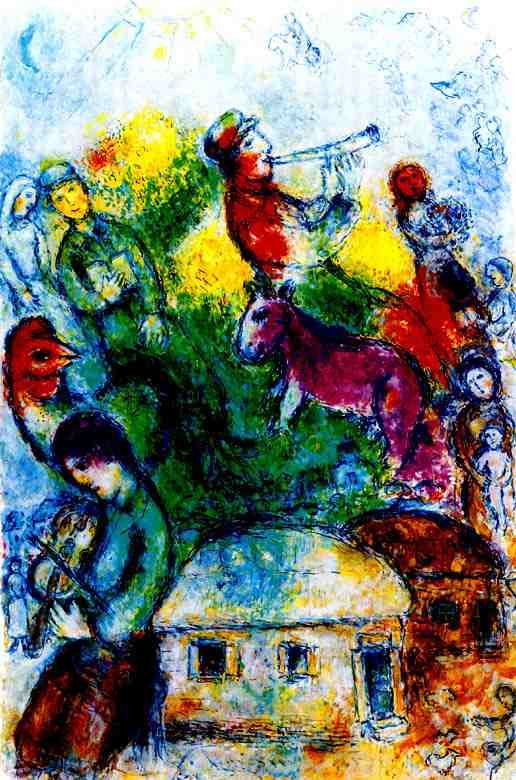
    NOT one of the stained glass windows: Marc Chagall’s “Shofar”


  • Time Machine & Time After Time Movie Discussion

    by 

    in
    3 responses

    Roy and I were on-the-clock last night, with our discussion of George Pal’s “The Time Machine” (1960). Enjoy our striking commentary by clicking on the video below.

    Then, we figured we’d go ahead and make it a timely weekend, by following-up tomorrow night, with a loosely-wound chat about “Time After Time” (1979), Nicholas Meyer’s sci-fi thriller about H.G. Wells (Malcolm McDowell) and his pursuit of Jack the Ripper (David Warner) to late 20th century San Francisco.

    The film also features Mary Steenburgen, ample affectionate touches that recall George Pal’s classic, and a late-career score by Miklós Rózsa!

    You’re welcome to chime in with your commentary. Roy’s Tie-Dye Sci-Fi Corner live-streams on Facebook every Friday and Sunday at 7 pm EDT.

    https://www.facebook.com/roystiedyescificorner/


  • Metaphorical Big Cats on Film

    Metaphorical Big Cats on Film

    by 

    in
    2 responses

    RrrrrrrrrrrrAAAAAAAAAAA!!!!!!!!!!!!!!!!!

    This Saturday, on “Picture Perfect,” the focus will be on metaphorical big cats.

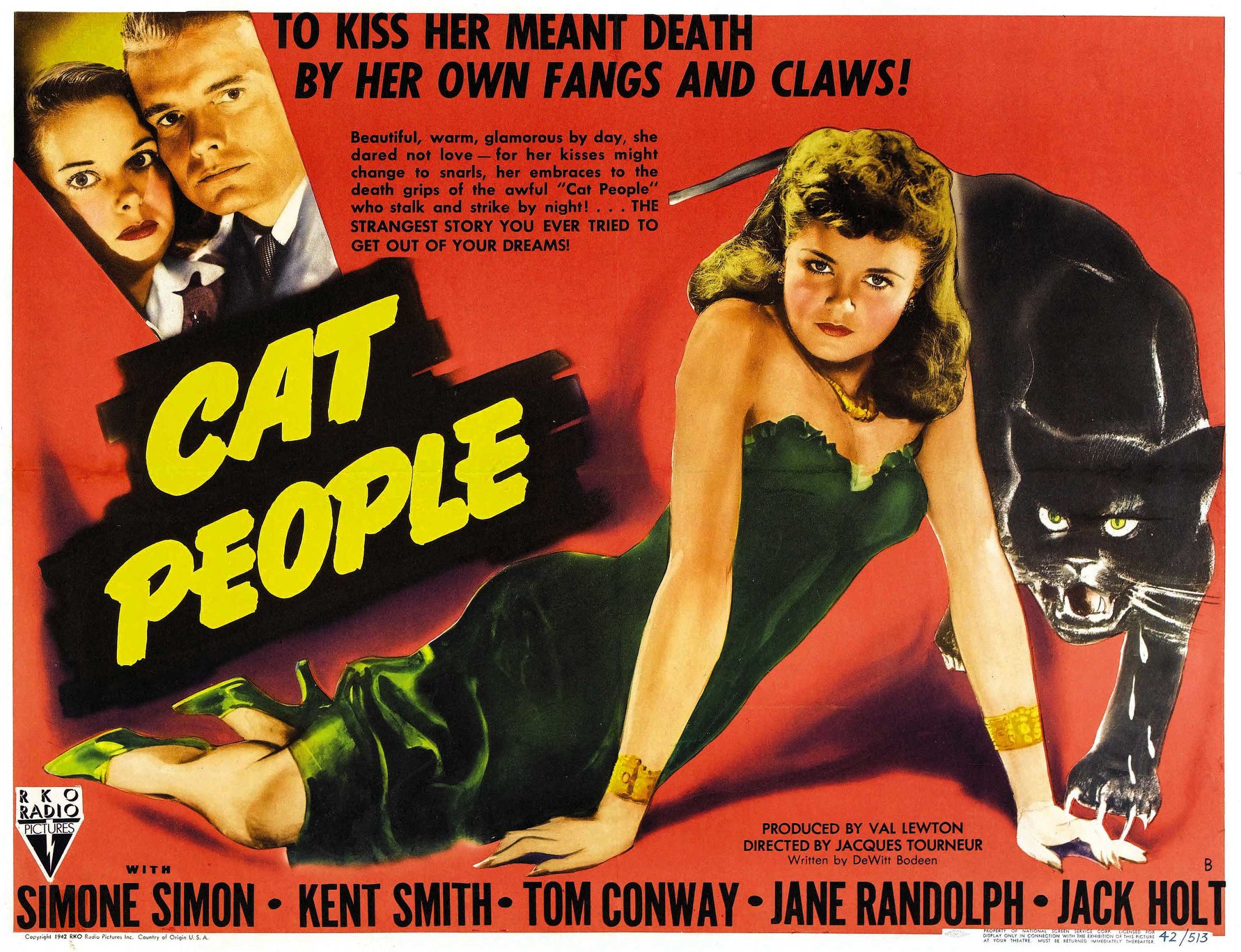
    Simone Simon’s barely repressed desires are made manifest in Val Lewton’s “Cat People” (1942). Lewton was a master of suggestion, with a majority of the horrors in his films imagined, rather than seen. Part of the reasoning behind the approach was practical, the result of shoestring budgets imposed by RKO. Whatever the case, the insinuating weirdness undeniably induces psychological chills. In fact, it was only as a concession to the studio that a literal big cat is included at all. The music is by RKO workhorse Roy Webb.

    Sean Connery plays a Berber chieftain who faces off against Teddy Roosevelt in “The Wind and the Lion” (1975). In a letter to Roosevelt (played in the film by Brian Keith), Connery’s character writes, “I, like the lion, must stay in my place, while you, like the wind, will never know yours.” Jerry Goldsmith provides one of his best scores for the Moroccan adventure. In fact, he was fairly confident that he finally had a lock on the Oscar. He experienced a harsh reality check when he went to see “Jaws.” (Goldsmith would receive his only Academy Award the following year for his music to “The Omen.”)

    Luchino Visconti’s epic telling of Giuseppe Tomasi di Lampedusa’s novel, “The Leopard” (1963), is a melancholy exploration of the fading Sicilian aristocracy. A bewhiskered Burt Lancaster plays Prince Fabrizio, who feels himself slipping into obsolescence. Nino Rota gives the film a full-blooded, operatic soundtrack, full of lyricism and pathos.

    Finally, Lyn Murray provides the breezy accompaniment for Alfred Hitchcock’s “To Catch a Thief” (1955), with Cary Grant a reformed burglar, known as The Cat, who attempts to clear himself of some “copycat” crimes, while romancing Grace Kelly on the French Riviera.

    Any excuse to get “The Wind and the Lion” and “The Leopard” in the same show…

    I hope you’ll join me for an hour of metaphorical big cats, on “Picture Perfect” – NOW AT A NEW TIME – THIS SATURDAY EVENING AT 6:00 EDT, on WWFM – The Classical Network and wwfm.org.

    (If you miss it, enjoy it later as a webcat – er, webcast – at wwfm.org!)

  • Richard Tang Yuk Leaves Princeton Festival

    Richard Tang Yuk Leaves Princeton Festival

    by 

    in
    5 responses

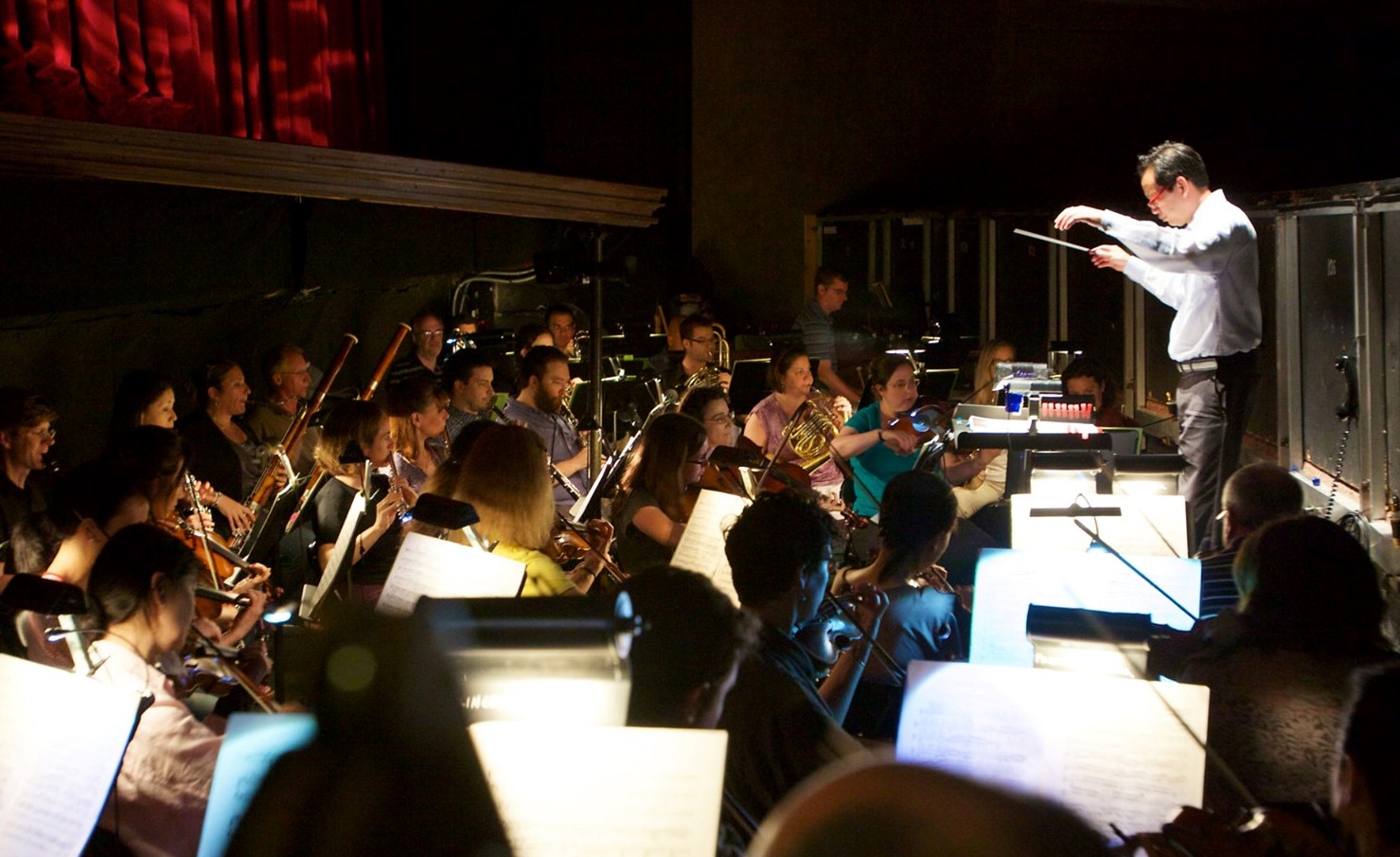
    Richard Tang Yuk is leaving The Princeton Festival.

    Tang Yuk is stepping down as executive and artistic director from the festival he founded in 2004.

    The festival has made Princeton a June destination for music-lovers seeking quality opera, musical theater, chamber works, Baroque performance, jazz, dance, and multi-media.

    Under Tang Yuk’s leadership, the festival has grown in scale from two events and four performances in 2004, to encompass eight events and 22 performances – in addition to 20 free lectures and workshops – in 2019. This year, the festival met the challenges of coronavirus with an ambitious menu of online offerings, mixing new and archival material.

    Tang Yuk’s opera performances have earned acclaim in such publications as Opera News and The New York Times. Repertoire at the Princeton Festival has always been an engaging balance of the familiar and the unusual. Tang Yuk and his crackerjack team of technicians have presented uniformly excellent productions of “The Flying Dutchman,” “Peter Grimes,” “Porgy and Bess,” “The Rake’s Progress,” “Nixon in China,” Handel’s “Ariodante,” and a double-bill of “Gianni Schicchi” and Rachmaninoff’s “Francesca da Rimini,” among others.

    Gregory Jon Geehern, the festival’s associate conductor and assistant to the artistic director, will step up as acting artistic director.

    On September 23 at 6 pm EDT, the Princeton Festival will hold the finals of its annual piano competition, this year to be presented online. The competition will feature participants from around the world. For tickets and information, visit princetonfestival.org.

    Sincere best wishes to Richard Tang Yuk. Thank you, Richard, for all that you’ve done!


Tag Cloud

Aaron Copland (93) Beethoven (95) Composer (114) Film Music (145) Film Score (143) Film Scores (255) Halloween (94) John Williams (195) KWAX (229) Leonard Bernstein (104) Marlboro Music Festival (125) Movie Music (160) Mozart (91) Opera (213) Philadelphia Orchestra (89) Picture Perfect (174) Princeton Symphony Orchestra (109) Radio (88) Ross Amico (244) Roy's Tie-Dye Sci-Fi Corner (290) The Classical Network (101) The Lost Chord (269) Vaughan Williams (105) WPRB (397) WWFM (881)

DON’T MISS A BEAT

Receive a weekly digest every Sunday at noon by signing up here


RECENT POSTS