• Igor Levit Plays Satie’s Vexations Live

    Igor Levit Plays Satie’s Vexations Live

    by 

    in
    5 responses

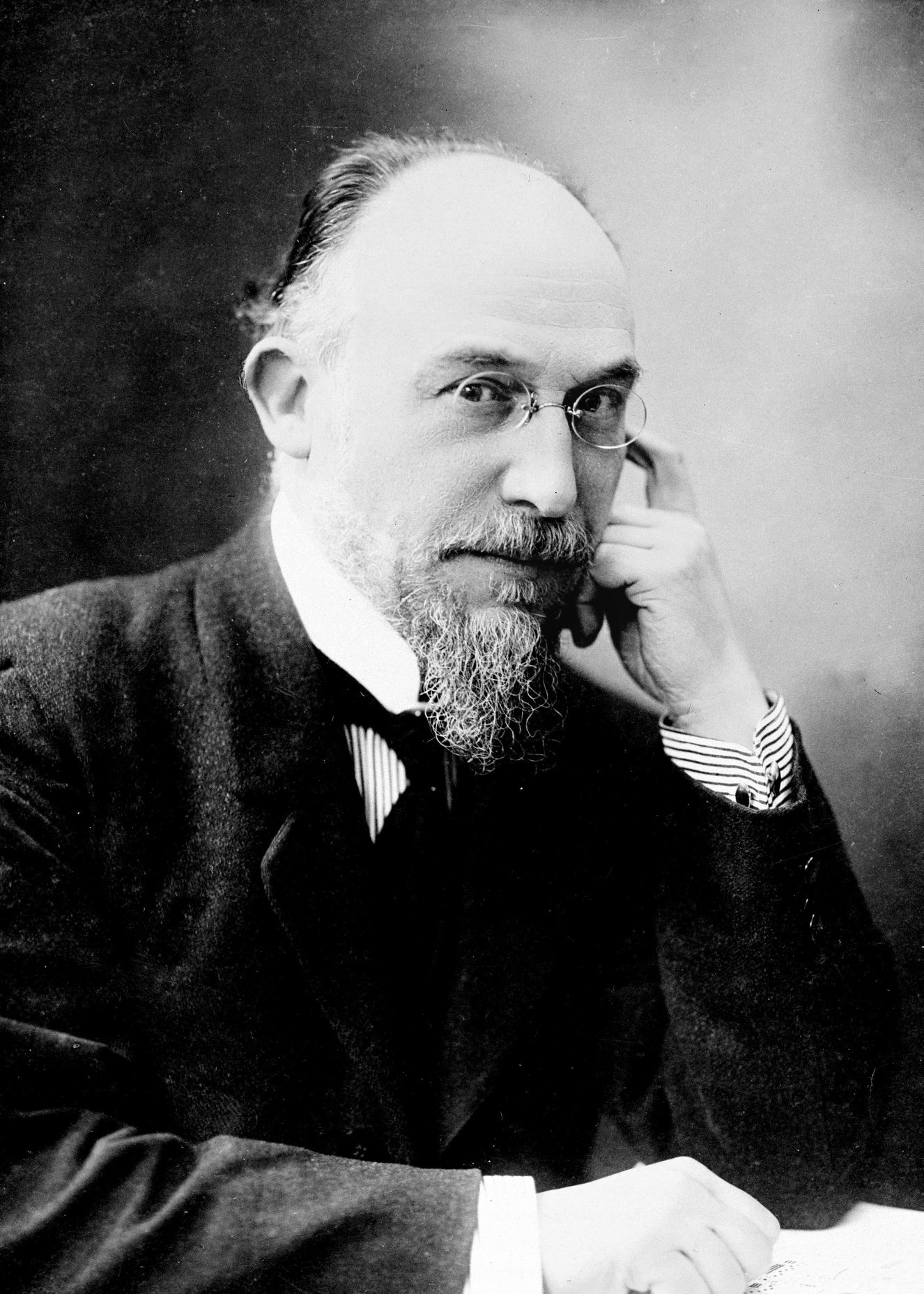
    It’s been brought to my attention by R. Bradley Wilson that pianist Igor Levit will perform Erik Satie’s “Vexations” – complete – beginning Saturday at 8 a.m. EDT. The event, intended to highlight the plight of artists worldwide during the coronavirus pandemic, will be streamed live from Berlin.

    Satie, who had a bone-dry wit, instructs the performer to repeat a sing-song snatch of what could generously be described as a melody 840 times. He probably never expected anyone to take him up on it. Levit projects that his rendition will span some 20 hours.

    Because of its extreme demands on performers (and listeners), “Vexations” has only very seldom been played in its entirety. Rarer still has it been undertaken by a single pianist.

    The composer coined the term “furniture music” to describe this sort of exercise – music to be played in the background; to be heard, but not really listened to. The repetitive nature also serves to heighten the effect of any extramusical intrusions. Anything that occurs during the span of the performance becomes part of the experience.

    Needless to say, Satie, who died in 1925, became something of a folk hero to John Cage. It was Cage who arranged for a team of pianists to present the work, probably composed in 1893-94, for the first time in public in 1963.

    When Peter Evans attempted it himself a few years later, in 1970, he reached repetition 595, after 15 hours, and found he could go no further. He wrote, “I would not play this piece again. I felt each repetition slowly wearing my mind away. I had to stop. If I hadn’t stopped I’d be a very different person today… People who play it do so at their own great peril.”

    Robert de Leeuw launched into his own marathon undertaking in the 1980s. In his case, he was shut down by the venue after 117 repetitions. De Leeuw did go on to record the piece – or rather the first 35 repetitions. He instructed purchasers, for the full experience, to play the record 24 times.

    To learn more about Levit’s quixotic – and vexatious – enterprise, visit:

    https://www.broadwayworld.com/bwwclassical/article/Pianist-Igor-Levit-To-Give-20-Hour-Livestreamed-Performance-Of-Saties-VEXATIONS-20200528#:~:text=To%20raise%20awareness%20for%20the,geographical%20borders%20and%20time%20zones.

    Then enjoy a profile of Levit in the May 18th edition of The New Yorker:

    https://www.newyorker.com/magazine/2020/05/18/igor-levit-is-like-no-other-pianist

  • Berlioz’s Faust: Opera or Concert Piece?

    Berlioz’s Faust: Opera or Concert Piece?

    by 

    in
    4 responses

    Arrigo Boito takes a lot of heat for his opera “Mefistofele” being so episodic. But I must say, Boito is a model of continuity next to Hector Berlioz, whose “La damnation de Faust” – let’s face it – really has no business at all being staged.

    That assessment has no bearing on the quality of the music, which has plenty of the hallmarks of quintessential Berlioz we mad Romantics hold so dear. Certainly, it has its share of standout moments. Alongside the recognizable orchestral highlights – “Minuet of the Will o’ the Wisps,” “Dance of the Sylphs,” the “Rákóczy March” – there’s the episode in Auerbach’s Cellar, Marguerite’s melancholy “Autrefois un roi de Thulé,” and the climactic ride to the Abyss. But I’m sorry, these disparate tableaux just don’t add up to much of an opera.

    “Faust” tanked horribly during its premiere run at Paris’ Opéra-Comique in 1846. It’s sad that the composer didn’t live to see the work redeemed – and his talent vindicated – at its first concert performance, decades later, in 1877.

    I won’t deny being entertained by the Robert Lepage production, streamed on the website of the Metropolitan Opera on Monday night. The conception is undeniably engaging, even if the multi-tier structure at its heart sometimes put me in mind of “Hollywood Squares.” (I kept expecting to see Paul Lynde or Wayland Flowers.) The action also reminded me at times of “moving” images viewed through a massive zoetrope. All in all, I can’t imagine anyone in the house having very much opportunity to drift off.

    But it still doesn’t change my assessment that this is music best appreciated in the concert hall, of a piece with Berlioz’s “Romeo and Juliet.” The Met itself would seem to agree. Lepage’s staging was scrapped for its revival this season, in favor of concert version sung, in its purest form, from the Metropolitan stage. The extravagant apparatus – projections, pullies, and all – proved to be more trouble than it was worth.

    I have not yet seen the Met’s “Les Troyens,” Berlioz’s distillation of Virgil, but based on Susan Graham’s reputation as a Berlioz interpreter – and her standout Marguerite on Monday night – she could very well be the high point of the evening. (That is, if we discount the Trojan Horse.) I can only imagine what “Faust” would have been like had Berlioz allowed it to breathe at twice its length.

    Get ready for four hours of Berlioz. “Les Troyens” is tonight’s “HD Encore” stream from the Metropolitan Opera. A different opera is streamed each day for 23 hours, beginning around 7 p.m. EDT (though my experience has been that they actually make the switchover a little earlier than that). You’ll find more information at metopera.org.


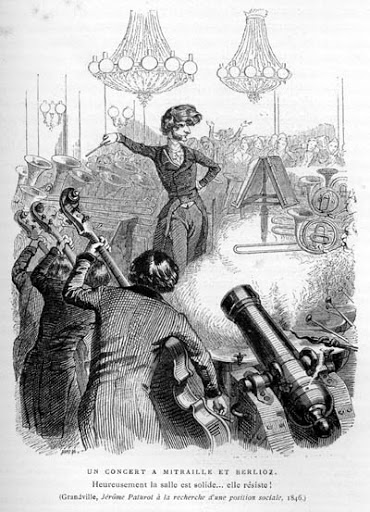
    IMAGE: Berlioz cartoon from 1845, “Un concert à mitraille et Berlioz” (“A concert of cannons and Berlioz”), by Jean Ignace Isidore Gérard (a.k.a. Grandville)


  • Vaughan Williams’ Covid-Era Music Precedent

    Vaughan Williams’ Covid-Era Music Precedent

    by 

    in
    One response

    Another precedent for time of Covid:

    In 1940, Ralph Vaughan Williams suggested that composers should write works for “combinations of all manner of instruments which might be played by people whiling away the waiting-hours of war.”

    Putting this into practice, he composed “Household Music” in 1940-41. The work exists in a version for string quartet, but the parts can also be played by flute, oboe, clarinet, bassoon, bass clarinet, saxophone, recorder, cornet, euphonium, or anything else at their respective pitches.

    The work bears the subtitle “Three Preludes on Welsh Hymn Tunes.” This should not be confused with an earlier, more popular triptych of that name, composed in 1920, for solo organ. The tunes are totally different.

    Here are flutist Kathleen Nester and violist Brett Deubner of the New Jersey Symphony Orchestra, and cellist Bronwyn Banerdt of the Pittsburgh Symphony, to perform the third movement, “Aberystwyth”:

    Vaughan Williams also arranged the piece for medium-sized orchestra:


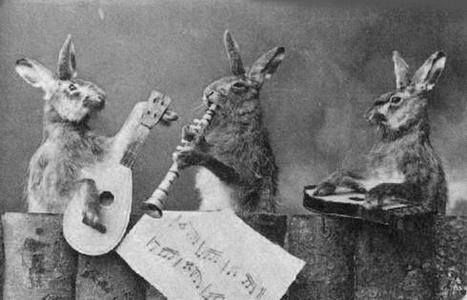
    PHOTO: “Household Music,” performed by isolating rabbits, on lute, clarinet and autoharp.


  • Schubert’s Symphony No 9 Nickname Revealed

    Schubert’s Symphony No 9 Nickname Revealed

    by 

    in
    One response

    What was Franz Schubert’s less-than-flattering nickname? Find out when you read my program note on this week’s “At Home with the PSO.”

    “At Home with the PSO” is the Princeton Symphony Orchestra’s gateway to original online content, including performance webcasts, photo albums, a virtual gallery, musicians’ recipes, and more, with fresh material being added weekly.

    Schubert’s Symphony No. 9 – also known as “The Great” C major symphony – is the focus of this week’s PSO “Play It Forward.” Watch music director Rossen Milanov’s spoken introduction, read my program note, and enjoy a complete performance from the PSO archive.

    HOT TIP: In the amount of time it takes to listen to the symphony, you could actually bake double-bassist Dan Hudson’s “Dangerously Easy Blondies.” Simply open another window and call up princetonsymphony.org on a second screen. (You’ll need two screens, because if you back out of the page, the audio will stop!) Look for the recipe listed under “Cooking with the PSO.” More musician recipes are archived at the bottom of the page.

    DON’T MISS: The PSO will present a special “At Home” event, this Sunday at 4 p.m. EDT.

    The virtual get-together will include performances by violinist Daniel Rowland and cellist Maja Bogdanović, a conversation with Milanov, and an appearance by PSO concertmaster Basia Danilow. Registration is free. Details are available on the PSO homepage, princetonsymphony.org.

    If it’s “Great,” it must be pretty good. Check out Franz Schubert’s “Great” C major symphony on this week’s “At Home with the PSO.”


    “Play It Forward” (the PSO plays Schubert):
    https://princetonsymphony.org/home-pso/music-play-it-forward

    “Cooking with the PSO” (Dangerously Easy Blondies):
    https://princetonsymphony.org/home-pso/cooking-pso

    A direct link to my program note:
    https://princetonsymphony.org/schubert-symphony-no-9-program-note

    Sunday registration:
    https://princetonsymphony.org/


  • Freedom’s Responsibility: Reclaiming Patriotism

    Freedom’s Responsibility: Reclaiming Patriotism

    by 

    in
    6 responses

    “Freedom makes a huge requirement of every human being. With freedom comes responsibility. For the person who is unwilling to grow up, the person who does not want to carry his own weight, this is a frightening prospect.”

    Eleanor Roosevelt


    It is frustrating to log on to the internet every day and find the concepts of “patriotism” and “liberty” being so perverted. “Freedom,” or the children’s book version, is used as a cudgel by the selfish and self-righteous, and insecurity and division are sewn by unscrupulous politicians, who wave “America” like a red cape in a bull ring.

    So many have sacrificed so much for this country and the living dream of how great America can be. Now, it seems, we can’t even manage to be decent, compassionate, and respectful of our neighbors. Clearly, the important lessons need to be re-learned. The question is, why have they not been handed down?

    The bravery and sacrifice of the soldier at war is unfathomable. I think especially of those souls who were called up in the days of the draft, or who volunteered. What horrors were thrust upon them, and how well they acquitted themselves. I am thankful to those, like my grandfather, who did the heavy lifting, so that the rest of us wouldn’t have to.

    The least we can do now is assume responsibility as a nation, pull ourselves together, and ensure that their sacrifices continue to resonate.


    In Flanders fields the poppies blow
    Between the crosses, row on row,
    That mark our place; and in the sky
    The larks, still bravely singing, fly
    Scarce heard amid the guns below.

    We are the Dead. Short days ago
    We lived, felt dawn, saw sunset glow,
    Loved and were loved, and now we lie
    In Flanders fields.

    Take up our quarrel with the foe:
    To you from failing hands we throw
    The torch; be yours to hold it high.
    If ye break faith with us who die
    We shall not sleep, though poppies grow
    In Flanders fields.


    “In Flanders Fields” remembered:
    http://www.greatwar.co.uk/poems/john-mccrae-in-flanders-fields.htm?fbclid=IwAR2R5bVThWh1_p1CADTCNnzZ5RDSXiWGKbqxlnuDiPtMq0rIwtk9V74nT9o

    Charles Ives’ setting:

    Ives’ “Tom Sails Away”

    Ives’ “He Is There!”

    Germany’s perception of the American soldier in World War I:
    https://www.mentalfloss.com/article/57121/42-quotes-germans-about-american-troops-after-world-war-i?fbclid=IwAR0enSmw2rP_N6QaFNn5vqK-cHTMd_hgURbzcPPaG9mQq-0Vk4a5yZBKlu8


Tag Cloud

Aaron Copland (93) Beethoven (95) Composer (114) Film Music (145) Film Score (143) Film Scores (255) Halloween (94) John Williams (195) KWAX (229) Leonard Bernstein (104) Marlboro Music Festival (125) Movie Music (160) Mozart (91) Opera (213) Philadelphia Orchestra (89) Picture Perfect (174) Princeton Symphony Orchestra (109) Radio (88) Ross Amico (244) Roy's Tie-Dye Sci-Fi Corner (290) The Classical Network (101) The Lost Chord (269) Vaughan Williams (105) WPRB (397) WWFM (881)

DON’T MISS A BEAT

Receive a weekly digest every Sunday at noon by signing up here


RECENT POSTS