• Sherlock Holmes Movie Music Scores

    Sherlock Holmes Movie Music Scores

    by 

    in
    4 responses

    The game is afoot! This week on “Picture Perfect,” it’s an hour of music from movies inspired by the world’s greatest detective.

    “Sherlock Holmes” (2009) features Robert Downey Jr. and Jude Law, in Michael Ritchie’s post-“Matrix” take on the master detective. While some of the film adaptations over the years may have glossed over the character’s physicality, Ritchie’s revisionist Holmes perhaps errs a mite too far in the other direction. Hans Zimmer wrote the music, he too going against received wisdom, and in the process coming up with one of his more interesting scores, if only for the quirky instrumentation, which includes a Hungarian cimbalom, accordion, fiddles and a broken pub piano.

    Perhaps it’s unfair to put Zimmer up against an old pro like Miklós Rózsa. Rózsa wrote the music for Billy Wilder’s melancholy portrait of the great detective, “The Private Life of Sherlock Holmes” (1970). Wilder requested that the composer adapt his lovely Violin Concerto for the project, a recording of which the director had listened to repeatedly during the writing of the screenplay. Rózsa and Wilder had previously collaborated on “Double Indemnity” and “The Lost Weekend.”

    The Sherlock Holmes comedy, “Without a Clue” (1988), represents a missed opportunity of sorts. The hope had been for Sean Connery to play Watson opposite Michael Caine’s Holmes, a longed-for reunion between the two who had worked so well together in “The Man Who Would Be King.” In the end, it was Ben Kingsley who assumed the role.

    The fun conceit that sets “Without a Clue” apart is that Holmes is the fictional creation of mastermind Watson, who in reality is the gifted crime-solver. Through necessity, Watson hires a second-rate actor to play the role of Holmes. Of course, the actor turns out to be a bumbling idiot. Henry Mancini provides the British Light Music style score, with a nod to Edmund White’s “Puffin’ Billy” (familiar stateside as the theme to “Captain Kangaroo”).

    Finally, the Steven Spielberg-produced “Young Sherlock Holmes” (1985) offers a conjectural origins story, including Holmes and Watson’s first meeting as teenagers (ignoring the particulars laid out by Arthur Conan Doyle in his stories, with Watson already a war veteran who had served in Afghanistan). It’s all for fun, though it’s unfortunate the filmmakers felt the need to interject ‘80s-style special effects, rather than simply trust in the inherent magic of the subject matter. “Young Sherlock Holmes” features the first photorealistic, fully computer-generated character (a stained glass knight). Also, some Indiana Jones B-movie antics involving an Egyptian cult seem especially out of place.

    Interestingly, the film’s screenwriter, Chris Columbus, went on to direct the first two Harry Potter films. By my recollection, “Young Sherlock Holmes,” with its boarding school setting, has some of that same feel.

    The music, by Bruce Broughton, is certainly buoyant and beautiful, in the best John Williams tradition. Broughton scored a handful of big screen hits, notably “Silverado” and “Tombstone,” though arguably it is in the medium of television that he’s made his greatest impact. Thus far, his work has been recognized with a record 10 Grammy Awards.

    It’s elementary, my dear Watson. Join me for “Picture Perfect,” this Friday evening at 6:00 EDT, on WWFM – The Classical Network and wwfm.org.
  • Princeton Festival Goes Digital

    Princeton Festival Goes Digital

    by 

    in
    4 responses

    The Princeton Festival is one of the many local arts organizations that’s begun to share musical material from its archive, as we all continue to figure out ways to navigate a world plagued by coronavirus.

    Unavoidably, this June’s festival has been cancelled, with an optimistic projection that some of the events could be rescheduled for the fall.

    In the meantime, the festival is making available podcasts and music files for our delectation, with further, digital content promised, including online educational workshops, poetry readings, and Princeton Festival performances.

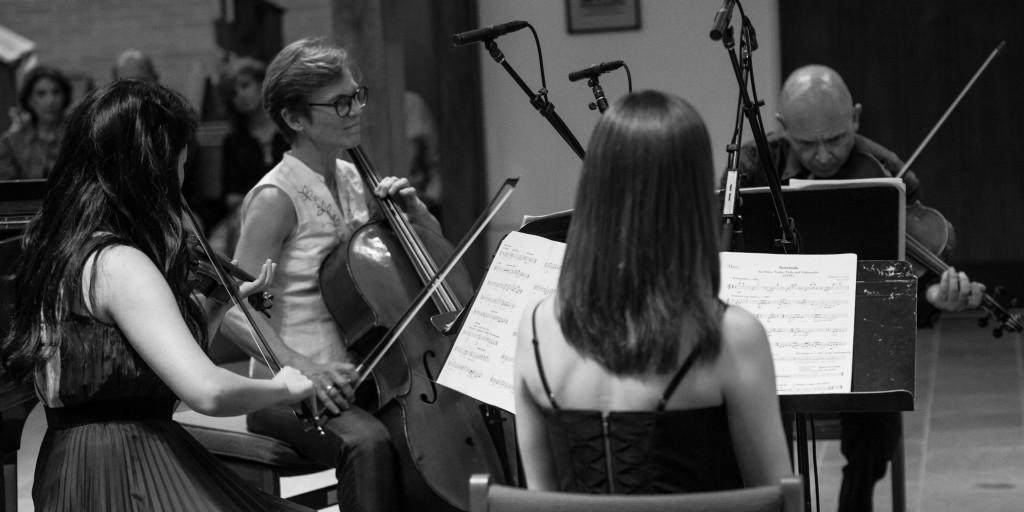
    This week, PF highlights Michelle Djokic, cellist and artistic director of Concordia Chamber Players. Concordia has long been a festival staple, but also presents a regular chamber music series, right across the Delaware River, at its home in the New Hope vicinity of Bucks County.

    Hear a conversation with Michelle Djokic here:

    Then enjoy Concordia performances of works by Mendelssohn and Kodály as part of the Princeton Festival’s growing archive of online music files.

    https://princetonfestival.org/music-archive/

    You can learn more about the Princeton Festival at its website or by following the organization on Facebook and Instagram.

    Last week’s conversation with festival artistic and executive director Richard Tang Yuk has been posted to the Princeton Festival YouTube channel.


  • Happy Birthday Henry Mancini Music Legend

    Happy Birthday Henry Mancini Music Legend

    by 

    in
    One response

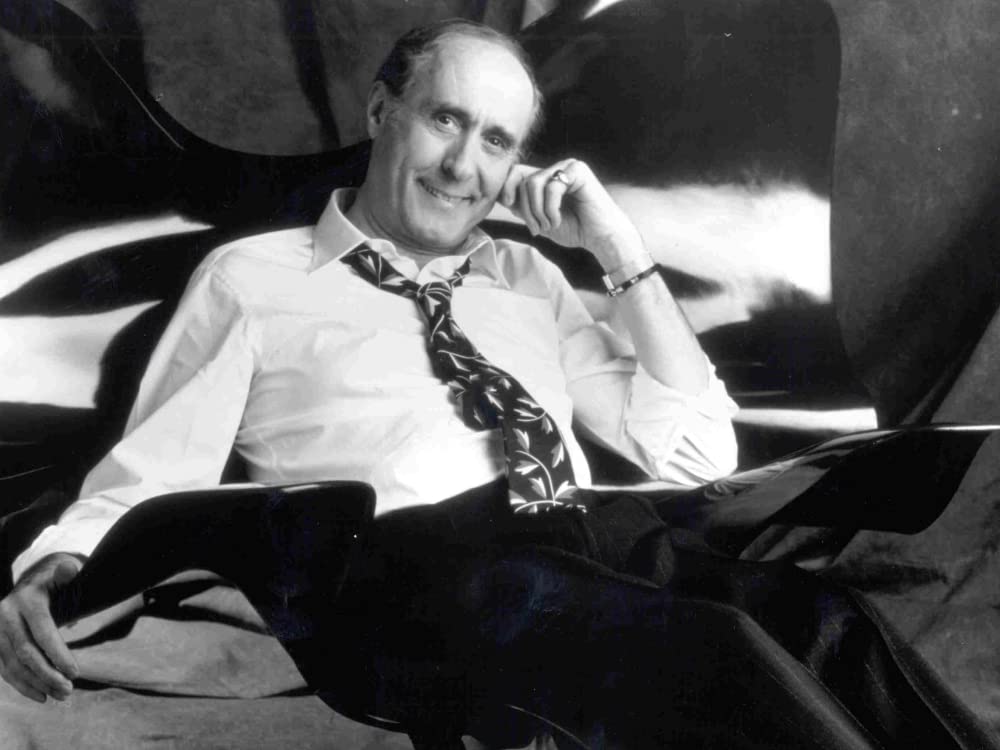
    Happy birthday, Henry Mancini!

    The recipient of 4 Academy Awards, 20 Grammy Awards, 1 Golden Globe, and a posthumous Grammy for Lifetime Achievement. His arrangement of Nino Rota’s love theme from “Romeo and Juliet” spent two weeks at the top of the rock-dominated Billboard charts in 1969.

    “The Pink Panther,” with Mancini at the piano
    https://www.youtube.com/watch?v=jBupII3LH_Q

    “Peter Gunn”

    (The original session pianist on the show was none other than John “Johnny” Williams)

    “Breakfast at Tiffany’s” (Audrey Hepburn sings “Moon River”)

    Mancini on composing “Moon River”

    “Hatari!”

    (Mancini quipped that the “Baby Elephant Walk” put his three baby elephants through college)

    Boy, does this one take me back!

    Mancini on music education

    Henry Mancini in duet with James Galway – “76 Trombones” on two flutes!

    Mancini-Galway conclusion, with a John Williams bonus

    Henry: A Personal Recollection


  • NJSO Violinist Demos Theremin Freely

    by 

    in
    4 responses

    New Jersey Symphony Orchestra violinist Darryl Kubian demonstrates the theremin. At the very opening, you’ll hear a quotation from Miklós Rózsa’s score for Alfred Hitchcock’s “Spellbound.” Kubian plays a more extended selection as he talks about the role of the theremin in movie music, beginning just before the 12-minute mark.

    I wrote about Kubian twice, as thereminist and composer, during my days at the Trenton Times.

    https://www.nj.com/times-entertainment/2013/04/theremin_adds_otherworldly_tou.html

    https://www.nj.com/times-entertainment/2015/03/classical_music_shakespeare_in.html


  • Laurel & Hardy Marlboro Music Comedy

    Laurel & Hardy Marlboro Music Comedy

    by 

    in
    3 responses

    Our regular Wednesday feature, “Music from Marlboro,” may be on hiatus from WWFM – The Classical Network, as we all continue to do our part to Flatten the Curve, but here’s a little something hopefully to keep you smiling. Only two genii of silent comedy could send up chamber music performance in pantomime like this. It’s the only time the pair would ever appear together on film.

    https://www.youtube.com/watch?v=aPRW1VQxmTs

    Marlboro School of Music and Festival: Official Page


Tag Cloud

Aaron Copland (93) Beethoven (95) Composer (114) Film Music (145) Film Score (143) Film Scores (255) Halloween (94) John Williams (195) KWAX (229) Leonard Bernstein (104) Marlboro Music Festival (125) Movie Music (160) Mozart (91) Opera (213) Philadelphia Orchestra (89) Picture Perfect (174) Princeton Symphony Orchestra (109) Radio (88) Ross Amico (244) Roy's Tie-Dye Sci-Fi Corner (290) The Classical Network (101) The Lost Chord (269) Vaughan Williams (105) WPRB (397) WWFM (881)

DON’T MISS A BEAT

Receive a weekly digest every Sunday at noon by signing up here


RECENT POSTS