• Free Met Opera Streams Week 4 Aida & More

    Free Met Opera Streams Week 4 Aida & More

    by 

    in
    3 responses

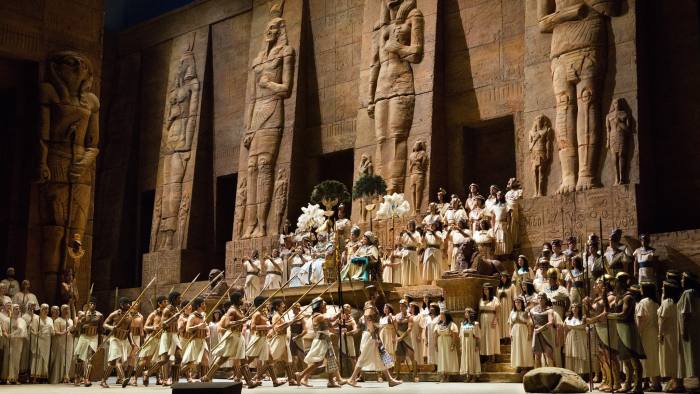
    The Metropolitan Opera continues to present its “Live in HD” encores, now entering their fourth week. The operas stream free, for 23 hours, beginning each day at 7:30 p.m. (“Norma” is available until 6:30 this evening.) You’ll find teasers and bonus materials when following the link.

    https://www.metopera.org/user-information/nightly-met-opera-streams/week-4/

    Monday, April 6
    Verdi’s Aida
    Starring Anna Netrebko, Anita Rachvelishvili, Aleksandrs Antonenko, Quinn Kelsey, Dmitry Belosselskiy, and Ryan Speedo Green, conducted by Nicola Luisotti. From October 6, 2018.

    Tuesday, April 7
    Puccini’s La Fanciulla del West
    Starring Deborah Voigt, Marcello Giordani, and Lucio Gallo, conducted by Nicola Luisotti. From January 8, 2011.

    Wednesday, April 8
    Verdi’s Falstaff
    Starring Lisette Oropesa, Angela Meade, Stephanie Blythe, Jennifer Johnson Cano, Paolo Fanale, Ambrogio Maestri, and Franco Vassallo, conducted by James Levine. From December 14, 2013.

    Thursday, April 9
    Wagner’s Parsifal
    Starring Katarina Dalayman, Jonas Kaufmann, Peter Mattei, Evgeny Nikitin, and René Pape, conducted by Daniele Gatti. From March 2, 2013.

    Friday, April 10
    Gounod’s Roméo et Juliette
    Starring Diana Damrau, Vittorio Grigolo, Elliot Madore, and Mikhail Petrenko, conducted by Gianandrea Noseda. From January 21, 2017.

    Saturday, April 11
    Donizetti’s Don Pasquale
    Starring Anna Netrebko, Matthew Polenzani, Mariusz Kwiecien, and John Del Carlo, conducted by James Levine. From November 13, 2010.

    Sunday, April 12
    Mozart’s Cosi fan tutte
    Starring Amanda Majeski, Serena Malfi, Kelli O’Hara, Ben Bliss, Adam Plachetka, and Christopher Maltman, conducted by David Robertson. From March 31, 2018.
  • John Foulds Rediscovered

    John Foulds Rediscovered

    by 

    in
    3 responses

    Though steeped in the comparatively conservative milieu of the English musical renaissance at the turn of last century, John Foulds possessed a physical, intellectual, spiritual, and creative wanderlust.

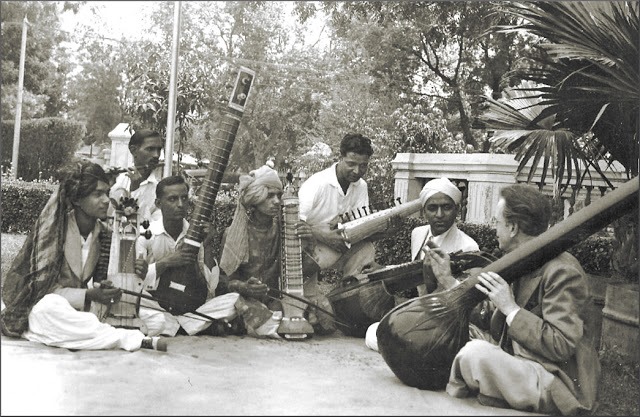
    Foulds moved to India in 1935. There, he collected native folk tunes. He became director of European music for All-India Radio in Delhi, created an orchestra from scratch, and labored tirelessly to fulfill his vision of a synthesis between Eastern and Western music. He also composed works for traditional Indian instruments. His efforts on behalf of the radio were so successful that he was asked to open a satellite branch in Calcutta. Unfortunately, he contracted cholera and died within a week of his arrival, at the age of 58.

    Because of the remote location and the fact that a number of the pieces of his maturity have been lost, or the manuscripts extensively compromised, Foulds’ slight reputation has rested for the most part on his “light music.” (especially “Keltic Lament”). But Foulds was definitely ahead of his time, as the gradual rediscovery of his works has revealed, with the composer’s fascination for quarter-tones and, occasionally, a tendency toward an almost proto-minimalism.

    So diverse were Foulds’ output and enthusiasms that it is difficult, if not impossible, to encapsulate the scope of his achievements within a single hour. Nevertheless, this Sunday night on “The Lost Chord,” we will endeavor to do our best, by sharing his light concert overture “April – England,” “Three Mantras” from the abandoned Sanskrit opera, “Avatara,” and selections from “A World Requiem.”

    It’s a Foulds paradise! Join me for “April Foulds,” this Sunday night at 10:00 EDT, on WWFM – The Classical Network and wwfm.org.


    PHOTO: Foulds (right), sitting in on an Indian jam session


  • Gustav Schreck Bach’s Unsung Leipzig Cantor

    Gustav Schreck Bach’s Unsung Leipzig Cantor

    by 

    in
    4 responses

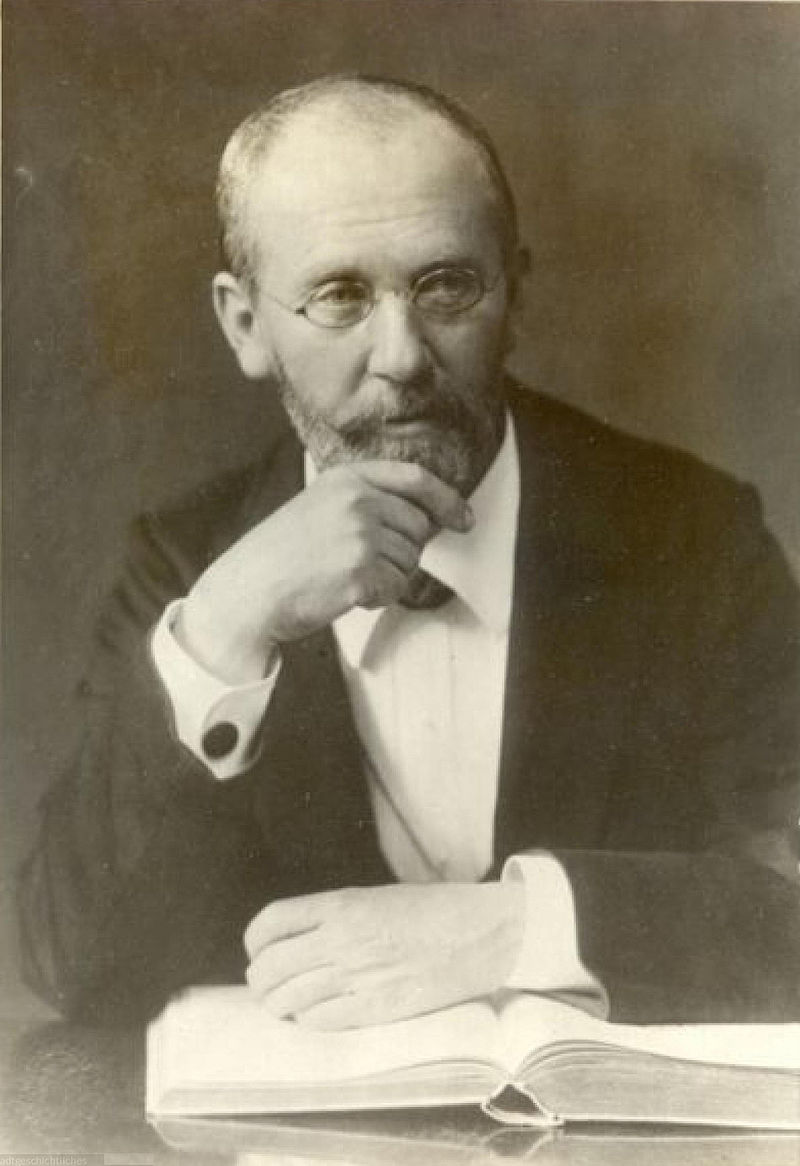
    Anyone else know of Gustav Schreck (1849-1918)?

    Schreck was cantor at the famed Thomaskirche in Leipzig. That’s right, Johann Sebastian Bach’s church. Under Schreck’s direction, works of Bach and other former Thomas cantors featured prominently in services and other musical activities. Artistic quality was high. He programmed Bach cantatas in their entirety, acquired historic instruments, and modified his performances to make them more “authentic” (soprano and alto parts were sung by soloists from the boy choir), decades before it would even be considered “pioneering.”

    Schreck was one of the founders of the New Bach Society. He was also professor of composition and theory at the Leipzig Conservatory. He broadened the exposure of his Thomanerchor by leading it out of the church and into the concert hall, introducing the group into programs of the Leipzig Gewandhaus Orchestra.

    I stumbled across this amiable Bassoon Sonata yesterday and thought you might enjoy it.


  • Elmer Bernstein A Cinematic Promised Land

    Elmer Bernstein A Cinematic Promised Land

    by 

    in
    5 responses

    With Passover only days away, simply remembering Elmer Bernstein leads me back through a wilderness of mediocrity that today passes for film music, to a Promised Land of cinematic milk and honey.

    Over the course of an enviable career that spanned some 50 years, Bernstein composed music for dozens of movies, many of them still much-beloved, including “The Ten Commandments” (1956), “The Magnificent Seven” (1960), “To Kill a Mockingbird” (1962), and “The Great Escape” (1963).

    In addition, he was one of the first film composers to incorporate jazz elements into his work for dramatic purposes, in movies like “The Man with the Golden Arm” (1955), “Sweet Smell of Success” (1957), and “Walk on the Wild Side” (1962).

    Coming out of the Swinging Sixties, when the industry clearly favored a more “popular” sound over purely orchestral scores (until John Williams changed everything), Bernstein kept right on working. Thanks to a generation of younger filmmakers who had grown up on his classics, he never lacked for opportunities. Suddenly he found himself much in demand as a comedy composer, providing the underscores for “Animal House” (1978), “The Blues Brothers” (1980), “Airplane!” (1980), “Stripes” (1981), and “Ghostbusters” (1984).

    For Martin Scorsese, he composed music for “The Age of Innocence” (1993), “Bringing Out the Dead” (1999), and “The Gangs of New York” (2002), though his score for the latter was ultimately rejected. He also adapted Bernard Herrmann’s music for Scorsese’s remake of “Cape Fear” (1991).

    Oh yeah, along the way, he also composed the iconic National Geographic theme – clearly by the same man who wrote “The Magnificent Seven.”

    In all, Bernstein was nominated for 14 Academy Awards, but claimed the Oscar only once, fairly early on, for his work on “Thoroughly Modern Millie” (1967), of all things. His final nomination was for his very last score, for “Far from Heaven” (2002). Elmer Bernstein died on August 18, 2004 at the age of 82.

    Here’s a suite from one of his best-loved scores.

    Happy birthday, Elmer Bernstein.


  • Elmer Bernstein East Meets West

    Elmer Bernstein East Meets West

    by 

    in
    3 responses

    No relation to Leonard Bernstein (or “Bern-STINE”), Elmer pronounced his surname “Bern-STEEN.” In the interest of clarity, the two were sometimes further differentiated as “East Coast Bernstein” and “West Coast Bernstein.” In this photo, we have a rare instance of East meets West.


Tag Cloud

Aaron Copland (93) Beethoven (95) Composer (114) Film Music (145) Film Score (143) Film Scores (255) Halloween (94) John Williams (195) KWAX (229) Leonard Bernstein (104) Marlboro Music Festival (125) Movie Music (160) Mozart (91) Opera (213) Philadelphia Orchestra (89) Picture Perfect (174) Princeton Symphony Orchestra (109) Radio (88) Ross Amico (244) Roy's Tie-Dye Sci-Fi Corner (290) The Classical Network (101) The Lost Chord (269) Vaughan Williams (105) WPRB (397) WWFM (881)

DON’T MISS A BEAT

Receive a weekly digest every Sunday at noon by signing up here


RECENT POSTS