• Star Wars The End of the Jedi Saga

    Star Wars The End of the Jedi Saga

    by 

    in
    5 responses

    It really is time for the Jedi to end.

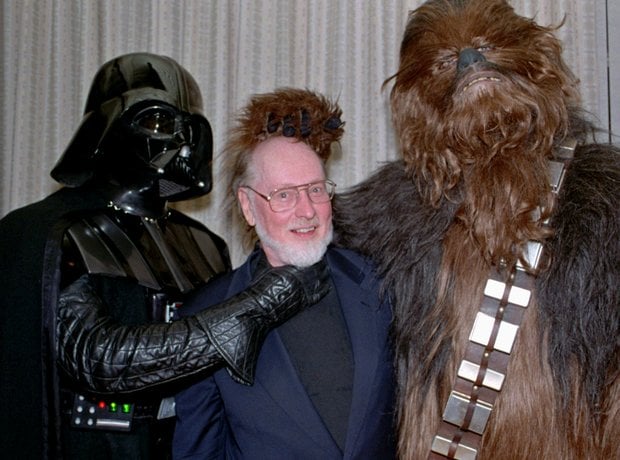
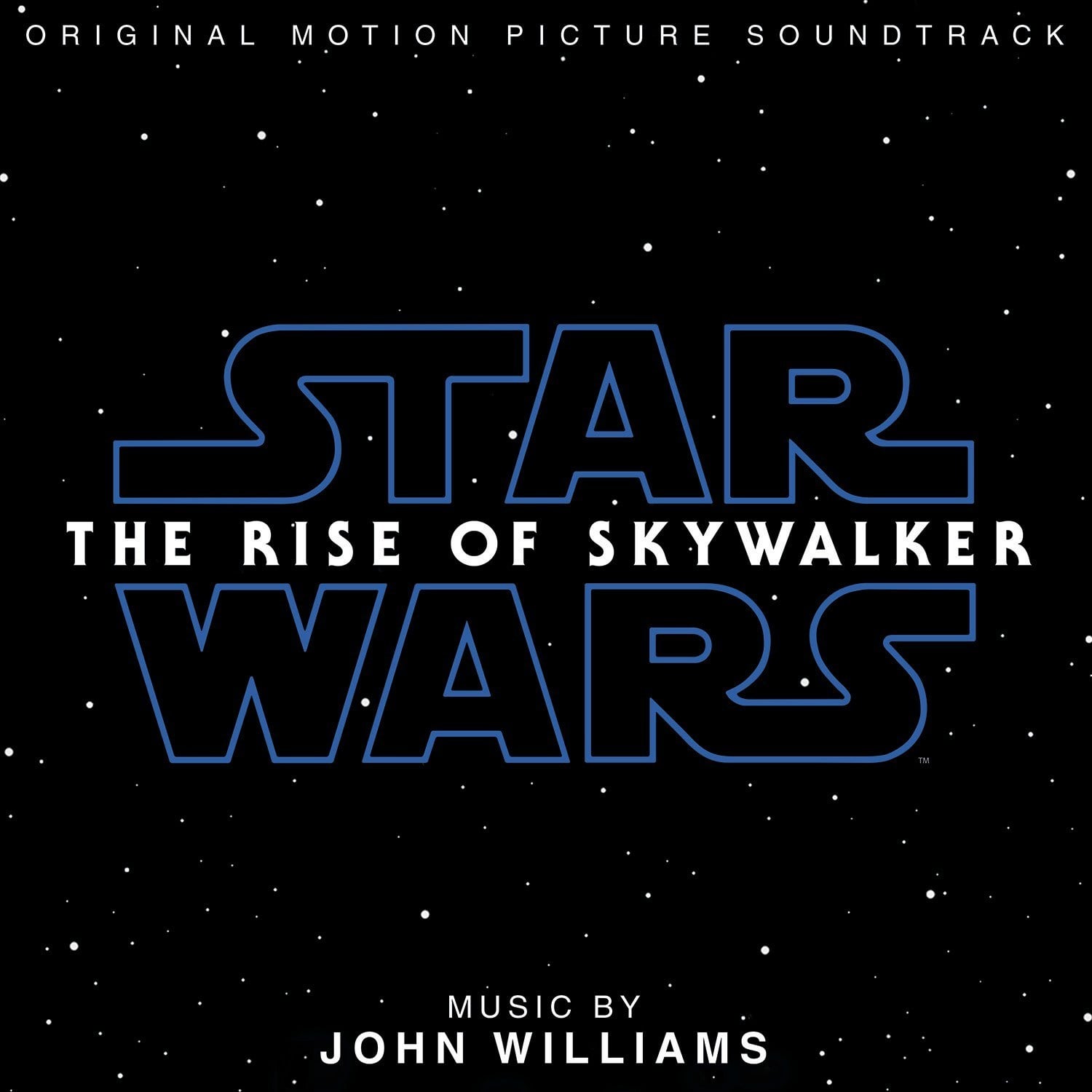
    This week on “PIcture Perfect,” with the release of “Star Wars: The Rise of Skywalker,” we’ll take a look back over four decades of the Skywalker saga.

    We’ll sample from all three trilogies, 42 years of music by John Williams. Williams has intimated that this could be his swan song. It’s certainly his last music for “a galaxy far, far away.”

    PLEASE NOTE: THIS HOUR WILL BE TOTALLY SPOILER-FREE.

    I hope you’ll join me for the rise of Skywalker and the triumph of Williams, this Friday evening at 6:00 EST, on WWFM – The Classical Network and wwfm.org.


  • Star Wars The Rise of Skywalker A Musical Look

    Star Wars The Rise of Skywalker A Musical Look

    by 

    in
    6 responses

    It really is time for the Jedi to end.

    This week on “Picture Perfect, we’ll hear selections from the last of John Williams’ “Star Wars” scores – and possibly the last film score of his distinguished career.

    I hope you’ll join me for a musical retrospective of the Skywalker saga, to coincide with the opening of “Star Wars: The Rise of Skywalker,” in theaters today.

    Take one last trip to a long time ago, in a galaxy far, far away, this Friday evening at 6:00 EST, on WWFM – The Classical Network and wwfm.org.


  • Small Steps Big Progress

    Small Steps Big Progress

    by 

    in
    5 responses

    “Put… one… foot… in front… of… the otherrr…”


  • Wagner, Brahms: A Christmas Truce

    Wagner, Brahms: A Christmas Truce

    by 

    in
    4 responses

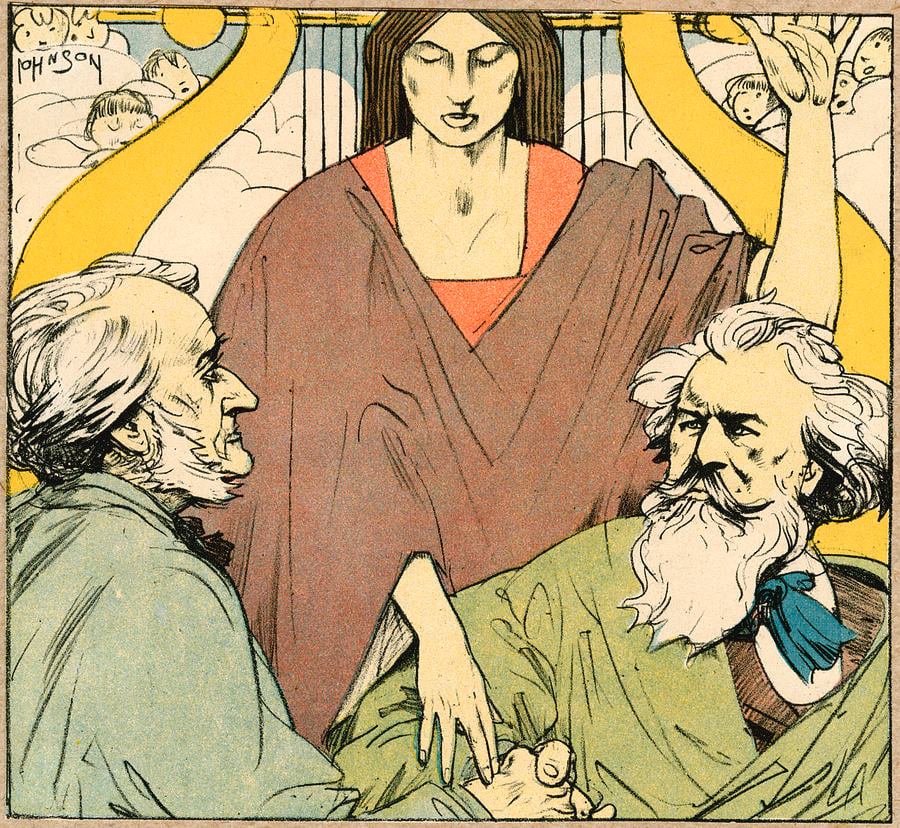
    Brahms and Wagner may have been pitted against one another as exemplars of two conflicting schools of music at the height of the Romantic era, but Christmas is the season of peace on earth and goodwill toward men. With this in mind, we call a ceasefire on the War of the Romantics, if only for the next “Music from Marlboro.”

    Though Wagner could be counted on to behave badly on just about any occasion, he did manage to pull off one of the most romantic gestures in all of classical music.

    On Christmas morning, 1870, Wagner’s wife, Cosima – with whom he had become involved while she was very much married to conductor (and devoted Wagner advocate) Hans von Bülow – awoke to the tender strains of a new serenade.

    Wagner had arranged to have 13 musicians seated along the stairs of their Swiss villa for the first performance of “Triebschen Idyll, with Fidi’s birdsong and the orange sunrise, a symphonic birthday greeting.”

    Cosima was born on December 24, but she always celebrated on Christmas. Fidi was the nickname of the Wagners’ newly-arrived son, Siegfried. Of course, today we recognize the piece more simply as the “Siegfried Idyll.”

    The work had been intended to remain in the Wagner family – from its original title, it’s obvious that it’s loaded with personal significance – but when Wagner ran short of cash, as he often did, he decided that maybe he had better have it published, after all. Some of the material later found its way into the third of the “Ring” operas (also known as “Siegfried”).

    We’ll hear Wagner’s Christmas serenade performed at the 1971 Marlboro Music Festival. In the first chair will be Alexander Schneider, a violinist long associated with the Budapest String Quartet.

    It’s all-too-easy to dismiss Brahms as crusty and gruff. This is the man, remember, who once notoriously wrecked a party by declaring, “If there’s anyone here I’ve failed to insult, I apologize!”

    But Brahms could also be an old softy, with a very generous heart. He retained as especially childlike demeanor around Christmas. He always saw to it that the Schumanns were well-gifted and that his housekeeper’s family had their own tree.

    Brahms’ “Zwei Gesänge” (“Two Songs”) for voice, viola and piano, Op. 91, from 1863, was originally intended as a wedding present for his friend, violinist Joseph Joachim (who also played the viola), and Joachim’s bride, Amalie (who was a contralto).

    The second of the songs , “Geistliches Wiegenlied” (“Sacred Lullaby”), is a setting of Emanuel Geibel’s text, a cradle song sung by Mary, who requests that the angels silence the rustling palms because her Child is asleep. The viola quotes the Christmas melody “Joseph, lieber Joseph mein,” a sly reference on the part of the composer, who incorporates the carol’s text, so as to include Joachim’s given name.

    We’ll hear a performance from 2011, featuring mezzo-soprano Jennifer Johnson Cano, violist Hélène Clément, and, at the keyboard, Marlboro co-director Mitsuko Uchida.

    The balance of the hour will be devoted to a work by the long-lived Carl Reinecke, who became friendly with Brahms while an instructor at the Cologne Music School in the 1850s. Like Brahms, Reinecke was a frequent guest in the Schumann home. A prolific composer himself, Reinecke served as kapellmeister of the Leipzig Gewandhaus Orchestra from 1860 to 1895.

    We’ll hear his charming Octet for Winds, Op. 216, which was published in 1892. It was performed at Marlboro in 2010 by oboist Nathan Hughes; clarinetists Anthony McGill and Moran Katz; hornists Rodovan Vlatkovic and Jill Bartles; and bassoonist William Winstead.

    It’s a Christmas truce, on this week’s “Music from Marlboro.” The Marquess of Queensberry Rules need not apply, this Wednesday evening at 6, on WWFM – The Classical Network and wwfm.org.

    Marlboro School of Music and Festival: Official Page


    WAGNER AND BRAHMS: Gods and sinners reconciled

  • Scrooge Opera & Christmas Carols on Classical Network

    Scrooge Opera & Christmas Carols on Classical Network

    by 

    in
    3 responses

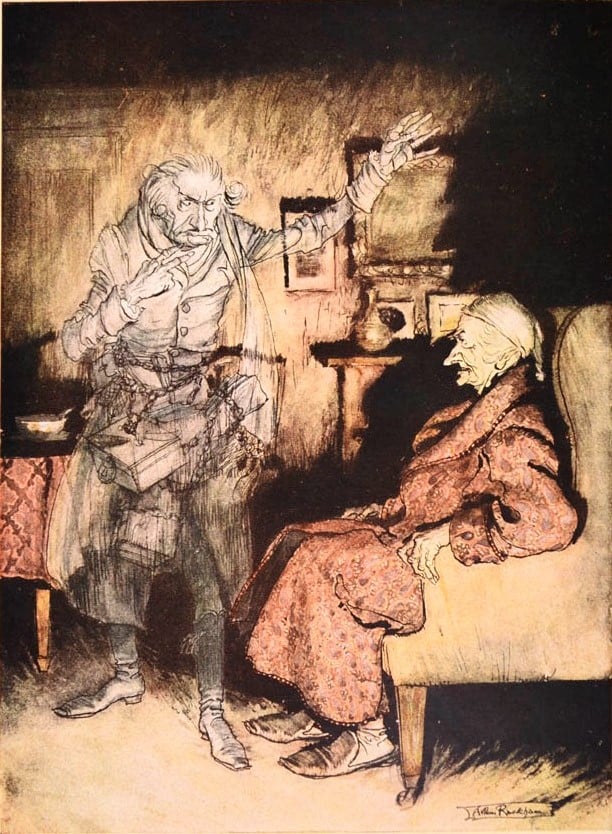
    If I could work my will, every idiot who goes about with ‘Merry Christmas’ on his lips should be boiled with his own pudding and buried with a stake of holly through his heart!

    Be that as it may, I hope you’ll join me this afternoon on The Classical Network for a conversation with documentarian H. Paul Moon of Zen Violence Films, who dropped by the WWFM studios last week to talk about the release of his latest project, a filmed production of John Deak’s chamber opera, “The Passion of Scrooge.”

    The work is a real tour de force for baritone William Sharp, who appears with Washington DC’s 21st Century Consort.

    Moon’s film is now available on BluRay and DVD. Learn more about it, when you tune in for our chat – with selections from the opera – beginning at 5 p.m., or by visiting scroogeopera.com

    The balance of the hour will be devoted to a complete performance of “On Christmas Night,” a rarely-heard masque, also inspired by Charles Dickens’ “A Christmas Carol,” by Ralph Vaughan Williams.

    Prior to that, we’ll remember American composer and pianist Edward MacDowell, on his birthday, with his “Fireside Tales,” and Rita Streich, whom we heard yesterday in Josef Rheinberger’s “The Star of Bethlehem,” on hers. This afternoon, she will present a medley of German language Christmas songs.

    At 6:00, it’s another “Music from Marlboro,” with works for Christmas by Wagner and Brahms. There will also be time for a cheerful wind octet by Carl Reinecke.

    Fires will roar and winds will blow. I hope you’ll join me for a bit of beef, a blot of mustard, a crumb of cheese, a fragment of underdone potato, this Wednesday from 4 to 7 p.m. EST, on WWFM – The Classical Network and wwfm.org.


Tag Cloud

Aaron Copland (93) Beethoven (95) Composer (114) Film Music (145) Film Score (143) Film Scores (255) Halloween (94) John Williams (195) KWAX (229) Leonard Bernstein (104) Marlboro Music Festival (125) Movie Music (160) Mozart (91) Opera (213) Philadelphia Orchestra (89) Picture Perfect (174) Princeton Symphony Orchestra (109) Radio (88) Ross Amico (244) Roy's Tie-Dye Sci-Fi Corner (290) The Classical Network (101) The Lost Chord (269) Vaughan Williams (105) WPRB (397) WWFM (881)

DON’T MISS A BEAT

Receive a weekly digest every Sunday at noon by signing up here


RECENT POSTS