• Beethoven’s 8th Symphony Subversive Masterpiece

    Beethoven’s 8th Symphony Subversive Masterpiece

    by 

    in
    3 responses

    BEETHOVEN BIRTHDAY BASH

    WWFM – The Classical Network’s symphony marathon continues!

    NOW PLAYING: Symphony No. 8 in F major (Orchestra of the 18th Century/Frans Brüggen)

    Like the 4th Symphony, Beethoven’s 8th tends to be swallowed up in the long shadows cast by its neighbors. But this work, frequently dismissed as Haydnesque, is actually quite subversive. The composer deconstructs many of the practices of standard classical symphonic form, with most of the weight thrown onto the shoulders of the last movement, as opposed to the first, no real slow movement, and the return of the minuet, which Beethoven handily dispensed with in earlier symphonies through the inclusion of more volatile scherzos.

    Was Beethoven secretly the Stravinsky of his day?

    Show this sphinx some love. Consider supporting it by calling us at 1-888-232-1212, or by donating online at wwfm.org.

    Thank you for your generous contribution!


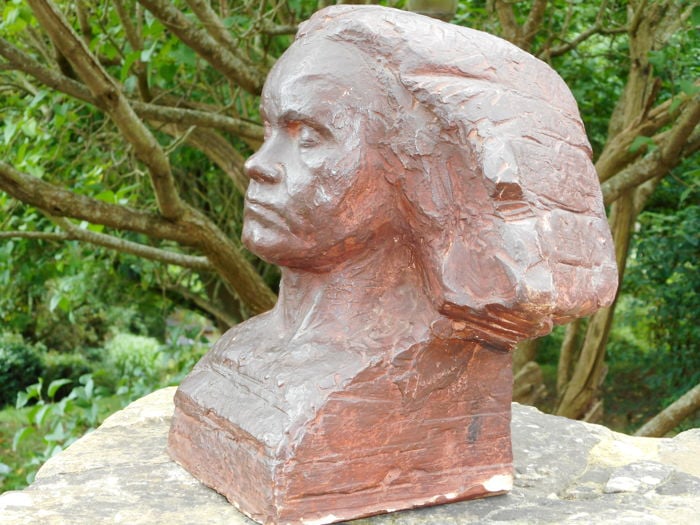
    “Beethoven in Sphinx,” Jules Jourdain (1873-1957)


  • Beethoven Liszt Symphony 8 Piano

    Beethoven Liszt Symphony 8 Piano

    by 

    in
    3 responses

    BEETHOVEN BIRTHDAY BASH

    Curve ball!

    As an exercise in deferred gratification and an addendum to that period instrument performance of the Symphony No. 8, by Frans Brüggen and the Orchestra of the 18th Century, we’ll hear Franz Liszt’s transcription of the 8th for solo keyboard.

    NOW PLAYING: Beethoven/Liszt – Symphony No. 8 in F major (Cyprian Katsaris, piano)

    From authenticity to audacity!

    Stick around, our concluding Beethoven symphony, the Symphony No. 9 – the beloved “Choral” Symphony – is on its way, in a powerhouse performance that’s bound to make an impression.

    We want to impress upon you that you’re the one who helps make it happen, when you call us with your contribution at 1-888-232-1212 or donate online at wwfm.org.

    Beethoven’s on our Liszt, on WWFM – The Classical Network and wwfm.org.


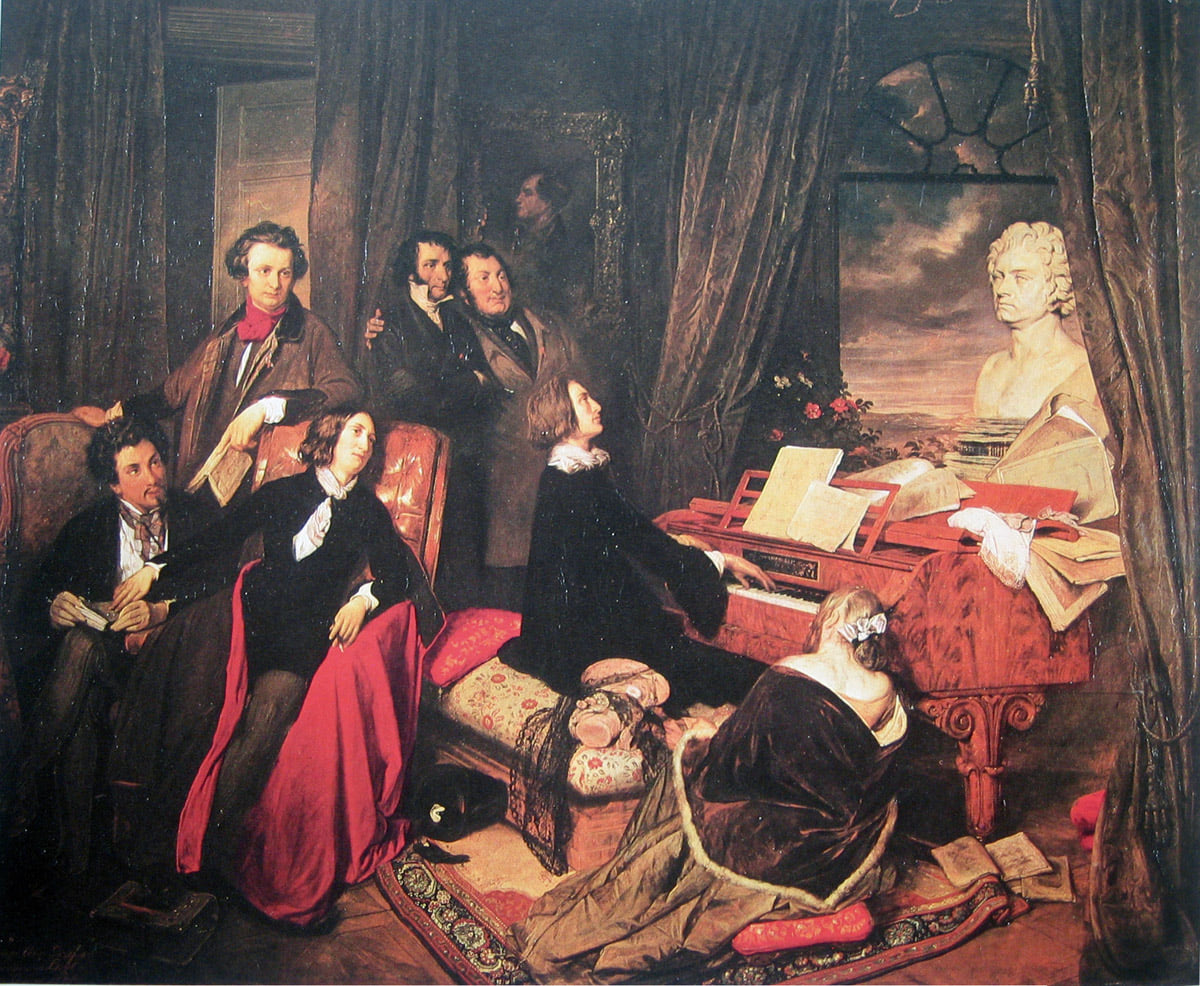
    “Franz Liszt Fantasizing at the Piano” (1840), Josef Danhauser

    Standing: Hector Berlioz, Niccolò Paganini, Gioachino Rossini

    Seated: Alexandre Dumas, George Sand, Liszt, Marie d’Agoult

    Bust: Beethoven


  • Beethoven’s Birthday on The Classical Network

    Beethoven’s Birthday on The Classical Network

    by 

    in
    4 responses

    BEETHOVEN BIRTHDAY BASH

    The climax of WWFM – The Classical Network’s symphony marathon is upon us!

    NOW PLAYING: Beethoven – Symphony No. 9 “Choral” (Leontyne Price, soprano; Maureen Forrester, contralto; David Poleri, tenor; Giorgio Tozzi, bass; Boston Symphony Orchestra; New England Conservatory Chorus/Charles Munch)

    Mighty, urgent, thrilling and beautiful, this 1958 performance is a fitting capstone to our day-long celebration of Beethoven. If you have been stirred in any way by the music you’ve enjoyed in honor of music’s greatest master, we hope that you will consider supporting it.

    We have come your way with limited interruptions, presenting all the music complete, both out of respect for the composer and out of respect for you, the listener. Let us know you appreciate it, by making future no-pain fundraisers like this one possible.

    Call us at 1-888-232-1212, or make a donation online at wwfm.org.

    Remember, the celebration will continue with David Dubal and Jed Distler, and two hours of Beethoven’s piano music, tonight at 8:00 EST.

    Thank you for this wonderful day of music, and thank you for supporting The Classical Network!


  • Beethoven’s Incidental Stage Music

    Beethoven’s Incidental Stage Music

    by 

    in
    6 responses

    Can anything about Beethoven truly be described as incidental?

    Beethoven’s music for the stage is one of the more neglected aspects of his output. This Sunday night on “The Lost Chord,” we’ll set aside the symphonies and concertos, for the time being, for a revelatory evening at the theater with the Master from Bonn.

    In 1807, Beethoven composed a curtain-raiser for the play “Coriolan,” by Heinrich Joseph Collin. Two years later came a commission from the Vienna Court Theatre for music for a new production of Goethe’s “Egmont.” The commission resulted in an overture and six separate numbers, altogether a fairly substantial work.

    Then in 1811, Beethoven was approached to write music for two plays by August von Kotzebue, “The Ruins of Athens” and “King Stephen.” Of the two, “King Stephen” is the less well-known. Stephen I, the 11th century sainted national hero of Hungary, was instrumental in converting the Hungarian people and neighboring tribes to Christianity. We’ll hear Beethoven’s incidental music, shorn of its frequently-performed overture.

    Four years later, he provided music for “Leonore Prohaska,” a play by Johann Friedrich Duncker. Duncker was cabinet secretary to the King of Prussia. Leonore Prohaska is a warrior maiden who disguises herself as a man to fight in a war of liberation. As it turned out, the play was cancelled, and the music was never performed in the context for which it was intended. In fact, it wasn’t even published until 1888. Beethoven’s efforts were not for nothing, however, as Duncker later persuaded the King to underwrite the “Missa solemnis.”

    We’ll hear the funeral march from “Leonore Prohaska,” which Beethoven arranged from the slow movement of his Piano Sonata No. 12 in A-flat Major.

    In 1822, Beethoven was enlisted to compose music for the reopening of the Theater in der Josefstadt. The director recalled the success of the Beethoven-Kotzebue double-bill in Pest, and requested a revival of “The Ruins of Athens.” Beethoven offered to revise the existing numbers of his 1811 score and compose new ones to suit the director. A new text was provided by Carl Meisl, about whose talents Beethoven was less than enthusiastic.

    Meisl’s occasional poem describes an exchange between the actor Thespis and the god Apollo and contrasts Greece under the Ottoman Turks to the freedom of Vienna. A chorus celebrates dance, altars are decorated for the entry of the Muses, and the work ends with the obligatory chorus, “Heil unserm Kaiser.” Beethoven wrote a new overture for the piece, which is performed fairly frequently, but this evening it will be omitted to allow time for some of the lesser-heard numbers.

    Don’t forget, December 16 is Beethoven’s birthday. Tomorrow morning, we’ll return to the Beethoven symphonies with a vengeance, presenting a marathon of the composer’s most popular and revered works, in recordings lovingly curated by WWFM hosts. The celebration begins at 9 a.m. I’ll be along at 4 p.m. to present Symphonies Nos. 7, 8 & 9, in performances that have meant a lot to me personally.

    At 8 p.m., David Dubal and Jed Distler will lend cinnamon to the strudel, with two hours of Beethoven’s piano music and some personal reflections on the composer.

    For tonight, Beethoven treads the boards. I hope you’ll join me for “Beethoven, Incidentally” – incidental music by Ludwig van Beethoven – this Sunday at 10 p.m. EST, on WWFM – The Classical Network and wwfm.org.
  • Christmas Overload The 12 Days Stress

    Christmas Overload The 12 Days Stress

    by 

    in
    5 responses

    Generally it’s “The Twelve Days of Christmas” that puts me over the edge.


Tag Cloud

Aaron Copland (93) Beethoven (95) Composer (114) Film Music (145) Film Score (143) Film Scores (255) Halloween (94) John Williams (195) KWAX (229) Leonard Bernstein (104) Marlboro Music Festival (125) Movie Music (160) Mozart (91) Opera (213) Philadelphia Orchestra (89) Picture Perfect (174) Princeton Symphony Orchestra (109) Radio (88) Ross Amico (244) Roy's Tie-Dye Sci-Fi Corner (290) The Classical Network (101) The Lost Chord (269) Vaughan Williams (105) WPRB (397) WWFM (881)

DON’T MISS A BEAT

Receive a weekly digest every Sunday at noon by signing up here


RECENT POSTS