On the air right now: some well-seasoned music by Franz Joseph Haydn. Until 4 p.m. EST, it’s a complete performance of his oratorio “The Seasons.” If you hurry, you might be able to catch a hit of spring! Haydn is a man for all seasons, on WWFM – The Classical Network and wwfm.org.
-
Haydn’s The Seasons On Air Now

by
-
Bach $1750 Finale Fundraiser Today

by
4 responses
Johann Sebastian Bach died in 1750. By coincidence, we have exactly $1750 left in challenge money.
I hope you’ll join us this morning on The Classical Network for a special Bach finale to our “Gathering of Gratitude” fundraiser. That will take place from 10 a.m. to 1 p.m. EST, and then we will be THROUGH with this autumn campaign! Your dollars will be doubled up to the amount of $1750, and then we are DONE. I hope you will support us TODAY at 1-888-232-1212 or by donating online at wwfm.org. Then stick around and enjoy our weekly broadcast of “Bach at 1.”
Today is also your LAST CHANCE to get in on our celebratory “Gratitude Gala,” which we are all very much looking forward to. The gala will take place at the Mercer County Community College Conference Center, on MCCC’s West Windsor campus, this Friday (Saint Cecilia’s Day), from 6 to 9 p.m. There will be food, there will be drink, there will be conversation with our hosts and celebrity guests, and there will be music, courtesy of Manhattan Chamber Players.
A contribution in the amount of $200 will generate a golden ticket for you and a guest to attend. But we need to hear from you TODAY, in order to get an accurate headcount, so that we’ll be able to pick up enough booze! Again, that number is 1-888-232-1212, or join us online at wwfm.org, and click on donate.
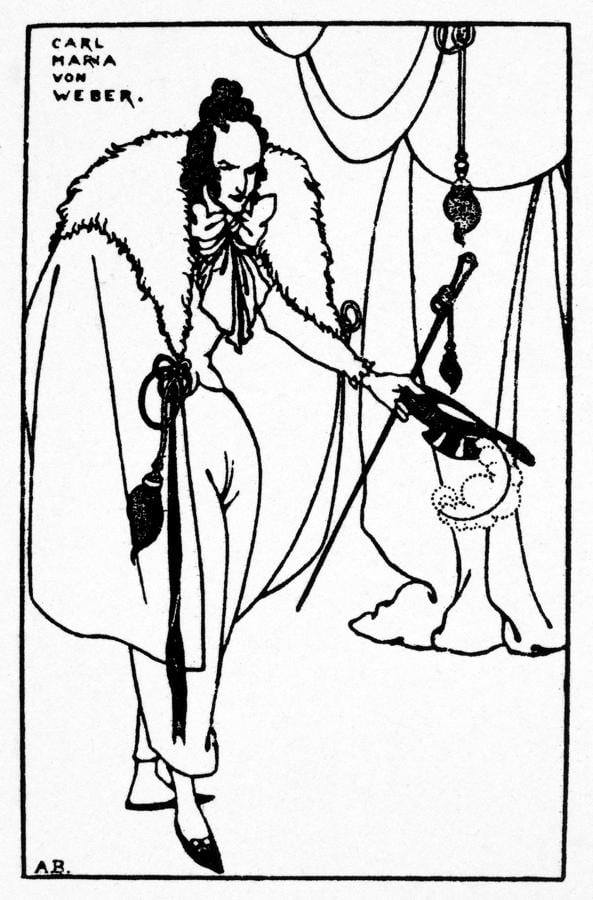
Once we’ve taken care of business, we can put our financial concerns to bed, and I’ll be on at 4:00 with a late afternoon/early evening of music made possible by YOU – including warm acknowledgements of the birthdays today of Johann Friedrich Fasch, Carl Maria von Weber, Ignaz Paderewski and Eugene Ormandy. Of course, there’s plenty more where that came from.
Bach may have died in 1750, but his music is alive and kicking, thanks to the generous support of our listener-members. Thanks so much for 37 years of WWFM – The Classical Network!
-
Fundraising Goal Achieved Thanks to You!
by
4 responses
Well, we made our goal and wrapped up fundraising around 1:00 this afternoon. Thank you again for being there for us for the past 37 years. It’s because of loyal contributors just like you that we are able to keep doing what we do best – that is to say, share the world’s great music – with the kind of passion and commitment you’ve come to expect from The Classical Network.
I hope you’ll join me this afternoon to reap the rewards of your generosity. We’ll celebrate the birthdays today of Johann Friedrich Fasch, Eugene Ormandy, Ignace Paderewski and Carl Maria von Weber, among others, from 4 to 7 p.m. EST.
All in all, a very nice mix, if I do say so myself, for an overcast November afternoon. Pat yourself on the back and cozy in for the kind of music you’ve made possible. Thank you again for keeping us strong at WWFM – The Classical Network and wwfm.org.
Hats off to our listener-members!
-
Ormandy’s Lost American Legacy Rediscovered
by
6 responses
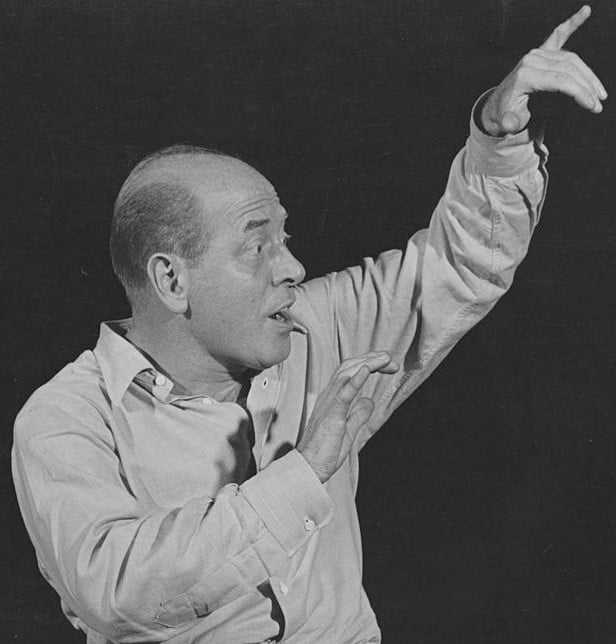
Eugene Ormandy was born Jenő Blau in Budapest in 1899. In 1927, he became a naturalized American citizen and wound up directing the Philadelphia Orchestra for 44 years.
In that capacity, he championed much contemporary music and works by his adopted countrymen – a fact eclipsed by his reputation as a superb interpreter of the 19th century classics.
In fact, much of his American legacy has dropped out of print. In the late 1990s, Albany Records attempted to rectify the situation by reissuing some of Ormandy’s recordings of lesser-heard American music. The series only made it to three volumes, but each one of them is a treasure.
This Sunday night on “The Lost Chord,” we’ll hear two selections from these invaluable anthologies. Both are by Pulitzer Prize winners whose music has sadly fallen out of fashion.
William Schuman was the very first recipient of the Pulitzer Prize for Music, in 1943, for his “Cantata No. 2, A Free Song.” At the height of his fame, he was also President of Lincoln Center. He was considered such an important figure in American culture, he was even brought on to “What’s My Line?” (Those were the days.)
We’ll hear Schuman’s “Credendum – Article of Faith,” composed in 1955. The work was written in response to the first ever commission by the U.S. government for a symphonic work.
Two years later, the Pulitzer was awarded to Norman Dello Joio, for his “Meditations on Ecclesiastes.” His symphonic suite “Air Power” was adapted from 22 individual scores composed for the CBS television series about the history of aviation. The series ran from November 1956 through the spring of 1957. (Dello Joio would collect his prize in April.) The individual sections were used to underscore segments on the early days of flight, with their barnstormers and daredevils, air battles and war scenes.
I hope you’ll join me for these rarely-heard recordings of American music. Ormandy flies American, on “All-American Ormandy,” this Sunday night at 10:00 EST, on WWFM – The Classical Network and wwfm.org.
William Schuman on “What’s My Line?” (1962):
“Air Power,” narrated by Walter Cronkite (1956):
-
Happy Birthday, Hindemith: Genius & Frenemy
by
2 responses
Who’s peekin’ out from under a stairway,
Calling a name that’s lighter than air?
Who’s bending down to give me a rainbow?
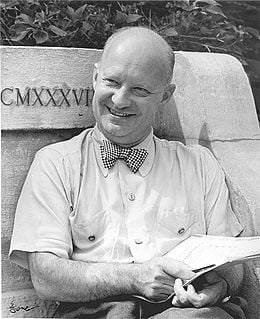
Everyone knows it’s Hindy.Today is the birthday of my best fiend, Paul Hindemith. Yes, you read that correctly. It’s not a typo. I don’t mind saying it: sometimes I loves him, sometimes I hates him. We are, in the parlance of the age, frenemies.
Paul Hindemith’s influence on 20th century music is incalculable. It’s difficult for me to think of any mid-century composer, especially of those active in the United States (Hindemith taught at Yale), that didn’t have their Hindemith moment. If they didn’t embrace serialism, that is. Sometimes they did both.
Is this a good thing? If it’s Norman Dello Joio, yes. If it’s Yehudi Wyner, not so much. (Sorry, Yehudi).
As is the case with most of us, there is no one Hindemith. People evolve over time. So there is the enfant terrible Hindemith, who delighted in upsetting the apple cart with foxtrots and sirens and grating harmonies. (He was denounced by Goebbels as an “atonal noisemaker.”) Then there was an equally subversive transformation, when Hindemith must have decided the best way to give the finger to fascism was to appeal directly to the people. The best revenge is writing well, and Hindemith began to write very well indeed. What’s more, he began to reach deeper.
A proponent of what he described as “Gebrauchsmusik,” or “utility music” – music for use, written for a purpose, often performance by amateurs (which one might say is a good thing) – he was kind of like a 20th century Telemann, spewing well-crafted music by the yard. But the price of such extraordinary productivity is that he often ran the risk of teetering into prolixity, and what we sometimes wind up with is an awful lot of limp noodles. Hindemith could be a real noodler. But when he was on, he was on, and some of the orchestral pieces, especially, can be glorious, thrilling, and even transcendent in their luminosity.
My personal breakthrough with this composer came with an album released in the late 1980s, on London Records, with Herbert Blomstedt and the San Francisco Symphony. Not only does it contain the most exciting recording of Hindemith’s “Symphonic Metamorphosis on Themes by Carl Maria Weber” I have ever heard – and that’s saying something, since it must be his most-recorded work – but it also introduced me to an unexpectedly moving piece called “Trauermusik” (“Mourning Music,” or “Funeral Music”).
On January 19, 1936, Hindemith, a violist, was in London to give the British premiere of his new concerto, “Der Schwanendreher.” A few minutes before midnight, King George V died. The concert was cancelled, but the BBC and conductor Sir Adrian Boult wanted to make use of Hindemith in whatever it was they decided to do in its place. The next morning, they set Hindemith up in a quiet office, with plenty of pencils and a stack of blank sheet music, and six hours later he emerged with a new concert piece, which he played the same night as part of a special memorial broadcast. That’s the kind of a composer Hindemith was.
Toward the end of the work Hindemith quotes a chorale by Johann Sebastian Bach, “Fur deinen Thron tret ich hiermet” (“Here I stand before Thy throne”). It was the composer’s great good fortune that the melody turned out to have added resonance, as it is widely recognized in England as “the Old 100th.” What could easily have been a mere occasional work, destined for a single performance and then lost to oblivion, actually turned out to be one of his most moving pieces.
Here is Hindemith that actually touches the heart. The violist is Geraldine Walther, then principal violist of the SFS, and later a member of the Takács Quartet. I had the pleasure to actually meet her once, after a Takács concert, to tell her just how much this recording has meant to me. (Sometime later, someone sent me an email in her name, claiming that she was stranded on an island and needed money to get home. But that’s another story.)
Okay, Hindemith, so you have a soul. You’ve shown me your humanity. Later, I caught his opera, “Mathis der Maler,” at New York City Opera. I even bought the t-shirt.
Prior to that, I remember, during my freshman year of college, my roommate had an LP of the cello sonatas, stowed among the debris packed solid beneath his bunk. It was the property of Easton Area Public Library. He was not the most unlikely person to have stolen the Hindemith cello sonatas – he was more the kind of guy who just didn’t return things to the library – but in an era when we were listening to an awful lot of Beethoven, this stuff was pretty heavy metal.
Here’s a worthwhile Hindemith piece I discovered as part of an extensive set of his orchestral works recorded by Werner Andreas Albert, who died last weekend – a Concerto for Woodwinds, Harp and Orchestra (1949). Note the quotation from Mendelssohn’s “Wedding March” in the last movement, a surprise for the composer’s wife. The premiere took place on their silver wedding anniversary.
Hindemith conducts his “Symphonia serena” (1946):
Kammermusik No. 1 (1921). I’m sure Goebbels didn’t like this one.
Happy birthday, Paul Hindemith. I’d gladly come to your party, but I’ve got my fingers crossed that the cake will be angel food, and not overbaked kugel.
PHOTO: He was a snappy dresser, too
Tag Cloud
Aaron Copland (93) Beethoven (95) Composer (114) Film Music (145) Film Score (143) Film Scores (255) Halloween (94) John Williams (195) KWAX (229) Leonard Bernstein (104) Marlboro Music Festival (125) Movie Music (160) Mozart (91) Opera (213) Philadelphia Orchestra (89) Picture Perfect (174) Princeton Symphony Orchestra (109) Radio (88) Ross Amico (244) Roy's Tie-Dye Sci-Fi Corner (290) The Classical Network (101) The Lost Chord (269) Vaughan Williams (105) WPRB (397) WWFM (881)
6 responses