
• Estonian Composers on The Lost Chord

    Estonian Composers on The Lost Chord

    by 

    in
    5 responses

    One needn’t vault the Baltic in order to enjoy tones from Estonia.

    This Sunday night on “The Lost Chord,” we’ll hear music by the so-called father of Estonian music, Heino Eller. Eller, born in Tartu in 1887, studied violin at the St. Petersburg Conservatory. He also studied law. For 20 years, he taught theory and composition at the Tartu Higher School for Music. In 1940, he became a professor of composition at the Tallinn Conservatory, where he remained until his death in 1970.

    Eller composed many beautiful tone pictures. We’ll hear his violin concerto, in a performance taken from a concert given in celebration of the composer’s 80th birthday.

    Among Eller’s pupils were Eduard Tubin, Arvo Pärt, and Lepo Sumera. Sumera was born in Tallinn in 1950. In his teens, he studied with Veljo Tormis; then, beginning in 1968, with Eller, at what was then the Tallinn State Conservatory. He went on to compose six symphonies, as well as many chamber and choral works.

    In the 1980s, he became interested in electro-acoustic music. He founded the Electronic Music Studio at the Estonian Academy of Music in 1995. He served as its director until 1999. Sumera died of heart failure in the year 2000, at the age of 50.

    His Symphony No. 4, subtitled “Serena Borealis,” was composed in 1992. Western ears may detect the influence of minimalist techniques, but it’s worthwhile to note that the folk tradition of Estonian runo songs, handed down orally, relies equally on repetition. And the Estonian nationalists were nothing if not in tune with their musical past.

    Finally, we’ll hear from Artur Kapp, who lived from 1878 to 1952. Like Eller, Kapp studied at the St. Petersburg Conservatory, where Rimsky-Korsakov was among his teachers. He himself became a professor at the Tallinn Conservatory, where he taught many notable Estonian composers, among them, his sons, Eugen and Villem. Kapp is regarded as the head of the Tallinn school of composition, a counterbalance to Eller, who was the head of the Tartu school.

    We’ll be listening to the finale from one of Kapp’s most enduring works, the oratorio “Job,” in a recording sent to me by the very generous Neeme Järvi (also born in Tallinn), while he was music director of the New Jersey Symphony Orchestra.

    I’ll share the wealth, on this hour of musical discoveries from Estonia. “Tallinn’s Got Talent,” this Sunday night at 10:00 EST, on WWFM – The Classical Network and wwfm.org.
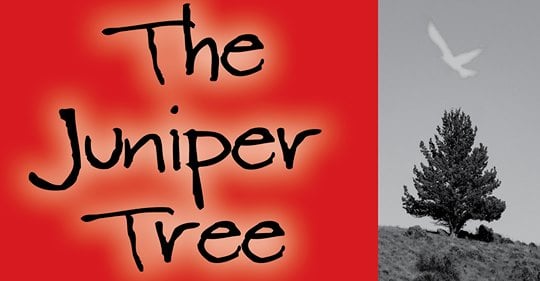

  • Juniper Tree Opera Stream Tonight!

    Juniper Tree Opera Stream Tonight!

    by 

    in
    7 responses

    Make room on your Sunday evening for an hour of decapitation, cannibalism, and supernatural vengeance by millstone.

    No, it’s not “60 Minutes.” The Cleveland Institute of Music Opera Theater is presenting Philip Glass and Robert Moran’s collaborative opera, “The Juniper Tree,” tonight at 7:30 EST.

    This grimmest of Grimm fairy tales has a little something for everyone. It was Maurice Sendak, who certainly knew a thing or two about wild things, that first suggested the subject. In perhaps the opera’s greatest irony, it is Moran who manages to find beauty, and even tenderness, at the heart of this black fable.

    “The Juniper Tree” was first performed at the American Repertory Theater, in Cambridge, MA, in 1985. Among the cast were Jayne West and the late Sanford Sylvan. Glass retained ownership of the opera and held back on releasing the recording until 2009. In the meantime, Moran encouraged fans to distribute their bootleg copies.

    CIM has been streaming this weekend’s performances, from a three-day run of an all-new production. I was unable to access last night’s performance, but I’ve got my fingers crossed for better luck tonight.

    The transmission will originate from a fixed camera situated at the rear of the hall, so the action may be a little distant, and some peripheral details in the side balconies lost, but here’s hoping story and music manage to retain their impact.

    Here’s a link to tonight’s livestream. Vimeo may require you to register, so be sure to do so in advance.

    https://livestream.com/cimmixonhall/junipertree110319

    Also, a printed program, with a colorful introductory note by Moran:

    https://www.cim.edu/sites/default/files/inline-files/The%20Juniper%20Tree_0.pdf

    Get out the TV trays for “The Juniper Tree.” The table is set tonight at 7:30 p.m.


  • Watch The Juniper Tree Opera Online

    by 

    in
    2 responses

    As a follow-up to my earlier post, regarding the Cleveland Institute of Music live stream of the Philip Glass-Robert Moran opera, “The Juniper Tree” – to be streamed again tonight at 7:30 EST on Vimeo – if you have trouble signing in, as I did yesterday, last night’s performance has been posted to CIM’s Facebook page. You can watch by clicking on the play button below.

    Here’s a link to the printed program, with synopsis and prefatory comments by Robert Moran:

    https://www.cim.edu/sites/default/files/inline-files/The%20Juniper%20Tree_0.pdf?fbclid=IwAR3RkD78c2smjNhFq_HeKueh33G-1VyMHIoILOiyp5PiOnOBZO9seEpzVzo


  • Wassenaer vs Dittersdorf Name Game

    Wassenaer vs Dittersdorf Name Game

    by 

    in
    One response

    Today’s Birthday Challenge:

    Whose name is more fun to say, Unico Wilhelm van Wassenaer or Carl Ditters von Dittersdorf?

    Wassenaer (1692-1766), the Dutch nobleman who composed his six “Concerti Armonici” on a whim, refused to have them published, until a couple of his friends twisted his arm. Wassenaer would condone it, barely, but only if his name was in no way connected with the material. Instead, the concertos would be attributed to violinist Carlo Ricciotti, who played in their first private performance, and dedicated to Wassenaer’s friend, Count Willem Bentick. A rumor circulated that the collection was actually the work of Giovanni Pergolesi, which is why, in 1920, a movement of the Concerto Armonico No. 2 wound up being used in Stravinsky’s ballet “Pulcinella” (allegedly on Pergolesi themes).

    Here’s how it sounds in the original:

    “…[T]hese concertos were published against my wishes,” Wassenaer wrote. “Some of them are tolerable, some middling, others wretched. Had they not been published, I would perhaps have corrected the mistakes in them, but other business has left me no leisure to amuse myself with them, and I would have caused their editor offence.”

    Dittersdorf (1739-1799) was one of the closest friends of Franz Joseph Haydn.

    He played first violin in a superstar string quartet that also included Haydn (second violin), Mozart (viola) and Dittersdorf pupil Jan Křtitel Vaňhal – a.k.a. Johann Baptist Wanhal (cello). Imagine being a fly on a wall at those performances, or even rehearsals! (Though wet blanket Michael Kelly, the Irish tenor who created Don Basilio and Don Curzio in Mozart’s “The Marriage of Figaro,” claimed the ensemble played well enough, but was nothing exceptional.)

    Among Dittersdorf’s enormous output, which includes some 120 numbered symphonies (it’s possible he may have composed 90 more), are twelve programmatic works inspired by Ovid’s “Metamorphoses.”

    Personally, I find more enjoyment in his chamber music. Here is his String Quartet No. 3 in G major.

    I’d never actually juxtaposed them before today, but of the two composers’ names, I’d have to say, it just tickles me to say “Carl Ditters von Dittersdorf.” How’s about you?

    Happy birthday, boys!


    PICTURED: Supercilious Wassenaer (left) and super-silly Dittersdorf


  • Wassenaer vs Dittersdorf Birthday Name Game

    Wassenaer vs Dittersdorf Birthday Name Game

    by 

    in
    One response

    Today’s Birthday Challenge:

    Whose name is more fun to say, Unico Wilhelm van Wassenaer or Carl Ditters von Dittersdorf?

    Wassenaer (1692-1766), the Dutch nobleman who composed his six “Concerti Armonici” on a whim, refused to have them published, until a couple of his friends twisted his arm. Wassenaer would condone it, barely, but only if his name was in no way connected with the material. Instead, the concertos would be attributed to violinist Carlo Ricciotti, who played in their first private performance, and dedicated to Wassenaer’s friend, Count Willem Bentick. A rumor circulate that the collection was actually the work of Giovanni Pergolesi, which is why, in 1920, a movement of the Concerto Armonico No. 2 wound up being used in Stravinsky’s ballet “Pulcinella” (allegedly on Pergolesi themes).

    Here’s how it sounds in the original:

    “…[T]hese concertos were published against my wishes,” Wassenaer wrote. “Some of them are tolerable, some middling, others wretched. Had they not been published, I would perhaps have corrected the mistakes in them, but other business has left me no leisure to amuse myself with them, and I would have caused their editor offence.”

    Dittersdorf (1739-1799) was one of the closest friends of Franz Joseph Haydn.

    He played first violin in a superstar string quartet that also included Haydn (second violin), Mozart (viola) and Dittersdorf pupil Jan Křtitel Vaňhal – a.k.a. Johann Baptist Wanhal (cello). Imagine being a fly on a wall at those performances, or even rehearsals! (Though wet blanket Michael Kelly, the Irish tenor who created Don Basilio and Don Curzio in Mozart’s “The Marriage of Figaro,” claimed the ensemble played well enough, but was nothing exceptional.)

    Among Dittersdorf’s enormous output, which includes some 120 numbered symphonies (it’s possible he may have composed 90 more), are twelve programmatic works inspired by Ovid’s “Metamorphoses.”

    Personally, I find more enjoyment in his chamber music. Here is his String Quartet No. 3 in G major.

    I’d never actually juxtaposed them before today, but of the two composers’ names, I’d have to say, it just tickles me to say “Carl Ditters von Dittersdorf.” How’s about you?

    Happy birthday, boys!


    PICTURED: Supercilious Wassenaer (left) and super-silly Dittersdorf


Tag Cloud

Aaron Copland (93) Beethoven (95) Composer (114) Film Music (145) Film Score (143) Film Scores (255) Halloween (94) John Williams (195) KWAX (229) Leonard Bernstein (104) Marlboro Music Festival (125) Movie Music (160) Mozart (91) Opera (213) Philadelphia Orchestra (89) Picture Perfect (174) Princeton Symphony Orchestra (109) Radio (88) Ross Amico (244) Roy's Tie-Dye Sci-Fi Corner (290) The Classical Network (101) The Lost Chord (269) Vaughan Williams (105) WPRB (397) WWFM (881)

DON’T MISS A BEAT

Receive a weekly digest every Sunday at noon by signing up here


RECENT POSTS