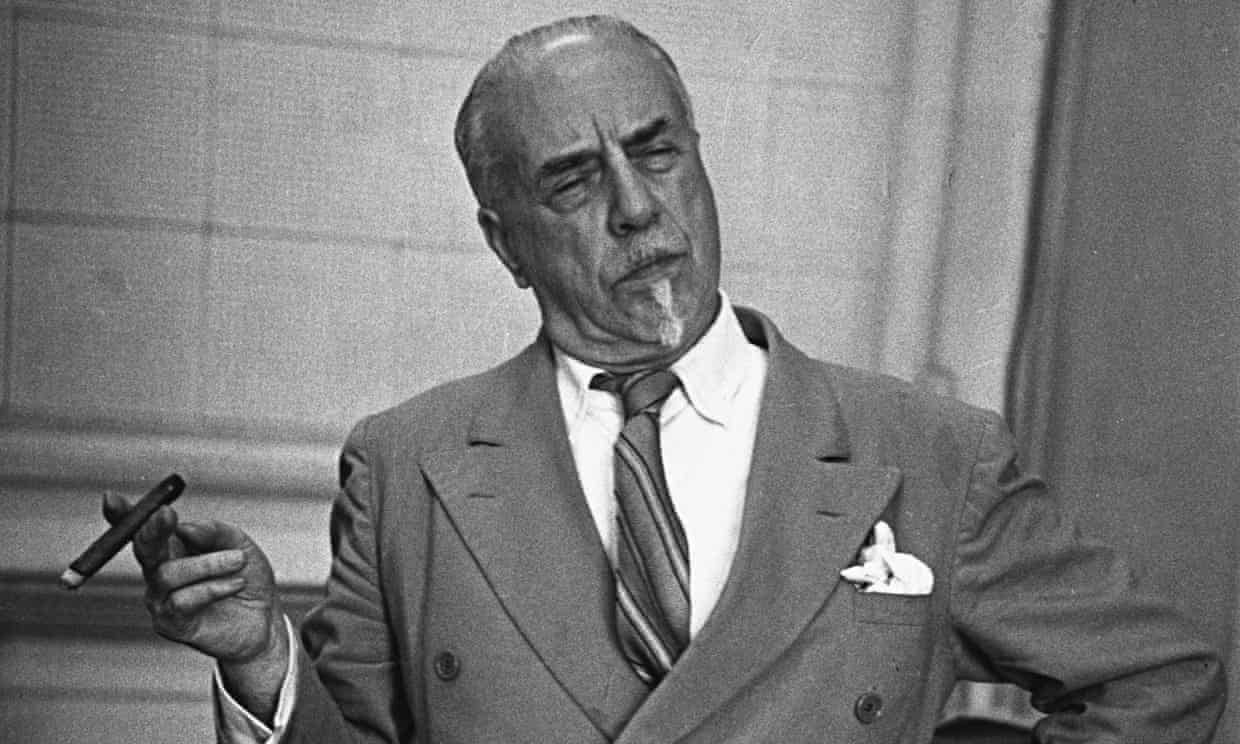
Sir Thomas Beecham was championing Handel before it was cool.
At a time when most people’s knowledge of the composer’s large-scale vocal works began and ended with “Messiah,” Beecham was dipping into the operas and polishing up the oratorios for the delectation of a new age. He defended these curations and modifications, stating that “without some effort along these lines, the greater portion of [Handel’s] magnificent output will remain unplayed, possibly to the satisfaction of drowsy armchair purists, but hardly to the advantage of the keenly alive and enquiring concertgoer.”
Experience the vitality of Beecham’s beautiful Handel realizations this week on “The Lost Chord.” That’s “Handeling Beecham,” this Sunday night at 10:00 EDT, on WWFM – The Classical Network and wwfm.org.
In the run-up to Ron Howard’s documentary about Luciano Pavarotti (release date: June 7), I got to thinking about “Yes, Giorgio” (1982). The most charismatic tenor of his day made his non-operatic, big-screen debut in this Franklin J. Schaffner-directed film. You know, the same Franklin J. Schaffner who directed “Patton?”
Franklin, you magnificent bastard, I saw your movie…
Here’s the premise: Operatic superstar Giorgo Fini (Pavarotti) is on tour in the U.S., when the unthinkable happens – he loses his voice! Naturally his manager engages a throat specialist, played by Kathryn Harrold (Giorgio thinks she is a nurse, ha ha), leading to much risible “repartee.” Not at all believably, the two fall in love. But of course there are complications. Giorgi IS Italian, after all.
Okay, so the premise is creaky. Is there any opera? Oh yes there is, including Luciano, as Calaf, belting out “Nessun dorma” at the peak of his powers. But to get there you have to slog through countless scenes of Pavarotti, with a face as open and as ingratiating as that of a golden retriever, trying to compensate for a horrible script by charming the socks off everyone in the room. Let’s face it: he may have had a voice from the heavens, but Pavarotti is no dramatic actor. Fortunately, there is also comic relief, courtesy of “Green Acres’” Eddie Albert (just to keep it real). And not to worry, there is a pie fight.
I guess there was no room in the $21 million budget – or his schedule – for John Williams to provide a complete music score (Michael J. Lewis does the dishonor), but Williams does contribute an Oscar-nominated song, “If We Were in Love,” with lyrics by the legendary Alan & Marilyn Bergman. Williams is in his element, and turns in a buoyant set-piece. In theory, this should have been a real showstopper.
Alas, for all his lyrical gift, Williams is not a song composer, and even with (or perhaps because it is) Pavarotti singing, it turns out to be kind of embarrassing. It would be perfectly fine if it weren’t a song, but let’s face it, the balloon ride over Napa Valley ranks up there – or down there, as it were – with Margot Kidder reciting poetry to Superman.
This was the same year as “E.T.,” by the way.
Ironically, the original soundtrack is now a collector’s item. The belated domestic CD reissue was shorn of the Oscar-nominated song. Williams, the Bergmans, and the Pavarotti estate must want this one buried deep.
“Yes, Giorgio” sank like a stone. Taking into account promotional and distribution costs, it lost MGM an estimated $45 million. Siskel and Ebert selected it as one of the worst movies of the year, and the film was nominated for multiple Razzies. Ebert claimed that Pavarotti utters the line, “I will sing this aria just for you!” a dozen times. The film opens with the following dedication: “This story is dedicated to lovers everywhere.” Oy vey.
There’s so much talent squandered on this movie that I could easily be fooled into thinking I would like to watch it again. This is the most dangerous kind of bad.
No, Giorgio!
I am, however, very much looking forward to seeing Ron Howard’s documentary.
With Passover and Easter right around the corner, we’re entering the peak season for Bible movies. This week on “Picture Perfect,” it’s an hour of music from epics inspired by the Old Testament – including “Samson and Delilah” (Victor Young), “Solomon and Sheba” (Mario Nascimbene), “Sodom and Gomorrah” (Miklós Rózsa) and “The Ten Commandments” (Elmer Bernstein).
We begin and end with two Cecil B. DeMille productions. DeMille could always be counted on to give his audience a good show. Both “Samson” and “The Ten Commandments” feature sultry temptresses, violent, bare-chested men, and plenty of austere moralizing. The climactic special effects in both films are still sublime.
Tyrone Power was originally cast as Solomon in King Vidor’s “Solomon and Sheba.” However, he died of a massive heart attack during shooting (at the age of 44), paving the way for Yul Brynner to assume the role of the wise king. Brynner, of course, would later become DeMille’s pharaoh Rameses. With Gina Lollobrigida as the Queen of Sheba, you know there has to be an orgiastic dance.
Miklós Rózsa characterized “Sodom of Gomorrah” as “an intriguing subject which developed into a bad picture,” and most critics agreed. Any film that casts Stewart Granger as Lot should be taken with a pillar of salt. Rózsa determined not to score any more Biblical epics after “Sodom,” though his music is nothing to be ashamed of. It possesses that classic Rózsa epic sound, much beloved thanks to his work on “Quo Vadis,” “Ben-Hur” and “King of Kings.”
Chariots! Tunics! Histrionic acting! It’s going to be epic, this Friday evening at 6:00 EDT, on WWFM – The Classical Network and wwfm.org.
PHOTOS: Victor Mature’s stuffed lion vs. Charlton Heston’s cotton candy beard
It was on this date in 1770 that the Mozarts, father and son, attended a Holy Week service in Rome. Young Wolfgang, then only 14, was intrigued by what he heard.
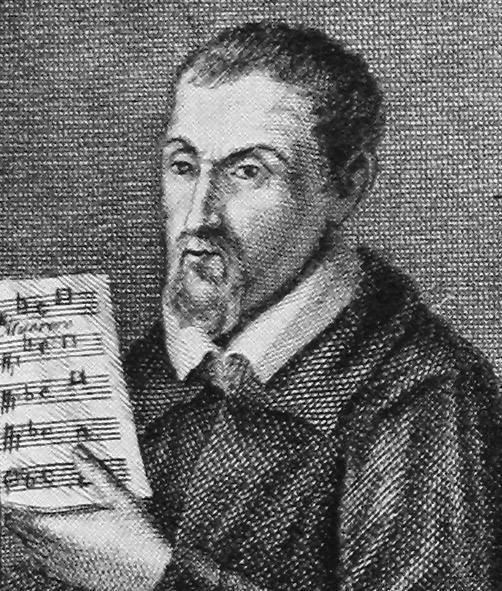
Gregorio Allegri composed his “Miserere mei, Deus” – or “Miserere,” for short, a setting of Psalm 51 – in the 1630s. The piece was designed for exclusive performance in the Sistine Chapel, as part of the Tenebrae service of Holy Wednesday and Good Friday.
Allegri’s conception was a striking one, for two choirs, one intoning a simple chant, and the other, spatially separated, providing ornamentation. The pièce de résistance was the inclusion of a stratospheric top C, which has the effect of making the “Miserere” one of the most haunting works in the choral literature of the late Renaissance.
The Vatican, realizing it had a good thing, forbade performance of the piece outside its walls or copies of the score to leave the premises, under threat of excommunication. But Mozart couldn’t help himself. A couple of hours later, he copied the work down from memory. Not long after, he handed it off to author and music historian Charles Burney, who published it without delay.
Mozart was summoned before the Pope, but rather than being excommunicated, he was showered with praise for his feat of musical genius, and the ban on the “Miserere” was lifted.
But did Mozart ever actually hear that famous “top C?”
In 1831, Mendelssohn made his own transcription of the “Miserere,” but, for whatever the reason, the performance he heard was sung a fourth higher than intended.
Leap ahead half a century to the first edition of “Grove’s Dictionary of Music and Musicians,” published in 1881. An editorial error resulted in a passage from Mendelssohn’s transcription being incorporated into a musical example used to illustrate one of the entries. The article was widely reproduced, until Grove’s error came to be established as the preferred version of the “Miserere.”
A good thing, too! I wouldn’t trade that top C for the world.
Here is Allegri’s “Miserere,” performed by the ensemble Tenebrae:
Franz Liszt also made an arrangement, which is most frequently encountered on the organ – sometimes the piano – but apparently he also orchestrated it. His version cleverly juxtaposes the “Miserere” with Mozart’s own “Ave verum corpus.”
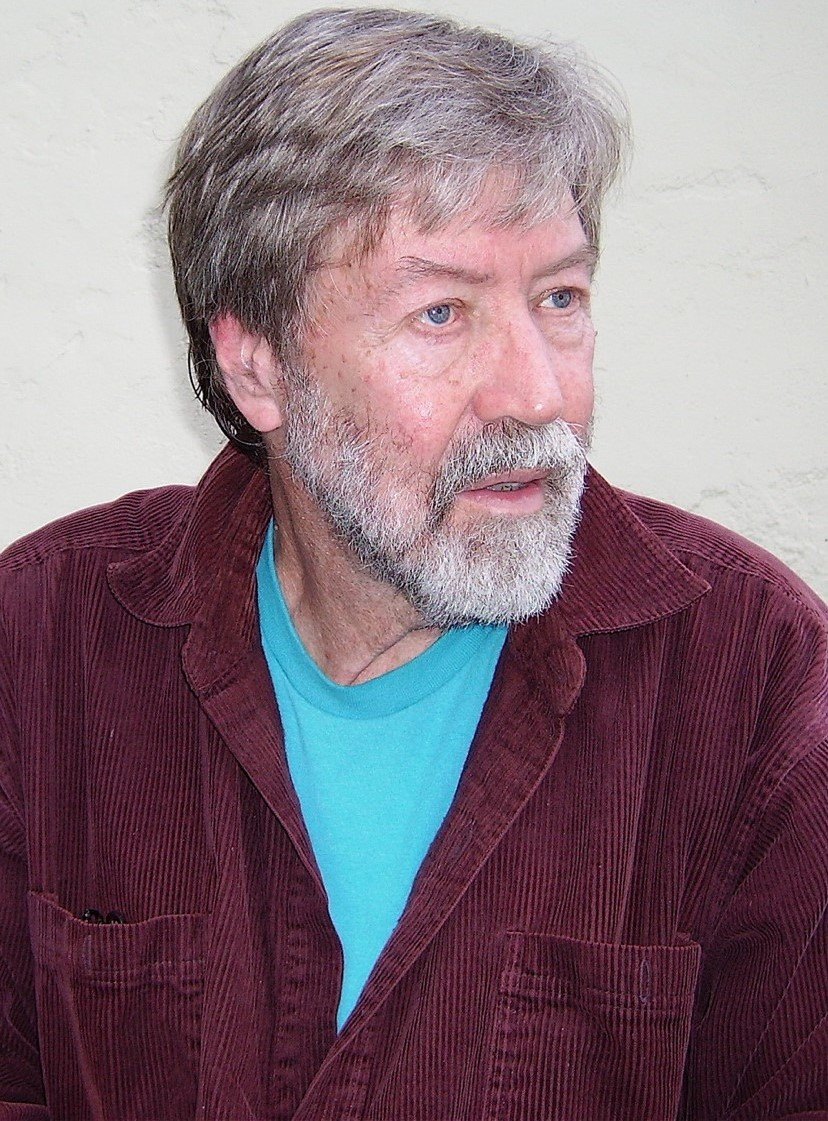
I suppose it’s no secret – there’s an 80th birthday concert coming up at Bargemusic in Brooklyn tomorrow night – but it sure as hell stunned me to learn that Andrew Rudin is now four score. In addition to being a very fine composer, the evergreen Rudin, of course, was once a regular presence on the airwaves as a music host at WWFM.
A former student of George Rochberg, Rudin writes uncompromising music of great integrity, yet manages to communicate with the listener without pandering. Nowhere is that more evident than in his attractive Piano Concerto, a recording of which I will include, among my featured works today, between 4 and 6 p.m. EDT, on The Classical Network. If you like Bartók or Ravel, give this one a shot.
I’ll also mark the birthday anniversaries of Eugen d’Albert, Yefim Bronfman, Jorge Mester, and Victor de Sabata.
There’s nothing quite like Schubert for a good palate cleanser. Wait a minute, that’s sherbet I’m thinking of. At any rate, come 6:00, enjoy an all-Schubert hour on the next “Music from Marlboro.”
Among the melancholy masterpieces churned out during Schubert’s remarkably productive final year, the Piano Trio No. 1 in B-flat major, D. 898, actually comes across as comparatively light-hearted.
We’ll hear it performed at the 2008 Marlboro Music Festival by pianist Jonathan Biss, violinist David Bowlin, and cellist Marcy Rosen. Biss, who is on the faculty of the Curtis Institute of Music in Philadelphia, was recently named co-artistic director (with Mitsuko Uchida) of Marlboro Music.
Finally, we’ll turn to what may have been the last music Schubert ever wrote. “The Shepherd on the Rock,” D. 965, was completed barely a month before the composer’s death at the age of 31. This multi-sectional “lied” traverses a broad range of emotions, as a shepherd listens to echoes from the valley below, grapples with feelings of loneliness, and finds hope in the prospect of Spring and renewal.
Marlboro legends, soprano Benita Valente, clarinetist Harold Wright, and pianist Rudolf Serkin, set down a classic recording of the work in 1960. We’ll hear a live performance captured at Marlboro nine years later.
In all, it will be a playlist in celebration of births and renewals, from 4 to 7 p.m. EDT, on WWFM – The Classical Network and wwfm.org.
Marlboro School of Music and Festival: Official Page

3 responses