• Thanksgiving Movies Celebrating American Ideals

    Thanksgiving Movies Celebrating American Ideals

    by 

    in
    6 responses

    There’s more to Thanksgiving than just turkey and football. This week on “Picture Perfect,” we count our blessings and aspire to do better, with music from movies reflective of what’s best in human nature and most admirable in the American character.

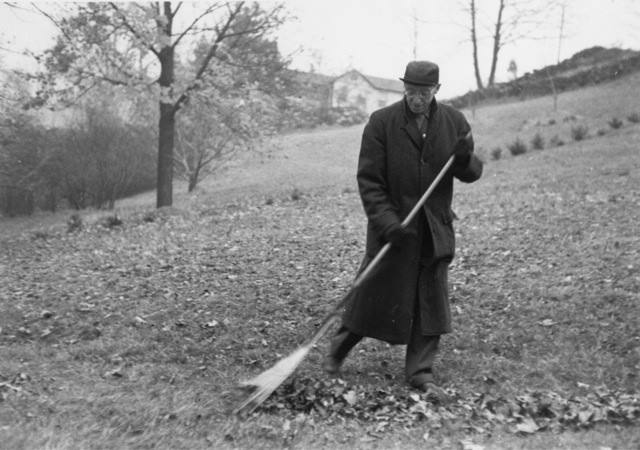
    Aaron Copland’s work on “The Cummington Story” (1945), a semi-documentary produced by the Office of War Information, underscores the gradual acceptance of European war refugees into a cautious but fundamentally decent New England community. The music is pure Americana, with some of the material later finding its way into Copland’s Clarinet Concerto and “Down a Country Lane.”

    “Field of Dreams” (1989) is one of those rare films that has the ability to reduce manly men – even those without father issues – to a pool of tears. Phil Alden Robinson’s superior adaptation of W.P. Kinsella’s novel, “Shoeless Joe,” is a male wish-fulfillment fantasy, in which a man finds redemption, and a new understanding of his father, in the enchanted cornfields of America’s heartland. And it’s all brought about courtesy of America’s pastime, baseball. The evocative score, much indebted to Copland, is by James Horner.

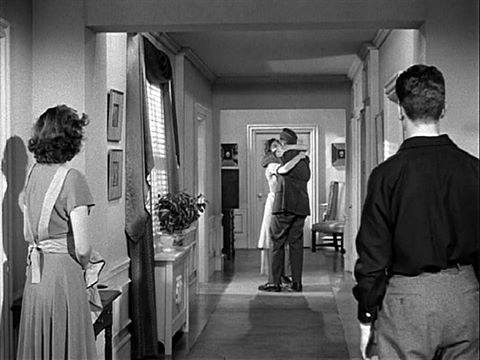
    “The Best Years of Our Lives” (1946) is one of the great American classics. This touching film tells the tale of the three WWII veterans struggling to readjust to civilian life. It isn’t easy, but with the support of family and friends, there’s plenty of hope for the future. Hugo Friedhofer wrote the Academy Award-winning score, earning the film one of its seven Oscars. The orchestrations were by Copland protégé (and composer of “The Big Country”) Jerome Moross.

    Finally, Daniel Day-Lewis elevated Steven Spielberg’s “Lincoln” (2012) to greatness with one of the most uncanny performances ever captured on film. Day-Lewis’ gentle but shrewd Man of Destiny would go to any lengths to hold the country together. John Williams tapped into America’s proud musical heritage, clearly influenced by Copland and Ives, to create a score of stirring nobility.

    I hope you’ll join me as we give thanks for family, community and country on “Picture Perfect,” music for the movies, this Friday evening at 6:00 EST, on WWFM – The Classical Network and at wwfm.org.


    And thank you, YouTube, for making “The Cummington Stoy” available online!

    Watching it again, it’s interesting to reflect on what an influence, for good or ill, media and government have had in shaping the popular consciousness.

  • Rachel Barton Pine on The Classical Network

    Rachel Barton Pine on The Classical Network

    by 

    in
    5 responses

    When you tune in to The Classical Network this afternoon at 4:00 EST, you’ll be able to enjoy a conversation with Rachel Barton Pine, Violinist. Pine will be a guest of the Princeton Symphony Orchestra this Sunday, when she appears as the soloist in Niccolò Paganini’s Violin Concerto No. 1. The concert will take place at Princeton University’s Richardson Auditorium in Alexander Hall. Also on the program will be works of Leoš Janáček and Igor Stravinsky. Pine will tell us a little more about the concert, her insights, and her work promoting music by Black composers, both through her foundation and a new recording on the Cedille Records label.

    We’ll round out the hour with a recording on Boston Records of Princeton Symphony music director Rossen Milanov conducting a performance of Reinhold Glière’s Harp Concerto, with Gretchen Van Hoesen, principal harpist of the Pittsburgh Symphony Orchestra.

    At 8:00 tonight, Carl Hemmingsen will host a broadcast concert with Milanov conducting the Princeton Symphony. Guest soloist Simone Dinnerstein will perform the Keyboard Concerto No. 7 by Johann Sebastian Bach and the Piano Concerto No. 3, a PSO co-commission, by Philip Glass. The program will also include works by Mason Bates and Maurice Ravel.

    In matters unrelated to the PSO, it’s also the birthdays today of Paul Hindemith, Antipodean colossus Alfred Hill, and neglected Baroque master Guillaume Dumanoir. We’ll celebrate with some of their music, and more, in the 5:00 hour.

    At 6:00, we’ll turn our attention to music for the silver screen, as we do every Friday, on “Picture Perfect.” This week, we’ll anticipate Thanksgiving with film scores by Aaron Copland, James Horner, Hugo Friedhofer, and John Williams.

    It’s a veritable cornucopia! Give thanks for variety in music. Make us your horn of plenty, at WWFM – The Classical Network and wwfm.org.


  • Cartoon Conducting Myths Debunked Leopold The Maestro of Cartoons

    Cartoon Conducting Myths Debunked

Leopold The Maestro of Cartoons

    by 

    in
    3 responses

    Five conducting myths perpetuated by cartoons:

    http://drneid.blogspot.com/2013/10/5-conducting-myths-perpetuated-by.html

    BONUS…

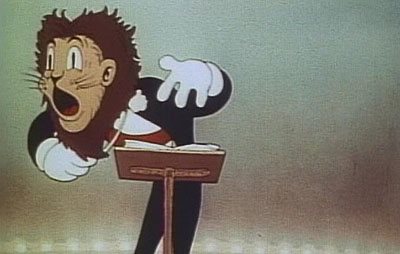
    “Leopold!”


  • Roy Clark Hee Haw Star Dead at 85

    Roy Clark Hee Haw Star Dead at 85

    by 

    in
    3 responses

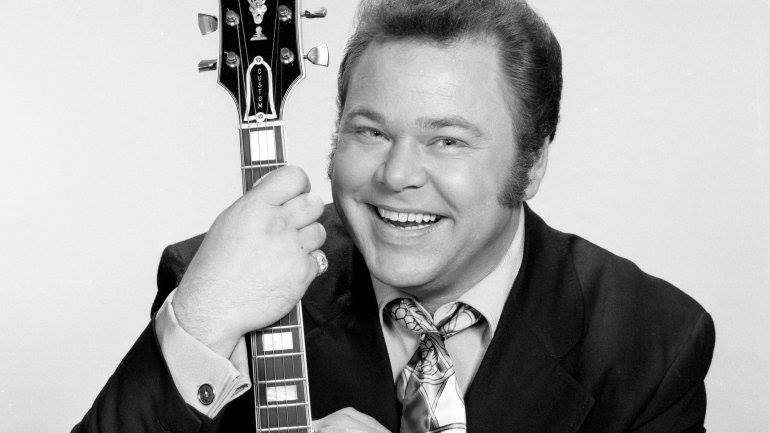
    Roy Clark has died at 85.

    https://www.msn.com/en-us/music/news/roy-clark-country-guitar-virtuoso-hee-haw-star-has-died/ar-BBPKktv?ocid=wispr

    By some bizarre coincidence, this is my second brush with “Hee Haw” today. The other was a reference to Junior Samples in this classic SCTV sketch (just to give you some insight into my unorthodox working methods). The reference is at around the 5:30 mark, but it’s worth watching the whole thing. Classic SCTV – with John Candy as slap-happy Cognac.

    https://www.youtube.com/watch?v=KASjyIqD9ME

    Then listen to Roy Clark play Ernesto Lecuona’s “Malagueña.”


  • Copland’s Appalachian Spring: A Ballet’s Journey

    Copland’s Appalachian Spring: A Ballet’s Journey

    by 

    in
    One response

    One might say it’s a little cool for spring. But when Aaron Copland came to write his magnum opus, he wasn’t thinking of spring or even the Appalachia, for that matter. What he had to work with were a series of impressions from Martha Graham. In fact, while composing the music, he thought of the project simply as “Ballet for Martha.”

    This week on “Music from Marlboro,” we’ll celebrate Copland’s birthday with a suite from this most durable of American ballets, since recognized as “Appalachian Spring.”

    It was Graham who came up with the title, well after Copland had finished. A phrase in a poem by Hart Crane had caught her fancy. When Copland asked her if the ballet had anything to do with the poem, Graham said, “No, I just liked the title and I took it.” Yet, as Copland loved to relate, people were always coming up to him and saying, “Mr. Copland… when I hear your music I can just see the Appalachians and I can just feel spring.” (FUN FACT: In Crane’s poem, “spring” isn’t even seasonal; it refers to a source of water.)

    Graham, every bit as concerned as Copland with forging a uniquely American art, had envisioned a ballet set during the Civil War. In her correspondence with the composer, she was quite specific in the moods she wished to evoke.

    By the time she came to choreograph the piece, Graham decided on a scenario built around the courtship and wedding of a young couple in a western Pennsylvania community in the early 19th century. One of the original dancers, Pearl Lange, remembered, “The first day we heard the music, it was like the sun spread over the floor.”

    All the themes are Copland’s own, except of course for “Simple Gifts,” the Shaker hymn that forms the basis for a series of variations at the work’s climax.

    “Appalachian Spring” was given its first performance at the Library of Congress on October 30, 1944. On V-E Day, 1945, the work was awarded the Pulitzer Prize for Music. We’ll hear it performed this evening in its original guise, for a chamber ensemble of thirteen instruments, from the 2006 Marlboro Music Festival.

    We’ll preface that with music by Heitor Villa-Lobos. In parallel with Copland’s experiments to the north, Villa-Lobos made a conscious effort in the late ‘30s to embrace a more populist style. The sixth of his seventeen string quartets was composed in Rio de Janeiro in 1938. The work received its first performance there on November 30, 1943. The quartet incorporates elements of Brazilian folk and popular music. At the same time, the composer is not at all bashful about his debt to the works of Franz Joseph Haydn.

    We’ll hear a performance of Villa-Lobos’ String Quartet No. 6, from the 2007 Marlboro Music Festival, featuring violinists Celeste Golden and Lucy Chapman, violist Kyle Armbrust, and cellist Wendy Law.

    It’s music from the Americas on this week’s “Music from Marlboro,” Wednesday evening at 6:00 EST, on WWFM – The Classical Network and wwfm.org.

    Marlboro School of Music and Festival: Official Page


    PHOTO: Copland, feeling a little nostalgic for that Appalachian spring


Tag Cloud

Aaron Copland (93) Beethoven (95) Composer (114) Film Music (145) Film Score (143) Film Scores (255) Halloween (94) John Williams (195) KWAX (229) Leonard Bernstein (104) Marlboro Music Festival (125) Movie Music (160) Mozart (91) Opera (213) Philadelphia Orchestra (89) Picture Perfect (174) Princeton Symphony Orchestra (109) Radio (88) Ross Amico (244) Roy's Tie-Dye Sci-Fi Corner (290) The Classical Network (101) The Lost Chord (269) Vaughan Williams (105) WPRB (397) WWFM (881)

DON’T MISS A BEAT

Receive a weekly digest every Sunday at noon by signing up here


RECENT POSTS