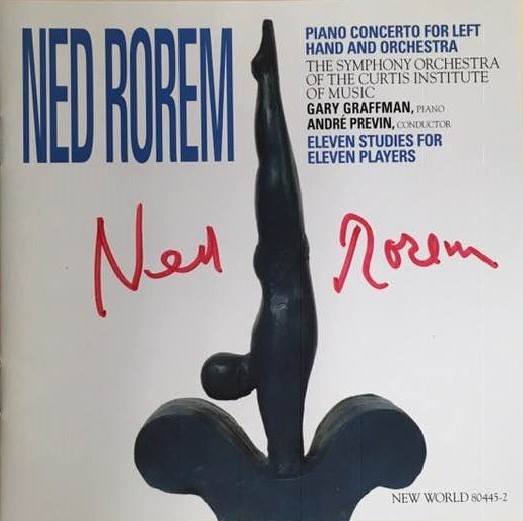
Celebrating Ned Rorem at 95 – and Gary Graffman at 90 – coming up in the 2:00 hour EDT, on WWFM – The Classical Network and wwfm.org!
-
Ned Rorem Gary Graffman Birthday Broadcast
by
-
Franz Liszt Underrated Genius Radio Tribute
by
5 responses
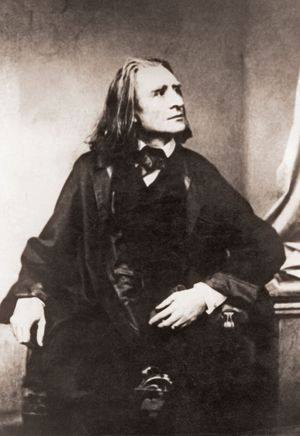
He is one of history’s most influential and undersold composers.
A champion of program music (music intended to express extramusical ideas), the inventor of the symphonic poem, a pioneer of structural innovation, and an explorer of strange new harmonies, Franz Liszt seldom gets the credit he deserves. By contrast, a composer like Richard Wagner (Liszt’s son-in-law) is revered for the “Tristan chord,” a kind of shot-heard-‘round-the-world that is said to have changed music. It’s seldom noted that it was but one of the ideas Wagner “borrowed” from Liszt.
As a conductor, Liszt’s energetic promotion of composers like Hector Berlioz and Wagner – then a political fugitive – marred with scandal and intrigues his tenure at the Weimar court. For his pains, he was frequently attacked by critics, derided by his peers, and undercut by his own showmanship.
No one seems to contest that he was one of the most remarkable pianists who ever lived, but the assessment is often tempered by charges of vulgarity, of crass pandering to sensation and to the mob.
Liszt played benefit concerts for victims of flood and fire, as well as for political refugees, spearheaded the creation of a monument to and festival for Beethoven in Bonn, never charged a fee for his lessons to his many pupils, and selflessly promoted the works of others, including (beside Berlioz and Wagner) Grieg, Smetana, Debussy, Saint-Saëns, Fauré, and Borodin.
This is the thanks he gets?
At the very least, I think he deserves three hours of airplay on his birthday. I hope you’ll join me this afternoon for a mix of piano and orchestral works, choral music and lieder, and transcriptions and fantasies of famous works by other composers.
It will be an all-Liszt playlist, from 4 to 7 p.m. EDT, on WWFM – The Classical Network and wwfm.org.
-
WWFM Asks: What Makes Us Unique?
by
3 responses
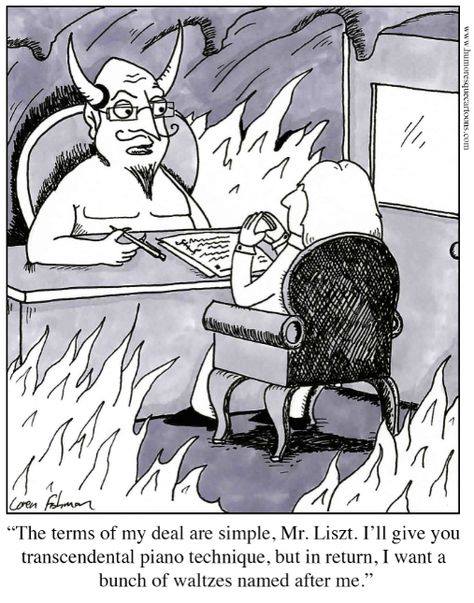
A regular WWFM listener shared this with the station during this afternoon’s celebration of the birthday of Franz Liszt. I thought you might enjoy it.
Don’t forget, we’re looking for you to share your personal observations on what makes us unique. Can you “Hear the Difference?”
As we move toward our Fall Membership Campaign, we’re asking you, our listeners, to take a moment to tell us exactly what it is that you love about WWFM, and what it is that makes us stand apart.
You can send us your thoughts by heading over to the station website at wwfm.org and clicking on the “Hear the Difference” box, at the upper right corner of the screen. Type your comments into the box, then hit submit. We’ll share them later this week, as we encourage others to step up and join you in support of the great – and unique – classical music programming we provide every day.
If your membership is up for renewal, please take a moment to continue your commitment by clicking on “donate.”
You don’t have to sell your soul for great music. Your financial support is all we require. Thank you for doing your part to sustain the music we all love, on WWFM – The Classical Network.
-
Liszt and Friends Collaborative Classics

by
7 responses
Sometimes even Romantic geniuses can use an extra hand.
This Sunday night on “The Lost Chord,” on the eve of the anniversary of the birth of Franz Liszt (born October 22, 1811), we’ll have several works in which Liszt was aided and abetted by his peers.
While it’s true that, early on, Liszt possessed a degree of insecurity over his ability to orchestrate – after all, he had been largely a “keyboard” composer, enlisting the aid of pupils like Joachim Raff and Franz Doppler during his years as a conductor in Weimar – Liszt quickly mastered the art himself and set about revising every bar of his earlier orchestral compositions, stamping them very much with his own distinctive voice.
The story behind Liszt’s “Concerto in the Hungarian Style,” however, is quite a different matter.
German pianist Sophie Menter studied with Liszt in Weimar, from 1869. Her gift was such that Liszt dubbed her “the greatest pianist of her day.” He admired her “singing hand” and called her his “only legitimate daughter as a pianist.” George Bernard Shaw compared her favorably to Paderewski. She was by Liszt’s side in Bayreuth when he died in 1886.
Menter taught at the St. Petersburg Conservatory between 1883 and 1887. There, she became friendly with Tchaikovsky and convinced him to orchestrate a piano concerto she said she had written to showcase her talents as a performer. Tchaikovsky did so and also dedicated the orchestral score of his own “Concert Fantasy” to her.
What he didn’t realize – and what is now widely believed (according to Menter, who confided it to a friend and fellow Liszt pupil, Vera Timanoff) – is that the piece was actually written, at least in part, by Liszt himself. Had Tchaikovsky known, he may very well have torn up the manuscript. He had come to loathe Liszt, and was particularly disgusted by Liszt’s transcription of the Polonaise from “Eugene Onegin.” But the truth – if truth it be – didn’t emerge, for nearly a hundred years, and Tchaikovsky conducted the first performance of the work in Odessa in 1893.
Roll over Beethoven, tell Tchaikovsky the news…
Alongside this colorful concerto by Menter’s mentor, we’ll also hear “The Black Gondola” (orchestrated by John Adams about a century after Liszt’s death); “Hexameron,” a titanic set of piano variations with contributions from six virtuoso superstars of the 1830s, including Liszt, Carl Czerny, Sigismond Thalberg, and Frederic Chopin; and a selection from the ballet “Apparitions,” engineered in 1936 by Constant Lambert and Gordon Jacob.
Liszt gets by with a little help from his friends, on “An Assist for Liszt,” this Sunday night at 10:00 EDT, on WWFM – The Classical Network and wwfm.org.
-
Happy Birthday Charles Ives A Musical Celebration
by
5 responses
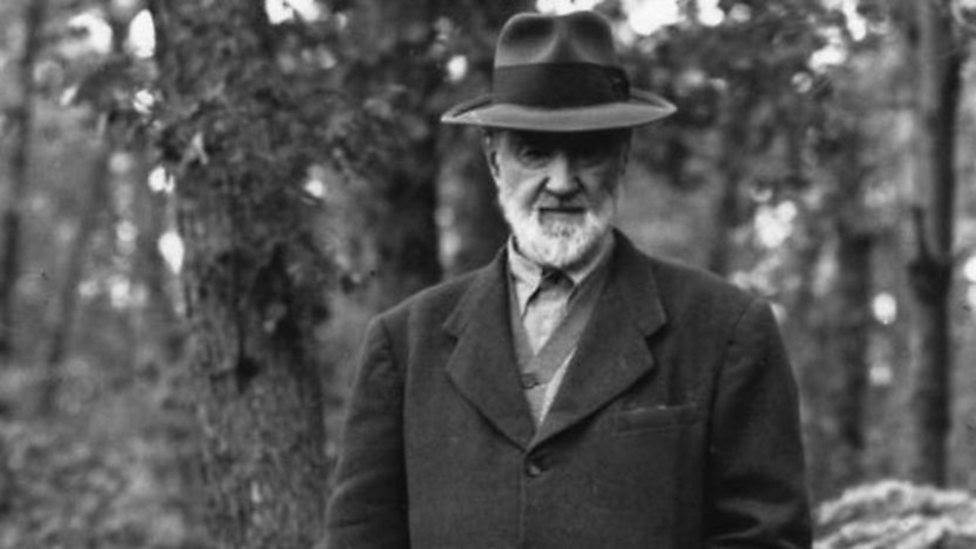
Happy birthday, Charles Ives!
Ives’ “Hallowe’en” for string quartet and piano (though I miss the big drum):
https://www.youtube.com/watch?v=NVnU4t5hMI4
Leonard Bernstein on the Symphony No. 2:
My preferred recording of the symphony, so beautiful (though not always entirely accurate, in regard to Ives’ intentions), with Bernstein and the New York Philharmonic in 1960.
The Yale-Princeton Football Game:
Ives sings!
Tag Cloud
Aaron Copland (93) Beethoven (95) Composer (114) Film Music (145) Film Score (143) Film Scores (255) Halloween (94) John Williams (195) KWAX (229) Leonard Bernstein (104) Marlboro Music Festival (125) Movie Music (160) Mozart (91) Opera (213) Philadelphia Orchestra (89) Picture Perfect (174) Princeton Symphony Orchestra (109) Radio (88) Ross Amico (244) Roy's Tie-Dye Sci-Fi Corner (290) The Classical Network (101) The Lost Chord (269) Vaughan Williams (105) WPRB (397) WWFM (881)
13 responses