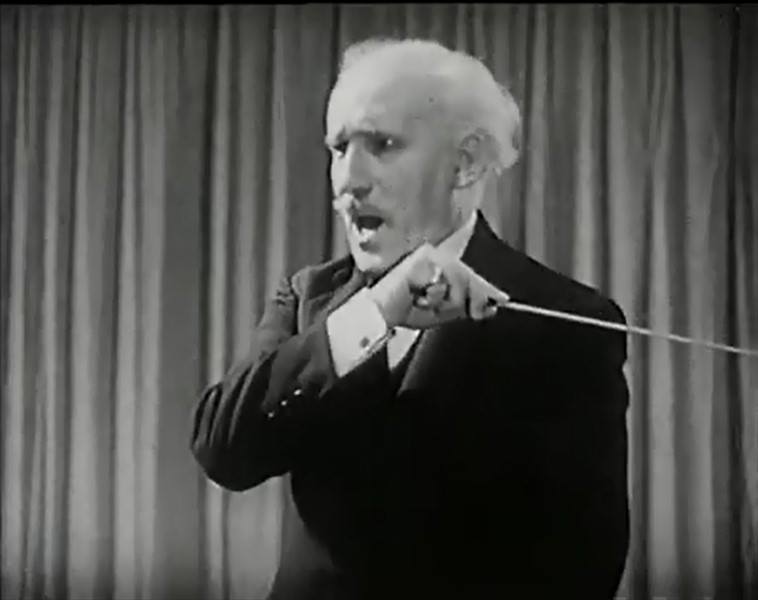
Feeling a little draggy this morning? Arturo Toscanini will get you going with the overture to Verdi’s “La forza del destino.”
Not for the faint of heart!
by
Feeling a little draggy this morning? Arturo Toscanini will get you going with the overture to Verdi’s “La forza del destino.”
Not for the faint of heart!

by
On this week’s “Music from Marlboro,” we’ll be doing some real Channel surfing – the English Channel, that is – with two works by British composers who were steeped in cross-cultural currents.
Ralph Vaughan Williams studied in Paris with Maurice Ravel for three months in 1907-08. Ravel took few pupils, but he said of Vaughan Williams, “he is my only pupil who does not write my music.” For his part, Vaughan Williams credited Ravel with helping him to overcome a heavy Germanic influence. Ravel had the effect of lightening the textures in Vaughan Williams’ music and sharpening his focus.
Vaughan Williams’ “Phantasy Quintet” of 1912 was one of numerous works commissioned from England’s great composers by one Walter Wilson Cobbett, a businessman and amateur musician whose dual passions were chamber music and music of the Elizabethan era. (“Phantasy” was Cobbett’s preferred spelling.) The quintet is full of Tudor inflections and stamped by Vaughan Williams’ tell-tale love of folk music. The composer doubles his violas, and the instrument is heard to great effect throughout the piece. We’ll hear a performance from the 1975 Marlboro Music Festival, with James Buswell and Sachiko Nakajima, violins; Philipp Naegele and Caroline Levine, viola; and Anne Martindale, cello.
Sir Arnold Bax composed his evocative “Elegiac Trio” in 1916. The work, scored for flute, viola, and harp, appeared the year after Claude Debussy’s trio for the same instrumental combination. Its alluring melancholy emerged from a world at war. Bax was especially affected by escalating tensions between England and his beloved Ireland, which had just boiled over into violence with the Easter Rising. We’ll hear a performance of the trio from 1978, with Carol Wincenc, flute; Caroline Levine, viola; and Moya Wright, harp.
Ravel too had his influences. His String Quartet in F major, composed in 1903, when he was 28 years-old, bears a superficial resemblance to Debussy’s famous quartet. But whereas Debussy’s aim was to obscure the rules of classical harmony in a sensual pursuit of greater artistic freedom – he confided to his diary, “Any sounds in any combination and in any succession are henceforth free to be used in a musical continuity” – Ravel returned to classical standards, revealing his mastery through quiet innovation within traditional forms. We’ll hear a performance from 2007, with Soovin Kim and Jessica Lee, violins; Jonathan Vinocour, viola; and Scott Bae, cello; from a concert that took place at the Isabella Stewart Gardner Museum in Boston, MA.
Musicians from Marlboro tour several times throughout the year. The final tour of this season will take place from April 29 to May 6, with stops in Greenwich, CT (at Greenwich Library); New York City (Weill Recital Hall at Carnegie Hall); Philadelphia (Perleman Theater at the Kimmel Center for the Performing Arts); Washington, DC (Freer Gallery’s Meyer Auditorium); and Boston (the Isabella Stewart Gardner Museum). On the program will be Haydn’s String Quartet in D major, Op. 20, No. 4; Krzysztof Penderecki’s String Trio; and Johannes Brahms’ String Quintet No. 1 in F major, Op. 88. You’ll find more information at marlboromusic.org.
It’s a Franco-British alliance this week, on “Music from Marlboro.” Join me Wednesday at 6 p.m. EDT, on WWFM – The Classical Network and wwfm.org.
Marlboro School of Music and Festival: Official Page
A bewhiskered Maurice Ravel in 1907, the year he met Ralph Vaughan Williams
by
As I said yesterday, we don’t really know when Shakespeare was born (he was baptized on April 26, 1564). Traditionally his birthday is celebrated on April 23, since that also happens to mark the anniversary of his death, in 1616, and by nature man is a compulsive creature, seeking order in all things.
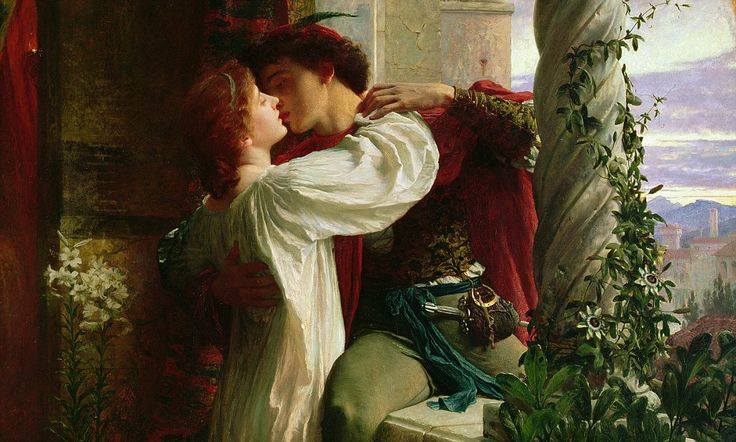
Though we’ve manufactured a birthday for the Bard it is quite possible he could have been born at any time between now and Thursday. So why not take advantage of the broad blank canvas provided me on a Tuesday afternoon to present Hector Berlioz’s mad, ramshackle symphony, “Romeo and Juliet?”
Berlioz adored Shakespeare. His “Symphonie Fantastique,” remember, was inspired by his passion for the actress Harriet Smithson, whom he had seen in Paris as Ophelia and fell instantly under her spell. He would woo and win her with his macabre, at times hysterical “symphonie.” At least, for as wild as his opium-induced vision of rejection, dejection, and, ultimately, damnation, would become, the work somehow clung to a semblance of “symphonic,” its romanticism bubbling out over the top of its somewhat classical structure.
“Romeo and Juliet,” on the other hand, is neither fish nor fowl – a veritable Frankenstein’s monster assembled from the components of symphony, symphonic poem, opera, and oratorio. Unwieldy and flamboyant, Berlioz’s “symphony” unfolds as a collage of the play’s emotional high points – plus a scherzo inspired by Mercutio’s Queen Mab exposition, which is the symphony’s best known movement. In fact, it is rare to hear anything else, except perhaps the love music. Listen for a complete performance of this perplexing masterpiece, this afternoon at 2 p.m. EDT.
First, on today’s Noontime Concert, it’s a program of new music with the American Modern Ensemble. The group’s founder, composer Robert Paterson, will be represented by two works – a collection of arias from the opera “Three Way” (2017), which explores the present and future of sex and love, and “In Real Life” (2015-16) for soprano and chamber orchestra, which examines the humor and heartbreak of what it means to join a dating website. In between, we’ll hear Robert Maggio’s “Forgetfulness” (2015), a setting for baritone and chamber ensemble of Billy Collins’ poem about Alzheimer’s Disease and dementia. The concert took place at Merkin Concert Hall at Kaufman Music Center in New York City.
The course of true love never did run smooth. Being caught between warring houses in old Verona seems almost attractive, by comparison. It’s an afternoon of romance, androids, and BDSM (I’m not kidding), from 12 to 4 p.m. EDT, on WWFM – The Classical Network and wwfm.org.
by
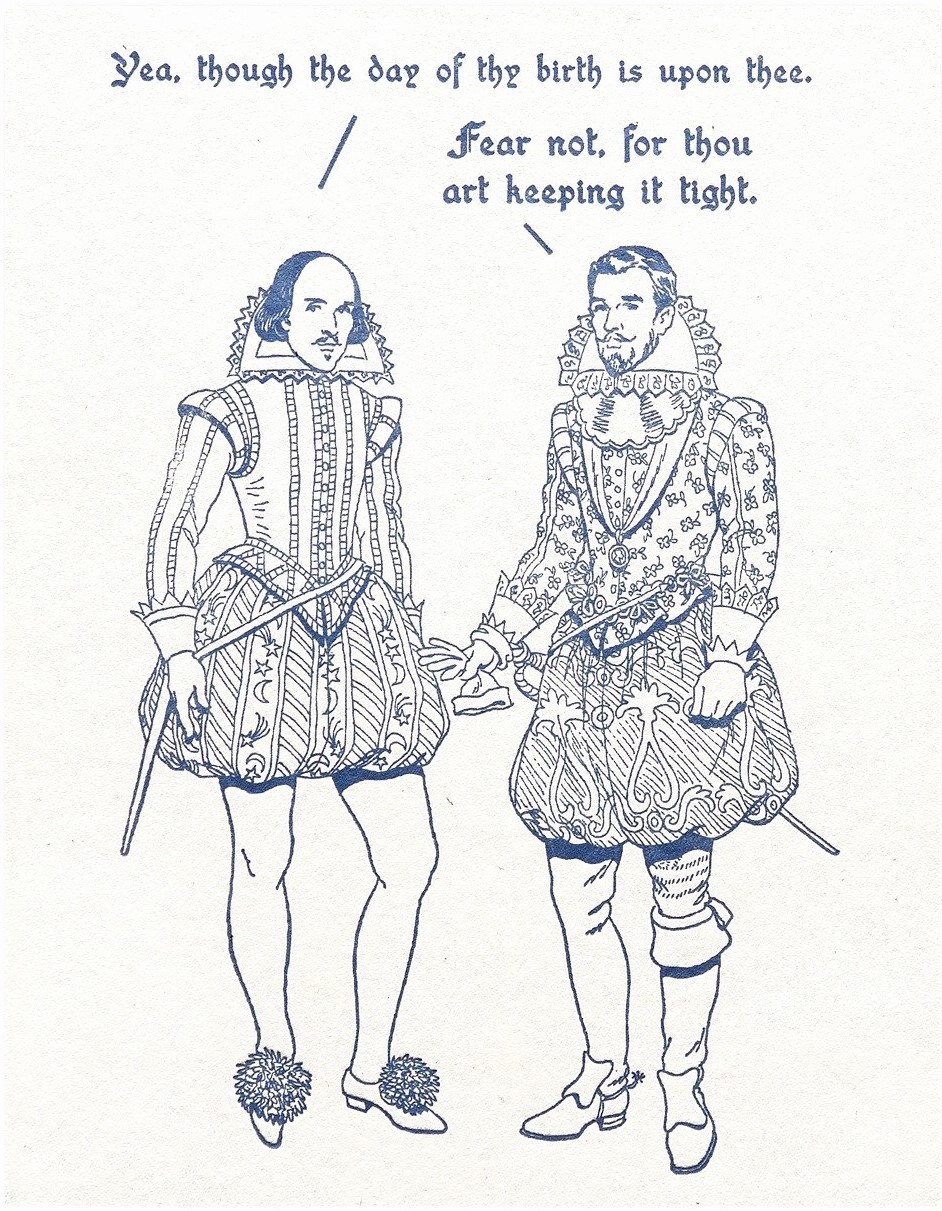
Okay, so we don’t know when exactly Shakespeare was born. We do know that he was baptized on April 26, 1564. He died on April 23, 1616. Scholars have found the potential symmetry irresistible; therefore his birthday has traditionally been observed on the same day as his death. To borrow from “The Tempest,” our little lives are not only rounded with a sleep, it seems; if we’re famous enough, and we die close enough to our natal day, our birthdays are also rounded down.
It doesn’t really matter when Shakespeare was born, but I look forward to celebrating the Bard every year. So many of his insights remain fresh, and the plays tie in beautifully with the spirit of renewal that springtime fosters. Also, there is just so much interesting and vital music inspired by his writings.
We’ll sample as much of it as we can – what masques, what dances shall we have – this Monday, from 4 to 7 p.m. EDT, on WWFM – The Classical Network and wwfm.org.

by
People of Earth!
We convene this Sunday morning on WPRB for much marvelous music inspired by our wondrous world, a collection of captivating classical creations calculated to corral our consciousness, pieces to prod our promise as protectors and preservationists as precursor to properly ‘ppreciating our precious planet.
Surf’s up for Earth Day, this Sunday morning from 7 to 10 EDT, on WPRB 103.3 FM and wprb.com. Attend the astral airwaves with Classic Ross Amico.
Alluding to the alliterative artistry of Stan “The Man” Lee, illuminatingly illustrated by the illustrious Jack “King” Kirby. Excelsior!
Aaron Copland (93) Beethoven (95) Composer (114) Film Music (145) Film Score (143) Film Scores (255) Halloween (94) John Williams (195) KWAX (229) Leonard Bernstein (104) Marlboro Music Festival (125) Movie Music (160) Mozart (91) Opera (213) Philadelphia Orchestra (89) Picture Perfect (174) Princeton Symphony Orchestra (109) Radio (88) Ross Amico (244) Roy's Tie-Dye Sci-Fi Corner (290) The Classical Network (101) The Lost Chord (269) Vaughan Williams (105) WPRB (397) WWFM (881)
6 responses