• Big Country Jerome Moross Picture Perfect

    Big Country Jerome Moross Picture Perfect

    by 

    in
    5 responses

    August starts BIG this week, on “Picture Perfect,” as we hit the sundrenched plains and wide-open spaces, with music from outsized movies set in the American West.

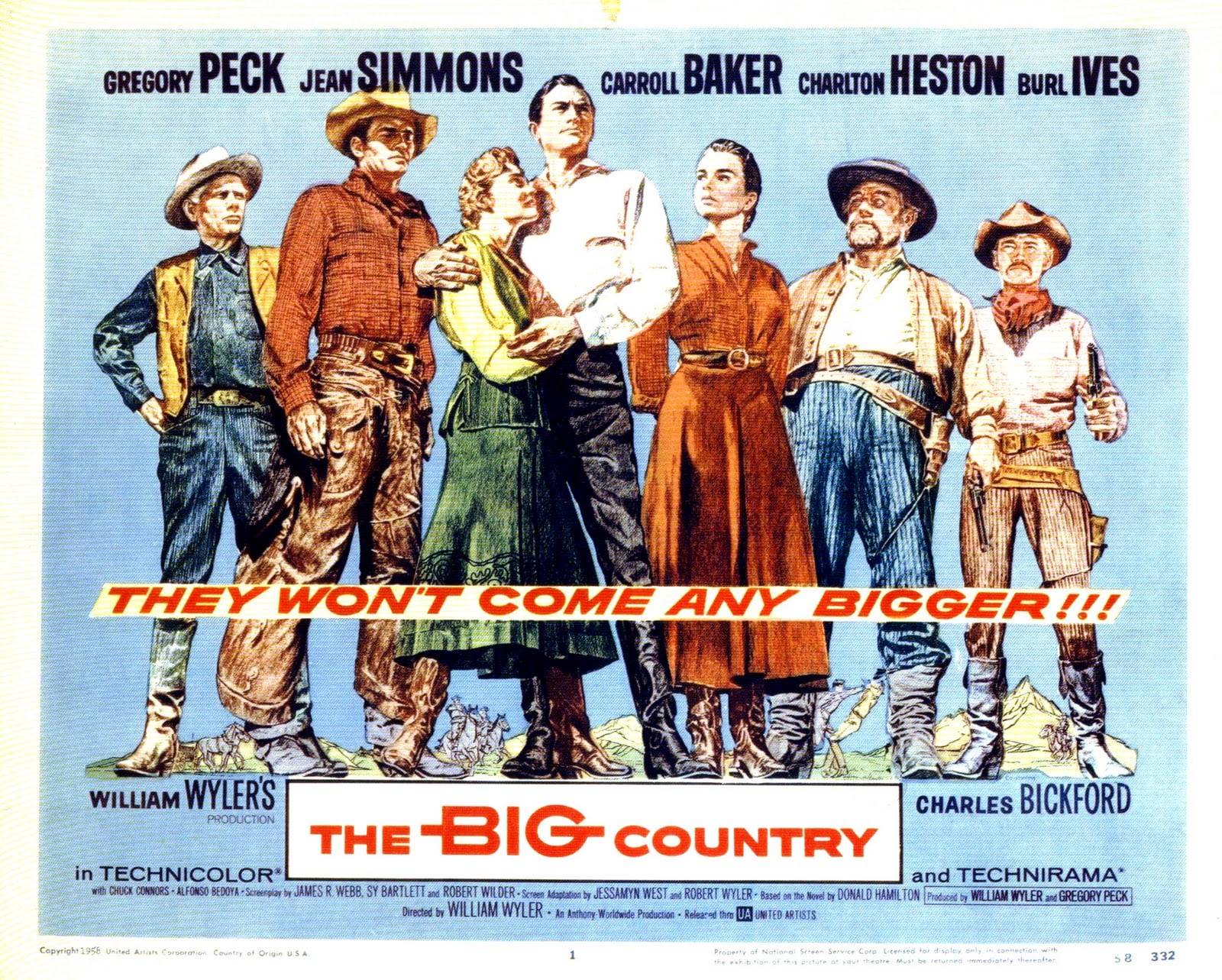
    On the birthday of Jerome Moross, we’ll begin with the composer’s most famous score, that for “The Big Country” (1958).

    Directed by William Wyler, the film’s cast includes Gregory Peck, Jean Simmons, Carroll Baker, Charlton Heston, Charles Bickford, Chuck Connors, and Burl Ives (who won an Oscar). Some big personalities! So it’s hardly surprising that not all the drama was limited to what we see on screen. The actors bristled against constant rewrites and Wyler’s ambiguous directing style. Some of them refused to talk about it, and a few of them refused to talk to each other. Ives, the exception, seemed to be above it all. He maintained he really enjoyed making the picture. In the end, Wyler had to delegate the film’s climax to his assistant, also the film’s editor, Robert Swink, as he had to leave for Rome to prepare for “Ben-Hur.”

    Fortunately, the entire technical crew was first-rate and brought its A-game. It’s a Hollywood miracle that all the pieces of “The Big Country” fit together as well as they do. It really says something that, alongside the awesome scenery, more than anything, it is the music that really solidified the film’s enduring popularity. Moross’ score is right up there, alongside Elmer Bernstein’s music for “The Magnificent Seven,” at the top of the genre.

    Though Moross was adept at writing music in many forms – including concert pieces (a symphony for Beecham), musical theater (the cult classic “The Golden Apple,” including the evergreen “Lazy Afternoon”), and opera (“Sorry, Wrong Number”) – unquestionably he is best known for his work in film. He spent much of his career ping-ponging back and forth between New York and Hollywood.

    When “Porgy and Bess” concluded its New York run in 1935, George Gershwin invited Moross to join the show, on tour, as a pianist. It was while on a bus trip to Los Angeles to participate in “Porgy’s” west coast premiere that the 23-year-old made a stop in Albuquerque.

    “[A]s we hit the Plains I got so excited,” Moross recollected. “. . . [T]he next day I got to the edge of town and then walked out onto the flat land with a marvelous feeling of being alone in the vastness, with the mountains cutting off the horizon. The whole thing was just too much for me . . . it was marvelous, and I just fell in love with it.”

    This communion with the American West stayed with him. It would be 23 years before he composed his big screen magnum opus. The vitality, invention, and lyricism of “The Big Country” was recognized with an Academy Award nomination. The “Western” sound would color Moross’ subsequent film and concert works, with the energetic syncopations of his native New York City bolstering an easy lyrical gift that could easily pass for genuine American folk music.

    Rounding out today’s program will be selections from “The Big Sky” (Dimitri Tiomkin), “Big Jake” (Elmer Bernstein), and “Silverado” (Bruce Broughton).

    It’s all BIG. Saddle up for music by Jerome Moross and friends on “Picture Perfect,” music for the movies, now in syndication on KWAX the radio station of the University of Oregon!


    Clip and save the start times for all three of my recorded shows:

    PICTURE PERFECT, the movie music show – Friday at 8:00 PM EDT/5:00 PM PDT

    SWEETNESS AND LIGHT, the light music program – Saturday at 11:00 AM EDT/8:00 AM PDT

    THE LOST CHORD, unusual and neglected rep – Saturday at 7:00 PM EDT/4:00 PM PDT

    Stream them, wherever you are, at the link!

    https://kwax.uoregon.edu/


  • Thurber’s Dogs on KWAX Dog Days Summer

    Thurber’s Dogs on KWAX Dog Days Summer

    by 

    in
    5 responses

    Hopefully these storms that will be rolling through New Jersey this afternoon and tonight will cool things down a bit. As it stands, this week on “Sweetness and Light,” I’ll be lying by my water bowl. We’ll be going to the dogs for the dog days of summer. To get you in the mood, someone put together this animation inspired by humorist James Thurber’s dog cartoons and the music of Peter Schickele. Hear Schickele’s “Thurber’s Dogs” again this Saturday morning at 11:00 EDT/8:00 PDT on “Sweetness and Light.” I’ll be panting right along with you on KWAX, the radio station of the University of Oregon. And yes, the program will be available for streaming, wherever you are, at the times indicated, by following the link:

    https://kwax.uoregon.edu/

    Enjoy the animated “Thurber’s Dogs” here:


  • Bard’s “Dalibor” A Rare Smetana Treat

    Bard’s “Dalibor” A Rare Smetana Treat

    by 

    in
    7 responses

    I am probably one of the few Americans who owns all of Smetana’s operas, though I confess I have not listened to more than three. Still, I believe I am correct in stating that “Dalibor” is the only one of them that doesn’t have a happy ending. In fact, if I understand correctly, the opera has two endings, both of them tragic. The current production at Bard College– the first fully-staged presentation in the United States – which I attended on Sunday afternoon, surprised me in providing a third. It punctuates the work with a strong and haunting image, to be sure, but I confess I’m still partial to the original, most commonly encountered, in which the hero is at least granted the dignity to take his fate into his own hands.*

    But opera lovers can handle it. We are used to stories in which our heroes are crushed, either by character flaws, political machinations, jealousy, misunderstandings, or just plain cruel fate.

    Bard’s “Dalibor” is an absorbing and at times even transporting experience. I still can’t get one of Smetana’s insinuating musical motifs out of my head. By and large, the production is well-conceived and executed. I always hope for more traditional productions of Romantic operas, setting them in actual medieval castles, the way composers and librettists originally envisioned, but I realize we’re living in an age when it is an unreasonable expectation. I guess after 150 years, the very idea is a little tired. At least the Bard production, directed by Jean-Romain Vesperini, isn’t Regietheater. The knights are not clowns driving around in VW buses. But it is dark and dour throughout. Still, Smetana’s music has enough ceremonial and dance music to remind us that this is also the composer of “The Bartered Bride.”

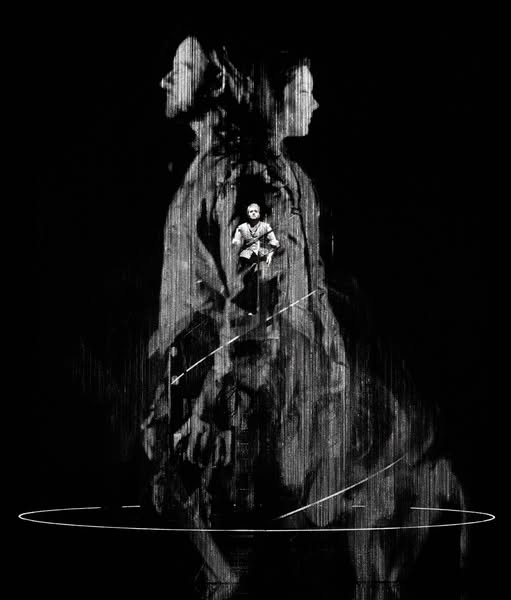
    The director’s program note cites the inspiration of German Expressionism. To me, it looks more like steampunk-lite, with a kind of double-helix iron staircase dominating the stage on a rotating turntable. I must say, if one were going to conceive of a single set to serve for three lugubrious acts, the solution is quite ingenious. The staircase rotates, giving the director plenty of options for entrances and singers ascending and descending. (The set design is by Bruno de Lavenère.)

    Further transformations are made possible through lighting effects by Christophe Chaupin. I’m not sure what material is draped from the line sets, but it’s made to look like curtains of chain mail that are raised and lowered and reflect the lights.

    Despite the fixed set, it is not a visually stagnant production. I do wish it could have been opened up somehow. It IS a dark story, but the entire thing isn’t set in a dungeon. It is perhaps more a “fault” of the opera itself than it is any interpretative concepts. The entire thing is set in stone, in more ways than one.

    The costumes by Alain Blanchot – at least most of them – are quasi-medieval, at least, and there are swords and spears rather than of lightsabers.

    Basically, the plot concerns a knight, Dalibor, who is on trial for killing a burgrave in revenge for the execution of his friend, the musician Zdeněk. His righteous indignation and noble character stir the populace and there are simmering intimations of rebellion against the king. The burgrave’s sister, Milada, calls for Dalibor’s death. The king assents, until he learns more about the circumstances of Dalibor’s crime and, in his mercy, commutes his sentence to life in prison. Of course, Milada winds up falling for this noble soul and determines to free him.

    Most interesting about the Bard production is the idea to have the specter of Zdeněk (a fabricated, silent role, played gracefully by Patrick Andrews), who is certainly central to the motivations and plot, literally wander the staircase, like Banquo’s ghost, feyly looming over the fates of the various characters. To give him even further emphasis, the decision was made to mirror his attire in the disguise of Milada, when she goes undercover, in drag, in her attempt to spring Dalibor from the bowels of the castle. The fact that Milada is made a kind of reincarnation of the knight’s fallen best friend, whom he mourns and even pines, lends an interesting homoerotic dimension that seems to exceed any concept of knightly brotherhood – never more so than when Zdeněk and Milada are blown up into massive projections (by Étienne Guiol) onto the chain mail curtain. Clearly, the production doesn’t want us to miss that these characters are being paralleled. Thankfully, the effect is more Bergmanesque than “Duck Soup.”

    In the libretto, Dalibor emerges from a dream and mistakes Milada for a reincarnation of his friend – and soon they are engaged in a passionate love duet – so I suppose the germ is already there in the work’s conception. So the interpretive choice is not inappropriate, and it is not ineffective. If anything, it underscores the dominance not only of Dalibor’s affections for his friend, but also the motivating force of music itself as a thematic element. Only in the Czech lands would music be so tied up with patriotism and nationalist identity. (The fallen Zdeněk was a violinist and Dalibor comes into possession of his instrument, even planning to use it to signal the final surge of rebellion against injustice, if not tyranny.) It always makes me envious how strongly the Czech culture embraces its music.

    “Dalibor” was a modest success at its premiere in 1868. It didn’t really take off until it was revived in 1886. Alas, it’s the old tale of an opera being underappreciated until after the composer’s death. (Smetana died two years earlier.) But do not go into it expecting another “Carmen.”

    It is worth seeing, especially if you are a Czech music fanatic. If you’re well-versed in Smetana and Dvořák, I think you pretty much know what to expect. But the sound world is more in line with Dvořák’s darker symphonic poems and “Rusalka” than, say, the Serenade for Strings.

    Hey, if you’re familiar with Smetana’s complete cycle of symphonic poems “Má vlast” (1874-79), you know it’s not just the picture postcards of “Vyšehrad,” “The Moldau,” and “From Bohemia’s Woods and Fields.” There’s plenty of tragedy and slaughter. That’s the Dark Ages for you, but also Romanticism. The Romantics love to dwell on the grim.

    In “Dalibor,” there’s a passage that looks forward to “Má vlast”s “Tábor,” specifically the hammered motto associated with the Hussite Wars that segues into “Blanik,” which recalls the supernatural resurrection of St. Wenceslaus’ army in time of need. There’s also one motive that unavoidably conjures “the Ring.” Wagner is an obvious influence (I mean, come on – castles, knights, troubadours, and warrior maidens!), but the music is always unmistakably Bohemian.

    The cast that Bard assembled for this production is an interesting one. All of the singers acquit themselves very well, even if their approaches aren’t always of a piece.

    Alas, visa difficulties precluded the scheduled participation of Czech tenor Ladislav Elgr and Polish soprano Izabela Matula, but I confess my grasp of Czech is nonexistent, so for all I know the cast could have been singing flawless Klingon. I already knew what to expect from John Matthew Myers, a heroic tenor I was lucky enough to hear in Carnegie Hall last month, when conductor Leon Botstein revived Richard Strauss’ first opera, “Guntram.” Myers was exemplary, if the character this time isn’t giving quite so many opportunities to belt.

    I wonder what his costar on that occasion, Angela Meade, would have made of Milada. Cadie J. Bryan is a small-voiced soprano, who nevertheless rose to the occasion in her duets with Myers and the more animated and extroverted Erica Petrocelli (as the rebel fireband Jitka, raised as Dalibor’s adopted daughter). Bryan was also affecting in her death scene. But early on, I was worried that her characterization was going to be one that was going to be bolstered more by her acting ability than the power of her voice. Physically, her waif-like appearance made her more believable than Meade would have been when the character disguises herself, Fidelio-like, as a boy.

    Petrocelli has charisma to burn, and the bigger voice, commanding attention whenever she was on stage, but her characterization was also the stagiest. Bryan, less so, had the more naturalistic acting style.

    Bass Wei Wu was for me the biggest surprise of the afternoon. As Dalibor’s jailer, Beneš, his voice was top to bottom resonant and awe-inspiring. It made me as happy as a lizard on a hot-rock.

    That said, bass-baritone Alfred Walker, who sang Saint-Saens’ Henri VIII at Bard a few years ago, gave the most rounded performance. He was in great voice, as always. In contrast to many of those around him, who are given plenty of opportunities to storm the ramparts, as it were, his is a more reflective role. He’s regal when he needs to be, but he’s also given a great “uneasy lies the head that wears the crown” scene, in which he deliberates over the duties of the king and his private misgivings at having to condemn Dalibor. Walker’s acting was of a piece with the vocal requirements, which he fulfilled magnificently if undemonstratively, to make his King Vladislav a creation of flesh and blood.

    Bard mastermind Leon Botstein was in the pit with the American Symphony Orchestra. Their rendering, for the most part, allowed the music to speak for itself. The Bard Festival Chorale, prepared by James Bagwell, always sings well. It’s an added joy that its members appear always to be having a good time. To have professional musicians tackle these rare works with such commitment is a blessing not to be underappreciated.

    Today’s matinee, at 2 p.m., will be livestreamed in real time and then repeated on Sunday at 5 p.m. The remaining live performances will be given at Bard College’s Richard P. Fisher Center for the Performing Arts this weekend, on Friday at 4 p.m. and Sunday at 2 p.m.

    The opera, of course, is but an appetizer to the main course of the Bard Music Festival, this year devoted to the Czech master Bohuslav Martinů. The festival, which will take place at Bard College over two weekends, August 8-10 and 14-17, will conclude with a semi-staged performance of Martinů’s opera, “Julietta,” also at the Fisher Center. I am elated to find Erica Petrocelli and Alfred Walker will be among the cast. John Matthew Myers will return to sing “The Epic of Gilgamesh” in a concert on August 16. You’ll find the full schedule at one of the links below.

    Thank you, Bard and Leon Botstein for yet another opportunity to hear interesting, neglected music live, so that we may develop a fuller understanding of the artists, their cultures of origin, their places in, and influence upon, the wider classical repertoire, and allowing us a broader understanding of cultural history. Your services are invaluable.

    *ERRATUM: Having done more research, I learned that there are indeed THREE endings for “Dalibor!”


    Smetana’s “Dalibor” at Bard SummerScape

    https://fishercenter.bard.edu/events/dalibor/

    Bard Music Festival, “Martinů and His World”

    Bard Music Festival

    Some of the past Bard operas are available for streaming here

    SummerScape Opera in HD


    Photos from the Fisher Center at Bard Facebook page

  • Mikis Theodorakis A Centenary of Zorba’s Composer

    Mikis Theodorakis A Centenary of Zorba’s Composer

    by 

    in
    4 responses

    Why, it seems like only yesterday that Zorba’s composer danced his last. Mikis Theodorakis died in 2021 at the age of 96. One of Greece’s best-known musical exports, Theodorakis was world famous for his score to the film “Zorba the Greek” (1964). Now, wouldn’t you know it, it’s already his centenary!

    As a former student of Olivier Messiaen at the Paris Conservatory, Theodorakis also composed dozens of concert and dramatic works, even as he continued to attract international attention with his more than one thousand songs. All the while, he remained politically active, variously jailed, exiled, and elected to the Greek Parliament.

    Never afraid to speak his mind, Theodorakis was a controversial figure. No one can deny that he also brought a lot of beauty into the world.

    He certainly did his best to live up to his surname. “Theodorakis” derives from the Ancient Greek “Theódōros,” composed of “theós” (divine, deity, god) and “dôron” (gift). Essentially, “God’s gift.” Unquestionably, he gave generously of himself.

    Theodorakis may no longer be with us, but on the 100th anniversary of his birth, the dance goes on.


    Theodorakis’ obituary from the BBC

    https://www.bbc.com/news/world-europe-58419832

    The music that sealed Theodorakis’ immortality

    His Symphony No. 2, with Cyprien Katsaris at the piano

    “Honeymoon” (from the Michael Powell film)

    Covered by The Beatles

    The theme from “Z”

    “Antonis,” on which it was based

    As heard in the song cycle, “Mauthausen Trilogy,” on poems by Iakovos Kambanellis, survivor of the Mauthausen-Gusen concentration camp

    Zorba flash mob


  • Remembering Jill Pasternak & WFLN’s Golden Age

    Remembering Jill Pasternak & WFLN’s Golden Age

    by 

    in
    3 responses

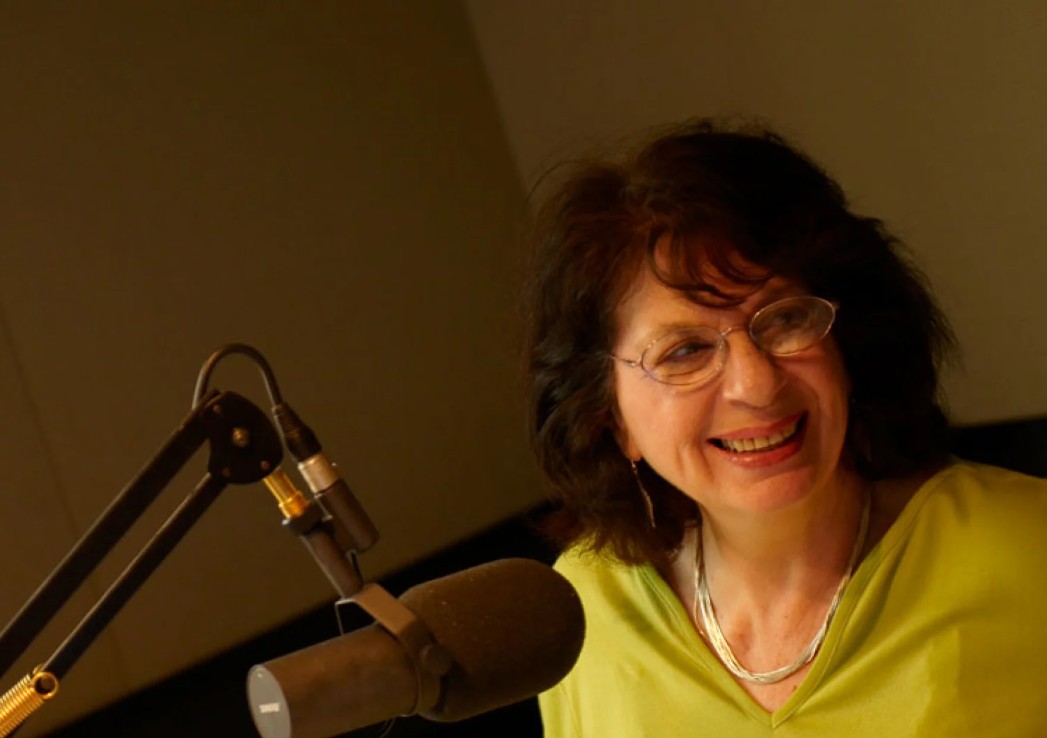
    Whenever one of the old WFLN roster dies, it makes me horribly nostalgic for the better days of classical radio. Signed on by Frank Kastner in 1949 (the two-hour inaugural program, he told me, included Brahms’ “Academic Festival Overture,” Rachmaninoff’s Piano Concerto No. 2, and Sibelius’ Symphony No. 2), WFLN was Philadelphia’s classical music radio station for nearly 50 years. Over time, Kastner, Henry Varlack, Taylor Green, Bill Shedden, and Ralph Collier all passed into the beyond. Now, I’m sorry to learn, they are joined by Jill Pasternak, who died on Saturday at the age of 91.

    Although I met her several times while working at WRTI, I don’t have any good Jill Pasternak stories. I only really knew her, like most people, as a listener. In house, I followed her at the microphone on a few occasions, as the station transitioned from classical to jazz at 6 p.m. But we really didn’t get to too much chit-chat. I defer to some of her other colleagues for their colorful reminiscences, which you’ll find at one of the links below. I found especially amusing Mark Pinto’s recollection of Jill’s penchant for Michel Legrand’s music for “The Go-Between” and what that led to behind the scenes.

    From time to time, I’ll google WFLN and its hosts to see if I can come up with any fresh information. Last night, I came across a report from 1986 that bore out what I had always heard about the station: WFLN was one of a dwindling number of commercial classical music stations that always turned a profit. (Nowadays, with few exceptions, if you hear classical music on the radio, it is usually from a public or community source.)

    Unfortunately, when the license was sold, that wasn’t good enough. You know how it is. It’s not enough to make money. You have to make a LOT of money. As in, squeeze it for as much as you possibly can.

    What followed is painful to remember, as the new owners gave this longstanding cultural oasis an ultimatum to pull bigger numbers, or else. The strategy? Bust up all those symphonies and concertos into bite-sized pieces to be spoon-fed to the populace. No more complete Brahms symphonies. Certainly no more Bruckner. Just individual movements of old favorites.

    This was especially painful when someone tried to program an excerpt from a piece like Liszt’s Piano Concerto No. 1, which has an innovative structure, intended to be played through without break. On such occasions, the music would stop, jarringly, interrupted like clicking an “off” button in the middle. It did not make for good radio.

    Again, WFLN proved profitable, but I think everyone knew, once the ultimatum had been issued, that its fate was inescapable. The station was merely being put through the motions to demonstrate, “Well, we tried.”

    Finally, on September 5, 1997 (with only 24-hours’ public notice), WFLN’s classical music format was replaced, again jarringly – both from a programming but also an emotional standpoint – with modern “adult contemporary hits,” as WXXM. Reflecting the kind of world we now live in, the “new” station shifted format every few years, in contrast to the anchor WFLN had been. (Its current call letters are WBEN-FM.) The last voice heard before the transition was that of Jill Pasternak, who bid farewell to a half-century of excellence with Fritz Kreisler’s “Schön Rosmarin.” Her humanity was never more evident. Audibly choked-up, she reflected what we all felt. It was loss. You could hear it in her voice. Just like that, five decades had come to an end.

    For months after, there was no classical music programming being broadcast from Philadelphia. Temple University stepped up with an imperfect solution: WRTI, which had built its own following as a 24-hour jazz station, would divide its schedule, with classical music during the daytime hours hosted by a handful of WFLN exiles. Jill was one of these.

    With all respect to WRTI, it never has been a substitute for WFLN. You could turn on 95.7 at any time during the day or night and find the consolation of Haydn or Grieg or Fauré. Now, after 6:00, you’re out of luck. Nearly 30 years later, America’s sixth largest city is still without a full-time classical music station.

    Of course, times have changed, and classical music can be found elsewhere, especially via internet streaming. But that kind of old-school classical music radio, with playlists of complete recordings of great performances, introduced by knowledgeable, friendly-without-being-inane hosts is increasingly rare.

    How many times have I had on a classical music station and been transported by the music, only to be slapped awake at the end of a movement by some vacuous chit-chat. What happened to the rest of the piece? It’s jarring, and very upsetting, and I doubt very much it does anything to build listenership beyond the music-as-wallpaper crowd. I can’t even deal with it as wallpaper. There’s too much talk to be able to use it as background. You can’t even get lost in the fantasy of the music.

    It’s happening all across the country. Increasingly, local hosts are falling away as owners, general managers, and even universities that run these stations find that it’s more economical to drop community-connected voices, who over time have become like family for local listeners, to become, essentially, affiliates for larger, syndicated, satellite-distributed behemoths like Classical 24, a service out of Minnesota that’s now being carried by classical music stations across the U.S., so that as a listener, when you drive for great distances, you jump from frequency to frequency, and it’s the same soul-deadening slop.

    WFLN was as solid as the Rock of Gibraltar. As a kid, I was able to learn the entire standard repertoire by listening to the radio.

    The greatest investment I made in the last several years was that for my internet radio. Yeah, you can get decent speakers and you can stream anything on your computer; but the internet radio allows me to continue to live in a world in which I can turn on a tabletop console and enjoy beautiful music with hosts who are real people who say relevant things without getting bogged down in chat or being so didactic that you start to wonder what kind of station you’re even listening to. In short, classical radio the way it used to be.

    The one thing that shatters the illusion is when I have to step outside the bubble and drive someplace and again I am at the mercy of “local” radio. Of course, there’s a workaround for that too, but I haven’t progressed to the point where I’m plugging in my phone in the car. It’s easier for me just to carry a few CDs.

    I realize this isn’t an awful lot about Jill, but there are some nice remembrances to be gleaned in reading from the WRTI website. (See the links below.) Already, I’d forgotten her warm greeting: “How ARE you today?”

    I keep hoping to uncover more airchecks from WFLN broadcasts from those pre-internet days. If you’ve got any, please consider sharing them. I would love to hear them! Over the years, I’ve only been able to find a few online, and one of them is morning drive-time, not really representative of the rest of the day’s programming.

    It’s astonishing to me that I had the opportunity to actually work with so many of these voices that were unwitting mentors to me over the years. Dave Conant, Bill Shedden, Ralph Collier, Jack Moore, Michael Carter, Jill. I talked to Henry Varlack on the telephone during his air shift in the middle of the night, many, many times. I met Terry Peyton and Taylor Green when I visited the WFLN studios in Roxborough (an hour’s bus-ride from Center City), when I auditioned to get on the air there when I was still in college. I did not succeed, although Dave Conant was very kind, recording my voice as I read copy and offering critiques (“You sound like you’re announcing the races!”) and inviting me to come back and try again. Which I did. Years later, as he neared retirement, I finally did wind up working with him, as an on-call classical host mostly doing overnight jazz at WRTI.

    Jill, a regular presence and a beloved one, retired from WRTI in 2015. I am grateful to her for helping to make life a little more pleasant. She shared a lot of beautiful music and always kept it human.

    R.I.P.


    Bruce Hodges’ obituary on the WRTI website

    https://www.wrti.org/wrti-spotlight/2025-07-27/jill-pasternak-longtime-classical-host-at-wrti-has-died-at-91

    WRTI staff memories of Jill

    https://www.wrti.org/wrti-spotlight/2025-07-27/here-are-our-memories-of-jill-pasternak-what-are-yours

    1986 radio report, affirming the solidity of WFLN’s finances and revenue

    https://www.worldradiohistory.com/Archive-Mediatrix/Mediatrix-Philadelphia-1986.pdf

    Philadelphia Inquirer article on the last gasp of WFLN

    https://www1.udel.edu/nero/Radio/readings/Classical/lastclass.html


Tag Cloud

Aaron Copland (93) Beethoven (95) Composer (114) Film Music (144) Film Score (143) Film Scores (255) Halloween (94) John Williams (195) KWAX (229) Leonard Bernstein (104) Marlboro Music Festival (125) Movie Music (159) Mozart (91) Opera (212) Philadelphia Orchestra (89) Picture Perfect (174) Princeton Symphony Orchestra (109) Radio (88) Ross Amico (244) Roy's Tie-Dye Sci-Fi Corner (290) The Classical Network (101) The Lost Chord (269) Vaughan Williams (105) WPRB (397) WWFM (881)

DON’T MISS A BEAT

Receive a weekly digest every Sunday at noon by signing up here


RECENT POSTS