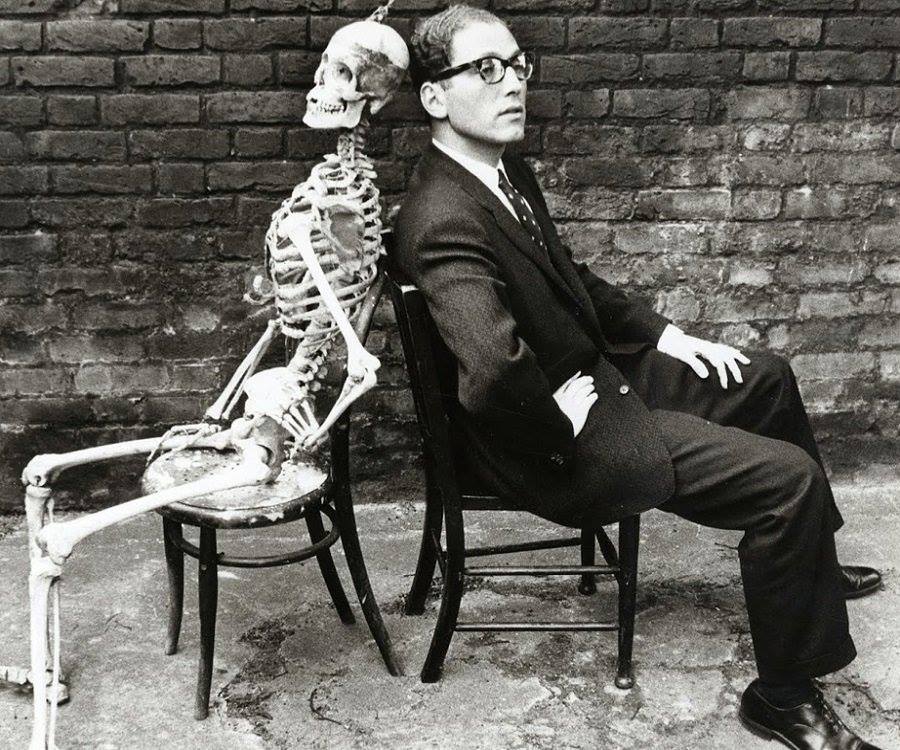
You’ve probably heard by now, the brilliant – and brilliantly funny – Tom Lehrer died on Saturday at the age of 97. Lehrer’s songwriting career was comparatively brief, as was his stint as a performer – avocations both, he claimed. The talent was effortless, if he is to be believed, his early creations tossed off to the delight of his university classmates. But when it came to making a living, he chose academia, teaching mathematics at Harvard and M.I.T. and mixing math with musical theater at the University of California. To the chagrin of his publisher, I’m sure, he relinquished all licensing opportunities by declaring his songs, both original music and lyrics, were free and available to the public to do with what they will. As a satirist and a composer, his mordant wit and lyrical dexterity could be devastating. He was a black comic genius, whose send-ups of politics, religion, and other human and social foibles were as gleeful as they were savage. He could have contributed so much more to the literature, but what he left us is gold. Here he is in his impish prime.
-
Tom Lehrer Satirist & Mathematician Dies at 97
by
-
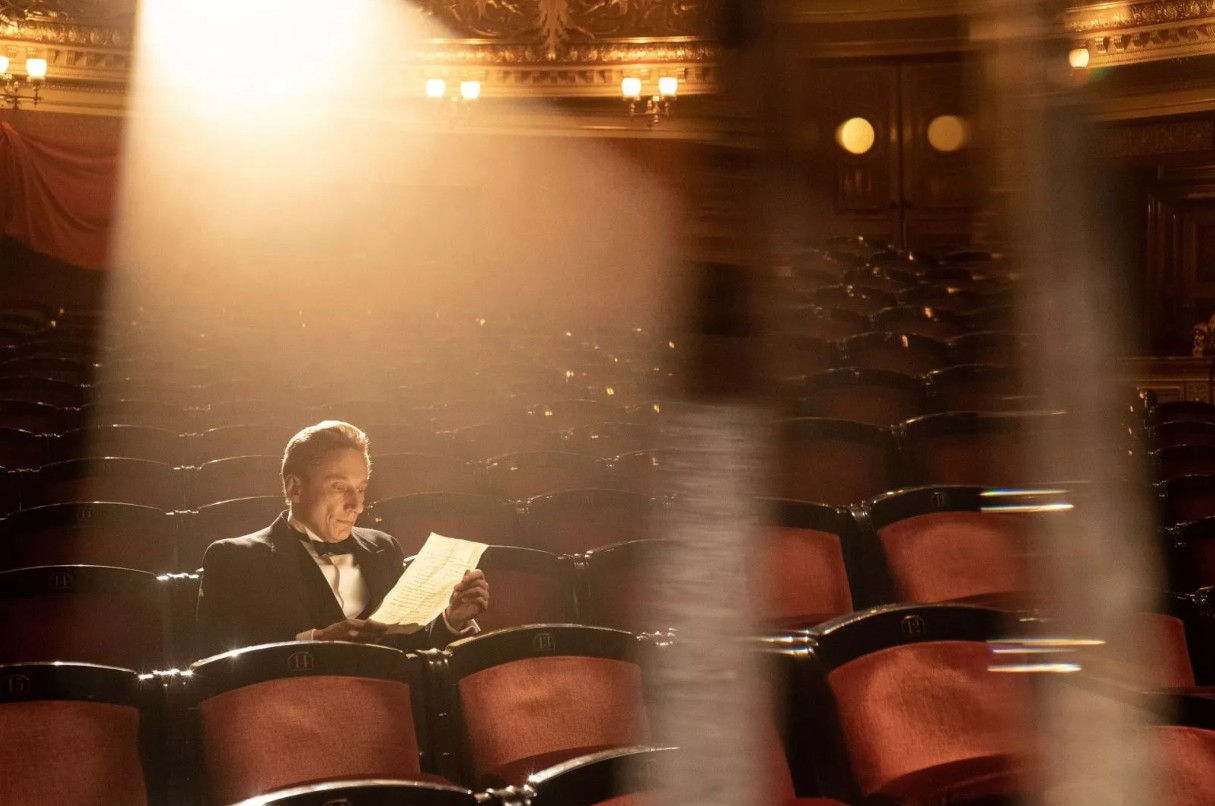
Fisher Center at Bard: Martinu Documentary Find
by
5 responses
I’ve been looking all over the internet for “My Life with Bohuslav Martinů,” a 2021 “feature documentary” (it’s only an hour long and looks more like a dramatization), and I’ve finally found it – in Czech!
There are no English titles, so if you’re interested and you’re not a native speaker, you’ll have to employ an external program for translations. I haven’t watched it yet, but I’m looking forward to doing so before this year’s Bard Music Festival, devoted to “Martinů and His World.”
https://www.ceskatelevize.cz/porady/11670494623-muj-zivot-s-bohuslavem-martinu/
Here’s the trailer:
“Martinů and His World” will be held over two weekends, August 8-10 and 14-17, at Bard College in Annandale-on-Hudson, NY. More about it here:
I’ll be heading up there today, departing within the hour, as a matter of fact, to “Czech out” the first fully-staged U.S. production of Bedřich Smetana’s 1868 opera “Dalibor.” I previewed it more extensively in another post earlier this week.
https://www.facebook.com/photo?fbid=1608573393395051&set=a.883855802533484
Remaining performances will take place at Bard College’s Fisher Center for the Performing Arts today at 2 p.m., July 30 at 2 p.m., and August 1 at 4 p.m.
If it sounds enticing, but you can’t make it, the July 30 matinee will be available for livestreaming, in real-time, with an encore broadcast on August 2 at 5 p.m. You can learn more here:
https://fishercenter.bard.edu/events/dalibor/
No time to smooth this. Gotta run!
Fisher Center at Bard
-
Night Music Nocturnes on Sweetness and Light

by
7 responses
This week on “Sweetness and Light,” we’ll be thinking cool and happy thoughts with an hour of night music – nocturnes, music reflective of the night sky, even sleep!
I hope you’ll join me for selections by Alexander Borodin, Antonín Dvořák, Jacques Offenbach, Claude Debussy, Manuel Ponce, John Field, and light music masters Charles Ancliffe, Archibald Joyce, and Robert Farnon.
Everything’s fine when the sun is asleep! I’ll be a fool for cool on “Sweetness and Light,” this Saturday morning at 11:00 EDT/8:00 PDT, exclusively on KWAX, the radio station of the University of Oregon!
Stream it, wherever you are, at the link:
-
Hungarian Night Music Rozsa Dorati Kodaly

by
6 responses
“Children of the night – what beautiful music they make!” So says Hungarian superstar Bela Lugosi in his signature role of Dracula. The observation (spoken in response to the howling of wolves) might equally be applied, under less chilling circumstances, to three of Lugosi’s composer-compatriots, whose nocturnal meditations we’ll enjoy this week on “The Lost Chord.”
Miklós Rózsa, himself a figure with cinematic associations, wrote nearly 100 film scores and won three Academy Awards – for “Spellbound” (1945), “A Double Life” (1947), and “Ben-Hur” (1959). He was also an active concert composer, writing concertos for Jascha Heifetz, Gregor Piatigorsky, Leonard Pennario, , Janos Starker, and Pinchas Zukerman.
In the summer of 1962, Rózsa composed “Hungarian Nocturne” on a commission from Edward B. Benjamin, a New Orleans millionaire with a fondness for quiet music. However, in order to maintain interest, the composer realized, there was no way he could remain quiet for the entire span of the piece. So the nocturne eventually builds to a climax before returning to the serene mood of its opening. His patron wasn’t entirely pleased, though he did draw enjoyment from the quieter parts. The piece was an attempt by the composer to recapture the rare beauty of nights on his estate in rural Hungary.
Though Antal Doráti would ultimately become world famous as a conductor, he studied composition at the Franz Liszt Academy under Zoltán Kodály and Leó Weiner. He also studied piano with Béla Bartók. A fine Bartok interpreter, Doráti would later conduct the world premiere of his teacher’s Viola Concerto.
Doráti’s own music has always been regarded as something of a sidelight. His “Night Music,” from 1970, is a collection of evocative miniatures for flute and orchestra. We’ll hear it performed by Alison Young, now a host for Minnesota Public Radio.
Unlike Rózsa and Doráti, who were both natives of Budapest, Zoltán Kodály was born in a small town in Southern Hungary. He claimed that his first exposure to folk music was through the singing of servant girls in his own home. He went on to become one of the most important figures in Hungarian musical life, as composer, ethnomusicologist, and educator.
Kodály will be represented by his orchestral idyll, “Summer Evening,” music originally composed in 1906, then revised in 1929, to fulfill a commission from Arturo Toscanini. Kodály himself will conduct, on a gorgeous recording with the Budapest Philharmonic.
I hope you’ll join me for “Children of the Night.” Hungarian composers take wing, on “The Long Chord,” now in syndication on KWAX, the radio station of the University of Oregon!
Clip and save the start times for all three of my recorded shows:
PICTURE PERFECT, the movie music show – Friday at 8:00 PM EDT/5:00 PM PDT
SWEETNESS AND LIGHT, the light music program – Saturday at 11:00 AM EDT/8:00 AM PDT
THE LOST CHORD, unusual and neglected rep – Saturday at 7:00 PM EDT/4:00 PM PDT
Stream them, wherever you are, at the link!
IMAGE: “New Moon,” by Mihály Zeller
-
Christmas in July Wintry Movie Music on KWAX

by
5 responses
It’s the 25th. Christmas in July! This week on “Picture Perfect,” there won’t be a manger or a Santa Claus in sight, but I’m sure we’ll all be grateful for a blast of frigid air and some chilly scenes from world cinema.
We’ll begin with music from “The Snow Storm” (1964), an adaptation of Pushkin’s “The Tales of the Late Ivan Petrovich Belkan.” The score’s Waltz and Romance enjoyed particular popularity, earning its composer, Georgy Sviridov, two of his greatest hits.
Then Arthur Honegger will take us to higher altitudes with his music for “The Demon of the Himalayas” (1935), complete with the eerie electronic timbre of the ondes Martenot.
Ralph Vaughan Williams will guide us to the South Pole with selections from his score for “Scott of the Antarctic” (1948). The music perfectly reflects the sublime, austere beauty of an unforgiving landscape. The score became the basis for the composer’s seventh symphony, “Sinfonia Antartica” (note the Italian spelling; hence the single “c”).
Finally, the “Battle on the Ice” from “Alexander Nevsky” (1938) provides a textbook marriage of music and film. Director Sergei Eisenstein granted the composer, Sergei Prokofiev, the unusual luxury of having the images cut to suit his music, as opposed to the usual practice, which is the other way around. The result is not only one of the great films, but also one of the great film scores.
Feeling hot under the collar? Chill out with wintry scenes from world cinema this week, on “Picture Perfect,” music from the movies, now in syndication on KWAX, the radio station of the University of Oregon!
Clip and save the start times for all three of my recorded shows:
PICTURE PERFECT, the movie music show – Friday at 8:00 PM EDT/5:00 PM PDT
SWEETNESS AND LIGHT, the light music program – Saturday at 11:00 AM EDT/8:00 AM PDT
THE LOST CHORD, unusual and neglected rep – Saturday at 7:00 PM EDT/4:00 PM PDT
Stream them, wherever you are, at the link!
Tag Cloud
Aaron Copland (93) Beethoven (95) Composer (114) Film Music (144) Film Score (143) Film Scores (255) Halloween (94) John Williams (195) KWAX (229) Leonard Bernstein (104) Marlboro Music Festival (125) Movie Music (159) Mozart (91) Opera (212) Philadelphia Orchestra (89) Picture Perfect (174) Princeton Symphony Orchestra (109) Radio (88) Ross Amico (244) Roy's Tie-Dye Sci-Fi Corner (290) The Classical Network (101) The Lost Chord (269) Vaughan Williams (105) WPRB (397) WWFM (881)
2 responses