• Bach, Reger & Busch at Marlboro Music Festival

    Bach, Reger & Busch at Marlboro Music Festival

    by 

    in
    5 responses

    On this week’s “Music from Marlboro,” after being put through the contrapuntal ringer by Max Reger, we’ll definitely be Busched – as in Adolf Busch, cofounder of the Marlboro Music Festival. Get ready to breathe a collective sigh of relief with Busch’s lighthearted “Divertimento for 13 Solo Instruments.”

    First, there are times when Reger’s music can be beyond rigorous. In fact, it might be better termed “Regerous.” Perhaps the craziest exemplar of vertiginous Teutonic counterpoint, he could write organ music of such density that the individual voices get lost in a tangle, deep inside a knot, somewhere in an impenetrable thicket.

    However, on two pianos, it all seems to make sense. We’ll hear a 1977 performance of Reger’s “Introduction, Passacaglia and Fugue,” Op, 96, performed by Marlboro stalwart Luis Batlle and a 19 year-old Yefim Bronfman.

    Reger composed a lot of fugues and sets of variations, seeing himself as the heir of Beethoven and Brahms. But it is the Baroque masters he most closely resembles, in his own gargantuan, overcooked way. Therefore, we’ll open the hour with one of the Brandenburg Concertos of Johann Sebastian Bach, conducted by Pablo Casals.

    Despite the fact that in most of his photos Reger looks like he’s got a mouth full of sauerkraut, he actually had a sharp sense of humor. His most famous retort to a critic came in the form of a letter written in 1906. It reads: “I am sitting in the smallest room of my house. I have your review in front of me. Soon it will be behind me.” Reger, you rascal. Why couldn’t you get more of that into your music?

    I hope you’ll join me for performances of works by Bach, Reger, and Busch, from the legendary Marlboro Music Festival, this Wednesday evening at 6:00, on WWFM – The Classical Network and wwfm.org.

    Marlboro School of Music and Festival: Official Page


    The many moods of Max Reger (1873-1916)

  • Elizabethan Lute Songs on The Classical Network

    Elizabethan Lute Songs on The Classical Network

    by 

    in
    5 responses

    “And now, — instead of mounting barbed steeds,
    To fright the souls of fearful adversaries,—
    He capers nimbly in a lady’s chamber
    To the lascivious pleasing of a lute.”

    Oh Richard, Duke of Gloucester, enough with the wordplay already. You’re too clever by half. Maybe the rest of us just want to enjoy the music AS music.

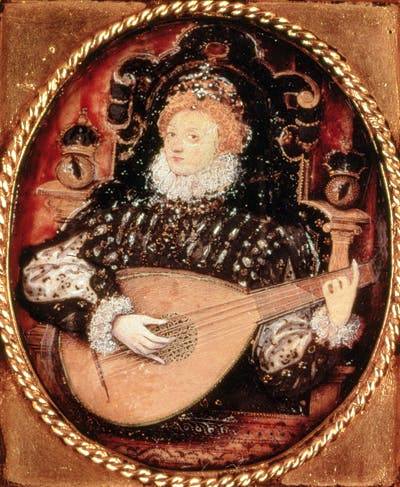
    On today’s Noontime Concert on The Classical Network, we’ll hear a program of “Lute Songs from the Elizabethan Golden Age.” Soprano Abigail Chapman and lutenist Matthew Weinman will present music by Thomas Campion, Robert Jones, Thomas Morley, and Anonymous.

    It’s another Midtown Concert offered by Gotham Early Music Scene (GEMS). The program was recorded on June 15 at St. Bartholomew’s Church, 50th Street and Park Avenue, in Midtown Manhattan.

    The next Midtown Concert, “Treasure Laden,” will take place there this Thursday at 1:15 p.m. At the invitation of the New York Philharmonic, and in connection with its “New World Initiative” – which invites different interpretations of Dvorak’s “New World” Symphony – the Alba Consort will weave iconic themes from the symphony with early Sephardic, Iberian, French, Italian, Cypriot, Armenian, and North African music, to bridge the ancient and “brave New World.” You’ll find a complete schedule of free lunchtime performances at midtownconcerts.org.

    Gotham Early Music Scene is a non-profit organization that supports and promotes artists and organizations in New York City devoted to early music – music of the Middle Ages, Renaissance, Baroque, and early Classical periods. For more information and GEMS’ events calendar, look online at gemsny.org.

    Later, we’ll remember Philadelphia-born Anshel Brusilow. For seven years, Brusilow was concertmaster of the Philadelphia Orchestra under Eugene Ormandy. He was also founder of the Chamber Symphony of Philadelphia and music director of the Dallas Symphony Orchestra. His memoir, “Don’t Shoot the Conductor: Too Close to Monteux, Szell, and Ormandy,” describes his tempestuous career with humor and pathos. Brusilow died yesterday at the age of 89.

    Join me today for the lute, Brusilow, and more, from 12 to 4 p.m. EST, on WWFM – The Classical Network and wwfm.org.


  • MLK Day Rediscovering Schwantner’s Lost Masterpiece

    MLK Day Rediscovering Schwantner’s Lost Masterpiece

    by 

    in
    2 responses

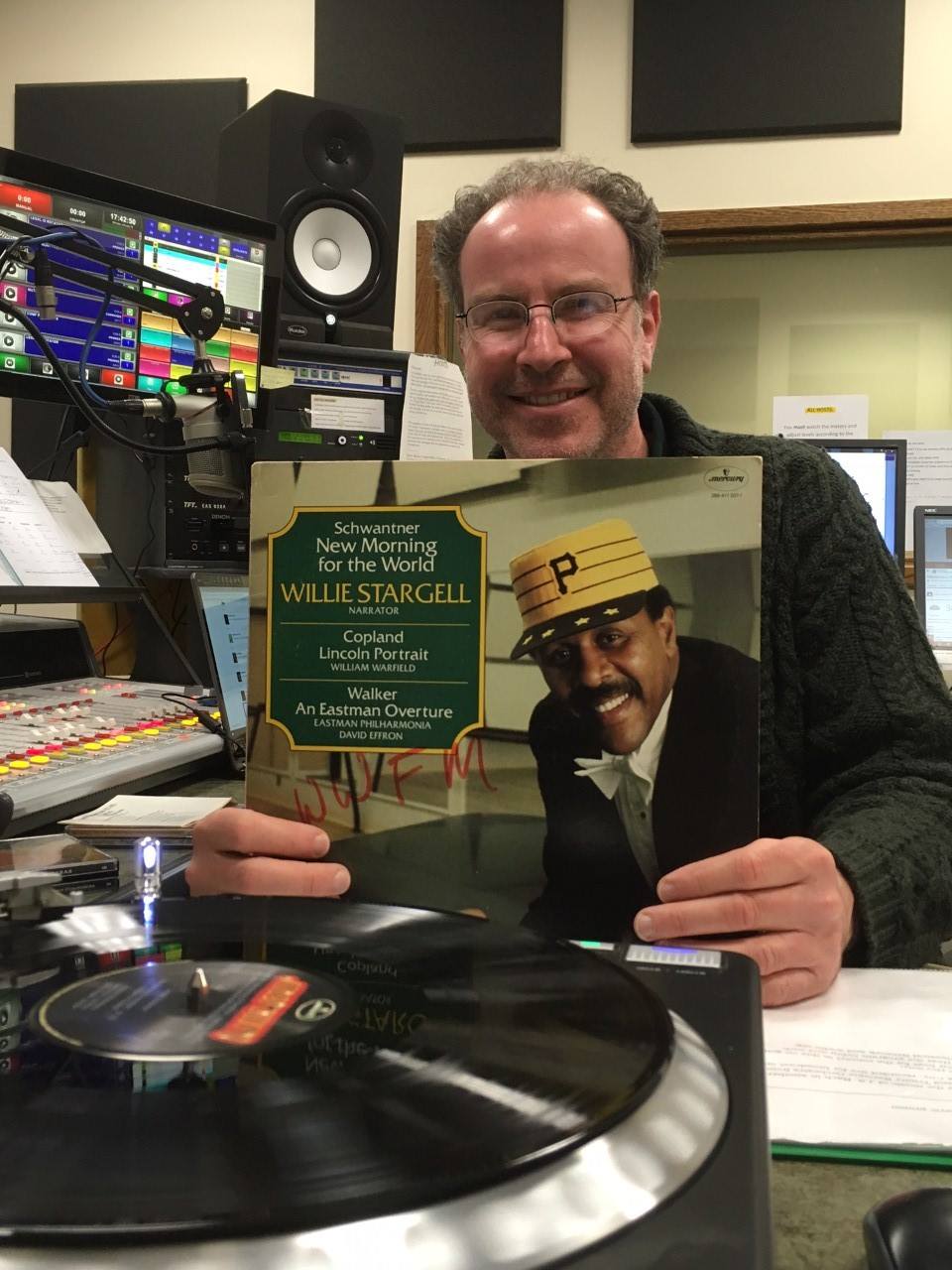
    On this Martin Luther King Jr. Day, once again I’ll be spinning this neglected contemporary classic from vinyl. This world premiere – and preferred – recording of “New Morning for the World: Daybreak of Freedom” has, inexplicably, never appeared on compact disc.

    These are the forces that introduced the piece on January 15, 1983 (King’s birthday), at the Kennedy Center in Washington, DC. The texts were compiled from King’s speeches. The narrator is former Pittsburgh Pirate Willie Stargell. Composer Joseph Schwantner was the recipient of the Pulitzer Prize for Music in 1979 for his work “Aftertones of Infinity.”

    You can learn more about Stargell here:

    https://en.wikipedia.org/wiki/Willie_Stargell

    That such a beloved figure would have been subjected to discrimination and harassment in the still recent past should make us realize how short history is, and how pertinent was King’s life’s work.

    Tune in today, between 4 and 7 p.m. EST to hear “New Morning for the World,” among my featured offerings, on WWFM – The Classical Network and wwfm.org.


  • Musical Wonder Cabinets on The Lost Chord

    Musical Wonder Cabinets on The Lost Chord

    by 

    in
    8 responses

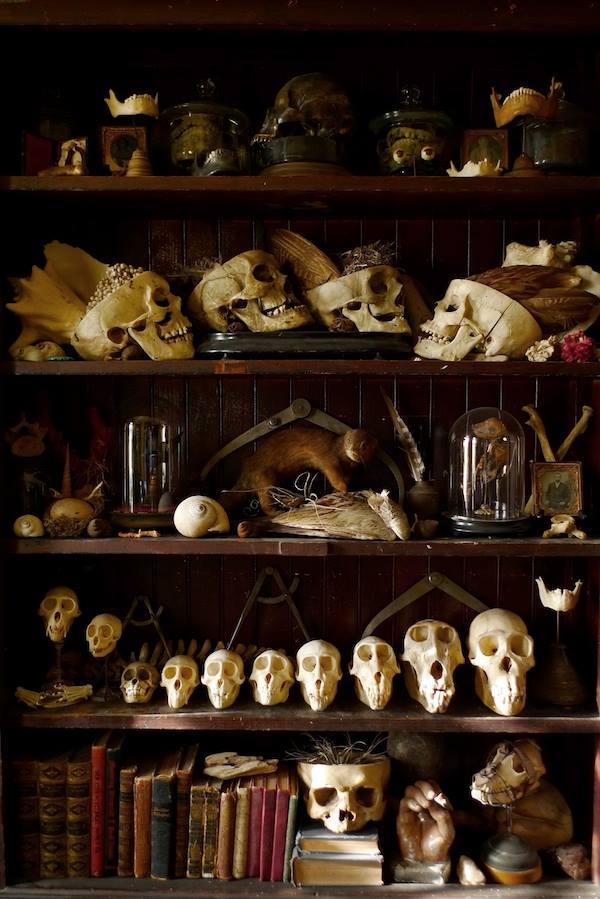
    Cabinets of curiosities, also sometimes referred to as “wonder rooms,” were small collections of extraordinary objects, strange and often fanciful precursors of today’s museums, which attempted to categorize and explain oddities of the natural world. This Sunday night on “The Lost Chord,” we’ll have three examples of musical equivalents.

    Princeton University professor Dmitri Tymoczko’s “Typecase Treasury” recalls a small table his parents acquired, made from a typecase subdivided into a hundred little compartments. “Each had been filled with a tiny mineralogical curiosity,” he writes, “a strange crystal, a piece of iron pyrite, a shark’s tooth, or a fossilized tribolyte.” He found it a useful metaphor for a multi-movement collection of short pieces, in which he attempts to produce “a sense of form through juxtaposition.”

    Grammy Award-winner Michael Colina is perhaps best known for his jazz and Latin projects. However, Colina was classically trained, having studied at the North Carolina School of the Arts, and then abroad, at the Chigiana Academy, in Sienna, Italy. We’ll hear his Violin Concerto, subtitled “Three Cabinets of Wonder,” a work inspired by Fanny Mendelssohn, the Buddha, and an Amazonian nature spirit.

    Finally, we’ll sample just a bit from “Cabinet of Curiosities” by Philadelphia-based composer Robert Moran, who’s something of a wonder himself. “The Hapsburg Kunstkammer” employs graphic notation and is scored for marimba, hairbrush, aluminum foil, bells played with fingers, finger cymbals, telephone bell, vibraphone, rubber ball, celesta and harpsichord.

    I hope you’ll join me for “Curiouser and Curiouser,” a tour of musical wonder cabinets, this Sunday night at 10:00 EST, on WWFM – The Classical Network and wwfm.org.

    More about cabinets of curiosities here:

    https://en.wikipedia.org/wiki/Cabinet_of_curiosities


  • Percy Grainger: Eccentric Genius Revealed

    Percy Grainger: Eccentric Genius Revealed

    by 

    in
    6 responses

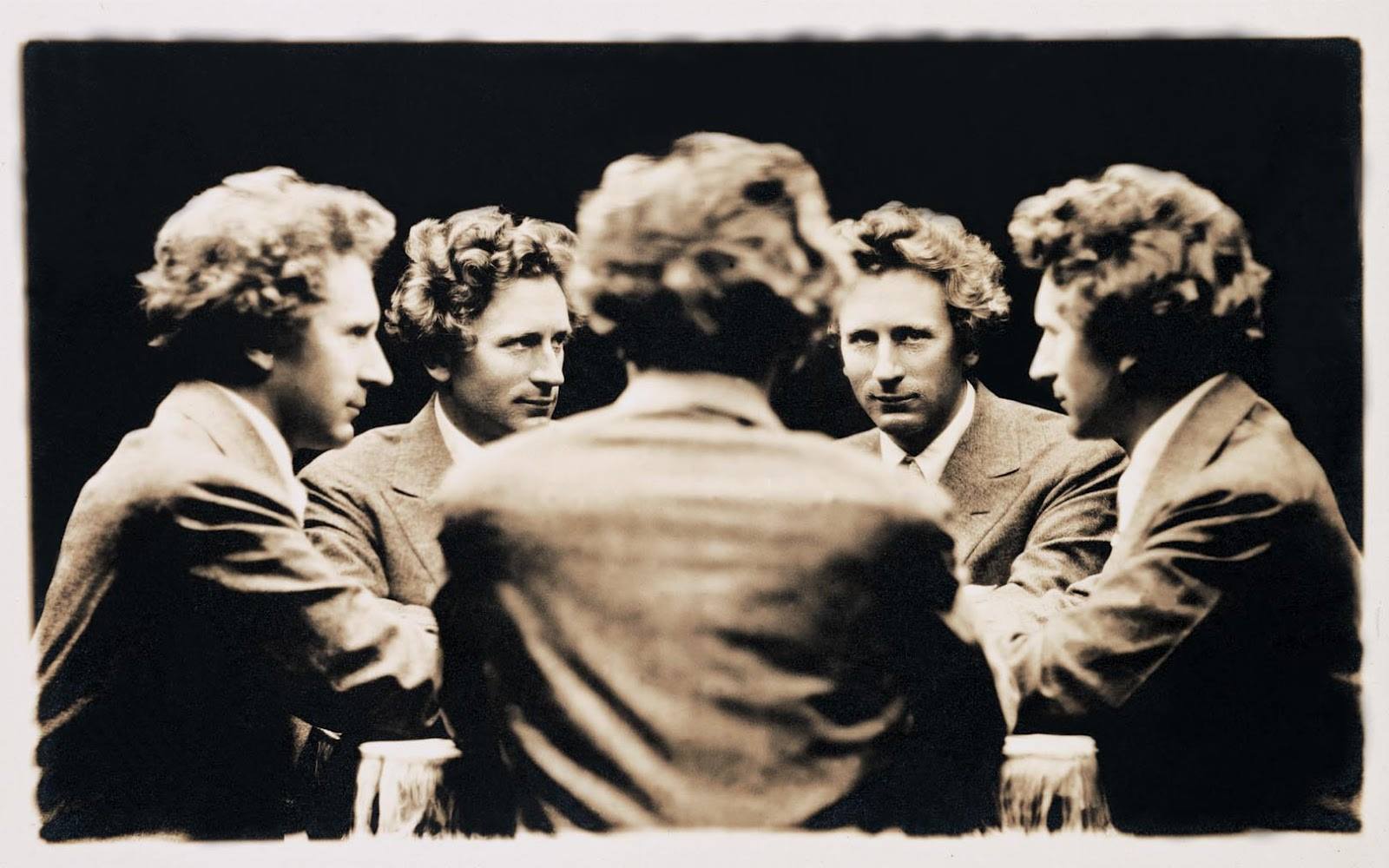
    In the course of working so much with Australian music over the past week, I happened to come across some interesting photos of Percy Grainger. Grainger, in addition to being an extraordinary pianist, was a visionary composer, whose music has frequently been undersold. He’s remembered largely as a collector and arranger of folk songs, especially those from the British Isles (“Country Gardens,” “Shepherd’s Hey,” “Molly on the Shore,” “Irish Tune from County Derry,” etc.).

    But it’s clear he was not afraid to think outside the box, either in his life or in his music. Even in these overexposed sweetmeats, which he arranged multiple times, he plays with rhythm and harmony, and in the case of “Shepherd’s Hey,” completely alters the original mood. Some of his orchestrations can only be described as “out there.” Part of the reason so little of his music is known is that he’ll decide to drop in a bass concertina or a detuned guitar for a piece that lasts only a couple of minutes.

    In life, of course, he was a force of nature. A physical fitness nut, he would throw a ball over the top of a house and run around the other side in time to catch it. He preferred to jog from engagement to engagement, sometimes with his favorite piano bench in a wheel barrow. It was not uncommon for him to take the concert stage with a running leap.

    He also had his dark or queasy side. He was unusually close to his mother (who didn’t touch him until he was five years-old, for fear that she would pass on her syphilis). He held contradictory views about the superiority of the Anglo-Saxon race (he married a “Nordic princess” before a crowd of 20,000 at the Hollywood Bowl), yet was enthralled by music of non-Western cultures and loved jazz (he was a friend of Duke Ellington). He endowed a museum in his birthplace of Melbourne with his collection of whips, bloodied clothes, and even his own skeleton. (As far as I know, the latter was not accepted.)

    Later in life, while living in White Plains, NY, he devoted himself to the construction of machines that would help him realize his dream of what he termed “Free Music,” a music liberated from what he saw as the “goose-stepping” rigidity of Western tradition. These cumbersome beasts were, in some respects, precursors of the modern synthesizer.

    Clearly so much can be written about this eccentric and his freewheeling genius, but for today my purpose is to share with you something new to me. On top of everything else, Grainger designed what he called “toweling outfits.” Here’s a link to some photos, with the composer’s own comments at the bottom of the page.

    http://collectedphotographs.blogspot.com/2012/04/percy-grainger-towel-clothes-and.html

    More about Grainger’s Free Music Machine here:

    The ‘Free Music Machine’. Percy Grainger & Burnett Cross, USA/Australia , 1948


    The multifaceted Percy Grainger


Tag Cloud

Aaron Copland (93) Beethoven (95) Composer (114) Film Music (145) Film Score (143) Film Scores (255) Halloween (94) John Williams (195) KWAX (229) Leonard Bernstein (104) Marlboro Music Festival (125) Movie Music (160) Mozart (91) Opera (213) Philadelphia Orchestra (89) Picture Perfect (174) Princeton Symphony Orchestra (109) Radio (88) Ross Amico (244) Roy's Tie-Dye Sci-Fi Corner (290) The Classical Network (101) The Lost Chord (269) Vaughan Williams (105) WPRB (397) WWFM (881)

DON’T MISS A BEAT

Receive a weekly digest every Sunday at noon by signing up here


RECENT POSTS