• Peter Serkin at 70 A Piano Maverick

    Peter Serkin at 70 A Piano Maverick

    by 

    in
    4 responses

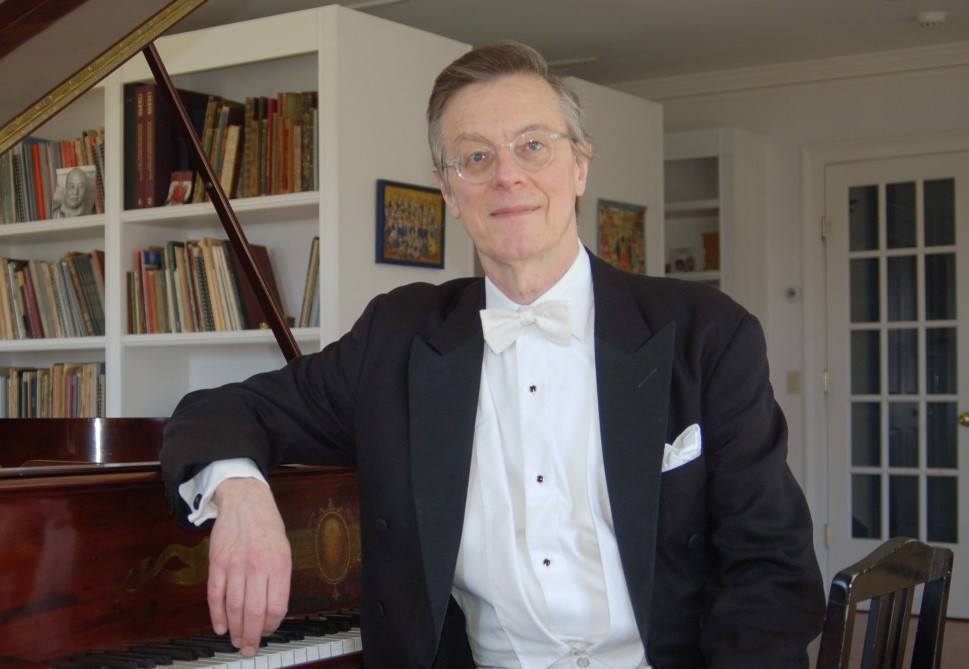
    For some reason, I always equate Peter Serkin in my mind with Peter Fonda. Perhaps it’s because he’s like the Easy Rider of pianists. At one point, he even totally dropped out, moving to Mexico and not playing for a couple of years. When he returned, as often as not, he was a kind of countercultural champion of modernist works (he was one of the founders of the new music ensemble Tashi); but he is, after all, his father’s son (he was sired by legendary pianist Rudolf Serkin), so Bach and Beethoven have been just as important to him as an artist and as a person.

    Hard to believe that Peter Serkin is 70 years-old today. We’ll honor him with several of his recordings, alongside those of the late violinist Ruggiero Ricci and composers Adolphe Adam, Ernest Bloch, Robert Farnon, and Leo Arnaud (he of Olympic fanfare fame).

    I’ll be bearing the torch for great music and music-making, from 4 to 7 p.m. EDT, on WWFM – The Classical Network and wwfm.org.


  • Australian Classical Music Heard on “The Lost Chord”

    Australian Classical Music Heard on “The Lost Chord”

    by 

    in
    2 responses

    G’day! This Sunday night on “The Lost Chord,” we’re headed Down Under, with an hour of music from Australia.

    Alfred Hill was born in Melbourne in 1870, but spent much of his early life in New Zealand. He studied abroad, at the Leipzig Conservatory, and played second violin in the Gewandhaus Orchestra, under then-kapellmeister Carl Reinecke. He also performed in concerts conducted by Brahms, Tchaikovsky, Grieg and Max Bruch.

    Throughout the course of his career, Hill founded, and/or pushed for, important institutions in both Australia and New Zealand, including one devoted to Maori studies. He composed more than 500 works, among them 12 symphonies, 8 operas, numerous concerti, a mass, 17 string quartets, two cantatas on Maori subjects, and 72 piano pieces. We’ll hear one of his brief, though atmospheric, tone pictures, titled “The Moon’s Golden Horn.”

    Then we’ll turn to Peter Sculthorpe, who was born in Tasmania in 1929. Sculthorpe studied at the Melbourne Conservatorium. Following a period of post-graduate struggles, he won a scholarship to study with Egon Wellesz at Oxford University. Unfortunately, he had to abandon the pursuit of his doctorate when his father became gravely ill. In 1963, Sculthorpe became a lecturer at the University of Sydney, where he remained, more or less, until his death in 2014.

    He became one of Australia’s most-honored composers. Much of his music is concerned with Australia and its South Seas environs. The focus of many of his pieces over the decades reveals an admiration for, and affinity with, Australia’s indigenous cultures. Major philosophical concerns include conservation and the preservation of the environment.

    We’ll listen to “Earth Cry,” an evocative piece from 1986. Scored for didgeridoo and orchestra, the work is a plea for balance, suggestive of the Aborigine mindset of living in accordance with natural law and the needs of the land.

    Colin Brumby was born in Melbourne in 1933. Like Sculthorpe, he attended the Melbourne Conservatorium. He studied abroad in Spain and London, before joining the staff of the music faculty at the University of Queensland. He directed the Queensland Opera Company for a few years. He received his doctorate from the University of Melbourne, and then returned to the continent for further studies in Rome. In 1981, he received an Advance Australia Award for his services to music. He has written orchestral pieces, music for the stage, choral, chamber and instrumental works.

    If you love the concertos of Sergei Rachmaninoff, you owe it to yourself to hear Brumby’s Piano Concerto No. 1, from 1984. The work is written in the grand romantic style for a former classmate of some 30 years earlier, the pianist Wendy Pomroy. The piece certainly is a throwback to an earlier age and an unremitting delight.

    Slip another shrimp on the barbie, open up a cold Foster’s, and join me for “Left Out Back,” neglected music from Australia, this Sunday night at 10:00 EDT, on WWFM – The Classical Network and wwfm.org.

  • Dudley Moore Beyond Comedy: A Musical Genius

    Dudley Moore Beyond Comedy: A Musical Genius

    by 

    in
    7 responses

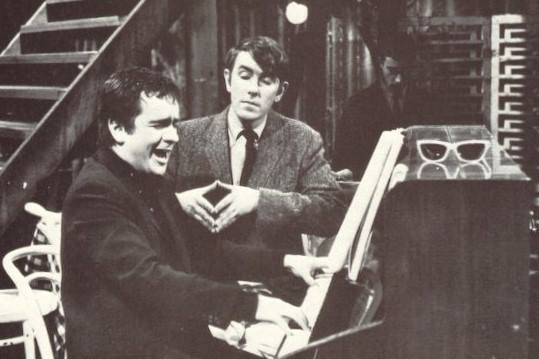
    People who knew Dudley Moore only from his appearances in American films (“10,” “Arthur,” “Foul Play,” etc.) are surprised to learn what a talented musician he was. In fact, the piano played a central role in a number of his comedy routines, both solo and with his partner-in-crime, Peter Cook. Revisiting some of these on YouTube astounds, as I reflect, not for the first time, how far we’ve fallen as a society. Don’t get me wrong, Moore and Cook could be as foul as any comedians on the circuit today, but they were also intelligent and educated men who trusted their audiences to “get it” – in part because the audiences actually had the necessary tools.

    Moore’s classic parody of a Beethoven sonata speaks for itself:

    Here it is again, in 1988. Already, he feels a need to telegraph the jokes in order to hold an audience:

    https://www.youtube.com/watch?v=0l3hq4G1iHs

    Nowadays, when fewer are familiar with “Colonel Bogey,” much less Beethoven, it would likely have to be “enhanced” by at least one flatulence joke.

    Officer Cook stops pianist Moore for “speeding:”

    Later in life, when Moore was afflicted with progressive supranuclear palsy, a rare degenerative disorder, he was asked what he missed doing the most. He replied, “Playing the piano.”


  • Sea Captains & Film Scores on the Radio

    Sea Captains & Film Scores on the Radio

    by 

    in
    6 responses

    Taste the lash, and prepare to be keelhauled!

    This week on “Picture Perfect,” we stand tall against tyrannical sea captains, with music from “The Sea Wolf” (by Erich Wolfgang Korngold), “Moby Dick” (Philip Sainton), “The Caine Mutiny” (Max Steiner), and “Mutiny on the Bounty” (Bronislau Kaper). Strawberries will be pilfered and arms distributed among the crew, this Friday evening at 6:00 EDT, on WWFM – The Classical Network and wwfm.org.
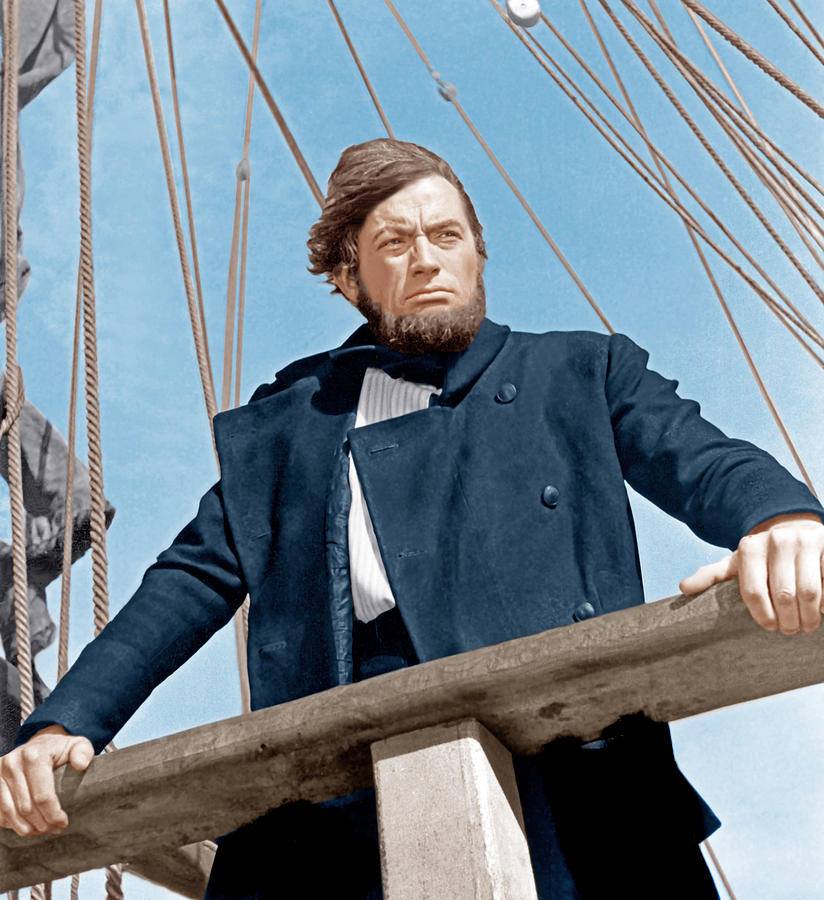

    CAPTAINS OUTRAGEOUS (clockwise from left): Gregory Peck as Captain Ahab, Edward G. Robinson as Wolf Larsen, Humphrey Bogart as Captain Queeg, and Trevor Howard as Captain Bligh


  • Celebrating Conducting Nonagenarians

    Celebrating Conducting Nonagenarians

    by 

    in
    4 responses

    There must be something to all that aerobic exercise and immersion in beautiful music. Otherwise, why would so many conductors live to such a ripe old age? The occupation must be second, in terms of promoting longevity, only to President of the United States (but the presidency ages you faster).

    Join me this morning on WPRB, as we celebrate the 90th birthday of conductor Michael Gielen. Gielen is best known for being the one-time music director of the Cincinnati Symphony Orchestra and, especially, the Southwest German Radio Symphony Orchestra, which he led from 1986 to 1999, and with which he has been associated ever since. Gielen, who is also a composer, had a particular knack for deciphering complex and contemporary scores, but he also lent interesting insights into music of the Romantic era. We’ll listen to some of his performances of fin-de-siècle masters Franz Schreker and Gustav Mahler.

    While we’re at it, we’ll continue along these lines, with appreciations of 90 year-old maestros Herbert Blomstedt (born July 11, 1927) and Serge Baudo (born July 16, 1927). We’ll also hear recordings by notable nonagenarians who passed within the last year or so, including Stanislaw Skrowaczewski, Georges Prêtre, Louis Frémaux, and Sir Neville Marriner. Then we’ll fill in around the edges with late-career performances by Sir Adrian Boult (who lived to be 93) and Leopold Stokowski (95).

    Join me for recordings by this nonet of nonagenarians (and perhaps a few more), this Thursday morning from 6 to 11 EDT, on WPRB 103.3 FM and wprb.com. We tap the wisdom of the ages, on Classic Ross Amico.


Tag Cloud

Aaron Copland (93) Beethoven (95) Composer (114) Film Music (144) Film Score (143) Film Scores (255) Halloween (94) John Williams (195) KWAX (229) Leonard Bernstein (104) Marlboro Music Festival (125) Movie Music (159) Mozart (91) Opera (213) Philadelphia Orchestra (89) Picture Perfect (174) Princeton Symphony Orchestra (109) Radio (88) Ross Amico (244) Roy's Tie-Dye Sci-Fi Corner (290) The Classical Network (101) The Lost Chord (269) Vaughan Williams (105) WPRB (397) WWFM (881)

DON’T MISS A BEAT

Receive a weekly digest every Sunday at noon by signing up here


RECENT POSTS