• Shelley’s Summer Poems on The Lost Chord

    Shelley’s Summer Poems on The Lost Chord

    by 

    in
    5 responses

    This Sunday night on “The Lost Chord,” our focus will be on works inspired by seasonal poems of Percy Bysshe Shelley and others.

    We’ll hear Geoffrey Bush’s “A Summer Serenade,” composed in 1948. The seven movement work is based on poems by Shelley, James I of Scotland, Samuel Daniel, William Blake, Thomas Heywood, and the ever-prolific Anonymous.

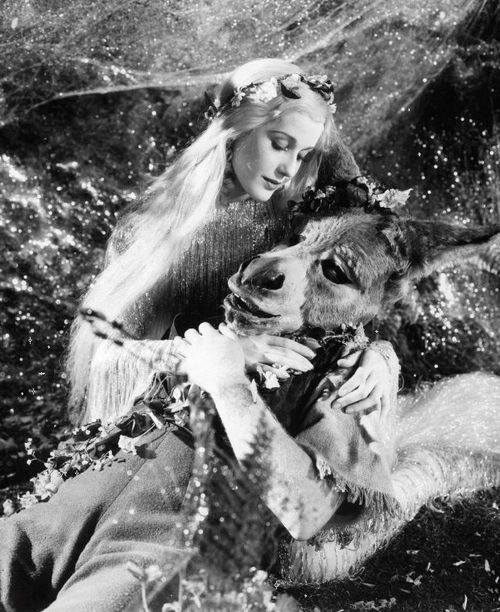
    Then we’ll have Arnold Bax’s rarely-heard “Enchanted Summer,” from 1918. The text is from Act II, Scene 2, of Shelley’s “Prometheus Unbound.” Composed in the middle of a string of Bax’s better-known nature poems, including “Into the Twilight” and “In the Fairy Hills” on the one hand, and “Nympholept” and “The Garden of Fand” on the other, the work begins with a depiction of light and shadow across a forest floor, mysterious caves and crags, and musical evocations of woodland spirits; continues with nightingales, in the second part; and two fauns, commenting on the wondrous things they have witnessed, in the third.

    I hope you’ll join me for “Summer Shelley, Some Are Not,” this Sunday night at 10:00 EDT on WWFM – The Classical Network and wwfm.org.

  • Vaughan Williams Symphony No 5 Hope Amidst Wartime

    Vaughan Williams Symphony No 5 Hope Amidst Wartime

    by 

    in
    7 responses

    Oh, Ralph, you’re such the contrarian. You wrote that embodiment of English pastoralism, “The Lark Ascending,” in response to the War to End All Wars. Then in peacetime, in the early 1930s, you composed your most turbulent symphony, the Symphony No. 4. Some say that already you sensed the impending cataclysm of World War II. Then when the war finally hit, you turned around and wrote your most serene symphony.

    On this date in 1943, you unveiled your Symphony No. 5. Queen’s Hall lay in ruins from German bombs, so you conducted the London Philharmonic at Royal Albert Hall. Perhaps unexpectedly, the audience that day found itself awash in hope and optimism. In place of the seemingly obligatory bluster of a “wartime symphony,” there was a sense of affirmation in a musical celebration of humanity and tradition. London may be rocked by air raids today, but England, the country and its people, would endure.

    You had already long been flirting with your pet project, the opera “The Pilgrim’s Progress,” for decades. The symphony shares the same sense of faith and optimism in the face of seemingly implacable adversity. The audience emerged into the sunlight on that summer afternoon feeling refreshed and ready to face the future.


    The Symphony No. 5 (dedicated, by the way, to Jean Sibelius):

    https://www.youtube.com/watch?v=q9YoEETzYsE

    PHOTO: Vaughan Williams and Foxy in 1942


  • Thief of Bagdad Rozsa Score Rediscovered

    Thief of Bagdad Rozsa Score Rediscovered

    by 

    in
    3 responses

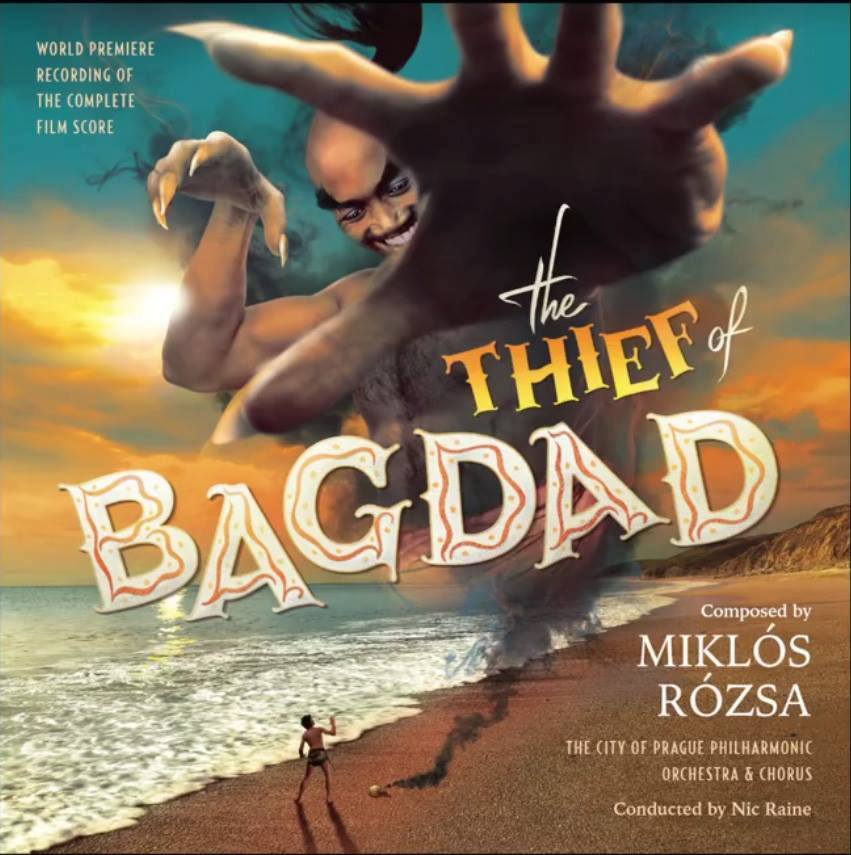
    If your three wishes would encompass a complete recording, in up-to-date sound, of one of the most enchanting film scores by Miklós Rózsa, you needn’t hold out for the discovery of a magic lamp. I hope you’ll join me for a recent release of a two-CD set, on the Prometheus label, of music from the classic 1940 fantasy-adventure “The Thief of Bagdad.” The City of Prague Philharmonic and Nic Raine have recorded the score, note-complete, with ample bonus material. Tune in to be transported. Take the magic carpet ride, this Friday at 6 p.m. EDT, on WWFM – The Classical Network and wwfm.org.

  • Midsummer Music Bonfires and Roman Roots

    Midsummer Music Bonfires and Roman Roots

    by 

    in
    2 responses

    You can thank the Romans. They’re the ones who marked the summer solstice on June 24. Hence, the schism between the longest day (June 21) and Midsummer. But the Romans liked nothing if not a good party, so why not keep celebrating?

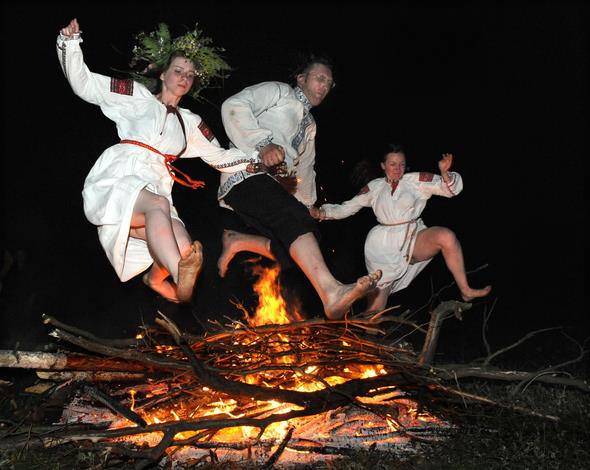
    This morning on WPRB, on the second day of summer, we anticipate the Eve of St. John – Midsummer, tomorrow night – the night when the demon Chernobog emerges from the Bald Mountain, Puck pours love juice in everyone’s eyes, and inebriated folk leap naked over bonfires.

    Join me for selections inspired by Swedish Midsummer revelry, Ukrainian folklore, and Shakespeare’s “A Midsummer Night’s Dream.” We’ll also hear music from Igmar Bergman’s “Smiles of a Summer Night,” Alfred Schnittke’s “(K)ein Sommernachtstraum” – “(Not) a Summer Night’s Dream” – and Gunnar de Frumerie’s ballet “St. John’s Eve.”

    We’ll squeeze the juice of love-in-idleness onto sleeping eyelids, this Thursday morning from 6 to 11 EDT, on WPRB 103.3 FM and wprb.com. Don’t get between me and my bonfires, on Classic Ross Amico.


  • Midsummer Traditions Worldwide Radio Show

    Midsummer Traditions Worldwide Radio Show

    by 

    in
    10 responses

    Why let the calendar get in the way of a good pagan tradition? Join me tomorrow morning on WPRB as I stand like a colossus, with one foot on the summer solstice and the other on St. John.

    June 21 may be the first day of summer, but the Swedes don’t celebrate Midsummer’s Eve until Friday, the eve of St. John the Baptist’s feast day. That’s the night the demon Chernobog emerges from the Bald Mountain, Puck pours love juice in everyone’s eyes, and inebriated folk leap naked over bonfires. The Swedes don’t really seem to care when it’s observed, as long as there’s plenty of drink, dancing, food, flowers and flame.

    Midsummer’s Eve, of course, is tied to the summer solstice and marked by free-flowing vodka, prognostications of the identities future lovers, fertility rituals, and the wider celebration of nature. The Swedes observe Midsummer by wearing wreaths, carousing around the maypole, and eating strawberry cake. The day is a national holiday. Skål!

    Sweden is not the only country to celebrate Midsummer, of course. There will be raucous celebrations in Austria, Brazil, Bulgaria, Canada (Quebec), Denmark, Estonia, Finland, France, Germany, Greece, Hungary, Iran, Ireland, Italy, Latvia, Lithuania, Norway, Poland, Portugal, Romania, Russia, Ukraine, Slovenia, Serbia, Spain, and the United Kingdom. Half the world will be sleeping it off on Saturday.

    Bottom joins his rude mechanicals in listening in with ass’s ears, this Thursday morning from 6 to 11 EDT, on WPRB 103.3 FM and wprb.com. We’ll all be dreaming of Midsummer, on Classic Ross Amico.


Tag Cloud

Aaron Copland (93) Beethoven (95) Composer (114) Film Music (144) Film Score (143) Film Scores (255) Halloween (94) John Williams (195) KWAX (229) Leonard Bernstein (104) Marlboro Music Festival (125) Movie Music (159) Mozart (91) Opera (213) Philadelphia Orchestra (89) Picture Perfect (174) Princeton Symphony Orchestra (109) Radio (88) Ross Amico (244) Roy's Tie-Dye Sci-Fi Corner (290) The Classical Network (101) The Lost Chord (269) Vaughan Williams (105) WPRB (397) WWFM (881)

DON’T MISS A BEAT

Receive a weekly digest every Sunday at noon by signing up here


RECENT POSTS